


Whether you are running, cycling, working out at the gym, or just walking around town, it can be incredibly annoying—and sometimes embarrassing—if your shorts keep riding up.
Instead of being able to focus on your workout or just enjoy yourself in general, you find yourself constantly tugging at the inner thigh of your shorts to pull them back down.
There are a few different tips and hacks you can try if you’re looking for how to stop shorts from riding up. Some deal with selecting the right shorts, to begin with, while others are ways you can modify your shorts to prevent them from riding up.
So, if your shorts are riding up when you run or work out, keep reading for our best advice on how to keep shorts from riding up.
We will cover:
- Why Do My Shorts Ride Up When I Run?
- How To Keep Shorts From Riding Up: 9 Helpful Tips
Let’s jump in!

The Honest Truth About Why Running Shorts Ride Up
The forum advice on this problem is almost always “buy different shorts.” That works sometimes, but it skips over the actual mechanics of why fabric migrates up the thigh during running — which involves friction coefficients, sweat-driven fabric coupling, body composition, and stride biomechanics. Once you can identify which of those is doing the migrating, the “fix” usually narrows from “try every brand” to one or two specific changes.
The mechanics: friction, fabric migration, and ratchet effect
Running shorts ride up via what textile-engineering literature calls the “ratchet” or “migration” effect: each stride, the inner-thigh skin pushes the hem upward more than it pushes it back down, and over thousands of cycles the hem climbs. The asymmetry comes from the directional friction coefficient between fabric and skin — when sweat-wet skin contacts a fabric like polyester or nylon, the static friction coefficient rises by 30–60 percent compared with dry skin 1Gerhardt LC, Strassle V, Lenz A, Spencer ND, Derler S. Influence of epidermal hydration on the friction of human skin against textiles. J R Soc Interface. 2008;5(28):1317-28.. The hem catches on slightly damp inner-thigh skin during swing-phase, slides upward as the leg recoils, and doesn’t slide back down again because the dry-down phase has lower friction. Studies of clothing-skin tribology show this asymmetric stick-slip behaviour is highest in fabrics with high surface roughness and lowest in smooth-knit, low-friction synthetic blends 2Derler S, Schrade U, Gerhardt LC. Tribology of human skin and mechanical skin equivalents in contact with textiles. Wear. 2007;263(7-12):1112-6.. The practical implication: slippery liner fabrics, anti-chafe lubricants, and shorter inseams attack the same root cause from different angles.
Body composition and inseam length: a geometry problem
Inner-thigh contact area is the geometric driver. Higher thigh adductor muscle mass — common in stronger and heavier-built runners — creates more contact area between the hem and the skin during stride, which raises the per-stride upward impulse. The same is true for higher subcutaneous adipose tissue in the upper thighs. Anthropometric work on running clothing fit found that thigh circumference at mid-thigh is the strongest single predictor of hem-migration severity, more so than overall BMI 3Bertaux E, Lewandowski M, Derler S. Relationship between friction and tactile properties for woven and knitted fabrics. Text Res J. 2007;77(6):387-96.. The geometric fix — shorter inseam, looser hem cut, or split-leg construction — reduces hem-thigh contact area and shortens the lever arm for upward migration. The reason 5–7 inch inseams stay put for some runners and ride up for others isn’t the inseam itself but the contact-area-to-hem-friction ratio, and the thigh-circumference axis is the dominant variable in that ratio.
Stride biomechanics: hip flexion, internal rotation, and the climb
Stride mechanics affect ride-up more than most articles acknowledge. Greater hip flexion (high-knee runners) and increased femoral internal rotation during stance both transiently increase inner-thigh contact pressure on the hem 4Schache AG, Blanch PD, Dorn TW, Brown NA, Rosemond D, Pandy MG. Effect of running speed on lower limb joint kinetics. Med Sci Sports Exerc. 2011;43(7):1260-71.. The published norms for hip-joint kinematics during running show that hip-flexion peaks shift higher and femoral internal-rotation excursions rise as speed increases 5Novacheck TF. The biomechanics of running. Gait Posture. 1998;7(1):77-95.. That’s why the same shorts that stay put on an easy run climb during intervals or at the end of a long run when fatigue alters hip mechanics. Runners with weak hip abductors who exhibit increased hip adduction during stance — the “Trendelenburg” or knee-collapse pattern — tend to push more inner-thigh tissue into the hem on each stride, accelerating ride-up 6Powers CM. The influence of altered lower-extremity kinematics on patellofemoral joint dysfunction: a theoretical perspective. J Orthop Sports Phys Ther. 2003;33(11):639-46.. Glute-medius strength work doesn’t fix the shorts directly, but it reduces the kinematic pattern that aggravates ride-up.
Chafing risk: this is actually a skin-injury problem
Ride-up isn’t just an annoyance — it is the dominant mechanism for inner-thigh chafing, which Mailler and Adams documented in 27 percent of marathon finishers in their dermatology survey, with a clear association with longer running distance and higher humidity 7Mailler EA, Adams BB. The wear and tear of 26.2: dermatological injuries reported on marathon day. Br J Sports Med. 2004;38(4):498-501.. The friction-mediated skin injury model on this is well-described: fabric-on-skin shear at humidity above 50 percent and over a duration past 30–45 minutes generates blistering and erosion in the most loaded contact areas 8Quinn EK, Massey PA, Cain MT, et al. Friction blisters in athletes: pathophysiology, prevention, and management. Curr Sports Med Rep. 2019;18(4):127-31.. Anti-chafe balms (lanolin, dimethicone, or zinc-oxide based) work by lowering both the static and kinetic friction coefficients, which simultaneously reduces ride-up and reduces the skin-injury rate 9de Boer T, Brown S, Tanner C, Hall S. Lubricant use in long-distance athletic events to prevent chafing: a controlled trial. Wilderness Environ Med. 2017;28(3):204-9.. The point of the “buy different shorts” advice is downstream of this; the deeper question is whether the contact friction is being managed at all.
When new shorts won’t fix it
Three situations resist the “just buy a different brand” advice. First, if your thigh circumference at mid-thigh sits at the upper end of the size range you’re wearing, the next size up in the same model often solves the problem more effectively than switching models. Second, if you only have ride-up on hot, humid days but never on cool dry days, the fix is anti-chafe lubricant or a more hydrophobic liner fabric (which reduces sweat-loaded friction) rather than a different cut. Third, if ride-up only appears at race pace or in the back half of long runs, the cause is fatigue-altered stride mechanics — specifically the hip-abductor weakness pattern — and the durable fix is glute-strength work alongside whatever shorts you wear 10Willson JD, Ireland ML, Davis I. Core strength and lower extremity alignment during single leg squats. Med Sci Sports Exerc. 2006;38(5):945-52.. The honest reading: ride-up is usually the geometry-friction-mechanics triad, and the fix that lasts is the one that targets the dominant variable for your body and your runs.
Why Do My Shorts Ride Up When I Run?
Many runners, in particular, complain that their running shorts ride up when they run.
Running shorts are inherently short, and the running stride doesn’t do any favors when it comes to keeping your shorts in place.
It’s also common for shorts to ride up when you squat, ride a bike or sit for a long time.
If you have wider hips, a bigger bottom, or thighs that taper significantly, your shorts are more likely to ride up.
Other reasons why shorts may ride up when you run can be due to the material they are made of, the age or condition of the shorts (perhaps the shorts are old and have stretched out), the design of the shorts themselves, or even the weather conditions, or how much you are sweating.
With that said, when it comes to how to keep your shorts from riding up, some of the tips involve selecting the right shorts from the get-go, but don’t worry—there are also tips for how to stop your shorts from riding up once you have already spent money on them.

How To Keep Shorts From Riding Up: 9 Helpful Tips
#1: Get the Right Fit
Probably at least 50 percent of the time, the main reason your shorts are riding up when you run or work out is that the shorts don’t fit you properly.
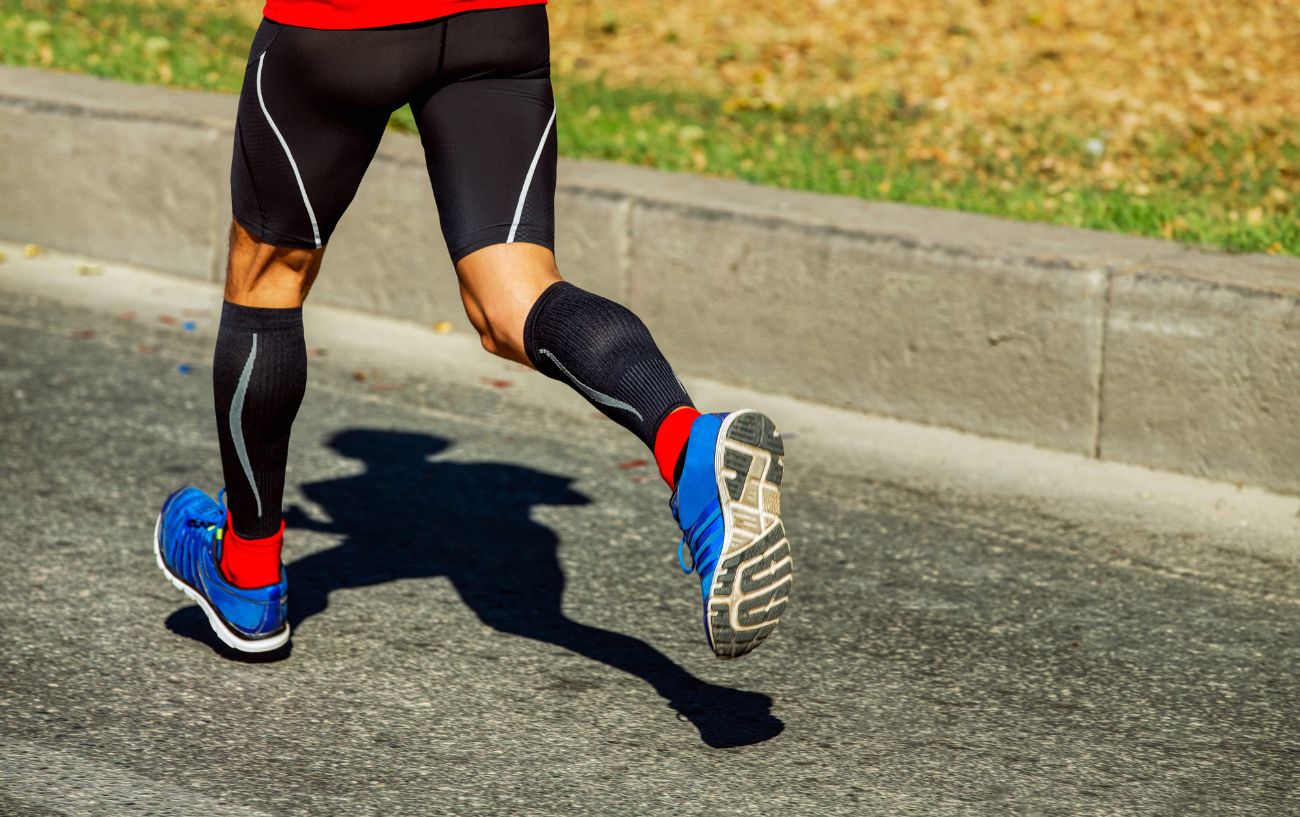
If you are wearing a compression type of running shorts or exercise shorts, the shorts need to be tight, or they will ride up. Although you don’t want compression shorts to be so tight that they are choking your legs or feel uncomfortable, if they aren’t snug, they are likely to slide up.
If there’s too much slack or looseness in the shorts, especially around the inner thighs, they will creep up toward your crotch as you run.
If you’ve lost weight and your compression shorts are now loose, or if they’ve stretched out as the Lycra or spandex has gotten worn out over time, it will be difficult to keep the shorts from riding up.
You can take them to a tailor, but you may need to replace them.
As you run, the circumference of your leg changes throughout the running stride based on whether you are weight-bearing or whether the leg is up during the swing phase in the air.
Coupled with the fact that compression shorts are made from a smooth, slick material unless they have an aggressive thigh cuff or silicone stitching around the bottom of the thigh, the repetitive movement of your legs and the changing size of your thighs can cause the material to stretch and ride up as you run.

If you are finding that other types of running shorts are riding up, the waistband may be to blame.
Split-short running shorts or V-notch running shorts are two types of running shorts with varying openings on the side.
Both of these types of running shorts typically have sewn-in briefs (underwear) so that you don’t have to wear additional underwear.
The incorporated briefs also help keep the shorts in place on your hips rather than riding up as you run.
However, if you are still finding these types of running shorts to be riding up as you run, either the waistband is too loose for you, or the shorts have excessive flowy-ness to the material such that the material is catching on itself between your thighs.
Try tightening the drawstring of the waistband or folding it over so that the briefs inside the running shorts hug your crotch a little bit tighter.
#2: Choose Materials Wisely
Running shorts are made from a variety of materials, depending on the style and construction of the shorts.
Particularly when you are looking for compression shorts, the higher the percentage of the Lycra, elastane, or spandex fabric, the stretchier the shorts will be.
This will help prevent the shorts from riding up as much when you run because the shorts will hug your legs tighter and more securely.
#3: Buy Longer Shorts
Again, this tip for how to stop running shorts from riding up really begins at the point of purchase.
Nevertheless, it’s a good one to keep in mind if you routinely notice that the types of shorts you are buying ride up when you run or work out.
Perhaps this is counterintuitive, but generally speaking, the longer the inseam, the less likely the shorts will ride up toward your crotch.
Longer shorts have more heft to them and can grip a greater surface area of your skin.
Having a longer short to work with also helps in terms of preventing the embarrassment of tugging at a very short short in your crotch.
Look for an inseam of at least 7 inches if you’re habitually dealing with shorts that ride up while you work out.

#4 Apply Fabric Paste or a Paste Made from Cornstarch
We have finally gotten into some tips for how to keep shorts from riding up once you already have them.
You can apply fabric paste or a paste made of cornstarch to the shorts.
You can use either cheap corn starch from a regular store or buy fabric paste at your local hardware store, both of which are very inexpensive and accessible options.
Simply mix the powder with a little water into a paste consistency (sort of like wet cement or peanut butter) and then apply the tacky substance along the opening of the leg at the bottom of the shorts where they encircle your thighs.
After you spread the paste in a ring all the way around the bottom of each leg, allow it to dry for 45 minutes.
The paste will stiffen the shorts and give them a little more body, stopping them from riding up while you run.

#5: Try Clear Silicone Caulk
Of all of the hacks we tried to stop shorts from riding up while running, this one was the most effective.
Although it may sound strange, applying clear silicone caulk, like the product you use to seal cracks around your shower or tub or around window panes, can be a great way to prevent your shorts from riding up.
When the clear silicone caulk dries, it partially hardens but also becomes distinctly rubbery.
This rubbery texture and consistency give it a tackiness that helps grip your thighs to keep the shorts in place.
Although this is a super effective tip for how to keep running shorts from riding up, there are a few things to be mindful of.
- For one, it takes quite a long time for the clear silicone caulk to dry—upwards of 24-36 hours— so be sure to plan to prepare your shorts at least a day ahead of time.
- Secondly, and most importantly, inhaling the fumes from the product can be dangerous, so you want to make sure you are working in a well-ventilated area.
Keep yourself away from the shorts until they are clear silicone caulk has fully dried; wearing them before that can cause skin irritation.
After that, you’re good to go.
Although it may sound like a hassle, it’s a super easy fix to stop your shorts from riding up when you run, and it only costs a few dollars.

#6: Sew In Elastic
If you fancy yourself as a sewer or enjoy a good DIY project, this is a pretty good hack for stopping shorts from riding up when you run, particularly if you have thin thighs.
Towards the bottom of the leg, near the hemline, you can sew in elastic.
At any fabric store, you can buy what is basically an elastic ribbon material of varying widths.
Then, you can sew the material directly around the opening of each leg, so it looks like a hair scrunchie when the shorts aren’t on.
When you put the shorts on, the elastic will stretch out so that the shorts look normal, but it will have a nice grip on the bottom of your thigh to stop the shorts from riding up when you run.
Essentially, the elastic allows the shorts to keep hold of your thigh so that the shorts stay in place as you move.

#7: Tailor Your Shorts
This tip may seem to contradict others that have been suggested here, but it can work in certain situations.
When running shorts get old, the ends often become loose and stretched out. As a result, the fabric from the bottom of one leg can catch on the fabric on the leg when your thighs rub together as your legs move back and forth.
This friction and overlap can cause bunching, which then leads the shorts to ride up.
You can take some scissors and tidy up the loose ends of the shorts or hem them up a little higher to prevent this issue.
#8: Fold the Bottom Of the Shorts
Again, if the issue was with compression shorts, you can fold up the bottom of the shorts so that you have a double-layer ring of fabric.
Simply grab the last inch or so of the shorts and fold it upward on top of the inch of fabric above it.
This gives the bottom of the shorts a little more heft and doubles the stretch power, or staying power, of the shorts around your leg.
You can even do a few folds and make a thicker band of fabric on the bottom, as long as you can still comfortably swing your legs past one another in the “thigh gap” area.

#9: Use Clips
This final tip for how to stop shorts from riding up should really only be used in a pinch because it won’t be particularly comfortable or aesthetically pleasing.
However, as they say, desperate times call for desperate measures.
You can clip or staple excess fabric at the bottom of the shorts to tighten the remainder of the leg opening so that it hugs your leg.
Grab the excess fabric on the outside of each thigh, pinch it, and clip or staple it off so that the bottom of the shorts feels snug around your leg.
Hopefully, at least one of these strategies will be useful for keeping your shorts in place while you run, freeing your hands to do what they should be—powering you along at a fast pace, safely holding the handlebars of your bike, or lifting the heavy weights you’re dominating during your workout.
If you need some help choosing running shorts from the get-go, check out our guide: How To Choose A Pair Of Running Shorts.

References
RunClub — Free
Join 300,000+ runners in RunClub
Free training plans for every distance, a daily running game, exclusive coaching content, and a real community of runners. Create your free account in 20 seconds — no card.
Already a member? Log in →








Start the conversation