


You’ve spent weeks—or maybe even months—training hard, dialing in your long runs, and preparing both physically and mentally for race day. The last thing you want is to sabotage all that effort with a small but costly mistake in the final 24 hours.
The truth is, what you do before the starting gun matters just as much as what you do once the race begins. From eating the wrong foods to skipping warm-ups or even letting nerves get the best of you, these simple missteps can derail your performance.
To help you avoid them, I’ve rounded up the 10 worst things you can do before a race, and what to do instead, so you can toe the line confident, prepared, and ready to run your best.

#1: Celebrate Too Hard The night Before
It can be tempting to want to celebrate the culmination of all of those months of training with a beer or two the night before the big race.
Or maybe you feel like a drink would just take the edge off those dreaded pre-race nerves.
Don’t do it!
Surprisingly, studies have shown that even one drink of alcohol the night before can compromise your running ability on race day. Drinking alcohol can disrupt your sleep and inhibit your body’s ability to store glycogen.
Instead, focus on hydrating properly so you wake up feeling fresh and ready.
Stick to water, electrolyte drinks, or even a sports drink to top off your hydration levels. Coconut water or an electrolyte tablet dissolved in water is also a great choice for balancing fluids and electrolytes without overdoing the sugar.
So skip alcohol entirely the day before your race (and obviously the morning of…). Trust me, it will only make that post-race beer all the more satisfying.
#2: Eat anything new for breakfast
If you usually have toast for breakfast, have toast for breakfast on race day.
Just because you’ve heard that oatmeal is an excellent breakfast for giving you energy on your run, it is still a bad idea to try it out for the first time on race day.
Stick to what you know. Your nerves will most likely be all over the place on the morning of the race, making the thought of eating hard to stomach. So, make it easier for yourself and your gut, and avoid getting inventive with breakfast, as it may lead to a bloated gut, or worse, an unplanned pit stop.
#3: Leave things to the last minute
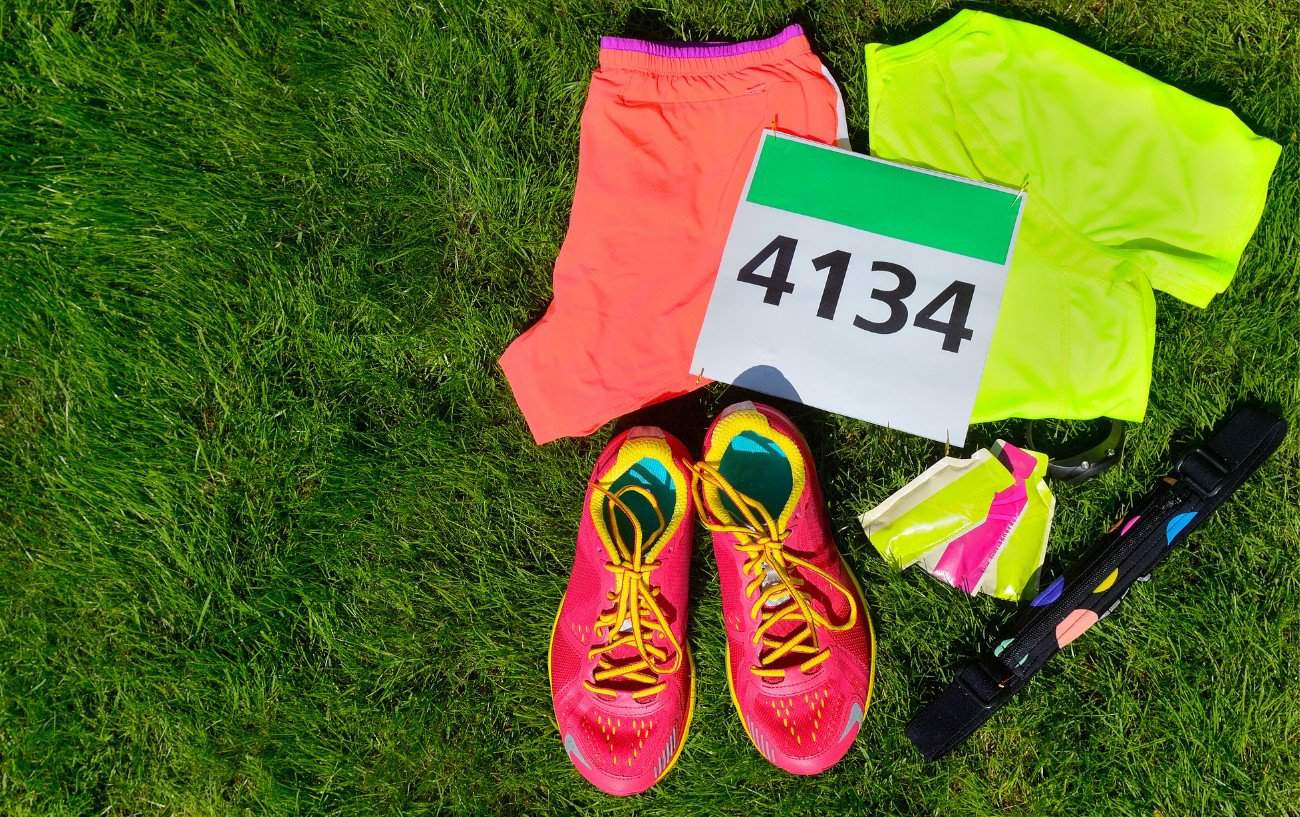
There can be a surprising amount of organization required for a race, and the last thing you want is to be flustered on race morning. Be sure to prepare everything in advance, from what you’ll wear to your logistics to how to get to the start line.
Depending on the race, here are some top tips for getting prepared:
- Check the weather and plan your race-day clothes accordingly.
- Lay out your running clothes the night before.
- Have your race number and safety pins ready the night before.
- Ensure you have your ideal breakfast and beverage of choice on hand.
- Have in mind how you will get to the race location well in advance of race morning.
- Set your alarm.
- Charge your devices, such as your GPS watch, phone, and headphones (if you plan to use them). Nothing worse than dead tech on race morning.
- Pack your fuel and hydration (gels, chews, salt tabs, or bottles) you’ll carry. If there are aid stations, still bring your tried-and-true options.
- Double-check your shoes and gear.
- Know where the start-line bathrooms/porta-potties are, and allow extra time for lines.
- Prepare your post-race bag with comfy clothes, flip-flops, snacks, and a recovery drink for after you finish.
Related: Marathon Training Plan Mistakes: Don’t Make These 9 Errors
#4: get caught up in ‘what ifs’
After months of training sessions, mental preparation, visualization, and time investment, it is easy to get caught up in thoughts of how everything could go wrong just before the race.
Don’t let yourself get caught up in self-destructive thought patterns. Don’t worry, you won’t forget how to run the second the gun goes off. And yes, you can trust your training plan to help you reach your goal.
Try to calm the mind with meditation, a shakeout run, a good book, or a feel-good movie. And remind yourself that you’ve got this.
#5: Wear your legs out
Although a shakeout run has been shown to improve race-day performance, aside from this short pre-race jog, it is best to avoid any other physical activity.
The day before your race, feel free to put your legs up and keep them there All. Day. Long.
If you do end up filling the day before your race with vigorous activity, you run the risk of toeing the start line with tired, worn-out muscles, or the dreaded DOMS (Delayed Onset Muscle Soreness).
This can be especially tough if you’re traveling for a destination race. It’s tempting to spend hours walking around sightseeing or exploring the city. But save that energy for after the race, when you can enjoy your victory lap as a tourist without worrying about sore legs.
This one’s hardly a challenge, just take it easy. You’ve earned it after all.

#6: Let yourself get cold
This one is for those final minutes before the gun goes off. A warm-up is called a warm-up for a reason—you want to avoid standing around at the start line and letting your muscles cool down.
If you skip your warm-up, especially in shorter races, your body won’t be primed to perform, and you’ll likely feel sluggish right out of the gate. Even worse, research shows that failing to warm up increases your risk of running-related injuries.1Fradkin, A. J., Gabbe, B. J., & Cameron, P. A. (2006). Does warming up prevent injury in sport? Journal of Science and Medicine in Sport, 9(3), 214–220. https://doi.org/10.1016/j.jsams.2006.03.026
In those last moments before the race, your goal should be to stay loose and warm. Do a light jog, add a few short strides, and include some dynamic stretches. Dress in layers you can easily shed as the start time approaches, so you’re ready to run at your best.
#7: Skip the carb load
The famous carb load. Why, oh why, would you want to skip it?
Carb loading is an excellent tool for smashing race day, particularly if your race is a long-distance event. If done correctly, it helps to replenish your glycogen stores in the muscles and liver.
Although a night before the race pasta party is all well and good, you actually need to be carb-loading gradually in the lead-up to your race.
Start carb loading two to three days before race day and continue until the morning of the race. That way, you’ll have lots of excess glycogen stored in your muscles and liver that you’ll be able to tap into when it counts during your race.
For a full rundown on carb loading, check out this guide: Carb Loading For Runners: How To Carb Load + Common Mistakes

#8: Carb load too hard, too late
So, we’ve just said that carb loading is good. But you can actually have too much of a good thing. If you go in too hard at the pre-race pasta party, you can be left feeling heavy and drowsy on the morning of the race.
And if you leave all the carb loading to the last minute, your muscles and liver won’t have had time to stock up on all the glycogen possible.
Instead, start fueling gradually in the 2–3 days before the race with balanced, carb-rich meals—think rice, potatoes, oats, or pasta—while avoiding a giant feast the night before. Aim for steady, lighter portions that leave you energized, not stuffed.
#9: Sleep too little
Getting quality sleep is key to being on your A-game.
If you don’t sleep enough, it can negatively affect your running performance, recovery, and overall mood on race day. In fact, the days leading up to your race are just as important as the night before, so try to establish a consistent sleep routine and prioritize rest throughout the week.
That said, it’s completely normal to feel nervous the night before and struggle to sleep soundly. Don’t panic if that happens—what matters more is being well-rested in the days prior.
To give yourself the best chance, go to bed earlier than usual the night before, especially since many races have very early start times.
And don’t feel silly for turning in early—whether it’s 9 pm or even earlier if needed. I’ve proudly gone to bed at 5 pm before a 6 am start, and my body thanked me for it on the starting line.
#10: not hydrate properly
Hydration isn’t all about what you drink while you’re racing, but pre-hydration is often just as important, and shouldn’t be skipped.
If you turn up to a race dehydrated, your performance will suffer. Studies have shown that not being sufficiently hydrated can actually increase your RPE (Rate of Perceived Exertion), the likelihood of experiencing GI problems, your heart rate, and your body temperature.2Sports Dietitians Australia. (2009). Monitoring Body Composition Fluids in Sport How Much Fluid & When? https://www.sportsdietitians.com.au/wp-content/uploads/2015/04/Fluids-in-sport.pdf
On the flip side, there is such a thing as being overhydrated. By knocking back large amounts of water just before a race, you’ll likely feel bloated, heavy, and uncomfortable, and increase your chances of taking unwanted bathroom breaks which will eat into your race time.
But more seriously, being overhydrated for a race can cause a dilution in blood sodium levels which can cause disorientation and headaches.
So, stay consistently hydrated in the few days leading up to your race. Take regular, small sips from an on-hand water bottle and avoid sinking litres of water at a time in the hope that more water = better.

#11: Panic!
Race day is here, and no amount of mentally pouring over the intricacies of your training block is going to change that fact.
It is now time to sit back and trust the process. Trust that your training has been sufficient to get you to the finish line, even if it hasn’t gone 100% to plan (secret: it never does).
You have everything you need within you to finish the race with a smile.
Be proud of yourself, the hard work is over. I like to think of the race as a celebration of all of my training. Get swept away in the excitement and enjoy it.
What do i do now?
Quite often we find ourselves at a loss after a big race. There’s only one thing for it:
Recover like royalty.
You might not feel like running much after a big race. And that’s totally normal. Give yourself a well-earned break and you’ll be back at it when the time is right.
References
RunClub — Free
Join 300,000+ runners in RunClub
Free training plans for every distance, a daily running game, exclusive coaching content, and a real community of runners. Create your free account in 20 seconds — no card.
Already a member? Log in →




Join the conversation
Three times London marathon winner Pinto of Portugal I think, had a pre race ritual of drinking red wine the night before his marathons. I looked it up and it said on occasions he would drink as much as 2 bottles.