



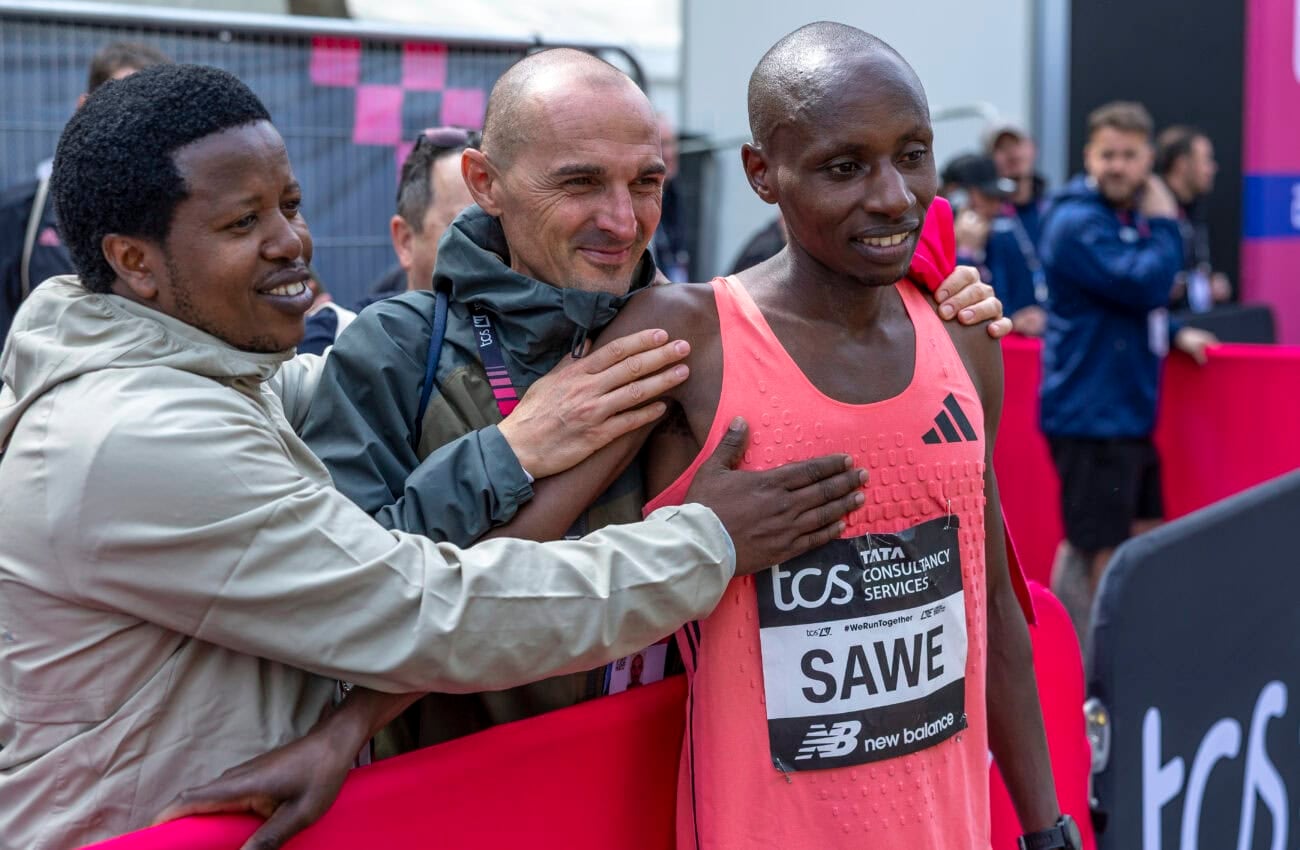
Sebastian Sawe became the first person to run a record-eligible marathon under two hours on Sunday, winning the London Marathon in 1 hour, 59 minutes and 30 seconds. He took 65 seconds off the world record set by the late Kelvin Kiptum. The bigger story for the sport, though, is what he did in the months leading up to the start line.
In a Monday press conference reported by the Associated Press, Sawe said he had voluntarily submitted to roughly 25 out-of-competition drug tests in the two months before London, on top of a similar block before his Berlin attempt last September. The 29-year-old Kenyan and his team built the program in agreement with his coaches and management, and he wants other elites to do the same.
“Doping has become a cancer in my country,” Sawe told the AP. He said he agreed to the testing because the prospect of people looking at his results “with a lot of doubts was not good,” and that he wanted to “show the world that we can run clean and also run fast.”
For those wondering if we can trust this new 1:59:30 marathon world record by Sabastian Sawe since there have been so many Kenyan runners caught doping and using performance-enhancing drugs in recent years…it’s always hard to have 100% certainty, but credit to Sabastian Sawe,… https://t.co/x6hd9r6hdK
— Chris Chavez (@ChrisChavez) April 26, 2026
How the testing program came together
Kenyan distance running has been buckling under doping cases for years. The Athletics Integrity Unit has logged 145 doping cases against Kenyan athletes since the unit was set up in 2017, more than double the next country on the list, Russia. The most recent high-profile case is Ruth Chepng’etich, the women’s marathon world-record holder, who was banned for three years in October after testing positive for the diuretic hydrochlorothiazide. Every Kenyan running fast now runs into the same wall of suspicion.
The funding for Sawe’s transparency program, as reported by the BBC and relayed by the Associated Press, came from Adidas. The brand paid the Athletics Integrity Unit roughly $50,000 to test Sawe frequently over a 12-month period, including about 25 out-of-competition tests before Berlin and a similar block before London. For context, most pros are not tested 25 times in a calendar year, let alone in two months.
Sawe described the cadence to Sporza after Berlin. “That is why I wanted to undergo these tests, both blood and urine, about 2 to 3 times a week,” he said. “And one day I was even tested twice: early in the morning and late in the evening. I wanted to show everyone that I do it clean, the right way.”
This is the part of the story that has been getting lost in the time. The 1:59:30 is the headline. The testing is the campaign.
Sawe’s challenge to the rest of the field
Sawe is now openly asking other elites to volunteer for the same kind of program. He framed it to the AP as something the sport owes itself.
“Everyone will feel comfortable running with his fellow athlete because there will be no doubt thinking that someone is using what he’s using,” he said. “And so, it’s important to run clean and to show the world that talent, with hard work, discipline and patience” can lead to big achievements.
The pressure is already landing on his peers. On a recent episode of the Citius Mag podcast, recorded after he ran 2:06:04 at Boston, the Canadian marathoner Rory Linkletter cast doubt on whether Jacob Kiplimo, the Ugandan with a stunning half marathon world record, is competing clean. A LetsRun forum thread summarising the clip put the obvious follow-up bluntly: if Kiplimo is clean, why not do what Sawe did?
There is a real cost to that answer. The same LetsRun thread captured what other commenters pointed out about Sawe’s regimen — a team of officials can turn up at your home unannounced, at any hour, and draw blood. Miss them, and you risk a ban. Sawe and his coaches have publicly called the schedule exhausting. That is part of why no one else has done it at this volume.
It is also why the model is so hard to argue with.
RunClub
Get more running stories — join RunClub
Daily running news, a community of 300,000+ runners, free training plans for every distance, and a daily running game. Free to join — no card.
Already a member? Log in →











Join the conversation
This is exactly the same strategy Lance Armstrong used