


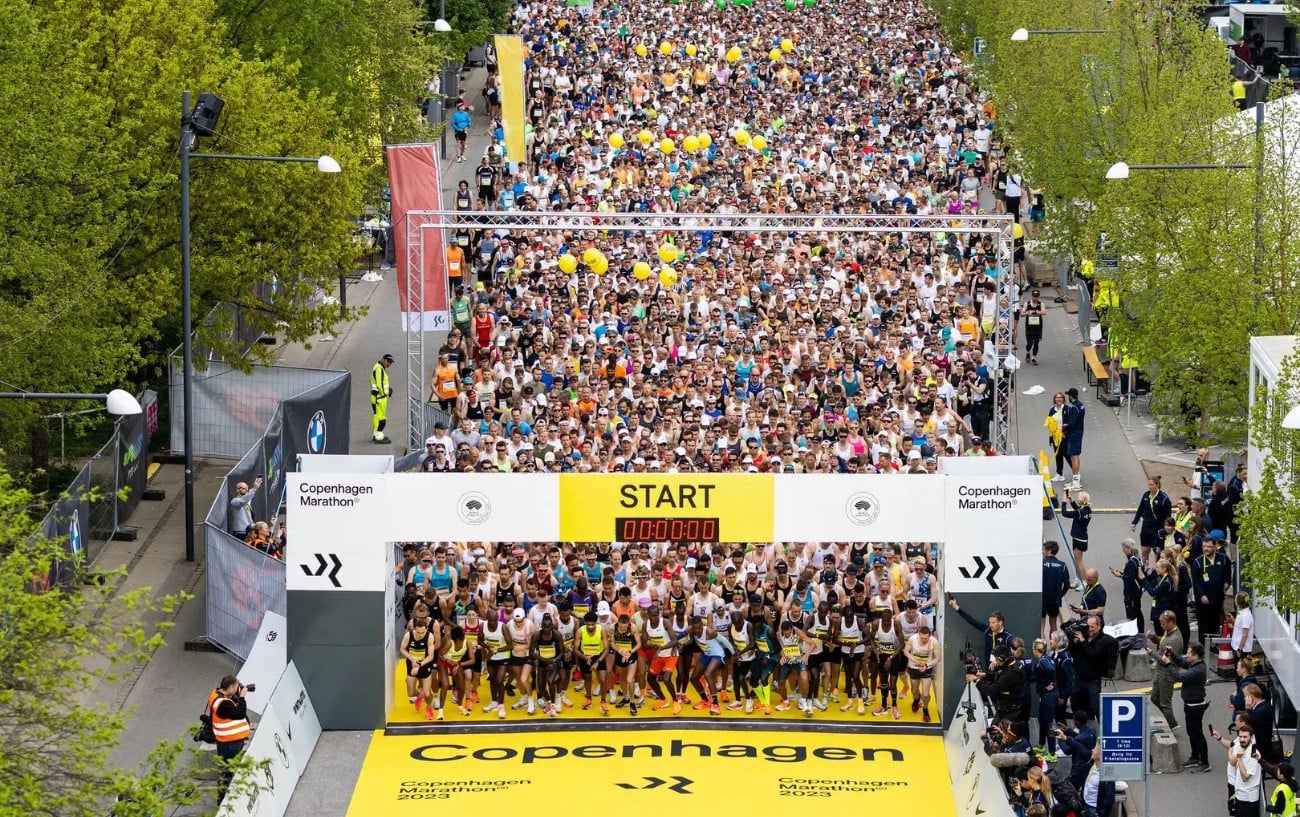
The 2027 Copenhagen Marathon drew 80,937 applications for 35,000 spots, the first time in the race’s history that bibs were assigned by random draw rather than first-come, first-served, organizers announced this week. The 43 percent acceptance rate is generous by current standards. Most of the big ones are far worse, and Copenhagen’s switch is the latest example of a trend that has quietly become the default across major marathons.
London now sits at the extreme end. London Marathon Events confirmed a world record of 1,338,544 applications for the 2027 race, an 18 percent jump on the previous record and more than double the 2024 figure. The TCS New York City Marathon drew 240,000 applicants for the 2026 edition and accepted roughly one percent of them, the lowest acceptance rate in the race’s history, according to Canadian Running.
Tokyo runs in a similar band, taking in around 300,000 applicants for 37,000 spots. Chicago drew more than 200,000 applicants for about 45,000 places in its 2026 lottery. Sydney, the newest Abbott World Marathon Major, took in 123,000 ballot entries for 2026, a 56 percent jump year-over-year. Valencia, long a favorite for runners chasing flat-course personal bests, switched to a ballot for the 2026 race.
A pattern this consistent stops being a pattern and starts being the default.
Why this is happening
The running boom is the simplest answer, and it is mostly accurate. RunSignup’s 2025 RaceTrends report found that race participation in the U.S. grew 5 percent from 2024 to 2025, on top of 8 percent growth in 2024 and 11 percent in 2023. Marathon finishers specifically jumped 14.6 percent in 2024, per the same report. The 2025 TCS New York City Marathon set a world record as the largest marathon ever, with 59,226 finishers.
The growth is not evenly spread. Run clubs have boomed since the pandemic and turned into social hubs in cities like London, Brooklyn, and Berlin. Marathons have leaked out of the endurance niche and into the broader culture, helped along by social media, by celebrity finishers, and by the running shoe arms race that has made the marathon feel both faster and more attainable.
At the same time, the supply of race bibs is more or less fixed. Streets only hold so many people. Aid stations only stretch so far. London is likely expanding to a two-day format with a target of 100,000 runners, but most majors are at or near their physical capacity. So the math has only one outlet.
The case for ballots
Race directors have a defensible argument. When Copenhagen sold out in under 24 hours in 2026, runners in Asia, Australia, and the U.S. West Coast effectively had no shot. A first-come, first-served system, Sparta CEO Dorte Vibjerg said, gave runners who happened to be near a screen at the right moment a meaningful edge over runners who were not. “It has given far more runners a genuine opportunity to secure a place on the start line,” Vibjerg said of the new lottery.
Ballots also kill the bot problem. Race entry systems used to crash under refresh-button traffic and bots that hoarded bibs for resale. Copenhagen banned resale of race numbers entirely this year, replacing it with a 99-kroner insurance policy that refunds runners who cannot start because of illness or injury. Event director Lars Nissen, speaking to Danish broadcaster DR, said the change came after “hundreds were left holding numbers they couldn’t resell before this year’s race.”
Then there is the demographic argument. Copenhagen’s new lottery brought in applicants from more than 160 nationalities, up from 122 on the 2026 start line, organizers said. Women made up 37 percent of applicants, well above the 30 percent share in 2026. London Marathon Events reports near parity in male and female ballot entries. A random draw, defenders argue, opens the door to runners who do not have insider knowledge, fast broadband, or the luxury of being free at exactly 9 a.m. local time.

The case against
The pushback is real, and it comes mostly from runners who feel they did everything right and still got nothing.
Some of it is structural. As Nissen acknowledged to DR, “no matter what we do, there is criticism.” If a race uses first-come, first-served, runners complain about server crashes. If it uses qualifying times, runners complain about exclusion. If it uses a lottery, runners complain about luck. The honest version of the trade-off is that no system is going to leave 200,000 disappointed applicants feeling good.
But the lottery criticism has some specific edges. The most common is that effort no longer counts. Training for a marathon takes months of structured running, often with a target race in mind. A runner who builds a 20-week plan around Chicago and then loses the lottery has to either pivot to a different race or sit out the season. Some runners now apply to four or five lotteries in parallel as a hedge, which adds entry fees, planning chaos, and a higher chance of clashing race dates.
Then there is what some call credit-card fairness. Most majors have backdoors via charity partners. Charity entries are the most common, but the fundraising minimums for London, NYC, and Boston routinely run between $3,000 and $10,000. Tour operator packages bundle a guaranteed bib with hotel and flights and can cost several times the race entry on its own. Both routes work. Both also tilt access toward runners with more money. A runner in Nairobi or Manila who clears the lottery and gets in still has to clear flights and visas, while a runner in London with a credit card and a flexible job has multiple paths in.
A small number of legal challenges have surfaced too. In 2016, two prospective NYC Marathon runners sued the New York Road Runners alleging that its lottery, with a non-refundable processing fee, met the definition of an illegal lottery under state gambling law, Gothamist reported at the time. The case did not get far, but the underlying question, whether a paid lottery for a finite good is the right way to allocate something runners feel they have earned, never quite went away.
Possible solutions
Nobody has a clean answer, but a few partial fixes are already in the field.
The clearest is streak protection. NYC’s longstanding 9+1 program gives runners guaranteed entry if they volunteer once and run nine NYRR races in a year. London now offers an automatic second-draw entry if applicants donate their fee upfront, plus a free hydration vest and charity donation if they miss out twice. Several races, including Tokyo and Berlin, have informal multi-year ballot weighting that tilts toward repeat applicants.
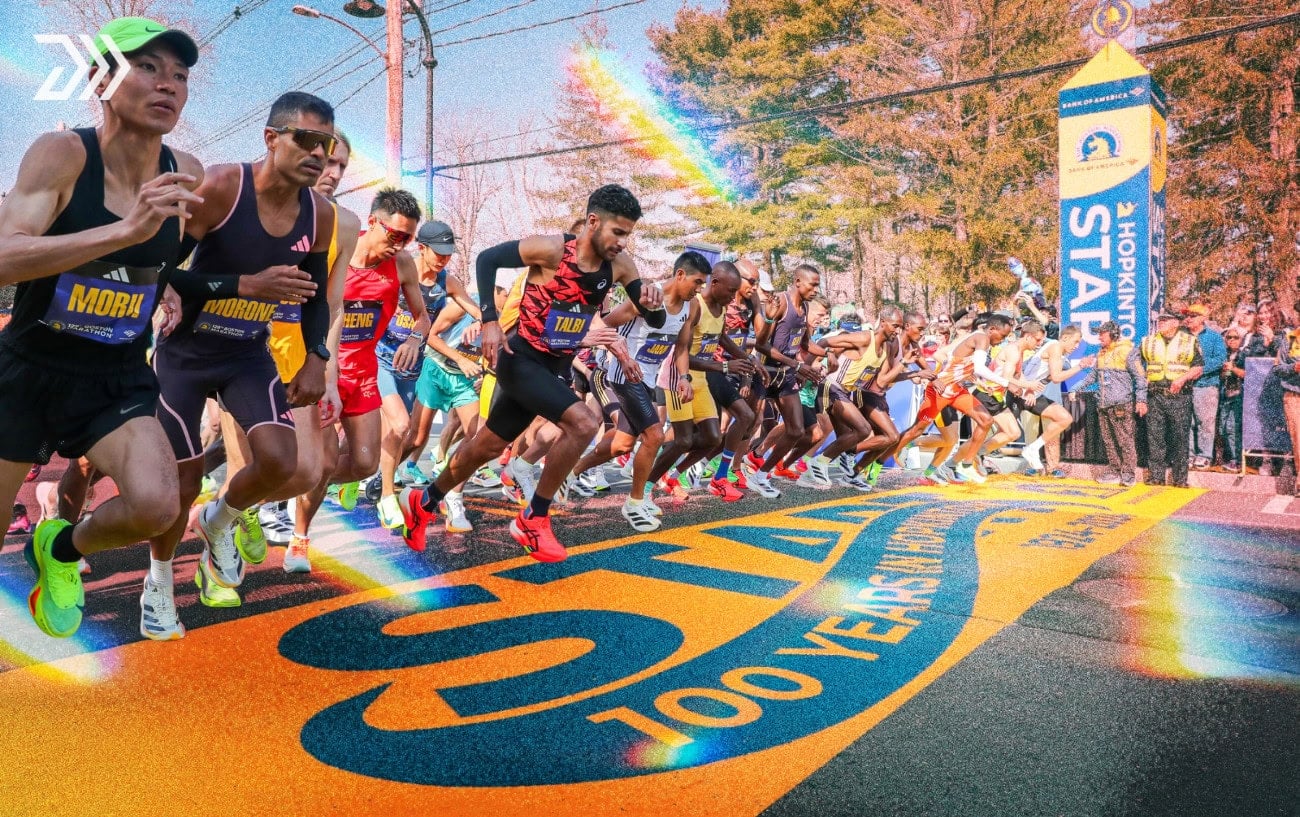
The second is qualifying-time access, the Boston model. Boston caps roughly 80 percent of its field through age-graded qualifying times. The system has its own fairness problems, including the rolling cutoff that has left some runners who hit the official standard locked out anyway, but it offers a route that rewards training rather than chance.
The third is expansion. London’s two-day plan, Sydney’s growth, and the boom in mid-size city marathons like Valencia, Seville, and Rotterdam all chip away at the bottleneck. Whether they can scale fast enough to keep up with demand is the open question.

Well then, where does this leave runners?
There is no neutral answer to whether the lottery is fair. Whether you think 80,937 people competing for 35,000 Copenhagen bibs is a reasonable outcome of a free draw, or a sign that something has broken in how we ration a growing sport, mostly depends on whether your name came up.
What is clear is that the lottery is no longer an exception. It is the entry system for almost every race a runner with a bucket list wants to do. For now, the practical move is probably to apply to several, plan for the backup of a regional race, and accept that some part of the marathon journey now happens before training even starts. Whether the sport is comfortable with that is a question the runners themselves will keep answering, one ballot at a time.
RunClub
Get more running stories — join RunClub
Daily running news, a community of 300,000+ runners, free training plans for every distance, and a daily running game. Free to join — no card.
Already a member? Log in →









Join the conversation
If someone has done 35 Bostons they\'re in automatically has a legacy runner but the point is a good one. Charity and tourist runners should have to meet a marathon\'s qualifications that everyone else has to meet. We need more marathons, or the races with too many runners trying to get in need to expand to multiple days or Sundays.
To my mind, the only real problem is the fact that a fast runner can keep qualifying and running the race, over and over taking up a spot for someone that has never gotten in. The fact of the matter is that only a small percentage of runners in the world can meet Boston Qualifying times, which mostly set the qualifying bar for all the other races. At what point does it stop being fair that a fast runner locks up a spot for their 35th Boston marathon when an 70 year old finally qualified for the first time and lost out because of the 5 minute reduction. I get wanting to keep the race elite, but their can be a balance between letting in people who put in the work, but just are not that fast and still keeping most of the field fast.
One who can not meet Boston Time Q, has no business to take away a spot from a Runner who has trained and can run BQ. If you can\'t make BQ, go to 5K and 10K County runs, don\'t saturate course in a Marathon.