

Nitrate Supplementation and Endurance Performance
Appropriate nutrition is a very important aspect in the preparation of athletes for proper training and success in competition. Over the years, numerous dietary protocols and supplements have been used in attempts to enhance sport performance, but research supporting such practices was minimal or nonexistent. With the development of the discipline of exercise and sport science during the latter part of the 20th century, the application of nutrition to sport received increasing research attention and sport nutrition became a recognized research specialty. For example, in 1991, the first issue of the International Journal of Sport Nutrition was published.
An appropriate sport-nutrition program has several major objectives, including the following:
- Promote good health
- Promote adaptations to training
- Recover quickly after each training session
- Perform optimally during competition
The first goal of any diet planned for an athlete is to promote good health, and such diets generally are rich in fruits and vegetables, whole grains, lean meat, fish and poultry, and low-fat dairy products. Such diets, such as the Dietary Approaches to Stop Hypertension plan, or the DASH diet, are highly recommended to promote health. They are rich in healthy carbohydrates, fats, and protein to provide adequate energy, vitamins, and minerals to help support optimal nutrition for the athlete.
As athletes, competitive runners are always looking for various ways to improve their performance, be it a new way of training, a new pair of shoes, or a new diet. Relative to the latter, many runners complement their diet with the use of various dietary supplements, often referred to as sport supplements. Numerous sport supplements are marketed to runners. However, research suggests that only a few have the potential to enhance performance in specific running events. For example, creatine monohydrate may improve sprint performance, sodium bicarbonate may be effective for middle-distance runners, and carbohydrate supplementation may enhance marathon and ultramarathon running performance. Readers of Marathon & Beyond are undoubtedly familiar with the possible benefits of carbohydrate intake before and after training and competition.
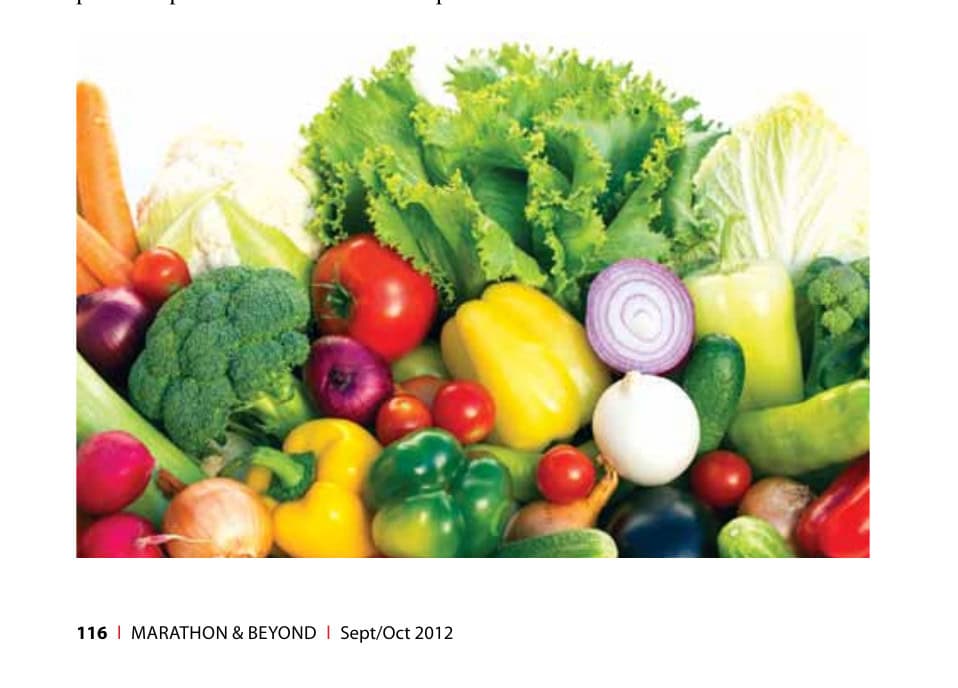
Most healthy diets are rich in fruits and vegetables, both of which may contain substantial amounts of carbohydrate. However, certain vegetables may contain an inorganic substance that may help enhance their health benefits but which may also help enhance endurance performance in runners and other endurance athletes.
Nitrates and nitric oxide
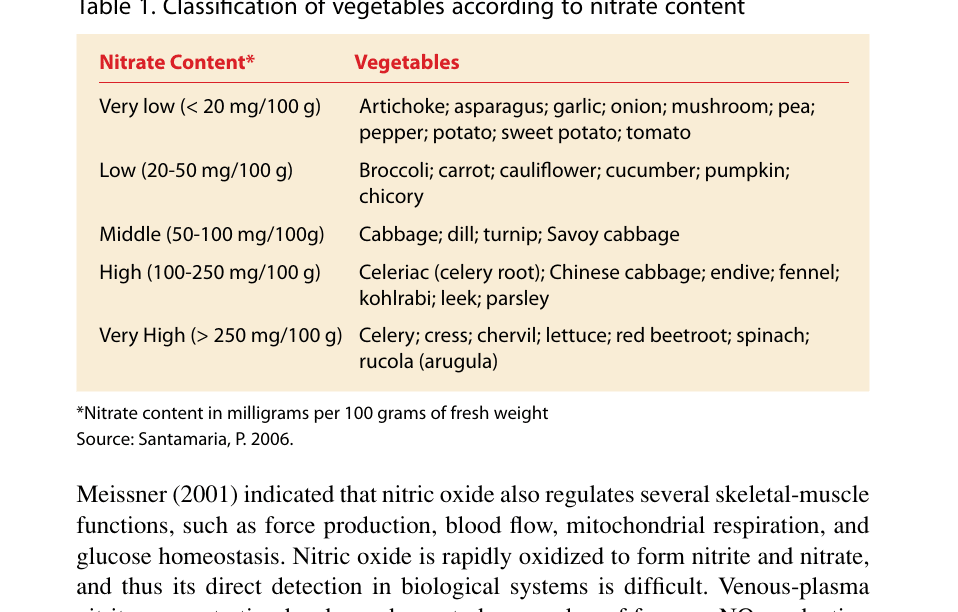
Nitrates are natural inorganic components of plant foods. Hord and others (2009) note that approximately 80 percent of human dietary nitrate intake is derived from vegetable consumption but also note that the total dietary nitrate intake is determined by the type of vegetables consumed, the levels of nitrate in the vegetables, and the amount of vegetables consumed. Table 1 provides a classification of vegetables based on nitrate content, given in milligrams per 100 grams (3.5 ounces) food weight. Other sources of nitrate in the human diet include sodium nitrate as a preservative in processed meats and varying amounts in drinking water.
In the human body, investigators have discovered that dietary nitrate can serve as a source for the production of a diverse group of nitrogen metabolites, particularly nitric oxide (NO) (Hord et al. 2009; Carlström et al. 2011). In brief, after ingestion, nitrate is rapidly absorbed in the upper gastrointestinal tract, circulates to the salivary glands where it is extracted, secreted in saliva into the mouth, and converted to nitrite by bacteria; swallowed nitrite enters the systemic circulation and then can be further reduced in blood vessels, heart, and skeletal and other tissues to form bioactive NO (Larsen et al. 2010). It should be noted that NO may be formed by other substances in the body, such as the dietary amino acids L-arginine and citrulline.
Nitric oxide may affect various physiological functions important to health and exercise performance. In particular, nitric oxide is a potent vasodilator. Stamler and Meissner (2001) indicated that nitric oxide also regulates several skeletal-muscle functions, such as force production, blood flow, mitochondrial respiration, and glucose homeostasis. Nitric oxide is rapidly oxidized to form nitrite and nitrate, and thus its direct detection in biological systems is difficult. Venous-plasma nitrite concentration has been shown to be a marker of forearm NO production (Allen et al. 2005). Using such methodology, nitric oxide has been studied for its potential positive effect on exercise performance.
We all know that proper exercise is one of the most recommended practices to promote good health, and it is also the most effective means to enhance running performance. One of the mechanisms whereby proper exercise may improve both health and performance is via an increased production of NO.
Proper exercise training is associated with many resultant health benefits, particularly prevention of diseases of the cardiovascular system. One such health benefit is a reduction in blood pressure; high blood pressure is one of the primary risk factors for coronary heart disease. Reviews have shown reduced blood pressure following aerobic exercise (Kelley and Kelley 2008). Concomitantly, studies have shown that mild aerobic-exercise training could increase the plasma markers of NO production in both younger and older individuals, but these levels decreased to the base levels following eight weeks of detraining (Maeda et al. 2004; Maeda et al. 2001; Wang 2005).
Some investigators theorize that NO may be a major factor supporting improvement in exercise performance (Gilchrist et al. 2010). Studies have shown (1) that increases in markers of nitric-oxide synthesis during exercise were positively correlated with exercise performance and that an impaired increase in plasma nitrite may limit exercise capacity (Rassaf et al. 2007), (2) that there is a favorable effect of plasma-nitrite concentration on high-intensity endurance exercise (Dreissigacker et al. 2010), and (3) that subjects who could exercise hardest in a treadmill VO2peak test also produced the most nitric oxide (Allen et al. 2005).
Although a vigorous exercise training program may be a very effective means to increase nitric-oxide production, some athletes may attempt similar increases via other means in attempts to go beyond training and obtain a competitive edge.
Supplementation protocols to enhance nitric-oxide production and exercise performance
Given the potential performance-enhancement effects of nitric oxide, an increase in its production during sports competition would be beneficial to many athletes. Although the role of nitric oxide was unknown at the time, various reports indicate extensive use of ergogenic substances by athletes, including the nitric-oxide-producing drug nitroglycerin, in the late 19th century (Ferro 2007; Mayes 2010). Fast-forward to the 21st century, in which recent reports indicate that nitric-oxide dietary supplements are popular within sport communities (Bloomer et al. 2012; Bloomer et al. 2010; Maughan et al. 2011).
Various substances have been used to increase production of nitric oxide in humans. Drugs such as nitroglycerin and amyl nitrate are potent vasodilators via nitric-oxide production. Although such drugs may be purchased on the Internet, their use may pose some serious health threats and will not be discussed relative to their ergogenic potential. Inorganic nitrate and nitrite salts may also increase nitric-oxide levels. Both salts may be used as food additives, and both can be classified as either a drug or a food depending on how they are administered (Allen 2011). Several studies have used sodium nitrate to evaluate the effect of NO on exercise performance, and the results will be presented below. However, as noted in the following section dealing with cautions in using NO-producing agents, use of such salts is not recommended. Dietary supplements, particularly L-arginine, and food sources of nitrates have also been studied as a means to increase nitric oxide and enhance exercise performance, and such protocols constitute the majority of current research studies.
Supplementation with nitrate salts
Nitrate salt supplementation has been studied for its ergogenic potential, as have some new salt preparations marketed as dietary supplements. In one study, cyclists consumed sodium nitrate (10 milligrams/kilogram body weight) prior to an ergometer test consisting of four six-minute submaximal workloads with increasing intensity and then, after a short rest period, an incremental exercise test until exhaustion. The supplement increased plasma nitrate and nitrite but significantly reduced peak oxygen uptake and the ratio between oxygen consumption and power at maximal intensity. This reduction of oxygen consumption occurred without changes in the time to exhaustion (Bescós et al. 2011). In another study, subjects received dietary supplementation with sodium nitrate for two days before undertaking maximal-exercise tests consisting of an incremental exercise to exhaustion with combined arm and leg cranking on two separate ergometers. Similar to the preceding study, supplementation was associated with a decrease in maximal oxygen uptake with a trend toward an increase in exercise time to exhaustion (Larsen et al. 2010). As noted in a following discussion, the findings of these two studies may be associated with enhanced performance.
Supplementation with amino acids
As noted previously, L-arginine may serve as substrate for the production of NO in the body. Most dietary supplements marketed as a means to promote NO production contain L-arginine (Bloomer et al. 2010).
Although one study (Bailey et al. 2010a) reported a reduced oxygen uptake and increased time to exhaustion in a severe-intensity exercise test, most studies report no ergogenic effect of L-arginine supplementation on various tests of aerobic endurance. For example, McConell and others (2006) actually infused arginine into endurance-trained cyclists during a cycling exercise protocol and reported no effect in a 15-minute maximal cycling time trial following two hours of cycling. In another endurance-cycling study, Abel and others (2005) reported that arginine aspartate supplementation had no effect on cycling endurance to exhaustion.
Some studies even suggest that L-arginine or citrulline supplementation may impair endurance-exercise performance. Buchman and others (1999) provided arginine or a placebo to marathon runners and speculated that arginine may be ergolytic, as the predicted times of the runners receiving arginine were slower than those receiving the placebo. Hickner and others (2006) reported that citrulline supplementation had no performance-enhancing effect on treadmill run time to exhaustion, and results of their study suggested that the supplement actually impaired run time to exhaustion.
The majority of studies indicate that L-arginine supplementation does not enhance exercise performance, and the major reason may be that while L-arginine supplementation may increase plasma levels of L-arginine, supplementation has rather consistently been shown to not increase nitric oxide or blood flow to the exercising muscle (Bescós et al. 2009; Tang et al. 2011; Willoughby et al. 2011).
Supplementation with beetroot juice
As noted previously, various vegetables may be excellent sources of dietary nitrate. In particular, beetroot juice has been studied for its performance-enhancing potential. Beetroot is the term used in England for the vegetable we know in the United States as the red beet. Doses used in studies approximate 300–500 milligrams of nitrate, an amount found in about 500 milliliters of beetroot juice, and there is no evidence that higher amounts are more effective (Lundberg et al. 2011).
Various study protocols have been used to evaluate the ergogenic effect of nitrate supplementation, include the following: various placebos including nitrate-depleted beetroot juice; various time frames of supplementation including acute (several hours) and chronic (several days) before testing; various dosages; multiple dependent variables; varying levels of exercise intensity; and specific exercise tasks. Most aerobic-endurance exercise tests involved cycling or treadmill running; although the two exercise tasks are different, one could assume that enhanced performance in one would be applicable to the other. The following represent some of the key findings in an overall review of these studies.
Increase of nitric oxide. Numerous studies have shown that dietary nitrate supplementation, usually in the form of beetroot juice, increases plasma-nitrite concentration, a marker for NO (Bailey et al. 2009; Lansley et al. 2011a; Lansley et al. 2011b; Vanhatalo et al. 2010). Such increases were noted after both acute and chronic supplementation.
Reduced oxygen cost of exercise. One of the most consistent findings from studies is a reduced oxygen cost of exercise or increased oxygen efficiency following either acute or chronic dietary-nitrate supplementation. Relative to acute supplementation, Vanhatalo and others (2010) reported significant reductions, about 4 percent, in the oxygen cost of moderate-intensity cycling exercise following both acute (2.5 hours prior to testing) and chronic (daily for five and 15 days) supplementation. These investigators concluded that dietary-nitrate supplementation acutely reduces the oxygen cost of submaximal exercise and that these effects are maintained for at least 15 days if supplementation is continued. Other studies support similar effects with chronic supplementation of beetroot juice. Lansley and others (2011b) reported a reduced oxygen cost of treadmill walking, moderate-intensity running, and severe-intensity running following four to five days of supplementation. Cermak and others (2012) reported a significant reduction in oxygen consumption in cyclists during 60 minutes of submaximal cycling following six days of supplementation, and in two studies, Bailey and others (2010b; 2009) reported a reduction in the oxygen cost of low-, moderate-, and high-intensity exercise, involving either cycling or knee extension exercise, following four to six days of supplementation. In a competitive cycling time-trial study, Lansley and others (2011a) reported that the oxygen-uptake values were not significantly different between the dietary-nitrate supplement and placebo during any stage of the trial, but the power outputs were increased, suggestive of improved oxygen efficiency. In yet another study, Lansley and others (2011b) concluded that the positive effects of six days of beetroot supplementation on the physiological responses to exercise, primarily a decrease in the oxygen cost of walking and running, can be ascribed to the high nitrate content per se.
Increased exercise time to exhaustion. As a measure of exercise performance, many studies use tests that involve exercise to exhaustion, such that the subject can no longer continue to exercise at a given rate or stops because of complete fatigue. Using such protocols, investigators have reported significant improvement in exercise tests to exhaustion following beetroot supplementation. Lansley and others (2011b) reported improved treadmill run time to exhaustion in a severe-intensity treadmill test after four and five days of supplementation. Bailey and others (2010b; 2009) utilized various protocols involving high-intensity exhaustive knee-extension and cycling tests and found that four to six days of supplementation improved exercise time to exhaustion. In their study of both acute and chronic supplementation protocols, Vanhatalo and others (2010) reported that supplementation increased both work rate and peak power in a ramp-incremental cycle-ergometer exercise protocol.
Improved performance in sport-specific tests. When conducting research specific to exercise or sport performance, scientists generally recommend consideration of two factors. One, the exercise task should be as applicable as possible to actual sport performance, and two, subjects should be trained in the sport or exercise task. Although exercise tests to exhaustion may be useful to study the effects of performance-enhancing substances, they do not replicate actual sports performance. A more relevant approach involves sport-like competitions, such as time trials under laboratory conditions, which are attempts to mimic actual types of sport performance. Relative to the training status of subjects in studies of dietary-
nitrate supplementation, Bescós and others (2012) noted that most studies showing enhancement of exercise performance have used untrained males as subjects.
However, two studies using a simulated sport-competition protocol and trained cyclists have reported performance-enhancing effects of both acute and chronic beetroot-juice supplementation. In one study, nine club-level competitive male cyclists consumed beetroot juice 2.5 hours before testing. Compared with the placebo trial, the cyclists significantly improved both power output and performance in both a 4-kilometer and 16.1-kilometer cycling time trial. Oxygen consumption was similar during the stages of the time trial, suggesting beetroot juice improves cycling economy (Lansley et al. 2011a). In the second study, trained male cyclists consumed beetroot juice for six days and on test day performed 60 minutes of submaximal cycling followed by a 10-kilometer time trial. Similar to the acute supplementation study, both power output and time-trial performance were significantly improved with beetroot supplementation, although the performance difference between the two trials was relatively small (Cermak et al. 2012).
Collectively, these data provide rather strong support for a performance-enhancing effect of dietary-nitrate supplementation.
Possible mechanisms of nitrate supplementation on performance enhancement
Dietary nitrate supplementation, as noted, may be related to favorable effects on both cardiovascular health and exercise performance. Machha and Schechter (2011) note that multiple mechanisms may underlie such beneficial effects, and such mechanisms may be applicable to both health and exercise performance. Specific to exercise performance, Bescós and others (2012) suggested that improvements following supplementation with dietary nitrates may be related to the increase in NO production and subsequent enhancement of oxygen and nutrient delivery to active muscles. Larsen and others (2010), noting the effect of dietary-nitrate supplementation to reduce the oxygen cost of exercise during maximal exercise, suggested that two separate mechanisms are involved: one that reduces oxygen uptake and another that improves the energetic function of the working muscles. In subsequent research, Larsen and others (2011) reported improved oxidative-phosphorylation efficiency in skeletal-muscle mitochondria, which correlated to the reduction in oxygen cost during exercise. They noted that after nitrate supplementation, skeletal-muscle mitochondria displayed an improvement in oxidative-phosphorylation efficiency (P/O ratio), which was correlated with the reduction of oxygen cost during exercise. This finding suggests a more efficient production of ATP for muscle contraction from a given amount of oxygen. However, the exact mechanism is not known at this time, and other factors may be involved.
Considerations on use of nitrates for performance enhancement in sport
Lundberg and others (2011) note that although the true performance-enhancing effects of nitrate are yet to be proven under actual competitive conditions, it is clear from Internet forums, articles, and discussions within the sports community that the use of nitrate supplementation currently is spreading rapidly among athletes. They, along with others, suggest caution in the use of various nitrate or nitrite preparations.
Drugs and salts
Lundberg and others (2011) note that drugs that contain organic nitrates and nitrites, such as nitroglycerine and amyl nitrite, are extremely potent vasodilators, and unintentional overdosing may lead to fatal vascular collapse. At this time, they also advise athletes to refrain from the uncontrolled use of nitrate and nitrite salts as dietary supplements, indicating that while the acute toxicity of nitrate is very low or absent, any confusion leading to a large unintentional intake of nitrite or organic nitrates and nitrites is potentially life threatening. For example, consuming various doses of nitrite, which may be found in dietary supplements, in conjunction with vasodilation erectile-dysfunction drugs, such as Viagra and Cialis, may cause health problems (Allen 2011).
Dietary supplements
As noted previously, most “nitric oxide” dietary supplements marketed to athletes contain L-arginine as the active ingredient, but there is little scientific evidence that L-arginine supplementation enhances exercise performance. Other supplements may contain different ingredients marketed to deliver “real nitric oxide” to the circulation, but research with such supplements is currently limited.
Food sources of nitrate
In general, most investigators indicate that there is very little harm, and possibly some health benefits, associated with consumption of healthful foods, particularly vegetables and vegetable juices, rich in nitrates (Allen 2011; Lundberg et al. 2011; Machha and Schechter 2011). One key research group notes that the dose of nitrate that reduces oxygen cost efficiently is in the range 300–500 milligrams, and there is no evidence that higher doses would increase the effects further (Lundberg et al. 2011). However, these investigators indicate a potential risk exists with nitrate-containing vegetable juice if stored inappropriately. Contamination of the beverage by nitrate-reducing bacteria may then occur, leading to substantial nitrite accumulation over time.
Possible health concerns
There appears to be some controversy regarding health concerns of dietary nitrates. Some evidence suggests that they may be harmful to health, and some government regulations may regulate the amount found in food and water. On the other hand, some evidence suggests that they may be beneficial to health and may underlie the rationale for proposed healthful diet plans.
Possible adverse health effects. In its Human Health Fact Sheet, the Argonne National Laboratory (2005) indicated that nitrates, a normal component of the human diet, by themselves are relatively nontoxic. However, after ingestion, most nitrate is converted into nitrite, which may pose some health concerns. In infants, nitrate may more readily be converted in the stomach to nitrite, which could impair hemoglobin metabolism and cause a condition known as blue baby, which can lead to weakness, loss of consciousness, coma, and death. In adults, nitrites in the stomach may also react with food proteins to form N-nitroso compounds, or nitrosamines. In particular, nitrosamines are formed when processed meats, which may be rich sources of added nitrates and nitrites, are cooked, especially with high heat. Nitrosamines have been found to be carcinogenic in animals, particularly related to stomach cancer, but evidence is inconclusive relative to their potential to cause cancer in humans (Argonne National Laboratory 2005; Gilchrist et al. 2010). Nevertheless, various governmental groups have developed toxicity values for dietary nitrate and nitrite intake, including water and food supplies, and particularly for food additives in processed meat and fish (Hord et al. 2009).
However, in a recent review, Hord (2011) noted that current regulatory limits on nitrate intakes, based on concerns regarding potential risk of carcinogenicity and methemoglobinemia, are exceeded by normal daily intakes of single foods, such as spinach, as well as various healthful diet plans. He issued a call for regulatory bodies to consider all available data on the beneficial physiologic roles of nitrate and nitrite in order to derive rational bases for dietary recommendations.
Possible beneficial health effects. Many scientists contend that dietary nitrate and nitrite, when converted to NO, rather than contributing to adverse health effects may exert some beneficial health effects in the body, particularly promotion of optimal cardiovascular health and prevention of vascular disease (Bryan et al. 2007; Gilchrist et al. 2010). For example, research has shown that the DASH diet, which may be rich in vegetables and nitrates, is an effective means to lower blood pressure (Frisoli et al. 2011). Larsen and others (2006) found that sodium-nitrate supplementation, in amounts equivalent to 150 to 250 grams of nitrate-rich vegetables as found in the DASH diet, significantly reduced diastolic blood pressure in young, normotensive subjects. They concluded the reduced blood pressure was associated with nitrate supplementation alone and was similar to that seen in DASH studies. Dietary nitrate content may also underlie the health benefits of the Mediterranean diet.
Practical advice
Andrew M. Jones, an expert in nitrate-supplementation research, offers some practical advice for athletes, and here is a summarization of some of his key points (Jones 2011).
- The available evidence suggests that dietary supplementation with approximately 300–450 milligrams of nitrate results in a significant increase in plasma-nitrite concentration and associated physiological effects.
- This dose can be achieved through the consumption of 0.5 liter of beetroot juice or an equivalent high-nitrate foodstuff.
- Following ingestion, plasma-nitrite concentration typically peaks within two to three hours and remains elevated for a further six to nine hours before declining toward baseline. Thus, athletes should consume the nitrate three to nine hours prior to training or competition.
- A daily dose of a high-nitrate supplement is required if plasma-nitrite concentration is to remain elevated, but the effects of sustained dietary-nitrate supplementation on adaptations to training are not clear.
- There is the possibility that uncontrolled high doses of nitrate salts might be harmful to health.
- Natural sources of nitrate are likely to promote health.
- Athletes wishing to explore the possible ergogenic effects of nitrate supplementation are recommended to employ a natural, rather than pharmacological, approach.
Sources of dietary nitrate
As noted in table 1, several vegetables are rich sources of dietary nitrate. Beetroot juice, in regular or concentrated form, has been used in most studies. Finding local sources of beetroot juice, or red beet juice, in the United States may be difficult. However, such products may be found on the Internet at various sites, such as Amazon. You may also Google the term “beetroot juice.” Prices vary. For example, a 16.9-ounce bottle of Biotta beetroot juice may cost about $5 to $7, whereas a 32-ounce bottle of Vitacost beetroot juice costs about $8.50. Beetroot powder and tablets are available, but no research evaluating their effects has been uncovered.
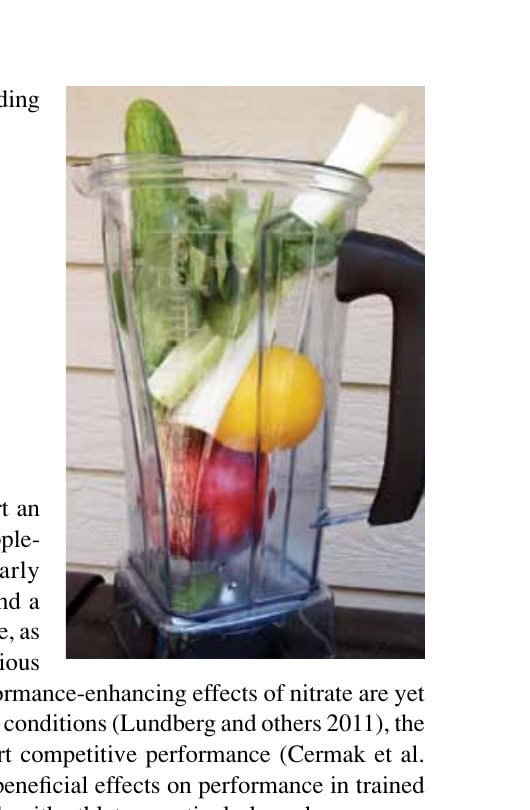
One possibility is to make your own juice from red beets. Use a blender to mix fresh red beets and dilute with carrot and/or celery juice; modify to your taste. Blended drinks with other nitrate-rich vegetables may contribute rich sources. In the February 5, 2012, issue of Parade, Dr. Mehmet Oz provided a formula for a drink rich in fiber, antioxidants, and vitamins and low in calories; it also would be rich in nitrates. Blend the following ingredients to make three to four servings:
ings. You could experiment with adding red beets as well.
- 2 cups spinach
- 2 cups peeled cucumber
- 6 stalks celery
- 1 bunch parsley
- 1 teaspoon ginger
- 2 peeled apples
- Juice of 1 lime
- Juice of 1/2 lemon
Future research
The current research findings support an ergogenic effect of dietary-nitrate supplementation. Laboratory studies clearly support an increase in nitric oxide and a decrease in the oxygen cost of exercise, as well as improved performance in various exercise tests. Although the true performance-enhancing effects of nitrate are yet to be proven under actual competitive conditions (Lundberg and others 2011), the two studies involving simulated sport competitive performance (Cermak et al. 2012; Lansley et al. 2011a) did find beneficial effects on performance in trained cyclists. However, additional research with athletes, particularly endurance runners, is needed to support these preliminary findings.
References
- Abel T., B. Knechtle, C. Perret, P. Eser, P. von Arx, and H. Knecht. 2005. Influence of chronic supplementation of arginine aspartate in endurance athletes on performance and substrate metabolism—a randomized, double-blind, placebo-controlled study. International Journal of Sports Medicine 26(5):344-349.
- Allen, J. D. 2011. Reply to Lundberg, Larsen, and Weitzberg. Journal of Applied Physiology 111(2):618.
- Allen, J. D., F. R. Cobb, and A. J. Gow. 2005. Regional and whole-body markers of nitric oxide production following hyperemic stimuli. Free Radical Biology and Medicine 38(9):1164-1169.
- Argonne National Laboratory. 2005. Nitrate and nitrite. EVS Human Health Fact Sheet, August.
- Bailey, S. J., P. G. Winyard, A. Vanhatalo, J. R. Blackwell, F. J. DiMenna, D. P. Wilkerson, and A. M. Jones. 2010a. Acute L-arginine supplementation reduces the O2 cost of moderate-intensity exercise and enhances high-intensity exercise tolerance. Journal of Applied Physiology 109(5):1394-1403.
- Bailey, S. J., J. Fulford, A. Vanhatalo, P. G. Winyard, J. R. Blackwell, F. J. DiMenna, D. P. Wilkerson, N. Benjamin, and A. M. Jones. 2010b. Dietary nitrate supplementation enhances muscle contractile efficiency during knee-extensor exercise in humans. Journal of Applied Physiology 109(1):135-148.
- Bailey S. J., P. Winyard, A. Vanhatalo, J. R. Blackwell, F. J. Dimenna, D. P. Wilkerson, J. Tarr, N. Benjamin, and A. M. Jones. 2009. Dietary nitrate supplementation reduces the O2 cost of low-intensity exercise and enhances tolerance to high-intensity exercise in humans. Journal of Applied Physiology 107(4):1144-1155.
- Bescós, R., A. Sureda, J. A. Tur, and A. Pons. 2012. The effect of nitric-oxide-related supplements on human performance. Sports Medicine 42(2):99-117.
- Bescós, R., F. A. Rodríguez, X. Iglesias, M. D. Ferrer, E. Iborra, and A. Pons. 2011. Acute administration of inorganic nitrate reduces VO2 peak in endurance athletes. Medicine & Science in Sports & Exercise 43(10):1979-1986.
- Bescós, R., C. Gonzalez-Haro, P. Pujol, F. Drobnic, E. Alonso, M. L. Santolaria, O. Ruiz, M. Esteve, and P. Galilea. 2009. Effects of dietary L-arginine intake on cardiorespiratory and metabolic adaptation in athletes. International Journal of Sport Nutrition and Exercise Metabolism 19(4):355-365.
- Bloomer, R. J., R. J. Alleman Jr, G. S. Cantrell, T. M. Farney, and B. K. Schilling. 2012. Effects of 2-nitrooxy ethyl 2-amino 3-methylbutanoate gel on resistance exercise performance and blood nitrate/nitrite in resistance-trained men. Journal of Strength and Conditioning Research 26(6):1680-1687.
- Bloomer, R. J., S. A. Williams, R. E. Canale, T. M. Farney, and M. M. Kabir. 2010. Acute effect of nitric oxide supplement on blood nitrate/nitrite and hemodynamic variables in resistance trained men. Journal of Strength and Conditioning Research 24(10):2587-2592.
- Bryan, N. S., J. W. Calvert, J. W. Elrod, S. Gundewar, S. Y. Ji, and D. J. Lefer. 2007. Dietary nitrite supplementation protects against myocardial ischemia-reperfusion injury. Proceedings of the National Academy of Sciences of the United States of America 104(48):19144-19149.
- Buchman, A. L., W. O’Brien, C. N. Ou, C. Rognerud, M. Alvarez, K. Dennis, and C. Ahn. 1999. The effect of arginine or glycine supplementation on gastrointestinal function, muscle injury, serum amino acid concentrations and performance during a marathon run. International Journal of Sports Medicine 20(5):315-321.
- Carlström, M., A. E. G. Persson, E. Larsson, M. Hezel, P. G. Scheffer, T. Teerlink, E. Weitzberg, and J. O. Lundberg. 2011. Dietary nitrate attenuates oxidative stress, prevents cardiac and renal injuries, and reduces blood pressure in salt-induced hypertension. Cardiovascular Research 89(3):574-585.
- Cermak, N. M., M. J. Gibala, and L. J. C. van Loon. 2012. Nitrate supplementation’s improvement of 10-km time-trial performance in trained cyclists. International Journal of Sport Nutrition and Exercise Metabolism 22(1):64-71.
- Dreissigacker, U., M. Wendt, T. Wittke, D. Tsikas, and N. Maassen. 2010. Positive correlation between plasma nitrite and performance during high-intensive exercise but not oxidative stress in healthy men. Nitric Oxide 23(2):128-135.
- Ferro, R. T. 2007. “Drug use.” In ACSM’s Primary Care Sports Medicine, 2nd ed., edited by D. B. McKeag and J. L. Moeller, 603-622. Philadelphia: Lippincott Williams & Wilkins.
- Frisoli, T.M., Schmieder, R.E., Grodzicki, T, and Messerli, F.H. Beyond salt: lifestyle modifications and blood pressure. Eur Heart J. 32(24):3081-7, 2011.
- Gilchrist, M., P. G. Winyard, and N. Benjamin. 2010. Dietary nitrate—good or bad? Nitric Oxide 22(2):104-109.
- Hickner, R. C., C. J. Tanner, C. A. Evans, P. D. Clark, A. Haddock, C. Fortune, H. Geddis, W. Waugh, and M. McCammon. 2006. L-citrulline reduces time to exhaustion and insulin response to a graded exercise test. Medicine & Science in Sports & Exercise 38(4):660-666.
- Hord, N. G. 2011. Dietary nitrates, nitrites, and cardiovascular disease. Current Atheroscleris Reports 13(6):484-492.
- Hord, N. G., Y. Tang, and N. S. Bryan. 2009. Food sources of nitrates and nitrites: the physiologic context for potential health benefits. The American Journal of Clinical Nutrition 90(1):1-10.
- Jones, A. 2011. Is nitrate the new magic bullet? Sport Nutrition Conference. Mallorca.
- Kelley, G. A., and K. S. Kelley. 2008. Efficacy of aerobic exercise on coronary heart disease risk factors. Preventive Cardiology 11(2):71-75.
- Lansley, K. E., P. G. Winyard, S. J. Bailey, A. Vanhatalo, D. P. Wilkerson, J. R. Blackwell, M. Gilchrist, N. Benjamin, and A. M. Jones. 2011a. Acute dietary nitrate supplementation improves cycling time trial performance. Medicine & Science in Sports & Exercise 43(6):1125-1131.
- Lansley, K. E., P. G. Winyard, J. Fulford, A. Vanhatalo, S. J. Bailey, J. R. Blackwell, F. J. DiMenna, M. Gilchrist, N. Benjamin, and A. M. Jones. 2011b. Dietary nitrate supplementation reduces the O2 cost of walking and running: a placebo-controlled study. Journal of Applied Physiology 110(3):591-600.
- Larsen, F. J., T. A. Schiffer, S. Borniquel, K. Sahlin, B. Ekblom, J. O. Lundberg, and E. Weitzberg. 2011. Dietary inorganic nitrate improves mitochondrial efficiency in humans. Cell Metabolism 13(2):149-159.
- Larsen, F. J., E. Weitzberg, J. O. Lundberg, and B. Ekblom. 2010. Dietary nitrate reduces maximal oxygen consumption while maintaining work performance in maximal exercise. Free Radical Biology and Medicine 48(2):342-347.
- Larsen, F. J., B. Ekblom, K. Sahlin, J. O. Lundberg, and E. Weitzberg. 2006. Effects of dietary nitrate on blood pressure in healthy volunteers. The New England Journal of Medicine 355(26):2792-2793.
- Lundberg, J. O., F. J. Larsen, and E. Weitzberg. 2011. Supplementation with nitrate and nitrite salts in exercise: a word of caution. Journal of Applied Physiology 111(2):616-617.
- Machha, A., and A. N. Schechter. 2011. Dietary nitrite and nitrate: a review of potential mechanisms of cardiovascular benefits. European Journal of Nutrition 50(5):293-303.
- Maeda, S., T. Tanabe, T. Otsuki, J. Sugawara, M. Iemitsu, T. Miyauchi, S. Kuno, R. Ajisaka, and M. Matsuda. 2004. Moderate regular exercise increases basal production of nitric oxide in elderly women. Hypertension Research 27(12):947-953.
- Maeda, S., T. Miyauchi, T. Kakiyama, J. Sugawara, M. Iemitsu, Y. Irukayama-Tomobe, H. Murakami, Y. Kumagai, S. Kuno, and M. Matsuda. 2001. Effects of exercise training of 8 weeks and detraining on plasma levels of endothelium-derived factors, endothelin-1 and nitric oxide, in healthy young humans. Life Sciences 69(9):1005-1016.
- Maughan, R. J., P. L. Greenhaff, and P. Hespel. 2011. Dietary supplements for athletes: emerging trends and recurring themes. Journal of Sports Sciences 29(Supplement 1):S57-S66.
- Mayes, R. 2010. The modern Olympics and post-modern athletics: a clash in values. Journal of Philosophy, Science & Law 10:1-17.
- McConell, G. K., N. N. Huynh, R. S. Lee-Young, B. J. Canny, and G. D. Wadley. 2006. L-Arginine infusion increases glucose clearance during prolonged exercise in humans. American Journal of Physiology—Endocrinology and Metabolism 290(1):E60-E66.
- Rassaf, T., T. Lauer, C. Heiss, J. Balzer, S. Mangold, T. Leyendecker, J. Rottler, C. Drexhage, C. Meyer, and M. Kelm. 2007. Nitric oxide synthase-derived plasma nitrite predicts exercise capacity. British Journal of Sports Medicine 41(10):669-673.
- Santamaria, P. 2006. Nitrate in vegetables: toxicity, content, intake and EC regulation. Journal of the Science of Food and Agriculture 86(1):10–17.
- Stamler, J. S., and G. Meissner. 2001. Physiology of nitric oxide in skeletal muscle. Physiological Reviews 81(1):209-237.
- Tang, J. E., P. J. Lysecki, J. J. Manolakos, M. J. MacDonald, M. A. Tarnopolsky, and S. M. Phillips. 2011. Bolus arginine supplementation affects neither muscle blood flow nor muscle protein synthesis in young men at rest or after resistance exercise. The Journal of Nutrition 141(2):195-200.
- Vanhatalo, A., S. J. Bailey, J. R. Blackwell, F. J. DiMenna, T. G. Pavey, D. P. Wilkerson, N. Benjamin, P. G. Winyard, and A. M. Jones. 2010. Acute and chronic effects of dietary nitrate supplementation on blood pressure and the physiological responses to moderate-intensity and incremental exercise. American Journal of Physiology—Regulatory, Integrative and Comparative Physiology 299(4):R1121-31.
- Wang, J. S. 2005. Effects of exercise training and detraining on cutaneous microvascular function in man: the regulatory role of endothelium-dependent dilation in skin vasculature. European Journal of Applied Physiology 93(4):429-434.
- Willoughby, D. S, T. Boucher, J. Reid, G. Skelton, and M. Clark. 2011. Effects of 7 days of arginine-alpha-ketoglutarate supplementation on blood flow, plasma L-arginine, nitric oxide metabolites, and asymmetric dimethyl arginine after resistance exercise. International Journal of Sport Nutrition and Exercise Metabolism 21(4):291-299.
Note: This article is an abbreviated version of a scientific report prepared for EAS, the Sport Nutrition section of Abbott Nutrition. For the full report, go to http://static.abbottnutrition.com/cms/easa/media/mel-williams-article-on-nitrates.pdf
A sudden thought occurred to me during a recent sleepless night: it has been 40 years since Frank Shorter’s Olympic marathon win at the 1972 Olympic Games. I reflected on the moment. Those Games were as memorable as any. They included Mark Spitz, Lasse Viren, Steve Prefontaine, Olga Korbut, Dave Wottle, the USA men’s basketball team’s loss to the Soviet Union, and also the Munich massacre—the killing of the Israeli athletes. But for many road runners old enough to have seen it, our most vivid, most enduring memory was that of Shorter’s win.
It wasn’t just the fact that no American had won the event since 1908. Here before our eyes, on live television, this seemingly average American man was able to train hard enough to win against the world’s best. For me, the image of Shorter entering the Olympic Stadium ahead of everyone else (except an impostor) will forever be etched in my memory.
Of course, I understand that Shorter is anything but average, but that was the thought at the time. And that’s a large part of the reason that his win marked the start of the running movement. It certainly got me going.
A watershed moment if there ever was one, Shorter’s gold medal sparked running as we know it today. Before the 1972 Olympics, only a few odd, skinny people ran. There were only a handful of marathons and other road races available around the country. After the 1972 Olympics, truly average people began to believe that if they just went out and trained, great things could happen.
Great things did happen. With all the new runners hitting the roads, several big cities inaugurated marathons and other road races to accommodate them. The growth of road racing began to accelerate further; with more road racing in the spotlight, even more people began to run.
This article originally appeared in Marathon & Beyond, Vol. 16, No. 5 (2012).
← Browse the full M&B ArchiveMore like this
1,000+ stories from 19 years of Marathon & Beyond
The complete archive of the legendary long-distance journal — digitized and free to read.
