


The Tokyo Marathon Foundation announced its 2027 plans on Monday, and the headline numbers were impossible to miss. A $170,000 champion’s prize, now the largest in the Abbott World Marathon Majors. A field of 40,000. A premium-edition 20th-anniversary medal. The race is turning 20, and the announcement was meant to feel like a celebration.
But Tokyo’s news landed three days after London’s, which set the bar somewhere in the stratosphere. London 2027 will run over two consecutive days, April 24 and 25, with 100,000 participants between them. That is not a marathon. That is a city-state taking shifts.
Add the rest of the news from the last 12 months, and a pattern becomes hard to ignore.

New York rejected 99 percent of its 2026 lottery applicants, the lowest acceptance rate in the race’s history. Sydney, the newest Abbott World Marathon Major, drew more than 123,000 ballot applications for its 2026 race, a 56 percent jump in a single year. Copenhagen, a non-major, ran its first ever lottery after the 2026 race sold out in under 24 hours. 80,937 runners applied for 35,000 spots. Valencia is moving to a ballot in 2026, the first in its history. Chicago drew more than 200,000 applicants for 45,000 places. Boston, where you have to earn your way in, set a 6-minute, 51-second cutoff below the published qualifying time in 2025, then tightened the qualifying standards by another five minutes for 2026 anyway. London received over 1.3 million ballot applications for 2027.
The running boom is not a moment. It is not a post-pandemic blip. U.S. race participation grew 5 percent from 2024 to 2025, on top of 8 percent growth the year before. Marathon finishers worldwide were up 14.6 percent in 2024. The under-30 share of the NYC Marathon field has gone from 17 percent in 2022 to 24 percent in 2025, while the number of women in their 70s racing major events has grown 250 percent over a decade. More than 50 million Americans run or jog regularly.
The pipeline is fuller than it has ever been, and it is showing no sign of slowing down.
So the races have started reacting, and they are reacting in the only ways they really can. Get bigger. Get richer. Get flashier.

Bigger
Bigger is the easiest lever to pull. Tokyo bumped its field by a thousand. NYC has crept past 59,000 finishers. Chicago, Berlin and Boston cap out around 45,000 to 50,000. Sydney pulled in nearly 33,000 finishers from 117 countries in its first year as a Major. London, having maxed out the logistical limits of running one day, just added another day.
There is a ceiling here, and London is showing us where it is. You can only close down so much of a city for so long, marshal so many volunteers, staff so many aid stations, time so many runners. The five-minute corral start that goes off at 9:35 a.m. is not infinitely scalable. A two-day London is genuinely creative. It is also a tell. The fundamentals are stretched.

Richer
Richer is the next lever, and Tokyo just pulled it. The $170,000 champion’s prize beats Boston’s $150,000 men’s and women’s open winner payout and easily clears NYC’s standard top prize. Valencia is offering one million euros to anyone who breaks the marathon world record on its course. Smaller invitationals like the Marathon Project are throwing $40,000 purses at the field to attract a competitive elite.
This is a different kind of arms race, and it is mostly about elite signalling. Amateur runners do not actually care about the size of the top prize beyond the headline. Tokyo is paying $170,000 because it wants the world’s fastest athletes on its course, where the flat profile gives them a real chance at a sub-two-hour attempt. The cheque is bait for fast.
It works for the race. It does not move the needle for the 39,990 other runners in the field, whose interest in $170,000 ends roughly the moment the announcement hits Instagram.
Flashier
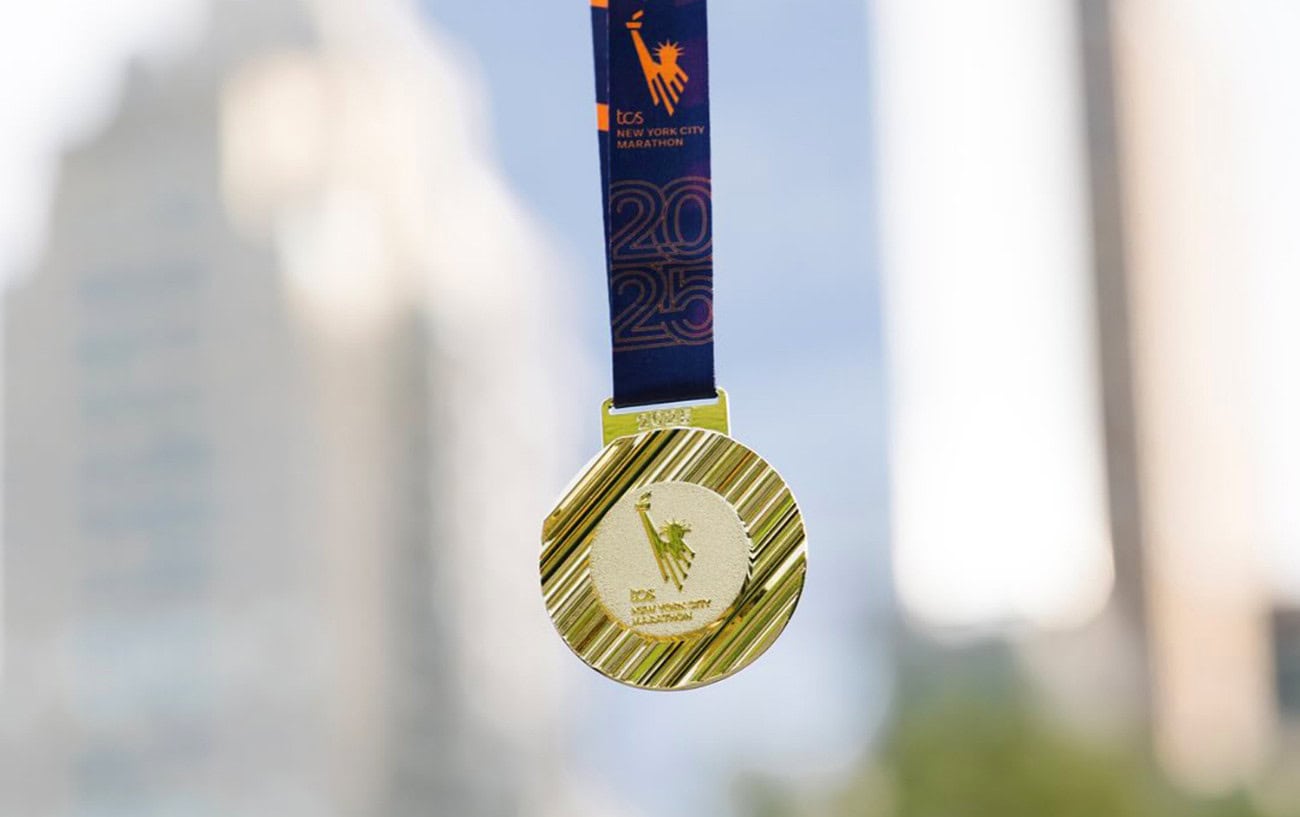
Flashier is the lever everyday runners do actually notice. Medals are turning into the size of dinner plates and there seems to be almost unlimited options for merchandise.
Munich’s 2025 marathon medal measures 8.5 centimetres across, the same size as an Olympic medal. The visual rollouts of finisher medals now look more like sneaker drops than commemoratives. The original Six Star Medal for completing all the founding Majors has been updated to accommodate the expanded series. Tokyo’s 20th-anniversary premium medal will be introduced with a full design reveal.
There is nothing wrong with a nice medal. There is something a little funny about a hobbyist sport in which the trophy now weighs more than the running shoes used to earn it.

What is actually happening
The honest read on all this is that the biggest marathons have become luxury goods.
They are not events you sign up for. They are events you get into. The response from the people running them has been to act, very rationally, the way luxury brands act when demand overwhelms supply. You make the product feel exclusive. You scale capacity just a little, never enough. You bundle in extras. You launch a special edition. You raise the prize money to keep the elite story compelling. You announce in spring, you let it marinate, you sell out in autumn.
This works in the sense that it preserves the brand. It does not work in the sense that it does not actually solve what is broken: there is nowhere for the other 95 percent of applicants to go.
The case for more races, not bigger ones
Which brings me to what I think is actually the right response, and what almost nobody at the top of the sport is meaningfully doing. Build out the middle.
When London goes from one day to two, that is 40,000 extra slots in the global pool. When NYC, at 1 percent acceptance, talks about expanding to over 60,000, that is roughly 5,000 extra slots. The math is unforgiving. The lottery problem cannot be solved at the top, no matter how big you make the top.
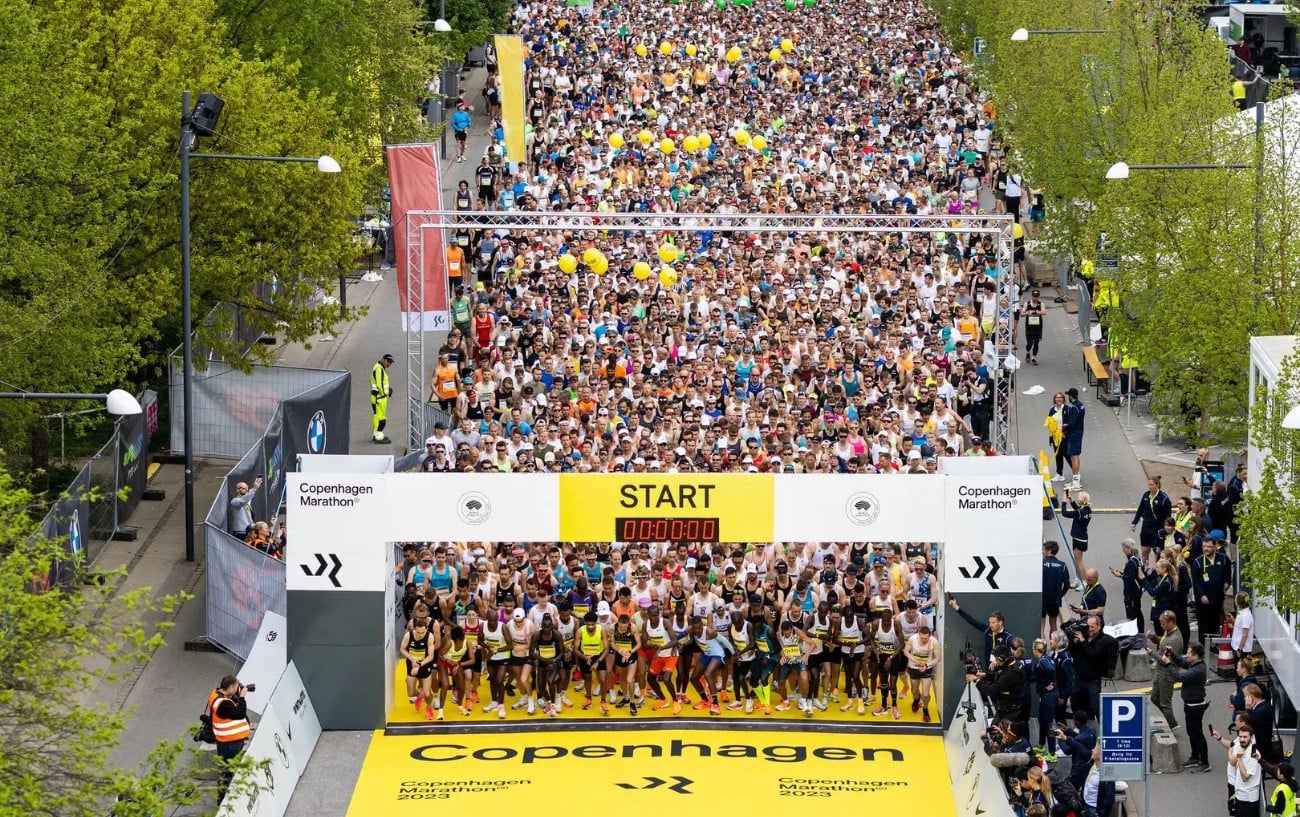
It can be solved by making a second tier of marathons feel like real prestige events rather than consolation prizes. There is no reason Copenhagen, Valencia, Stockholm, Marseille, Houston, Indianapolis, Eugene, or Edinburgh should not be on the same shortlist of must-run races as the Majors. Many of them already deliver a better runner experience.
The Majors have brand, but the middle has space.
The Diamond League model works for track because there are 14 meets in the calendar, not seven. World Athletics could push its road series harder. Sponsors could fund prize purses outside the Abbott umbrella. Race directors could collaborate instead of just letting the biggest events acquire the next-biggest events. National federations could subsidise travel to mid-sized international marathons the way they subsidise Boston qualifiers.
There is no shortage of well-organised, beautiful, fast marathons that do not require a lottery, a fundraising minimum or a Boston-qualifying time. The information gap is huge. The middle has a marketing problem more than it has a quality problem.
So, What Can We, Runners, Do?
In the meantime, the question for runners is whether the lottery is worth playing. The honest answer for most people is no. If you applied to NYC at 1 percent odds, you are statistically going to spend the next four years getting rejection emails. If you applied to London, the same. Tokyo, Berlin, Chicago, all the same.
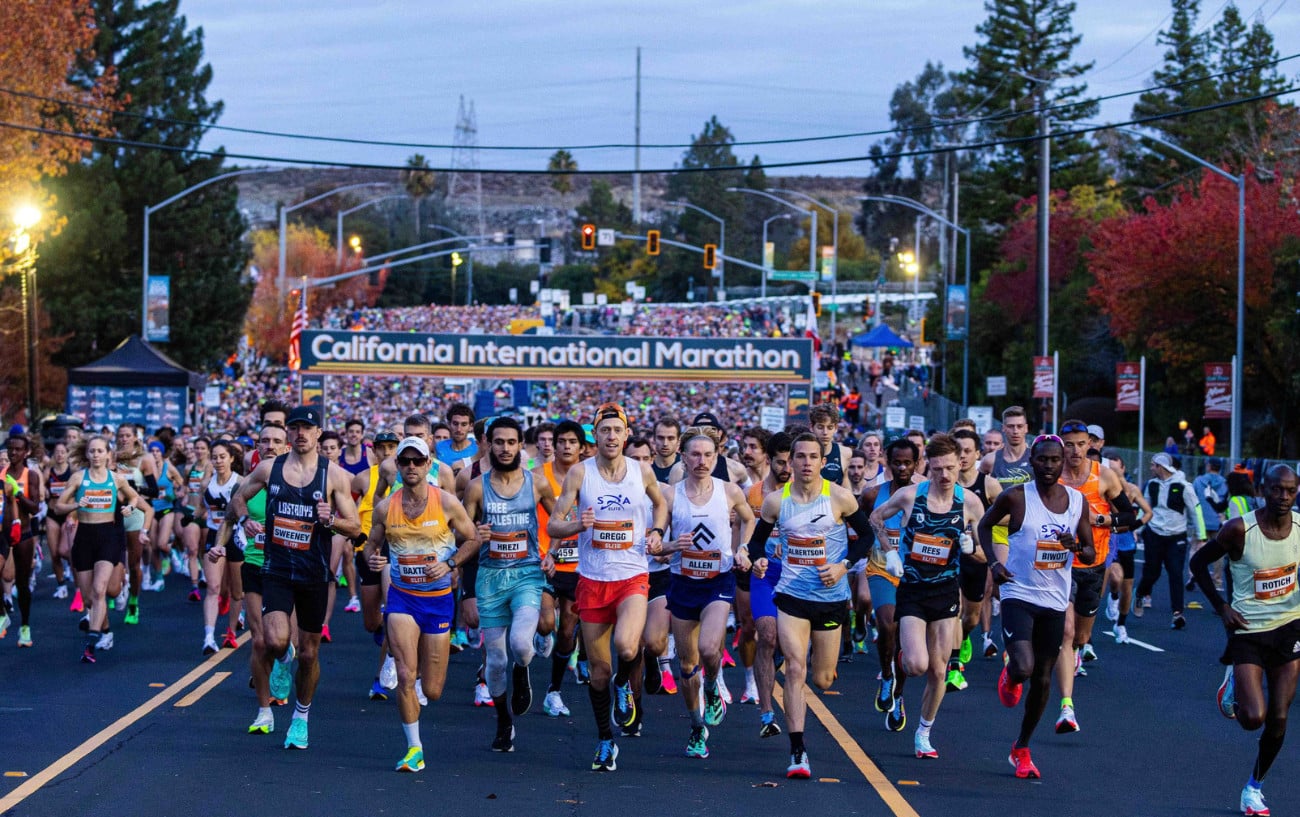
Run a marathon that has not capped out. Run two. Run the kind of race where the volunteers know your name by mile 18, where the medal is brass and small, and you stop caring about it three months later because you remember the course and the experience instead. The Majors will still be there when you are ready, and if you do end up getting the chance. They are not going anywhere. They have, in fact, never been more determined to stay exactly where they are.
The running boom is the best problem racing has ever had. Twenty years ago the sport was figuring out how to grow. Now it is figuring out how to fit. That is a luxury problem, but it is also the wrong problem to solve with seven cities and a $170,000 cheque.
The future of distance running is not in the cities that already have it. It is in the hundrends that don’t.
Until the sport’s biggest events spend as much time building the middle as they spend defending the top, the lottery losers will keep getting their rejection emails, the medals will keep getting bigger, and the prize purses will keep climbing. None of those things is the same as solving the problem.
It just feels like it for a news cycle.
RunClub
Get more running stories — join RunClub
Daily running news, a community of 300,000+ runners, free training plans for every distance, and a daily running game. Free to join — no card.
Already a member? Log in →





Join the conversation
I ran the Houston marathon earlier this year (my first!) and it was an amazing experience. The race was SO well organized, the crowd energy was spectacular, and the course was flat and clearly marked. It was a truly wonderful first marathon and felt like a big race and a big deal to me! I have a hard time imagining how a world major could be a better experience than that.
What a wonderful article this is, Jesse. Thank you for writing it. As one of my friends put it, many people are doing these humongous races just for Instagram posts (\"boasts\") or Facebook posting (\"boasting\"). A ton of joy can be found within the smaller events, but only if the runner actually loves running and does it not just for publicity.
This is so important! It would be super cool if y’all did a series of articles covering some of the great, established races globally - like 20 races you should know in each country, or 5 unique ones in each state! And of course the big other solutions would be for the Majors to add more races to their roster, especially on the more popular continents - why not have 20-30 Majors, especially hitting more geographic variety? They’ve already started this, but adding more could increase the access of talent to racing.