


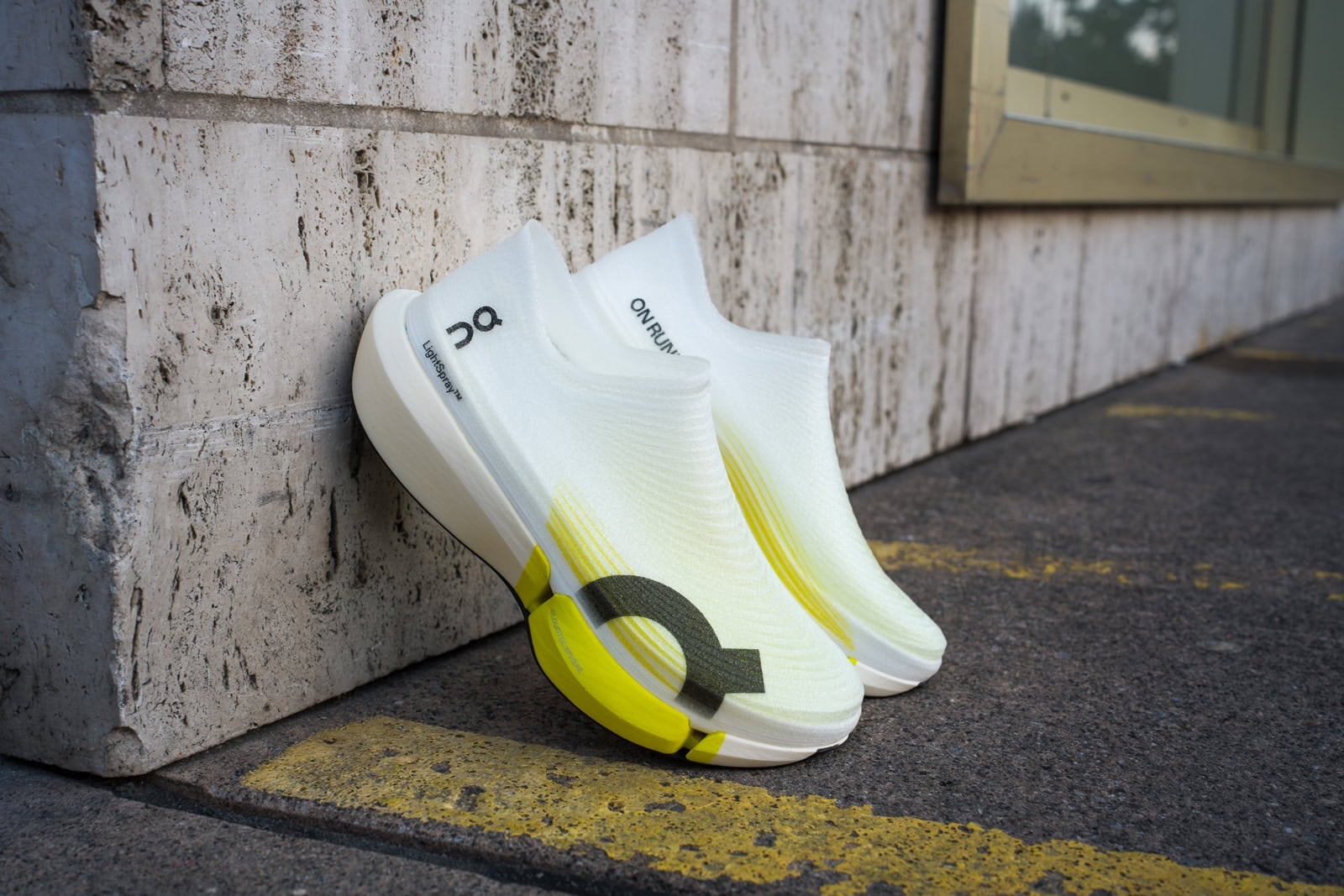
The shoe On released this week will be remembered as the robot shoe, and it is easy to understand why. The upper of the LightSpray Cloudboom Strike 2 is not cut, stitched, or glued but sprayed, a single unbroken thermoplastic filament, a kilometer and a half of it, laid onto a foot-shaped last by a robotic arm in a matter of minutes. Where a conventional running shoe upper passes through as many as 200 separate manufacturing stages spread across multiple factories, this one comes into existence in a single step, in one room, in under ten minutes. The spectacle is irresistible, every review of this shoe will lead with footage of the nozzle doing its hypnotic work, and all of that coverage will be looking at the wrong end of the shoe.
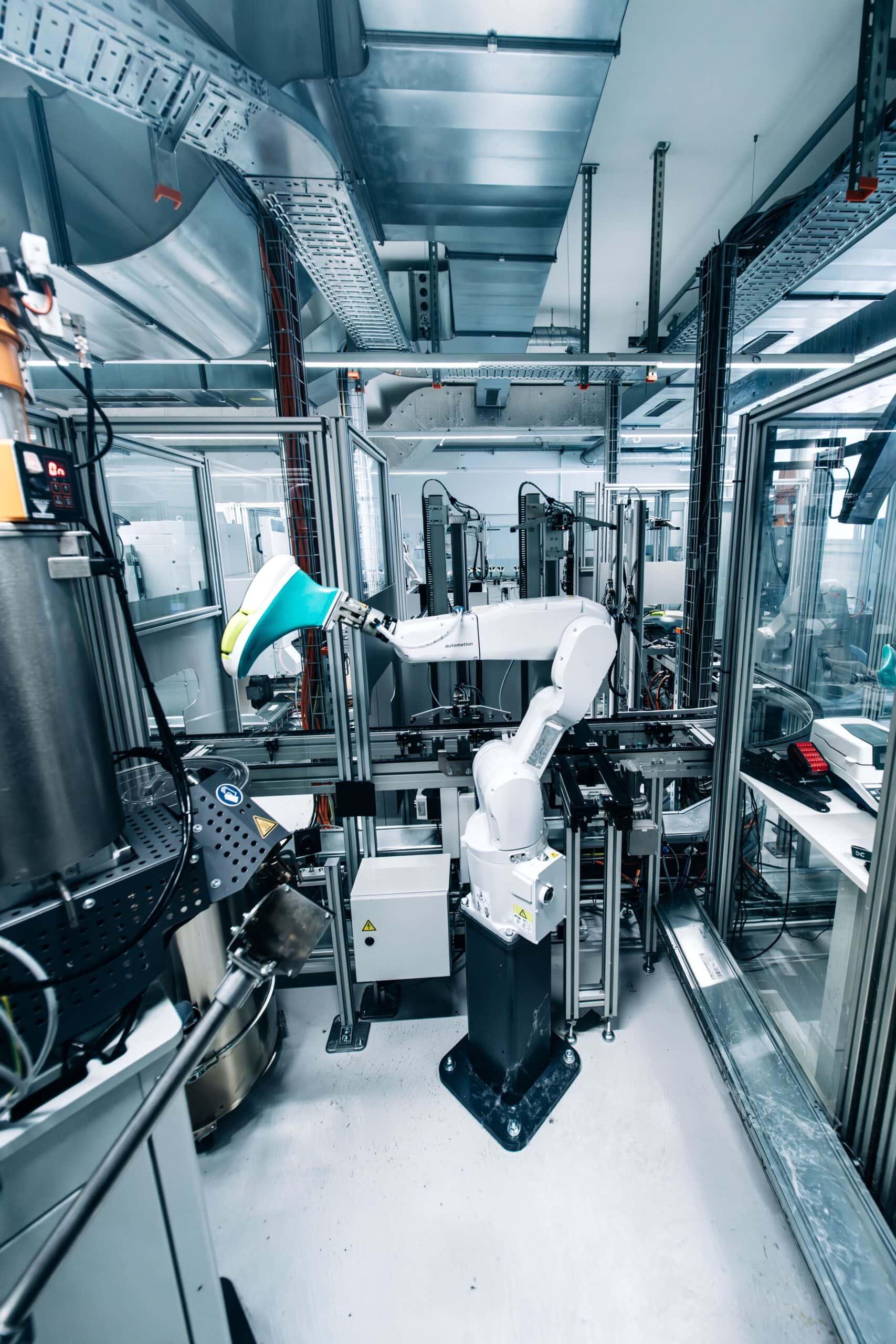
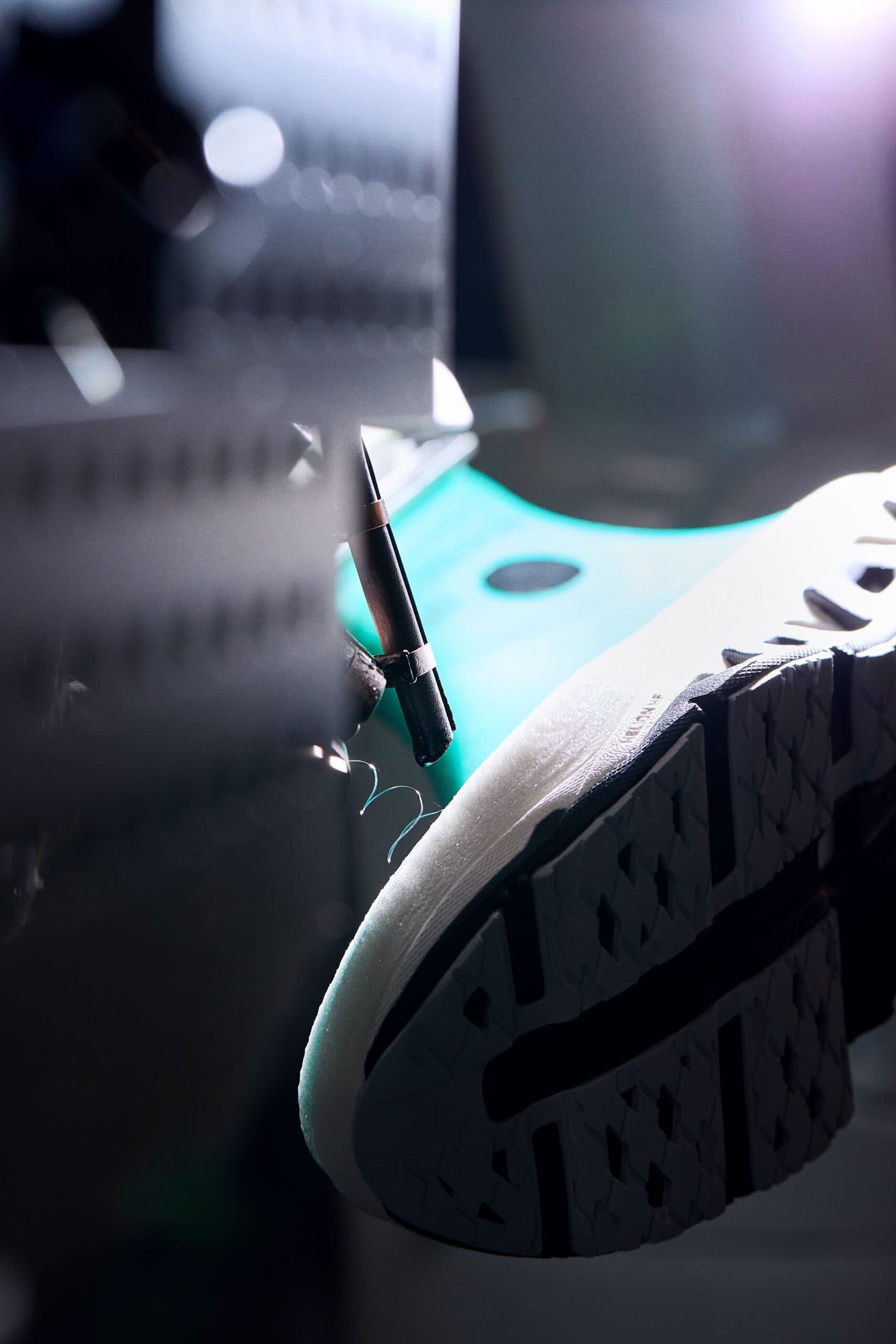
The real story of the Cloudboom Strike 2, the one I pieced together over a week at On’s headquarters in Zurich and its global summit in Paris during fashion week in late June, and over more than 80 kilometers of running in the shoe itself, is happening under the foot, where the brand that built a 16-year identity on the visual signature of its CloudTec holes is signaling a willingness to let its origin story take a back seat to the more exacting and less photogenic discipline of foam.
David Allemann, On’s co-founder and co-CEO, repeated the same phrase so often during my week with the company that it stopped sounding like a talking point and started sounding like a man willing a new way of thinking into existence: On, he kept saying, is becoming a structural engineering company. That is a considerable claim for this particular brand to make about itself, and this very good, surprisingly complete super shoe is the first full expression of what it means.
The Holes Question
Every great running brand eventually faces a version of the same problem: what made you famous is not what will keep you fast. For On, what made it famous is holes. The CloudTec pods, born from a garden hose in co-founder Olivier Bernhard’s garage, gave On the most recognizable silhouette in running and a piece of visual theater no other brand could match. The problem is that the super shoe era is not won with theater. It is won with foam, as much of the lightest, most energetic supercritical foam as can be engineered into the 40 millimeters World Athletics allows, and a shoe defined by its voids sits awkwardly in a category defined by volume.
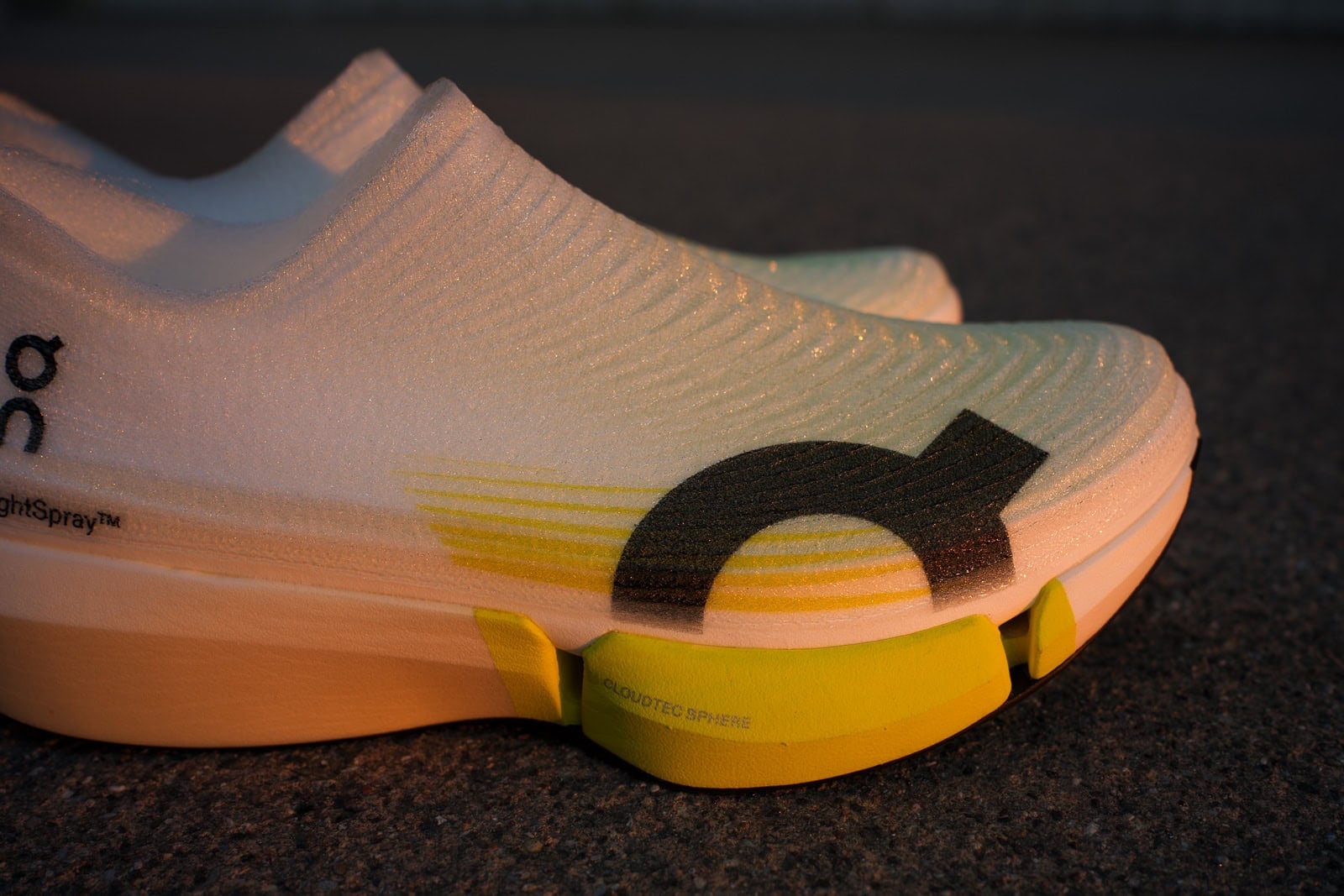
The Cloudboom Strike 2 is On’s answer, built on a new generation of Helion HF, the company’s supercritical foam, now produced with what it calls structural engineering: shaping the internal architecture of the foam itself rather than simply molding a slab, the way you would engineer a bike frame or a ski rather than bake a cake. The CloudTec idea survives inside it as CloudTec Sphere, geometry embedded within the foam rather than holes punched through the silhouette.
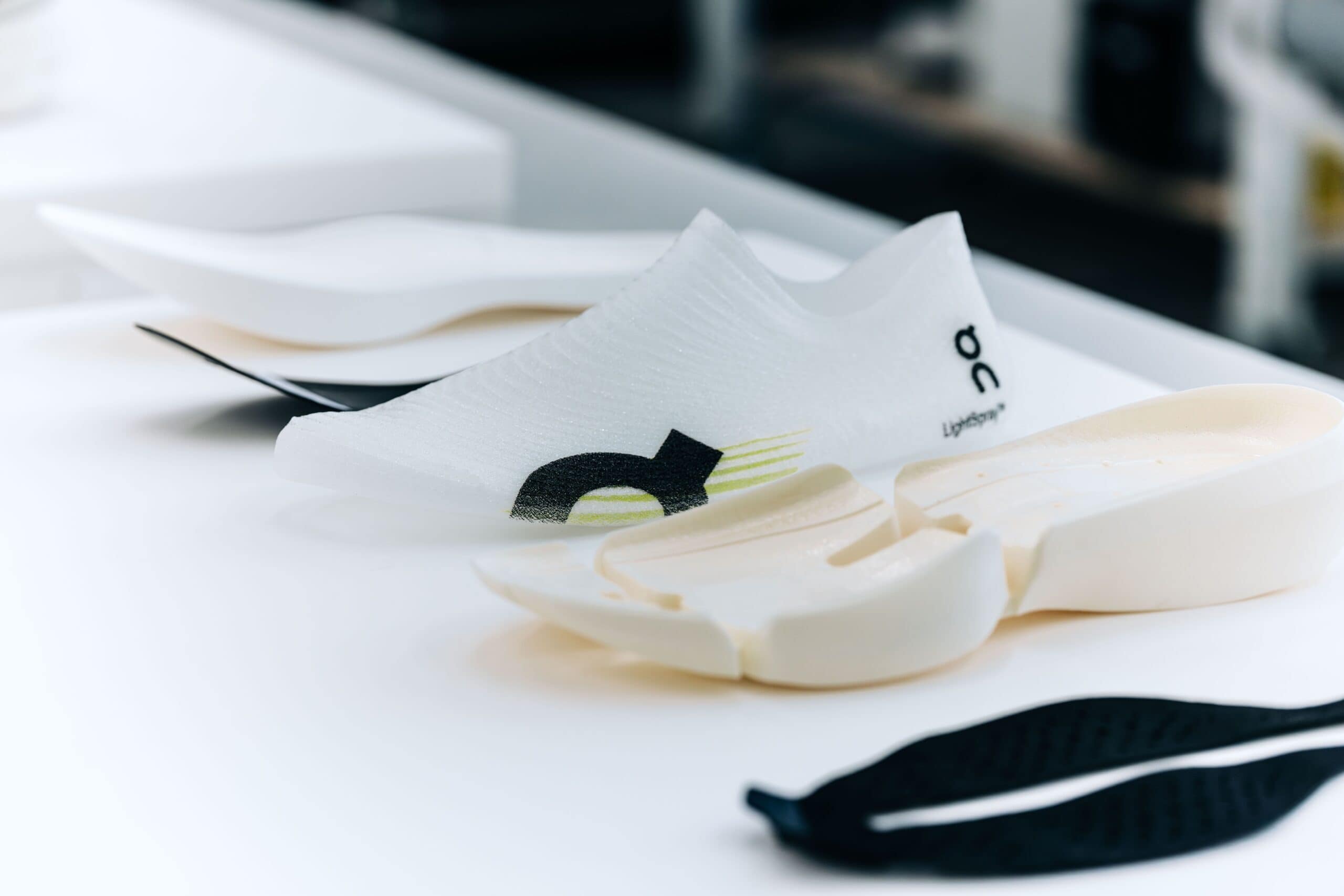
Having seen a preview of On’s complete 2027 lineup at the Paris summit, I can report that the holes are not going anywhere across the range; they remain all over next year’s shoes. But at the bleeding edge, where On now intends to compete stride for stride with adidas, Nike, and Asics for the fastest shoes in the world, the visual signature has been subordinated to the physics. On credits the new platform with a 1.6 percent improvement in running economy over the first Cloudboom Strike, though that figure comes from a study the company commissioned itself and has not been independently confirmed, so I treat it here as a claim rather than a measurement and will describe instead what the shoe actually does on the run.
The polymer choice at the heart of the new foam is its own quiet statement of the same philosophy. In the experimental foam lab on On’s campus I spoke at length with Jean-Philippe Romain, the French engineer who runs it as On’s director of polymer science and engineering, and he told me the new Helion generation is built on PEBA at a moment when much of the industry has been drifting toward newer materials like ATPU and TPEE that carry the shine of the cutting edge. When I asked why On was not drifting with them, his answer came down to the lab results, which in On’s extensive testing keep returning the same verdict: PEBA produces more energy return and offers far more room for tuning than the alternatives.
His suspicion about why other brands are moving away from it is simple: PEBA costs many times more per kilogram as a raw material than the polymers replacing it, and he believes the industry’s drift toward the newer materials is being driven by procurement costs rather than performance data. On has decided to keep paying for the material its own testing says is best.
The pivot continues all the way down through the rest of the shoe. The carbon plate is new, an in-house Speedboard developed and prototyped in On’s own labs rather than adapted from the last generation, the outsole rubber is new, and the LightSpray upper itself was retuned for this build, its ATPU made more pliable and the sprayed bootie subtly reshaped.
In On’s prototyping lab I spoke with an engineer, formerly of adidas, who walked me through the shoe’s development: roughly two dozen iterations across two years of building, testing, and rebuilding.
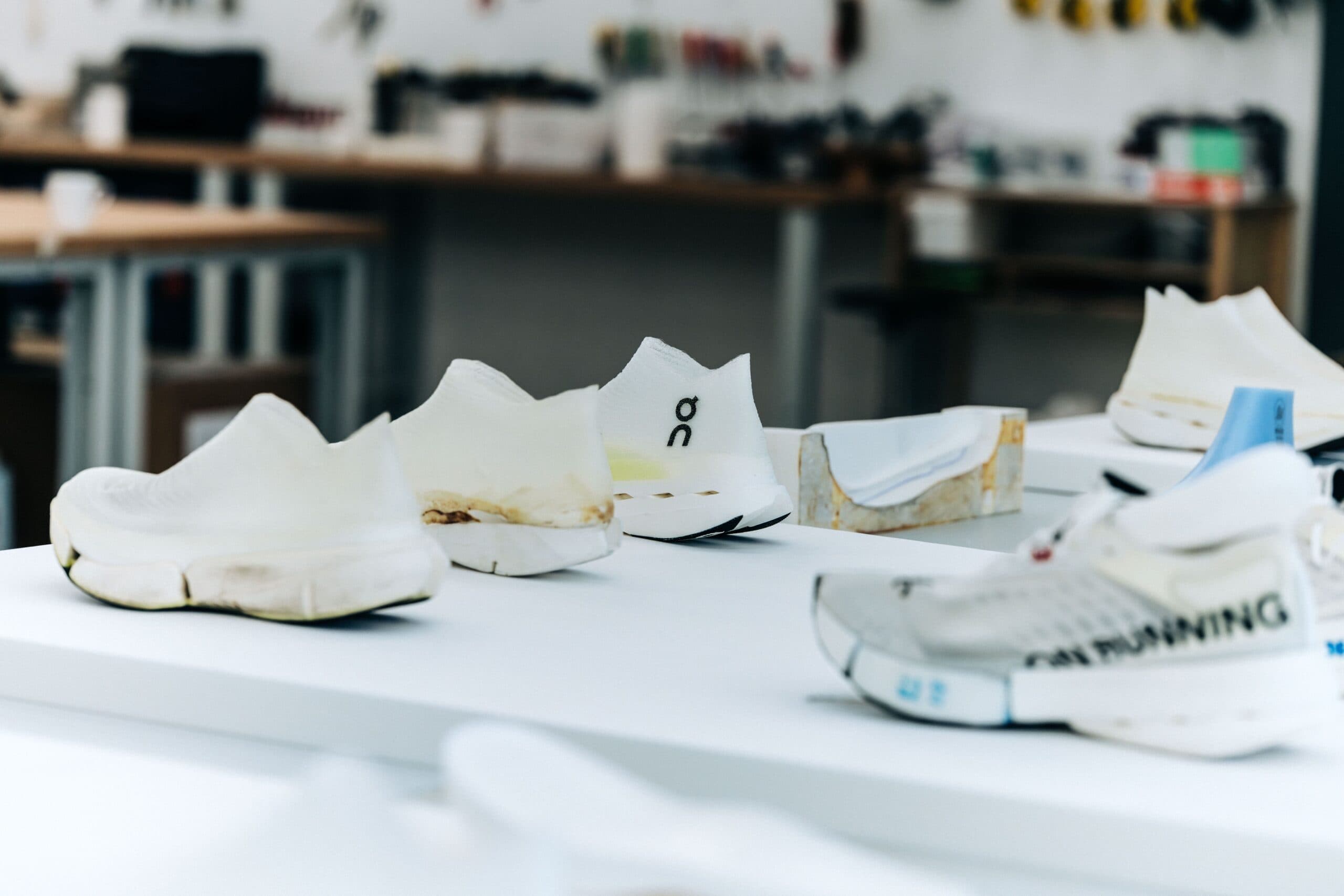
The wear testing happens separately, in On’s own QA lab, and keeping that operation in house is itself unusual in an industry that mostly farms the work out. There, machines run around the clock to find out when and where the shoes finally break down, including a series of robotic feet in the basement racking up tens of thousands of steps per day on asphalt, concrete, turf, and dirt. The result is that nothing in this shoe was kept simply because it was there in version one.
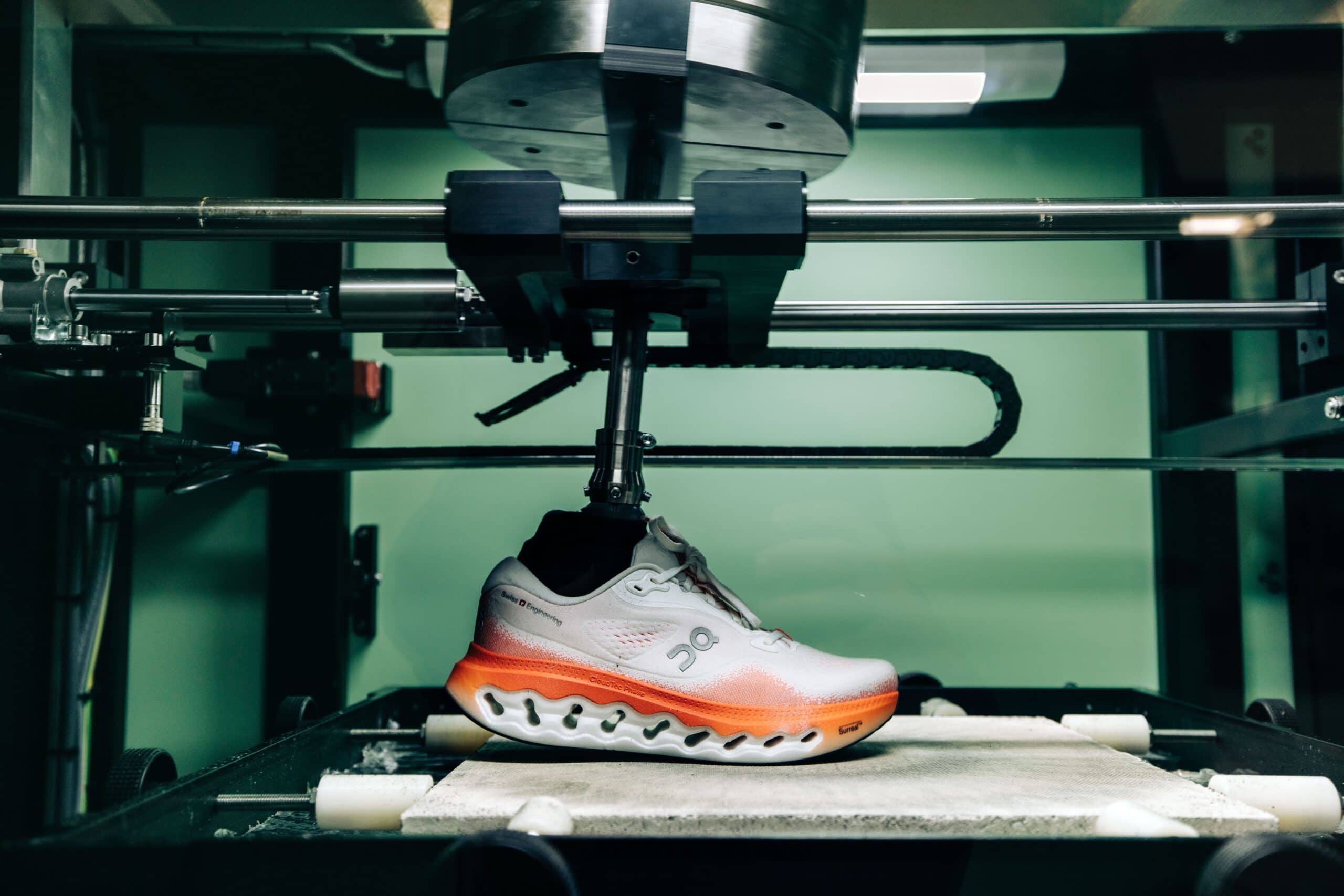
The Strike 2 is a rebuild rather than an update, though not because the original fell short. Version one was an excellent shoe that was never really a retail product at all. Its few extremely limited drops existed largely to satisfy World Athletics’ availability rules, so that Hellen Obiri and a small group of other elite marathoners on On’s roster could legally race in it, and the shoe was tuned for their feet rather than for mass production, carrying the eccentricities and minor flaws you would expect of a working prototype, among them a less forgiving upper and a midsole foam slightly behind the best of its competition. This generation cleans those up and treats the rest of the design as an opportunity to level up.
Nothing in this shoe was kept simply because it was there in version one.
The Ride
I ran more than 80 kilometers in the LightSpray Cloudboom Strike 2, through a record-breaking European heat wave, first in Zurich and then in Paris, including two honest workouts in the conditions this shoe is actually built for: a lactate threshold session and a marathon-pace effort.
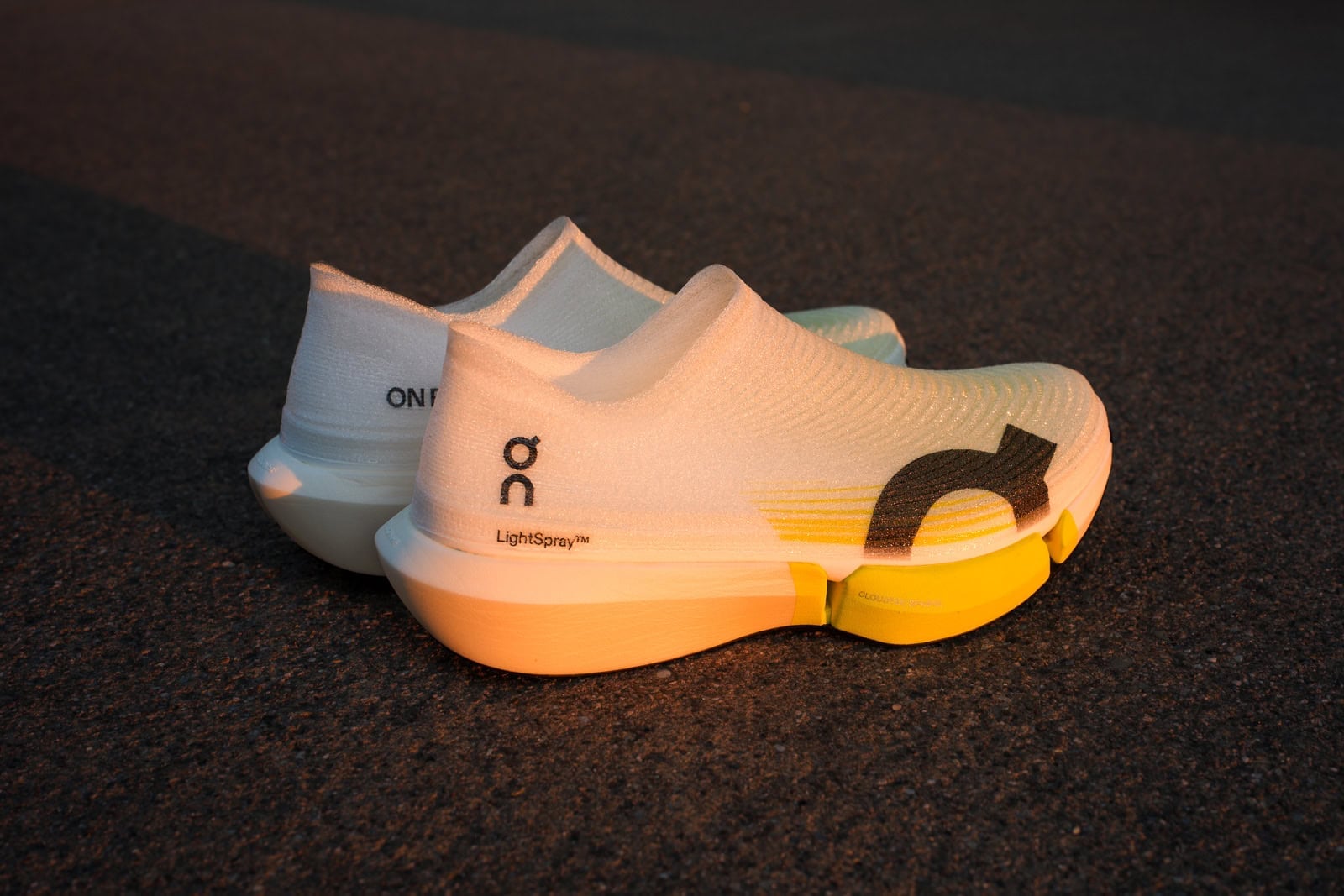
The foam gives the shoe its personality. Supercritical midsoles have distinct temperaments, and this one is a rebounder, with a quick, springy return that pops back almost the instant you load it, closer to a bouncy ball than to the sink-and-recover softness of something like Asics’ FF Leap, which cushions you deeply and then hands the energy back a beat later.
As a natural midfoot-to-forefoot striker I loved the kick this puts at the front of the shoe, though heel strikers should know the arrangement is less generous behind the midfoot, and if your form degrades late in a marathon and you settle back onto your heels, there is less waiting for you there than some rivals provide.
The rocker is calibrated with a restraint I came to appreciate more with every run, because some super shoes, the Hoka Cielo X1.3 among them, force you onto your forefoot with an aggression that never feels like your own stride. The Strike 2 has a mid-range forefoot rocker that flows instead of shoves.
My favorite test for any super shoe is an easy run, because it exposes the last’s true character: a shoe that fights you at recovery pace is a shoe that is fundamentally not shaped like your stride. The Strike 2 passed the way very few have. It felt natural and forgiving at easy pace while still carrying me along a touch quicker than I should responsibly have been going, which is the tell of a shoe working with your mechanics rather than on them. I have had that sensation this purely from perhaps two other shoes: the Asics Metaspeed Sky Tokyo, and the forthcoming Brooks Hyperion Elite 6.
Two practical observations from the road are worth passing along. Cornering, the quiet weakness of the whole category, is handled better here than tall race shoes usually manage, and I put the shoe through hard corners deliberately without it ever feeling tippy. Several of my Zurich runs also followed the river on crushed gravel and dirt double track, terrain no super shoe is designed for, and the Strike 2 handled it with a composure that speaks well of the new outsole, which is tacky and grippy without being heavy or aggressive.
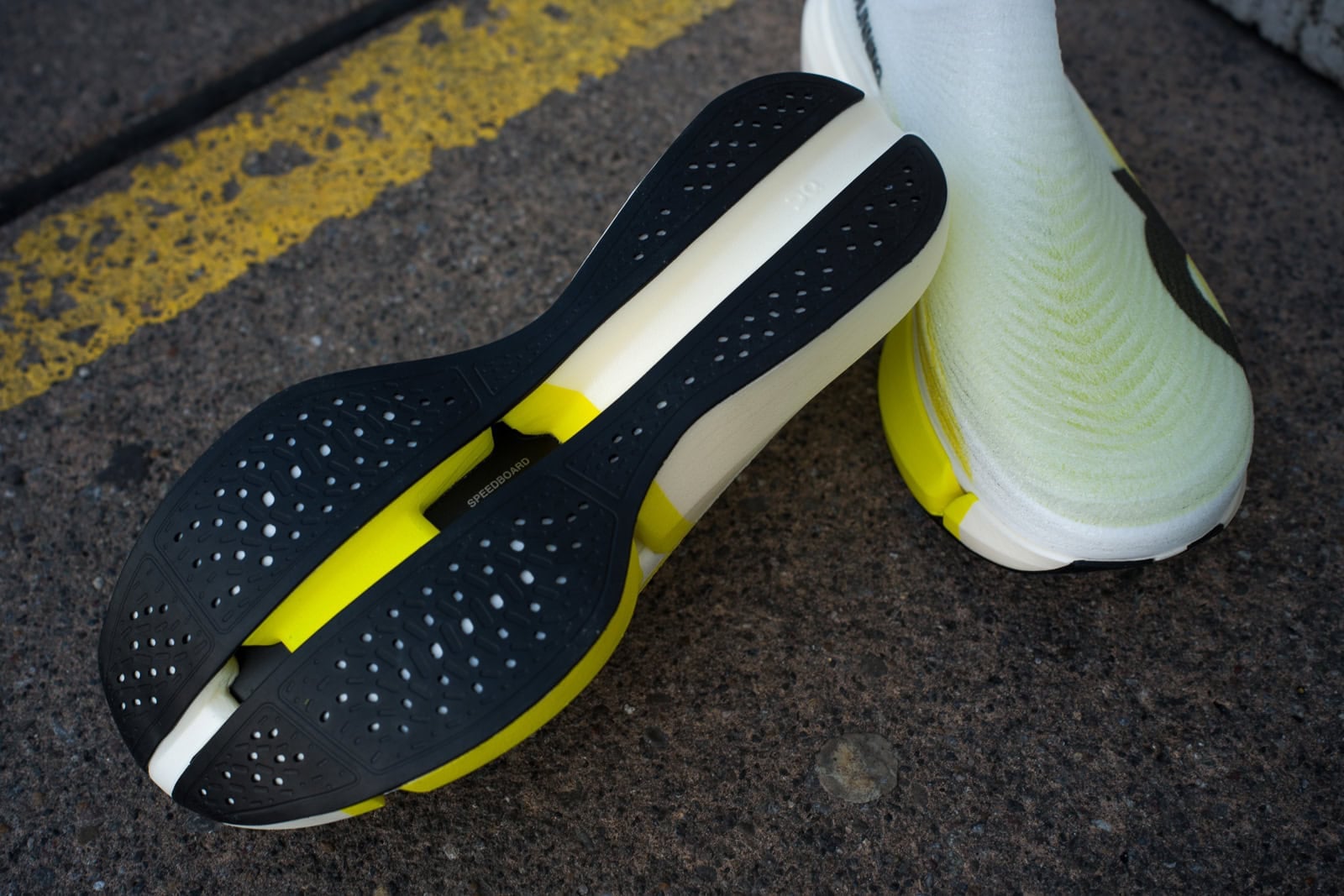
The heat wave also turned out to be a useful laboratory for a question I brought to the shoe: what happens when you pour sweat into an upper made from a single unbroken strand of polymer, with no ventilation holes, no breaks in the fabric for evaporation, and no laces or tongue? I half expected the LightSpray bootie to behave like a rubber boot, and during the marathon-pace workout I gave it every chance, dumping what must have been two liters of sweat into the shoes. I am not sure how, but the upper is surprisingly breathable, and I noticed no waterlogging at all.
It stayed remarkably quiet through all of it too, with no squeaks and none of the irritating sucking sounds a soaked shoe usually develops. Super shoes are often noisy, engineered as they are to be fast at all costs rather than pleasant to listen to, but On is weirdly obsessed with making silent shoes, as one of its lab engineers told me, and this one runs low key and rather stealthy even at pace.
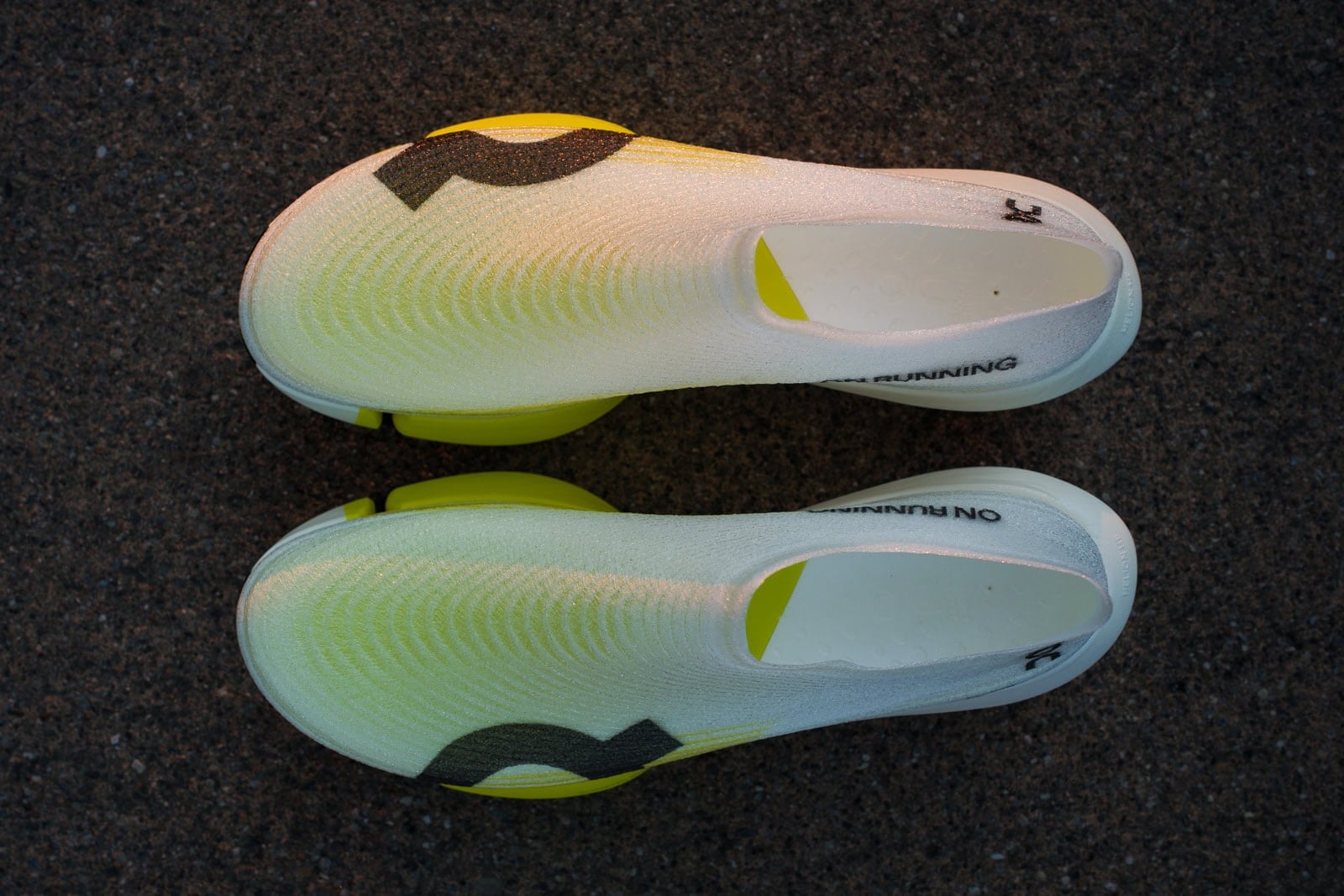
The upper is also the feature that separates the $310 LightSpray version from the $250 mesh one, so its fit deserves close attention. My left foot carries a bony prominence on top that my right does not, exactly the kind of asymmetry that a conventional structured upper punishes. The sprayed bootie simply accommodated it. Over the week the upper molded to each foot individually without losing its shape or its hold, snug without ever hugging my admittedly narrow foot into complaint, and the fit overall runs true to size and true to width, a straight-down-the-middle last.
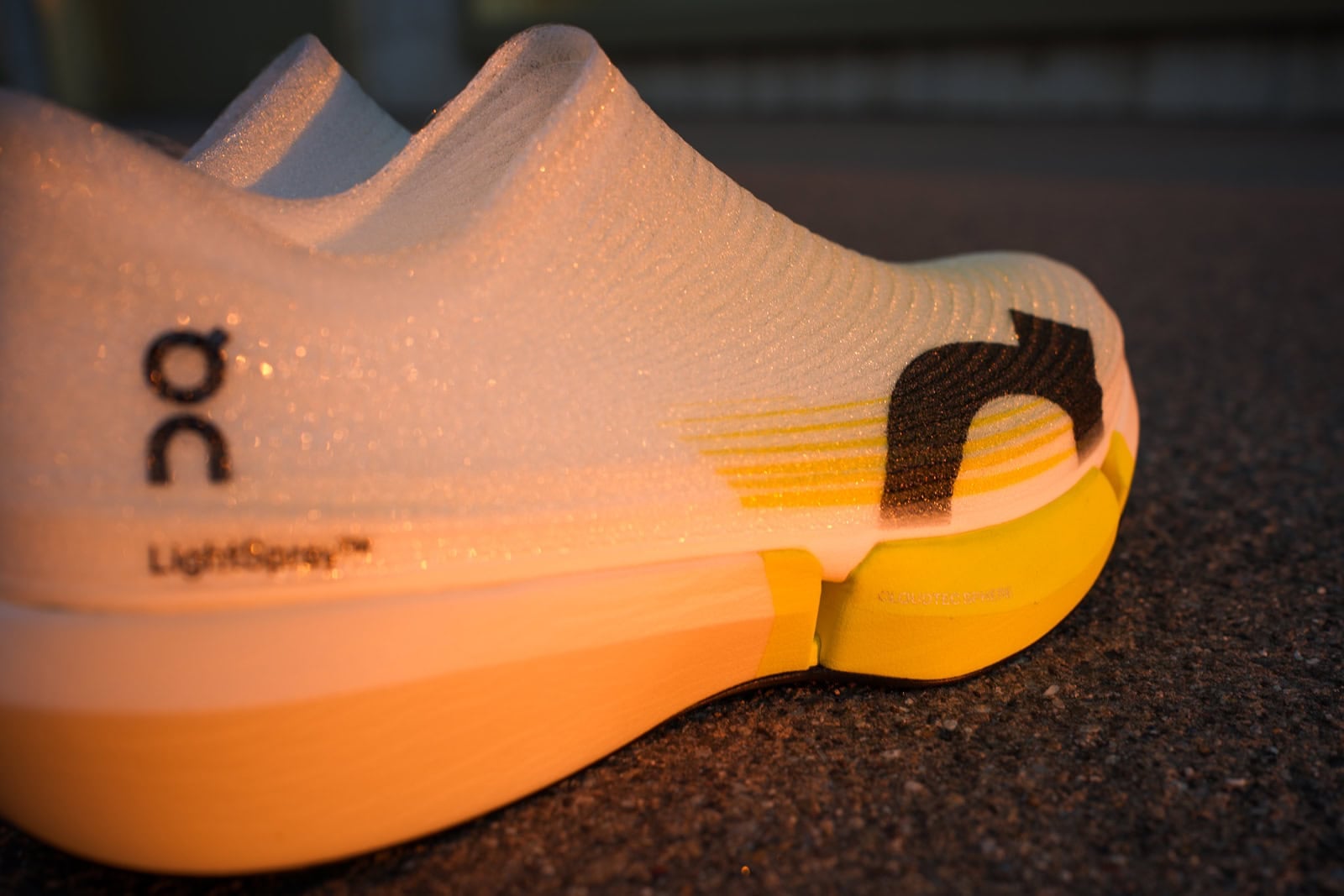
This matters, though the original’s stiffness deserves perspective rather than condemnation. I tested the first LightSpray Cloudboom Strike at On’s New York City Marathon pop-up in November 2024, where the robot sprayed shoes on site, and I found that upper stiff and unforgiving, awkward enough that getting in and out of the shoe became a small ordeal. It was the kind of eccentricity a super shoe can get away with, because these are shoes you strap on and fire yourself out of a cannon in for 26.2 miles, and fussy details are easy to overlook when the shoe delivers a big PR.
Version two removes the need for that bargain. The retuned material makes getting in and out as easy as slipping a Blundstone boot on and off, and the shoe is comfortable besides, while losing nothing in speed. I now own three pairs of LightSpray shoes, including the Cloudmonster Hyper LS I use as a super trainer, and the routine is a non-event.
One disclosure about my test pair, which turned out to be part of the story. The shoes I ran in were a preproduction one-off, sprayed for me in the Zurich lab because size 12 is not a tester size, and since they were never approved for long-term use in the real world, I had to promise to return them to an On staffer before leaving Europe. On can fully recycle a LightSpray shoe, because the upper melts back down to its original raw state.
The fit verdicts above do not rest on that bespoke pair alone. The other LightSpray shoes I own are retail pairs, and On’s engineers told me they are thoroughly confident the sizing and the sprayed upper behave as they should across a wide variety of feet. My experience supports the true-to-size call, though I do not mind wearing a half size down in the LightSpray models, and with this shoe as with any other, the best advice remains to visit an independent running shop and try them on.
I seldom get attached to a pair of test shoes, but I was sad to hand this pair over to be melted down. They had begun to mold to my feet in a way I have never experienced with a more generic upper, and they were, in effect, truly my shoes and no one else’s. The material has presumably been recycled by now, which means some part of them may be out there in another runner’s pair.
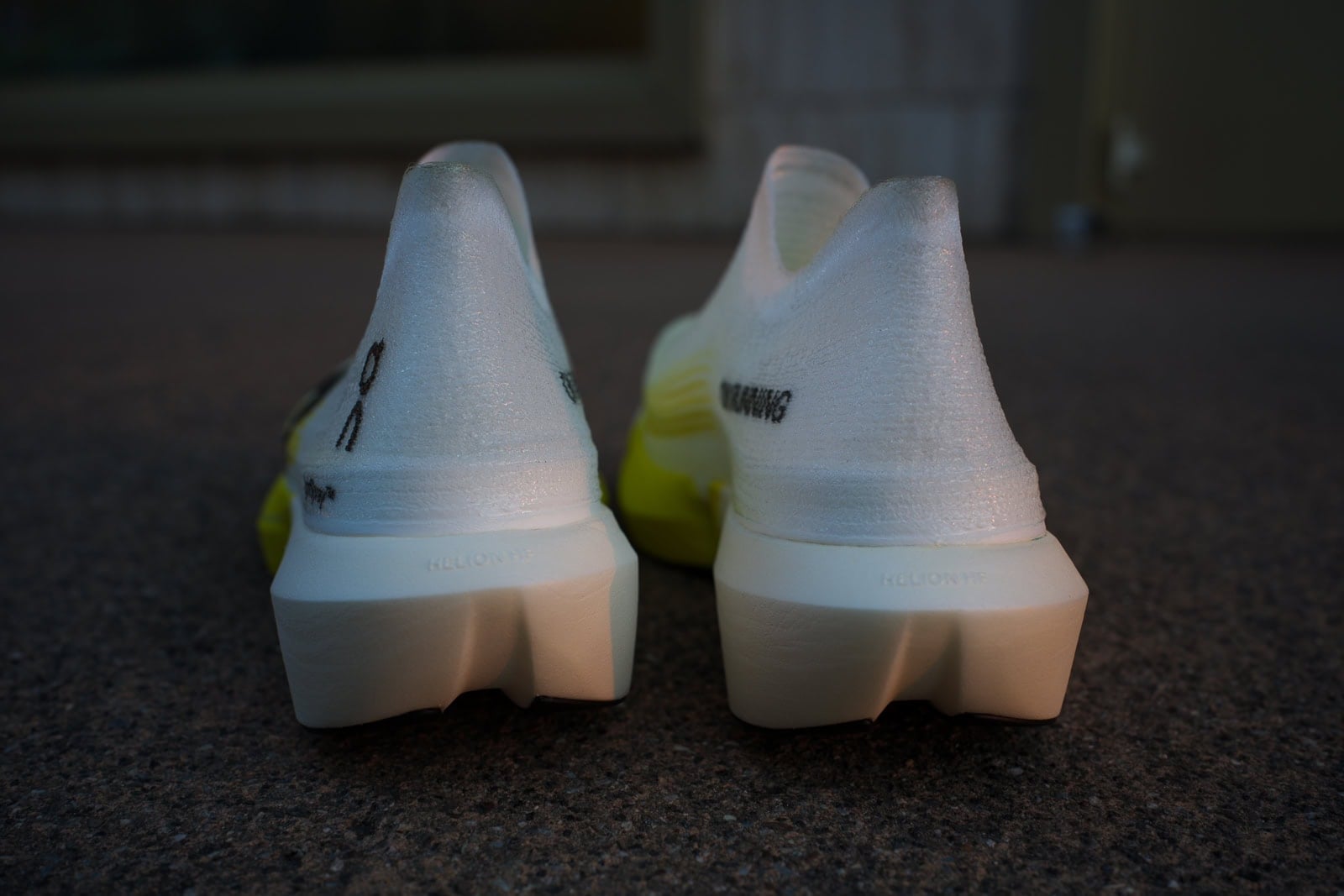
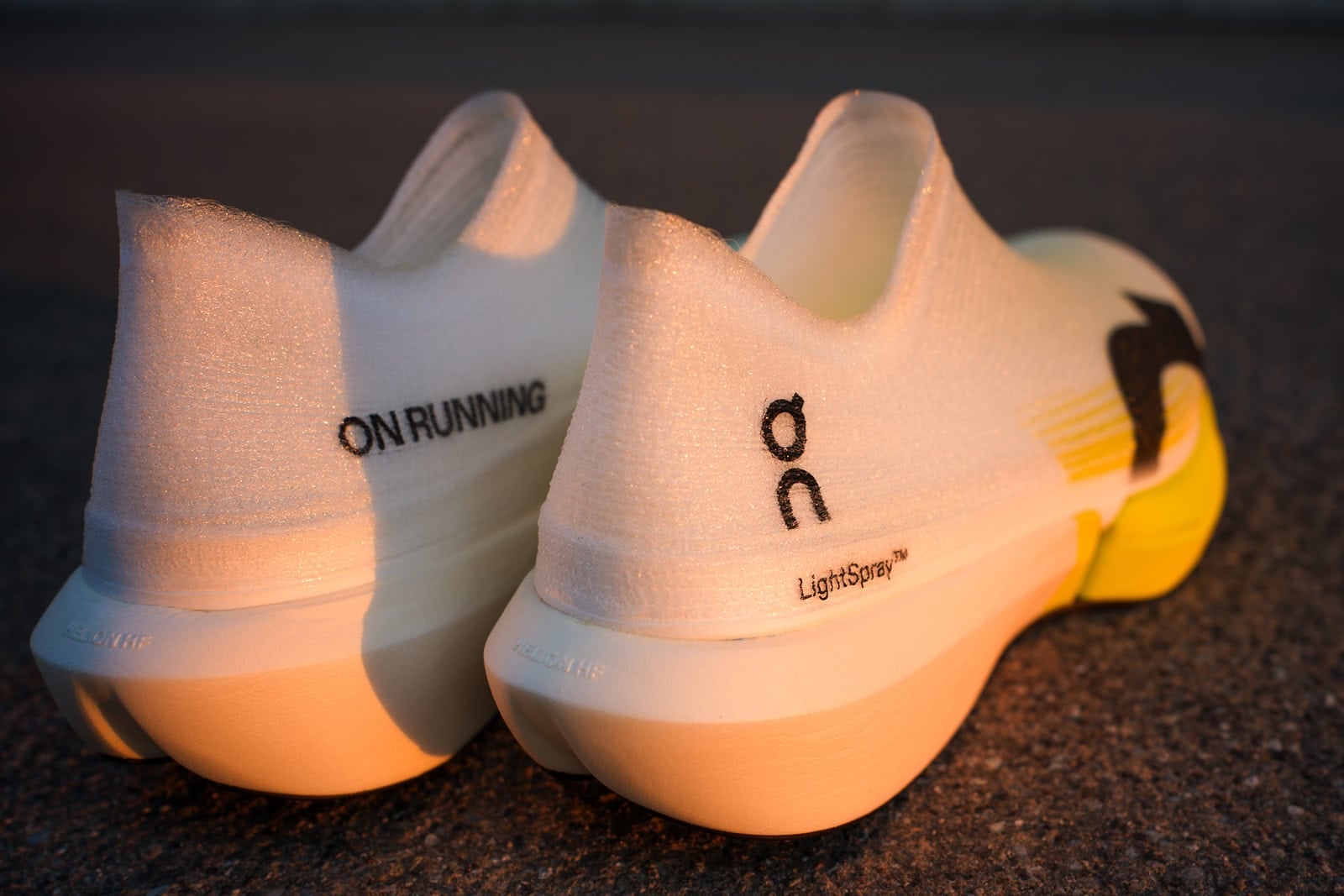
Over the week the upper molded to each foot individually without losing its shape or its hold.
The Third Wave
To understand why this shoe matters beyond On, it helps to see where the super shoe era actually is. The first wave was about the plate, which is why the category got saddled with the misnomer “carbon-plated shoes.” The second wave was the industry quietly realizing the foam was the point all along: the tuning, placement, and engineering of supercritical foam is what produces the energy return and the startling running economy gains, for elites and for the rest of us, while the plate mostly provides structure so all that soft, explosive material does not flop and contort against its own purpose, plus a modest flick of the foot at toe-off.
The third wave, the one we are in now and the one adidas has been driving from the front, is the race to make the lightest possible package of that power: a super shoe with the slipper weight of the racing flats of the old world, which was the missing link all along.
That is the race the LightSpray upper enters On into seriously. At 158 grams, the LightSpray Strike 2 is the lightest shoe On has ever made and lighter than anything Nike currently sells to the public, though honesty requires the full grid: the adidas Adios Pro Evo 3, at a scarcely believable 97 grams, remains the lightest racing shoe ever produced, and the Asics Metaspeed Ray sits at 129. What On has that those shoes do not is a manufacturing story that scales.
The Evo 3 trades at $500 in drops designed to sell out. The LightSpray robot in Busan, South Korea exists precisely to mass-produce what used to be unobtainable, and that promise deserves scrutiny, because version one never attempted it: the original LightSpray Strike was released in tiny, exclusive runs with limited sizing, a shoe-nerd fantasy acquisition rather than a product. The Strike 2 improves on that record without settling the question. On has listed the LightSpray version as a limited release, and within a day of launch most of the size run on its US site was sold out, with several sizes down to their last few pairs and mine among the ones already gone. The capacity in Busan is real, but this launch was still rationed, and for now the robot future arrives in allocations.
So what does the $60 between the two versions actually buy? On my scale and on my feet the answer comes in three parts: more than 30 grams of weight, which is the single largest legitimate performance lever left in the category; a fit experience unlike anything else in running, as that sprayed bootie molds to your specific feet; and a measure of participation in the most interesting manufacturing experiment in the industry. The $250 mesh version is the same very fast shoe and the sensible buy, but the $310 version is the better one.
The Details
The premium positioning is carried through with self-awareness. The LightSpray version arrives in elegant, minimal packaging, and every box includes a pair of On’s Elite Run Sock Hyper, a high-cut sock the company says was designed specifically to pair with the sprayed upper. It is a nice sock, and also, I can report after running the shoe in a variety of other brands’ socks, an entirely optional one.
Durability looks promising as well, since the ATPU material wears hard, and a media colleague I met in Paris has converted his version one pair into daily walkers after heavy running mileage, the upper aging into a slight yellowed patina that reads less like decay and more like character, the way good raw denim fades. Six of On’s athletes have already delivered breakthrough performances in the shoe in 2026, Hellen Obiri, Ryan Ford, and Joe Klecker among them.
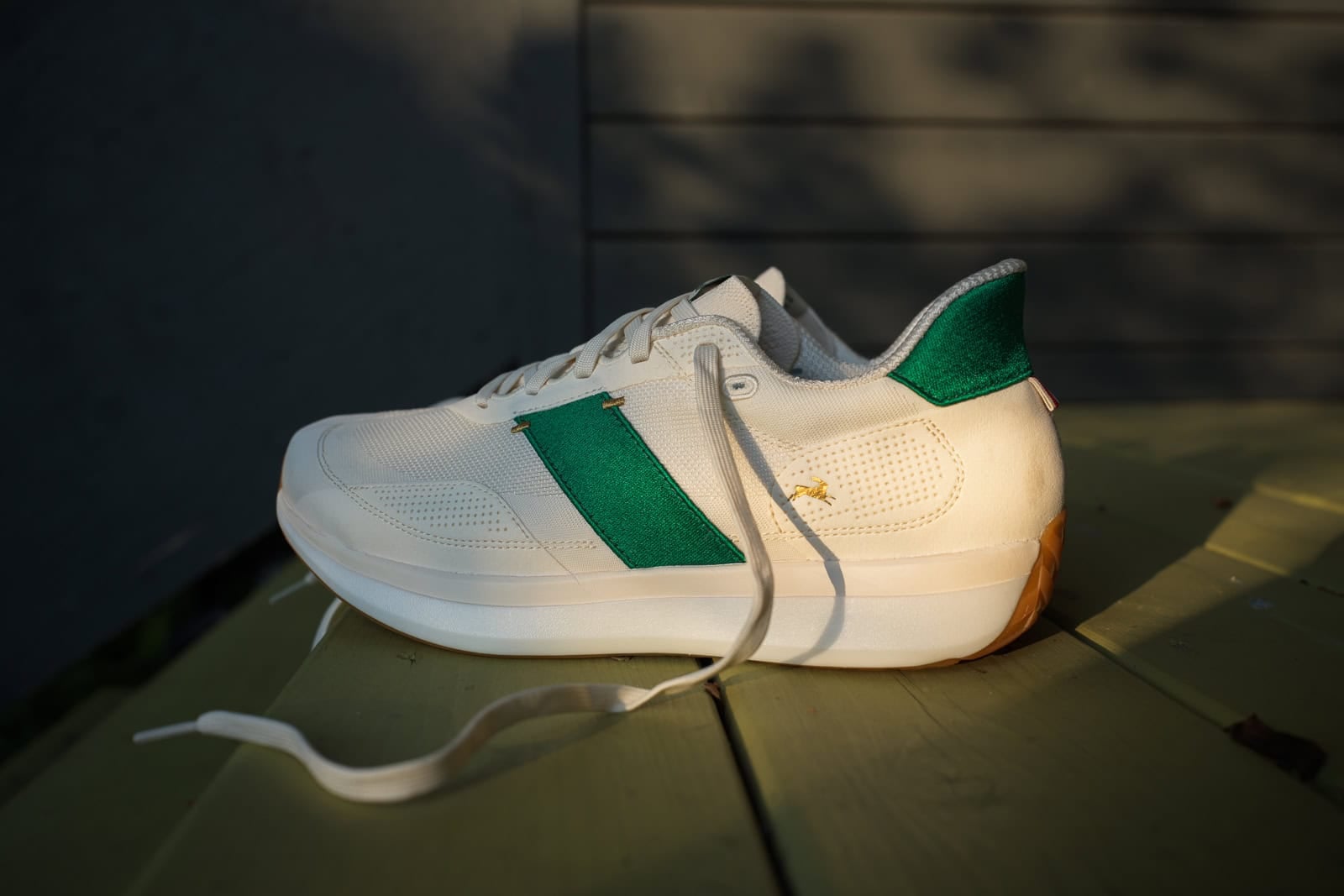
It also happens to be one of the most beautiful running shoes on the market, with a silhouette that is pitch perfect for what the shoe wants to signal, minimal, Swiss, engineered, every line deliberate, in a category where most designs still read as science projects.
The Verdict
The Cloudboom Strike 2 is a thoughtful, ground-up rebuild that improves on every aspect of a flawed and fascinating original, and it is the first shoe that makes On’s ambition fully legible: not to remain the quirky Swiss brand with the holes, but to become a structural engineering company that competes for the fastest shoe on earth and happens to own the best manufacturing story in the industry. The robot will get this week’s headlines, and that is fair enough, but it is the foam, and the willingness to reorganize a company’s identity around what the foam demands, that earned them.
Running. In Your Inbox, Daily.
Fun and informative running tips, news, hot takes, and shoe reviews — read by 345,000+ runners.
Send Me the Next NewsletterRunClub — Free
Join 300,000+ runners in RunClub
Free training plans for every distance, a daily running game, exclusive coaching content, and a real community of runners. Create your free account in 20 seconds — no card.
Already a member? Log in →


Join the conversation
If it looks like a slipper and feels like a slipper, it’s a slipper. I’m sick of expensive race only shoes that are overhyped and under perform…. But most of all just sit in my closet until the next super shoe comes out, I buy it and then the cycle continues…. 🤣