


I live in one of the flatter corners of Belgium. It’s a good place to be a runner in most respects, and it is not, by any stretch, trail country. The most technical surface I get in a normal week is a gravel farm track, and the nearest thing I have to a climb is the ramp up onto a bridge. When I want a trail, I get in the car.
Some of that is why I’m still a cautious runner on real mountain ground. I love being up there and I hike every chance I get, but when a descent turns loose or greasy I tend to shorten my stride and pick my way down instead of running it. I spent five years racing bikes and assumed all those Alpine descents would have left me something to draw on. Trusting a bike and trusting your own feet turn out to be very different skills, and I only ever picked up the first one.
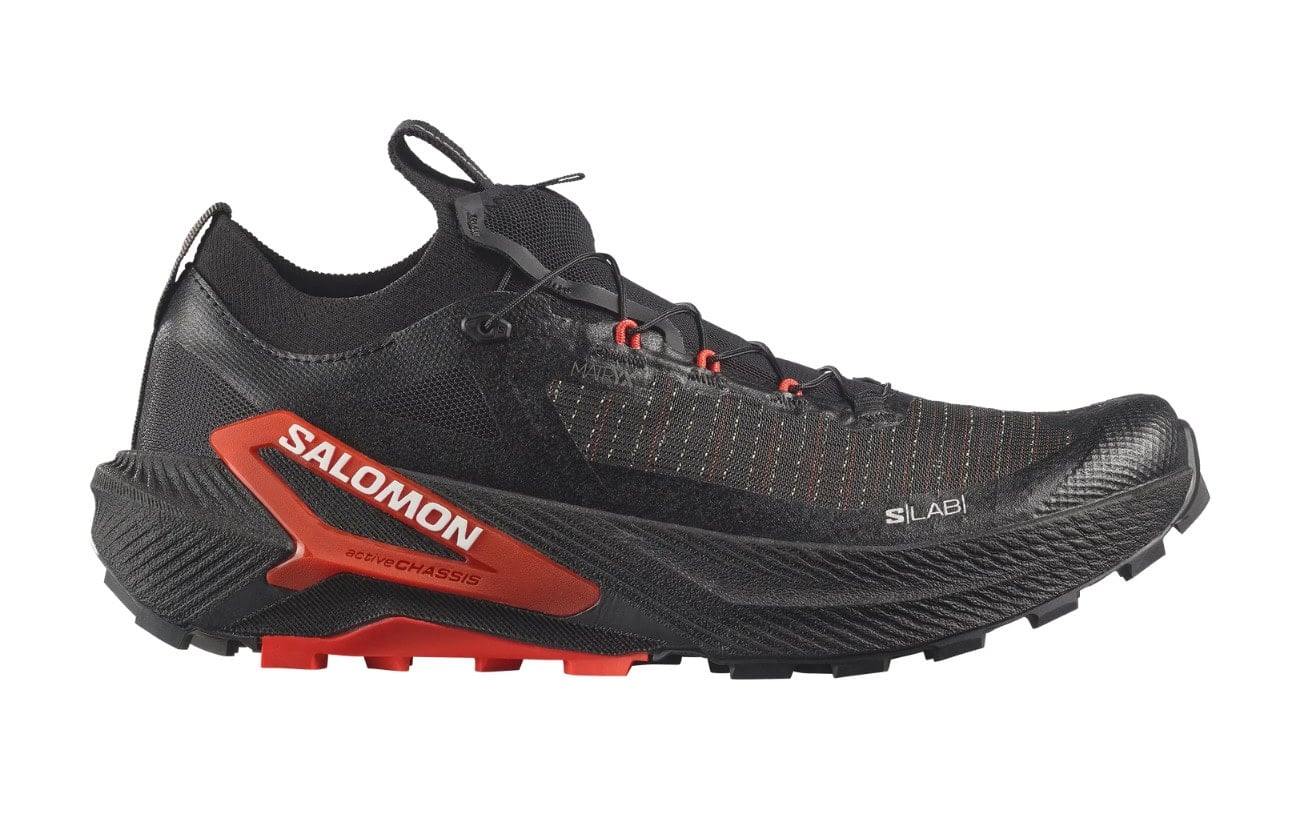
So I took the Salomon S/Lab Genesis 2 to Chamonix for a week covering UTMB, onto ground I can’t get anywhere near from my front door. By the third day I’d stopped thinking about my feet, which isn’t something I expected to be writing.
The short version: buy it if you run technical ground and want to feel what you’re standing on. The grip and the stability work together, and inside a week they changed how I go downhill. Budget for the fact that you’ll be re-tightening the lace.
How I Tested These
I ran in them six times over a week at the end of August. That covered the climb up toward Brevent and Planpraz, several sessions on the Petit Balcon Nord and Sud, a run up to the glacier, and a vertical kilometer with more than 1,000 meters (3,280 feet) of climbing in one sustained ascent. Underfoot I got dry dusty hardpack, wet rock, greasy roots in the forest, loose scree, and a lot of rocky steps.
Disclosure, because you should be able to weigh it: I was in Chamonix on a press trip hosted by Salomon, who covered the travel, and I spoke with people from the team who worked on the shoe, but nothing here was influenced by the brand; this is just my honest review.
And one week is one week. I can tell you how this shoe fits, climbs, descends and grips. I can’t tell you what it looks like at 500 kilometers, and I’m not going to pretend otherwise.
What Salomon Actually Changed
The S/Lab Genesis 2 went on sale at the start of August 2026, priced at $200, about three weeks before the race. It follows a shoe people liked a lot and complained about for one reason, which was that it ran out of shoe on long days.
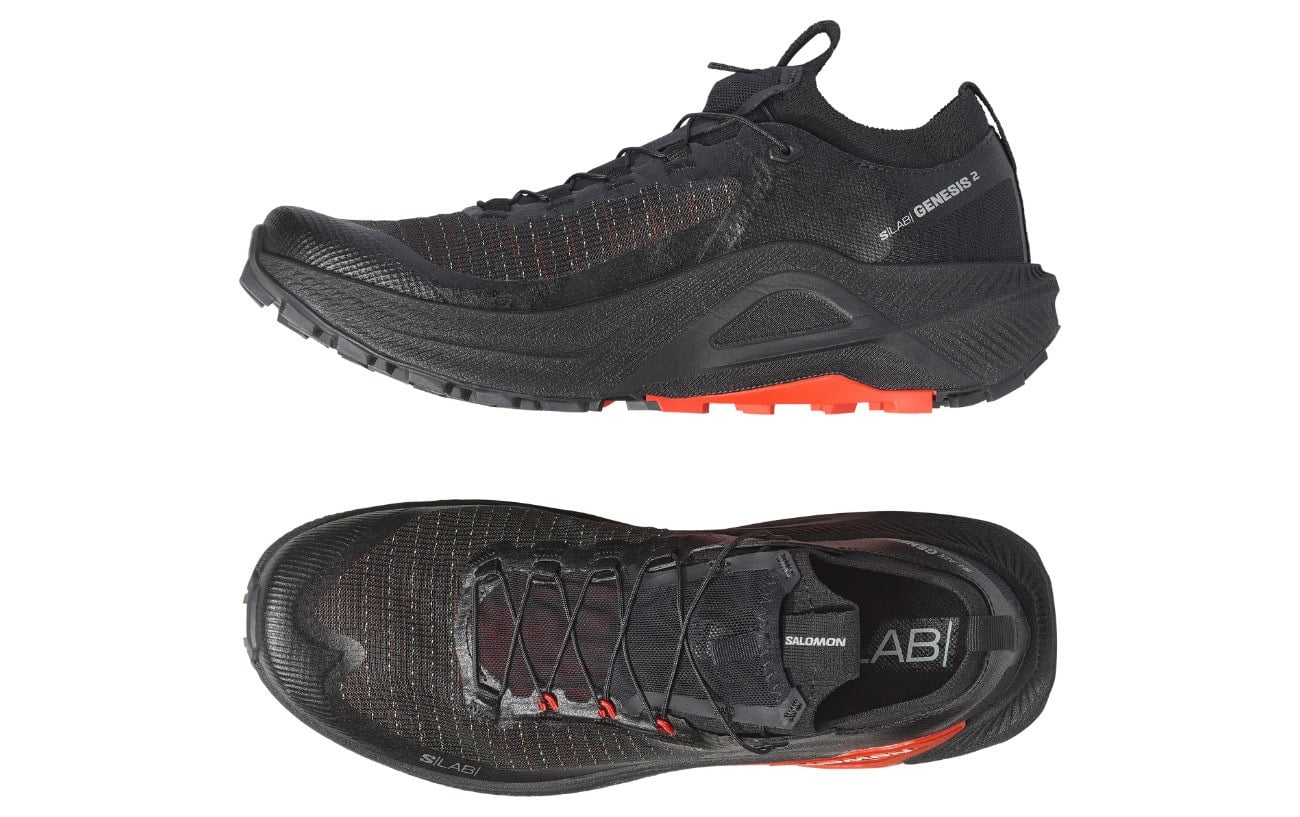
The specifications, from Salomon:
- Stack: 31 mm heel, 25 mm forefoot
- Drop: 6 mm, down from 8 mm
- Weight: roughly 9.5 oz (269 g), about half an ounce more than the original
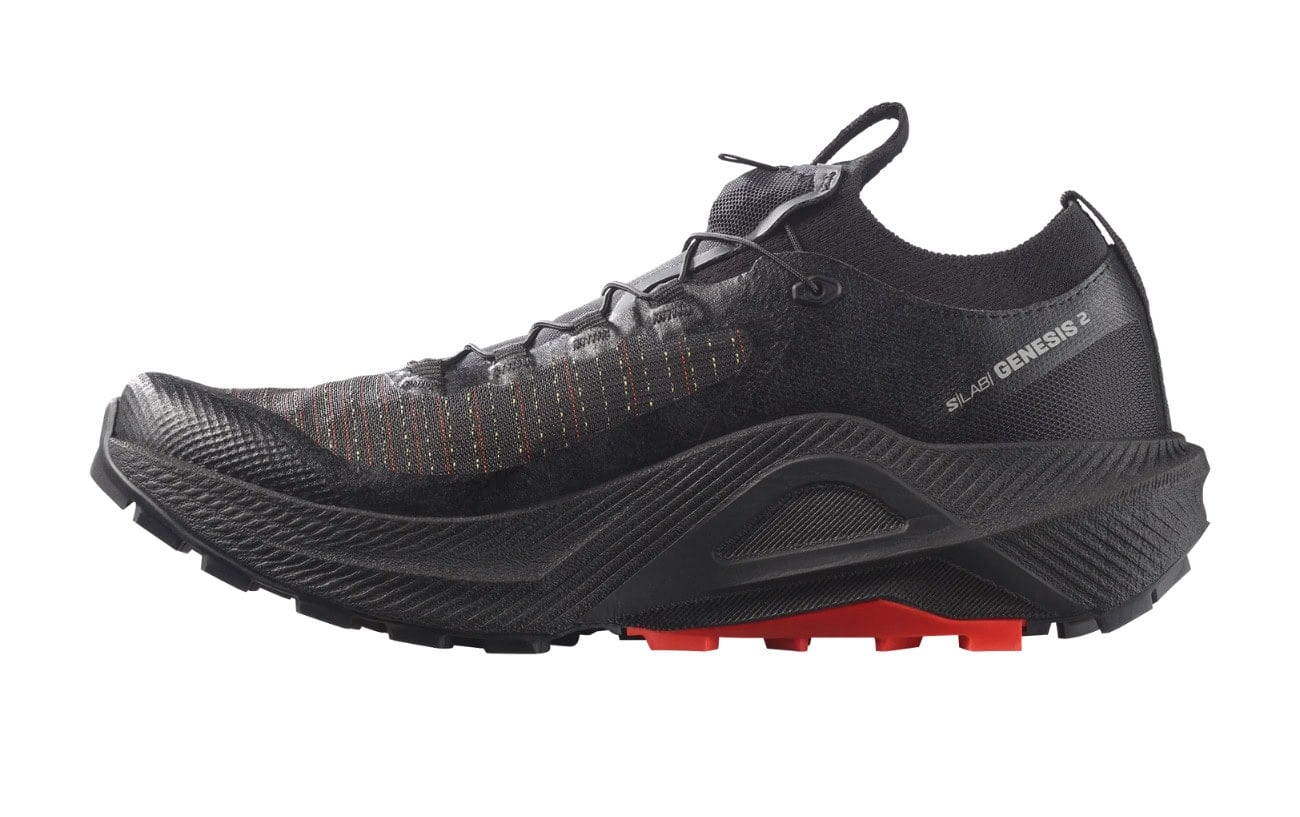
- Midsole: dual-density optiFOAM², replacing a single EVA
- Upper: Matryx Micro, a tighter weave of the Kevlar-reinforced textile Salomon used before
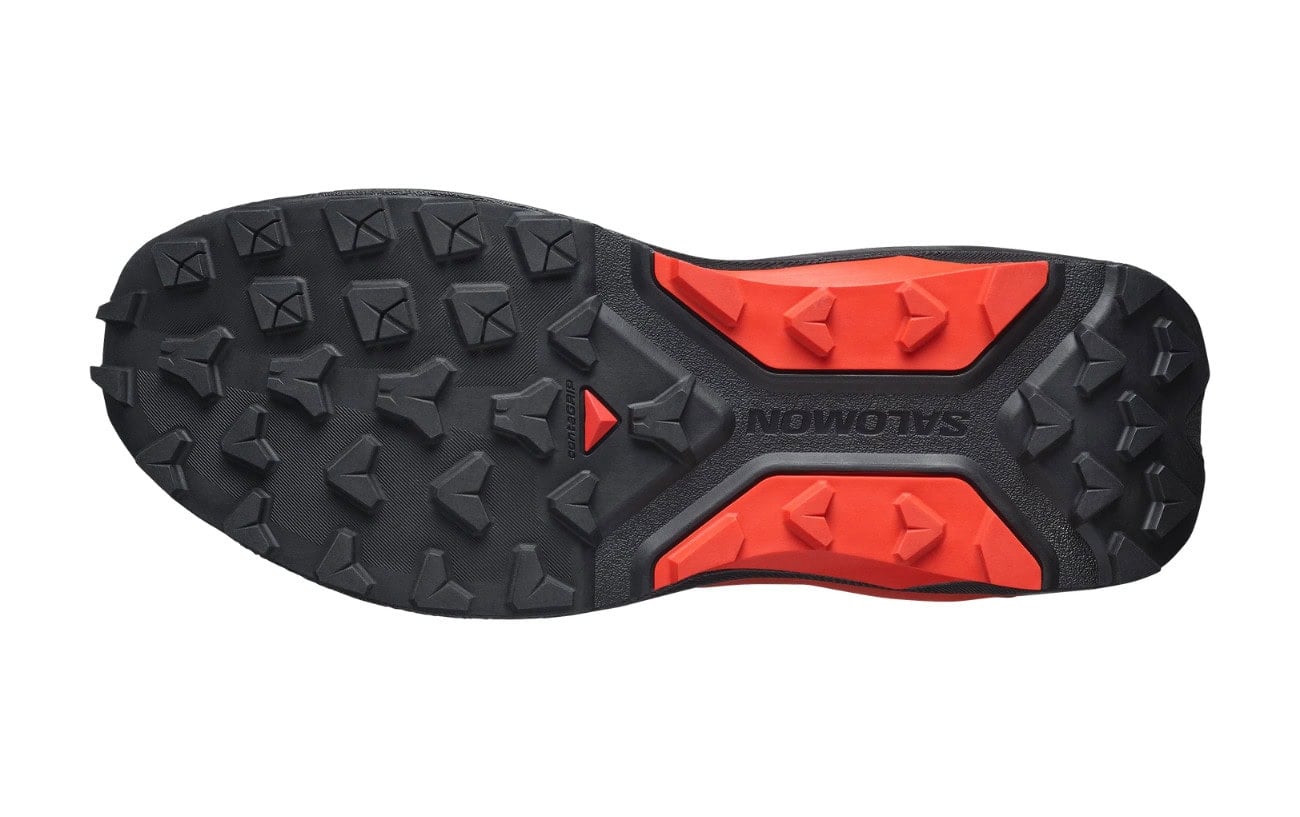
- Outsole: All-Terrain Contagrip, 4.5 mm lugs
- Chassis: integrated activeChassis in place of the Profeel Film rock plate (per Gear Patrol’s rundown of the changes)
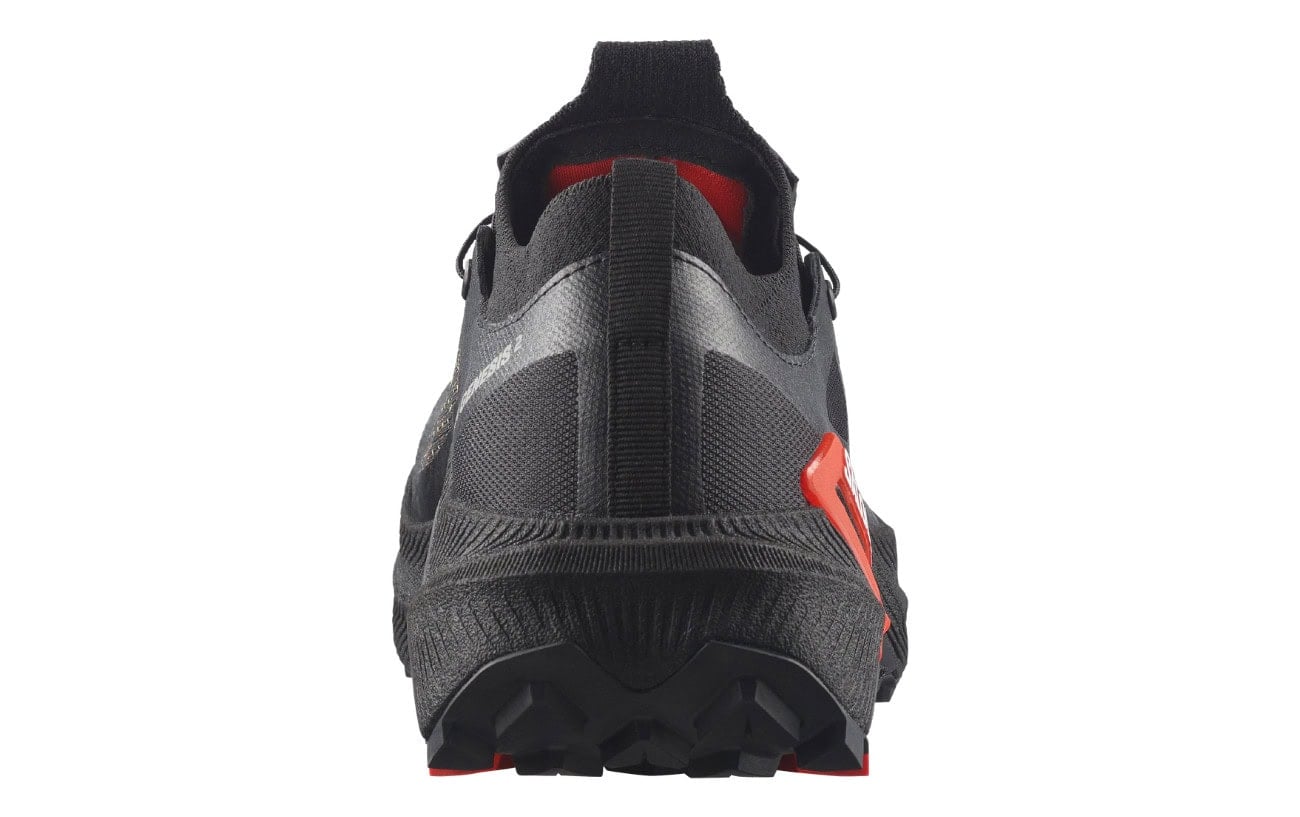
- Lacing: quicklace
Salomon’s own line on the new tooling is 23 percent more ground contact from a wider platform. Brands say things like this constantly and most of it can’t be checked from inside a running shoe. But this one I could feel, which surprised me, and I’ll come back to it.
The 2 mm the shoe lost off its heel-to-toe drop is the first thing I noticed and the thing I’d warn people about. My calves grumbled for two runs. By the fourth they’d gone quiet and I never thought about it again, but if you’re coming out of an 8 or 10 mm road shoe, give yourself a couple of easy sessions before you point these up anything steep. There’s decent evidence that lower drop shoes change how the lower leg gets loaded, and the adjustment can feel pretty significant for some runners, even when it’s brief.
The Vertical Kilometer
A vertical kilometer is exactly what the name promises, which is 1,000 meters of climbing, with the rule being that it has to happen inside 5 km of horizontal distance. The famous one in Chamonix does it in 3.8 km. The route goes from the edge of the old town straight up underneath the Brévent cable car line, switchbacking beneath the wires at an average gradient of around 26 percent, and finishes at the Planpraz lift station. For scale, the fastest vertical kilometer anyone has ever run is Rémi Bonnet’s 27:21, set at Fully in Switzerland last year. The rest of us take rather longer.
The lower half is steep but it is still recognizably a trail, and on a good day parts of it are runnable. The top third stops being a trail. There are ladders, fixed cables and metal rungs bolted into the boulders, the path narrows with real drops beside it, and getting up the last of it uses your hands as much as your feet.
What it does, for a shoe, is strip out every variable except the one I cared about. There’s no flat and nowhere to coast, only an hour or so of putting your foot on something steep and asking the shoe to stay where you put it.
The S/Lab Genesis 2 is very good at that, and the reason is that it’s firm. The stack is low, the foam barely compresses when you drive off it, and what comes back is a direct line to whatever you’re standing on. On the rocky steps I could feel the edge of the rock without being punished by it, which is the balance every technical shoe is chasing and most of them miss in one direction or the other. Softer shoes swallow the information, and thinner ones leave your feet bruised by the bottom of the descent. On the scrambling near the top, where you’re weighting the front of the shoe on small edges, that firmness is the whole reason you can trust it.
The heel is where it let me down. On the steepest pitches I got a bit of lift, not enough to stop me but enough to be aware of. Some of that is the lacing, which I’ll get to. Some of it might just be my heel.
The Glacier Run, and the Point Where I Stopped Thinking
The run I keep coming back to is the one up to the glacier. It’s rock and moraine, with sections closer to a scramble than a run, and it’s exactly the surface where my brain usually spends the whole time working out where the next foot goes.
Somewhere up there it stopped doing that. I wasn’t choosing lines defensively any more. I was looking at the Mer de Glace instead of at my shoes, which for me is close to a first.
This is the point in a review where writers start reaching for language the shoe hasn’t earned, so here’s the plain version of what I think was happening. The platform is wide and the activeChassis keeps your foot sitting on top of it instead of rolling toward an edge. When you put a foot down on ground that isn’t level, and up there almost none of it is, the shoe stays under you. You make fewer small corrections, you stop bracing for the ones that might be coming, and eventually the whole question drops out of your head.
That’s Salomon’s 23 percent doing something. I can’t verify the number with my feet, but I can tell you the shoe is more planted than anything I’ve run in.
Grip, and Where I Still Slowed Down
The Contagrip was excellent all week. Dry hardpack, dust over firm ground, rock, the loose stuff coming off Brevent, and I never had a moment. On damp rock and wet roots in the forest it held better than I expected it to, which is where I’d assumed I would find the limit.
It isn’t magic. On genuinely slick or very wet rock I was still careful and still picking my line, and any review that tells you a rubber compound has solved wet stone is not describing a real run. But there’s a difference between being careful because you’ve decided to be and being careful because the shoe has given you a reason, and I only ever got the first kind.
The 4.5 mm lugs bite in soft ground without feeling like stilts on hardpack, which matters more than it sounds when a single Chamonix hour puts you on four surfaces.
Coming Back Down
I expected to hedge here and I don’t need to. The S/Lab Genesis 2 descends as well as it climbs, which is rare. Most technical shoes are better in one direction and you work out which within ten minutes of pointing them downhill. This one held my foot, kept my toes off the front on long steep ground, and gave me enough protection through the forefoot that I stopped flinching at rock. Downhill running is the weakest part of my running and the shoe made it look better than it is.
Sizing was true for me, on an average width, average volume foot. I wouldn’t size up.
The Quicklace, Which Is the Thing I’d Change
This is my one real complaint, and it isn’t a small one. The quicklace kept coming undone. I was re-tensioning it mid-run all week, usually right before or partway into a descent, and twice the slack was enough that small stones found their way in over the top of the shoe. On a training run that’s an annoyance. On a race it’s a stop, and stopping to deal with a lace on a 100K is exactly the sort of tax that adds up over a day.
I suspect it’s also behind the heel lift on the steepest climbing. If the lace is walking loose over the course of an hour, the foot isn’t going to stay locked, and it seems unfair to blame the fit for something the closure is doing to it.
Quicklace is a proven system and plenty of runners get on with it perfectly well. It’s still the one part of this shoe that made me think about the shoe, when everything else about it works by disappearing.
Two smaller things are worth flagging. The Matryx Micro upper runs hot, and I noticed it on warm afternoon climbs, so bear that in mind if you’re racing in real summer heat. It also feels seriously tough, the kind of material you’d expect to survive being dragged across rock repeatedly, and after a week of exactly that the shoes look almost new. No rounding on the lugs, no abrasion worth mentioning, no creasing through the midsole.
Who Should Not Buy This
If you want soft, cushioned and forgiving, this is the wrong shoe and you’ll know inside a mile. The S/Lab Genesis 2 is firm and low and connected, and that’s the whole point of it. Anyone coming off a high-stack max-cushion trainer will find it harsh, and no amount of breaking in changes what 31 mm of firm dual-density foam is.
It’s also more shoe than most people need for smooth, runnable trail. If your local routes are groomed paths and buffed singletrack, you’re paying for capability you’ll never call on, and our tested picks across the wider trail category cover that ground for less money.
And if you’re new to trails and all your reference points are road shoes, as mine were, take the drop warning above seriously. Going from road to trail already asks plenty of your lower legs.
Is $200 Defensible
Yes, and the comparison is what makes the case.
When we went through what the 2026 UTMB podium actually wore, the six shoes that crossed the line came in at $325 for the norda 055, $280 for Ben Dhiman’s Asics, $275 for Hoka’s Tecton X 4, and $260 each for the On Cloudultra Pro and the Nike ACG Ultrafly. Against that lineup, $200 for a shoe with an S/Lab badge on it sits at the cheap end of the elite bracket.
It’s worth saying, though, that no Salomon appeared on either UTMB podium this year (though we did see them in the shorter races), in a race the brand has historically owned. Dhiman won in 18:16:29, Blandine L’Hirondel in 21:54:49, and nobody in either top three was in Salomon. That tells you nothing about whether this shoe works, and sponsorship decides most of what shows up on a finish line anyway. But it’s the honest context for a week spent being told by a brand how good its shoe is, and I’d rather hand it to you than leave it out.
Would I race a long mountain ultra in these? Yes, and I’d trust them out to 100K and past it, with the obvious caveat that I haven’t run one and my judgment there is about the shoe rather than about the distance. What I can say is that six runs on some of the hardest ground in Europe didn’t show me a ceiling.
Salomon also sells the standard Genesis 2 at $150, same Matryx-family upper, same All-Terrain Contagrip, on a taller 33.5 mm stack and an 8 mm drop, without the second density of foam. For a lot of runners that’s the smarter buy, and it’s the pair I want to put a proper month into next.
RunClub — Free
Join 300,000+ runners in RunClub
Free training plans for every distance, a daily running game, exclusive coaching content, and a real community of runners. Create your free account in 20 seconds — no card.
Already a member? Log in →



Start the conversation