


Update — 27 April 2026: Since this article was published, Sabastian Sawe became the first man to officially run a marathon under two hours, clocking 1:59:30 at the 2026 London Marathon to break Kelvin Kiptum’s previous men’s world record (2:00:35) by 65 seconds.
Predictions in running usually age badly. Either they overestimate how fast the sport changes, or they underestimate how stubborn it can be. The truth tends to sit somewhere in the middle. Big shifts rarely arrive as shocks. They build slowly, then get formalized once everyone has already adjusted.
What follows isn’t wish-casting or trend forecasting. It’s an attempt to connect the dots that are already visible.

Cape Town becomes a World Marathon Major, and Shanghai follows not long after
Cape Town’s push toward World Marathon Major status hasn’t been perfectly clean. The race was cancelled this year because of extreme wind, a decision that disappointed thousands of runners but was made on safety grounds.
The more relevant detail is that Cape Town still moved through the Majors evaluation process. The cancellation didn’t derail it. Abbott clearly didn’t see the decision as a failure, just a race responding to conditions it couldn’t control.
Shanghai sits in a similar position. It’s already inside the same candidate structure, and its inclusion aligns with where the Majors see future growth. Once the series accepted expansion with Sydney, it stopped being a closed club. If Cape Town becomes the eighth Major, Shanghai becoming the ninth feels less like a leap and more like the next administrative step.

A woman runs 2:10 or low-2:11, and the record conversation turns uncomfortable again
The women’s marathon world record still officially belongs to Ruth Chepngetich. Her 2:09:56 from Chicago remains in the books, even after her later doping ban, because the positive test came months after the race and there was no legal basis to retroactively strip the result.
So, on paper, the record stands. In reality, it sits on uneasy ground.
A performance in the 2:10 or low-2:11 range wouldn’t exist on its own anymore. It would land in the middle of an unresolved mess, and the reaction won’t be uncomplicated. The time would be impressive, but it would also trigger the same arguments the sport has been circling since Chicago. The focus wouldn’t stay on the race for long.
Women’s marathon racing is deeper than it used to be. More athletes are capable of running fast on legitimate courses, and races are being contested earlier instead of turning into survival tests over the final 10K. Big times are showing up more often, which is why the next standout performance won’t feel like a one-off.
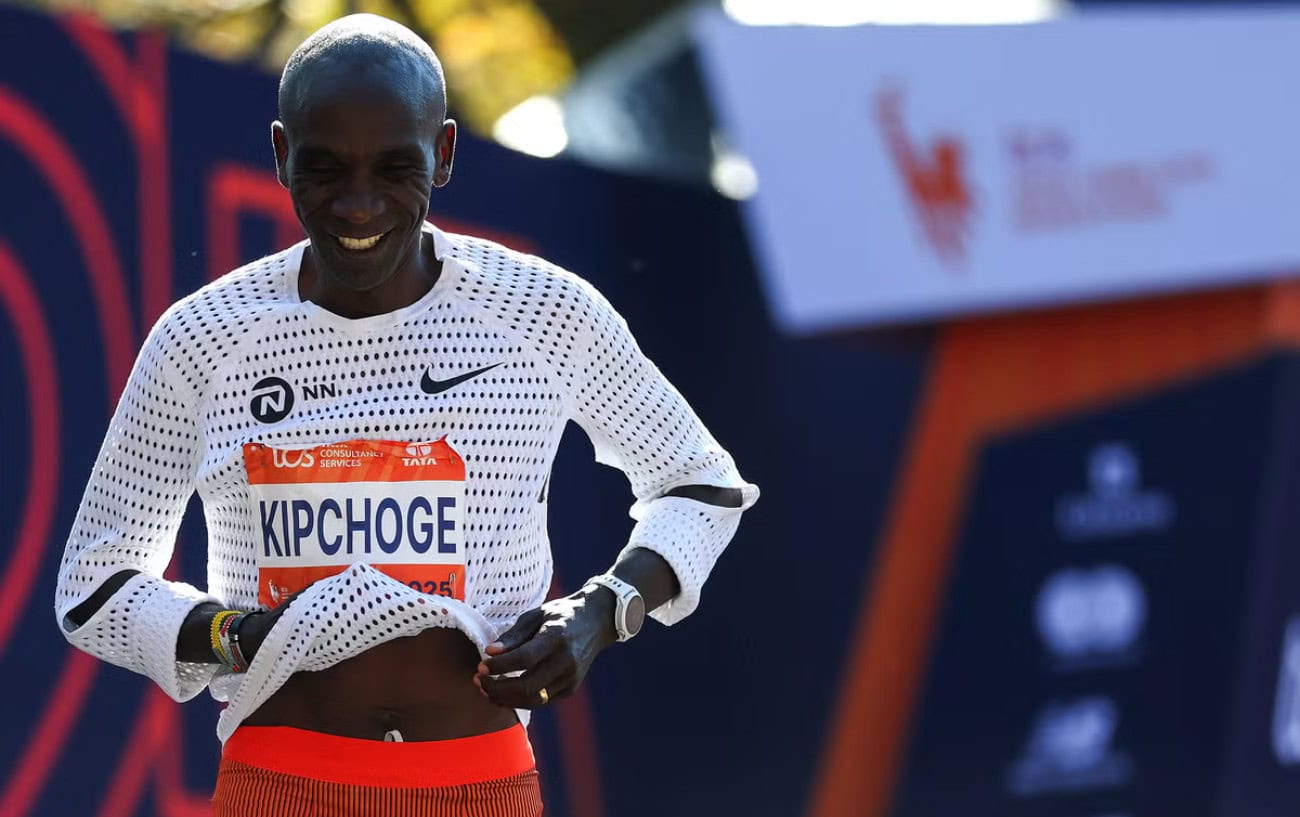
Kipchoge wins another marathon, just not one of the biggest ones
Kipchoge is no longer building his seasons around the World Marathon Majors, and that’s been fairly obvious for a while. His recent race choices haven’t been about defending titles or chasing stacked fields, they’ve been about showing up in new places and racing on different terms.
That makes another Major win a stretch, not because he’s suddenly irrelevant, but because the Majors have changed. Fields are deeper, tactics are more aggressive, and there’s less room for the kind of controlled, patient racing that defined his peak years. Younger athletes are willing to take risks earlier, and races break open faster than they used to.
Away from that environment, Kipchoge is still dangerous. He’s been in the game a long time, rarely makes tactical mistakes, and he’s comfortable letting chaos play out in front of him. In the right race, against the right field, that still counts for something. A win in 2026 doesn’t feel unrealistic, per se, it just feels more likely to come somewhere outside the Majors.

London passes 60,000 finishers, and New York refuses to be second
London and New York have both started treating field size as part of the event itself. London’s jump past 56,000 finishers showed how far the ceiling has moved. New York’s response, edging back ahead soon after, made it clear this wasn’t accidental.
Neither race looks interested in pulling back. Demand is still extreme, and both cities have spent years figuring out how to move, start, and finish enormous fields without breaking the event. What once felt unwieldy is now built into the system.
London clearing 60,000 finishers feels realistic. New York going a bit further after that wouldn’t be surprising. At this point, the question isn’t whether these races can handle more runners. It’s whether they see any reason not to.
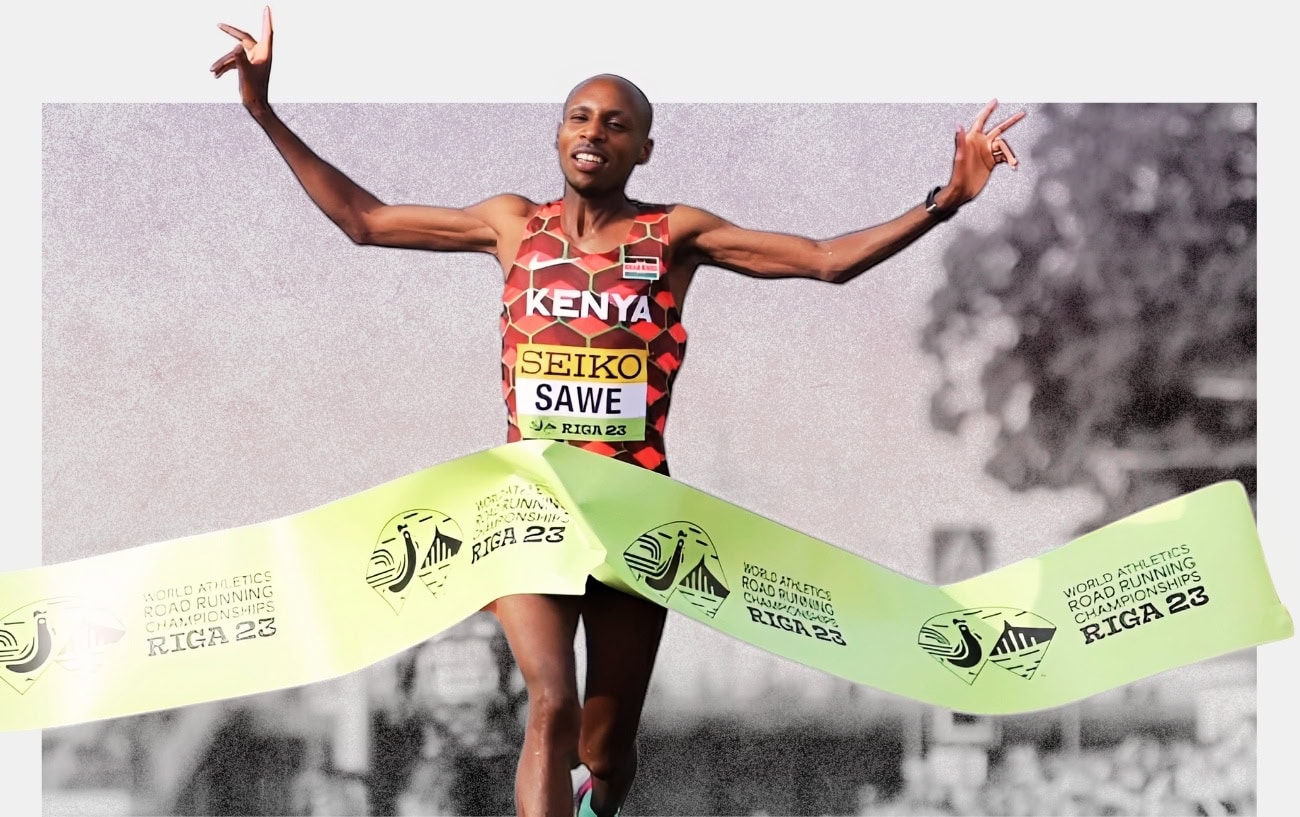
The men’s marathon stays just above two hours
The men’s marathon world record is still Kelvin Kiptum’s 2:00:35, and nobody yet looks like they’re truly on the verge of pushing that under standard race conditions.
The three athletes most often mentioned as the next big players are Sabastian Sawe, Jacob Kiplimo, and John Korir. On paper, having all three in the same race would be the closest real test most of us may have seen in years. They’ve shown they can run fast, but even together they haven’t come close to seriously threatening the record.
Sawe’s season has been the clearest example.
He ran 2:02:16 to win the 2025 Berlin Marathon, a world-leading time and one of the fastest marathon performances in history. That run came on a day when conditions were warmer than typical for September in Berlin, and many runners claimed the heat was a big factor slowing overall times.
Despite pacing himself through the first half at record-pace splits, he fell off world-record pace in the latter stages and still finished with one of the quickest times the sport has seen in those conditions. That shows how talented he is, and how much promise he shows, but also how much the weather and other variables still matter.
Kiplimo and Korir have had moments, Kiplimo with his half-marathon world record shape and Korir with wins in Boston and Valencia, but neither has closed the gap to within striking distance of the world mark.
Sawe’s efforts were the clearest signal so far that the record might be within sight for this generation, but even his best performances on hot days aren’t enough to leap over the current benchmark. And building predictions on what might happen in perfect conditions only takes you so far; until someone actually runs significantly closer to the record under real race conditions, sub-two in an eligible marathon remains on the far side of ambition rather than just out of reach.

Nike releases another shoe that makes everyone argue again
Nike has never shown much interest in standing still. Recent updates to its racing lineup suggest the company is still pushing design boundaries, even if those changes are incremental on paper.
The next shoe doesn’t need to break any rules to cause friction. Small changes in geometry or foam behavior can meaningfully alter how races unfold. When Nike introduces something materially different, the ripple effects are immediate. Athletes switch. Other brands respond. Officials get dragged back into regulatory discussions they’d rather avoid.
By now, this cycle is familiar. Performance improves. Debate follows. The sport adjusts. Another shoe in 2026 that restarts that cycle would surprise no one.

Strava becomes a coaching platform, and Runna fades into the background
Strava buying Runna didn’t come as much of a shock. Strava has been inching toward coaching for years, layering more analysis and automated feedback onto activities that used to just sit there as data points. Runna gave them something they didn’t have yet: ready-made training plans that people were already paying for.
Once that deal happened, it became harder to see where Runna fits long-term as a standalone app. When your runs already live on Strava, and your feedback shows up there too, opening a second app for training plans starts to feel unnecessary. And most users really don’t care where the plan comes from, they care that it shows up when they open the app they already use.
That’s probably where this is heading. By 2026, training plans will feel like a Strava feature, not a separate product you go looking for.

Kiplimo’s half marathon record never gets fully signed off
Jacob Kiplimo ran 56:42 for the half marathon nearly a year ago, and it’s still listed as pending ratification. That alone stands out. World records in road running usually move through the process in a matter of months, especially when they’re set at major races with full doping control and timing systems in place.
For comparison, Ruth Chepngetich’s 2:09:56 marathon world record was ratified quickly after Chicago. Yomif Kejelcha’s half-marathon world record also cleared within roughly five to six months. Kiplimo’s mark has now been waiting significantly longer than either, with no public explanation.
The size of the performance likely plays a role. Kiplimo didn’t edge past the previous record, he took nearly a minute off it. In a discipline where records usually fall by a few seconds at a time, that kind of jump invites extra scrutiny. Add in questions around race setup and pacing assistance, and the review process stops being routine.
At this point, the delay itself has become the story.
RunClub
Get more running stories — join RunClub
Daily running news, a community of 300,000+ runners, free training plans for every distance, and a daily running game. Free to join — no card.
Already a member? Log in →








Start the conversation