


I once set an alarm for 4 a.m. to watch a Kenyan man run a fast lap of a Vienna park.
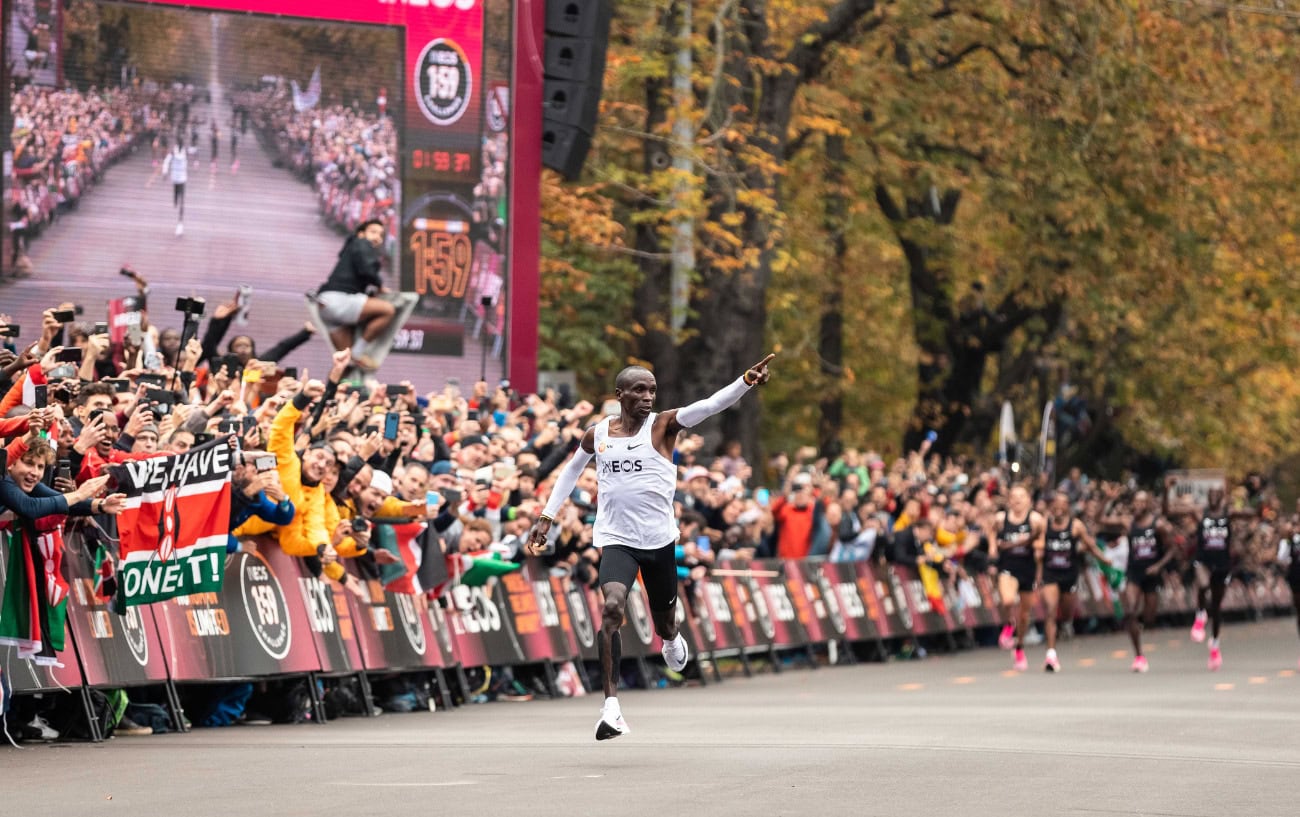
It was October 12, 2019. Eliud Kipchoge crossed the line in 1:59:40.2 and dropped to his knees in front of a wall of pacers in matching black singlets. He had just done the thing nobody had ever done. He had also done it in a way that didn’t count — a shielded V-formation of rotating elites, an electric car pulling him through the air, a hand-off scheme tighter than a track relay.
It was a science experiment in a runner’s kit. World Athletics would not ratify it. We knew that going in. We watched anyway, because watching it was watching the limit of the thing.
For most of the seven years since, I assumed that was the closest we would get for a long time. Maybe a decade. Maybe a generation. The marathon doesn’t do dramatic discontinuities. It does twenty-second nibbles at a record stretched by mid-pack carnage and the wind.
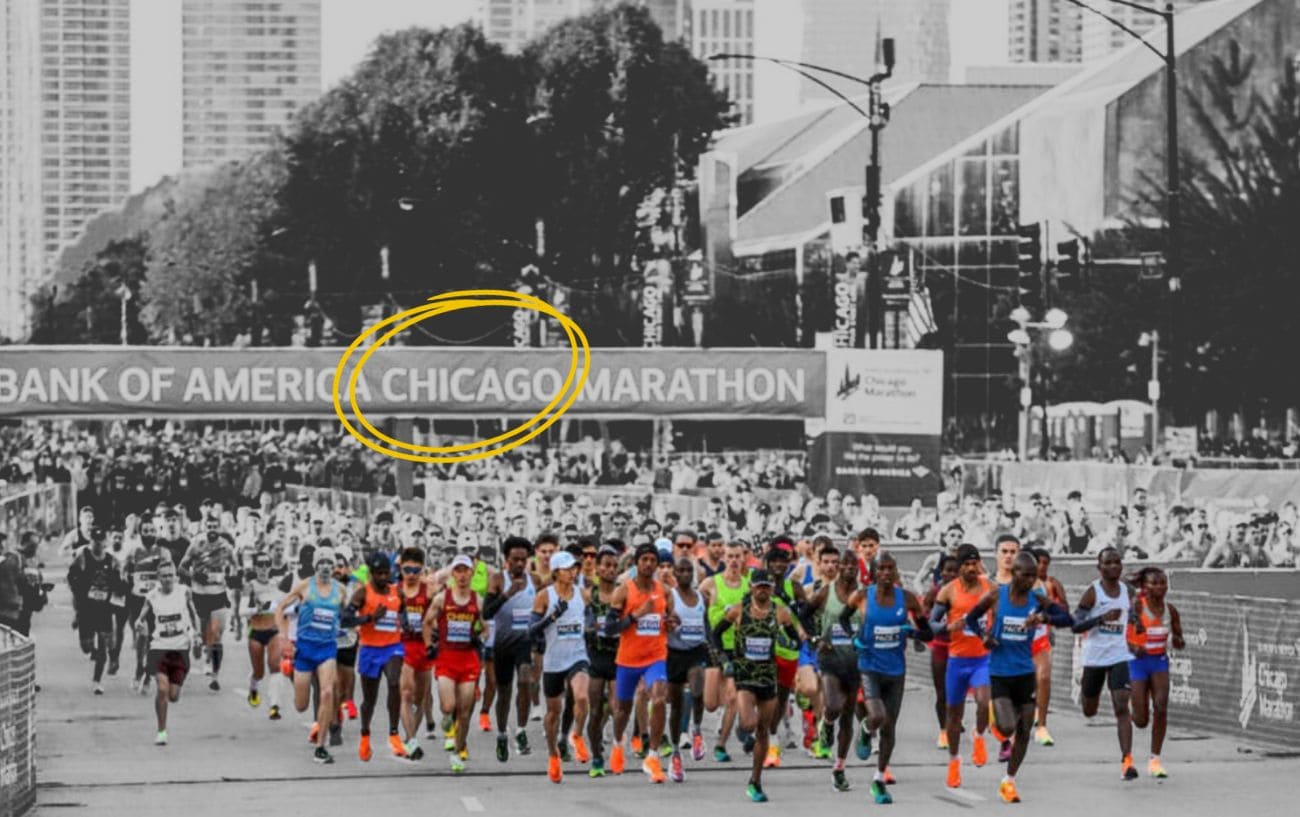
Then Kelvin Kiptum showed up and ran 2:00:35 in Chicago in October 2023, and for a while it felt like the door was about to come off the hinges. Four months later he was dead in a car on a Kenyan road, twenty-four years old.
For the last two years there has been a sub-two-shaped hole in the sport. We didn’t know whose breath was supposed to fill it.
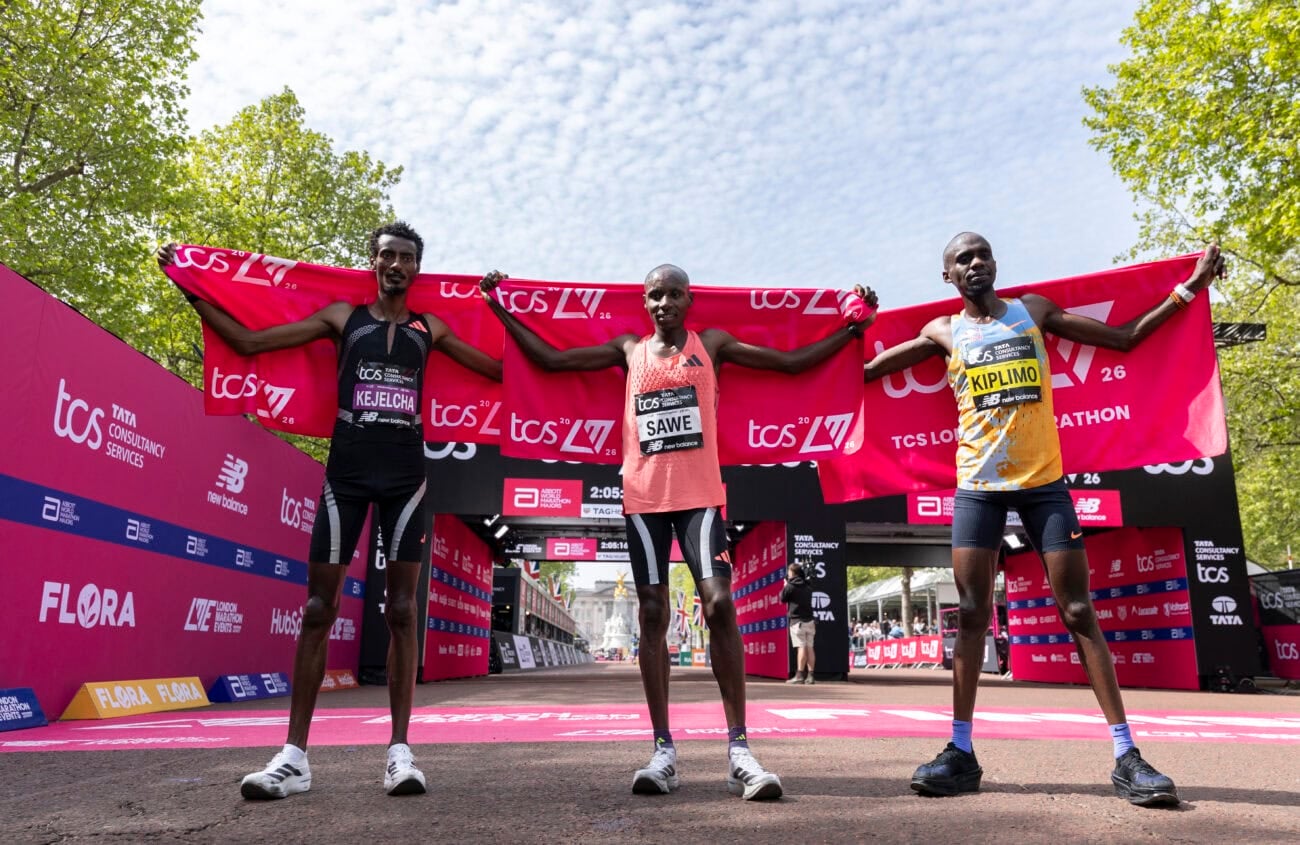
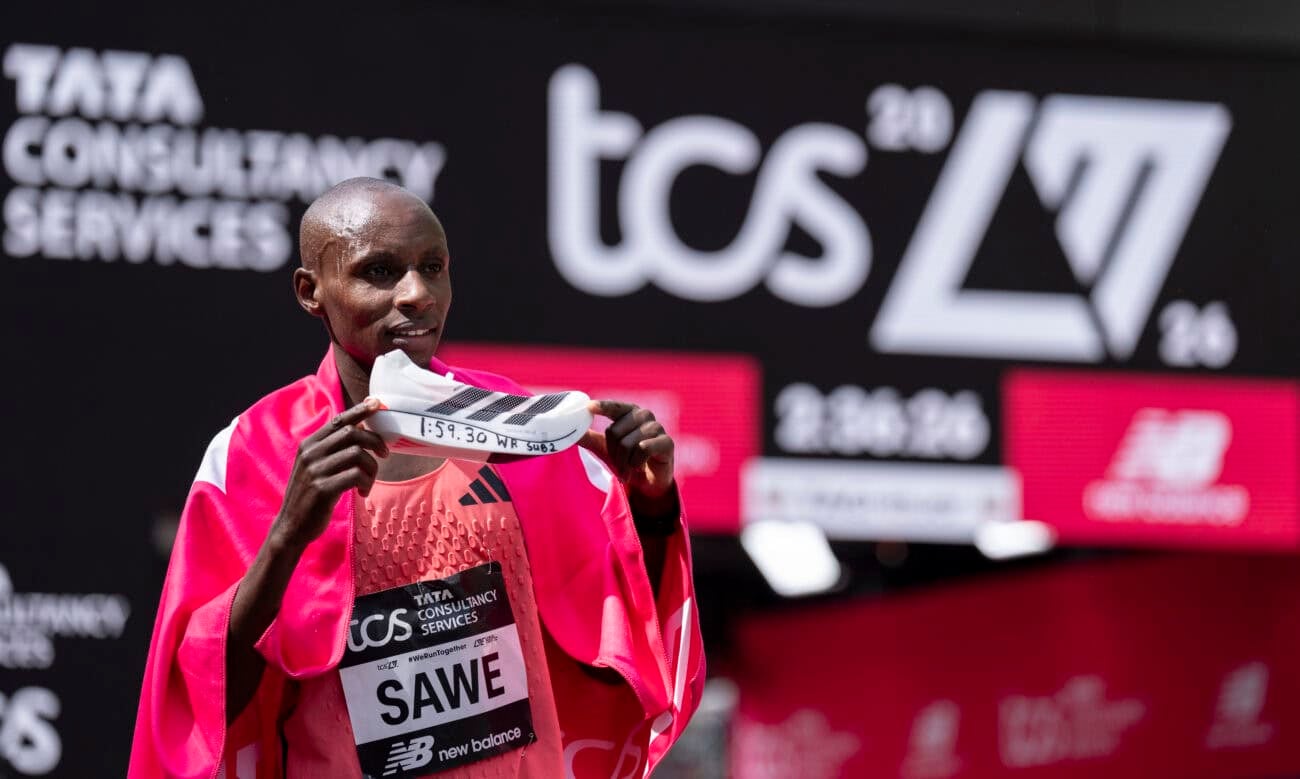
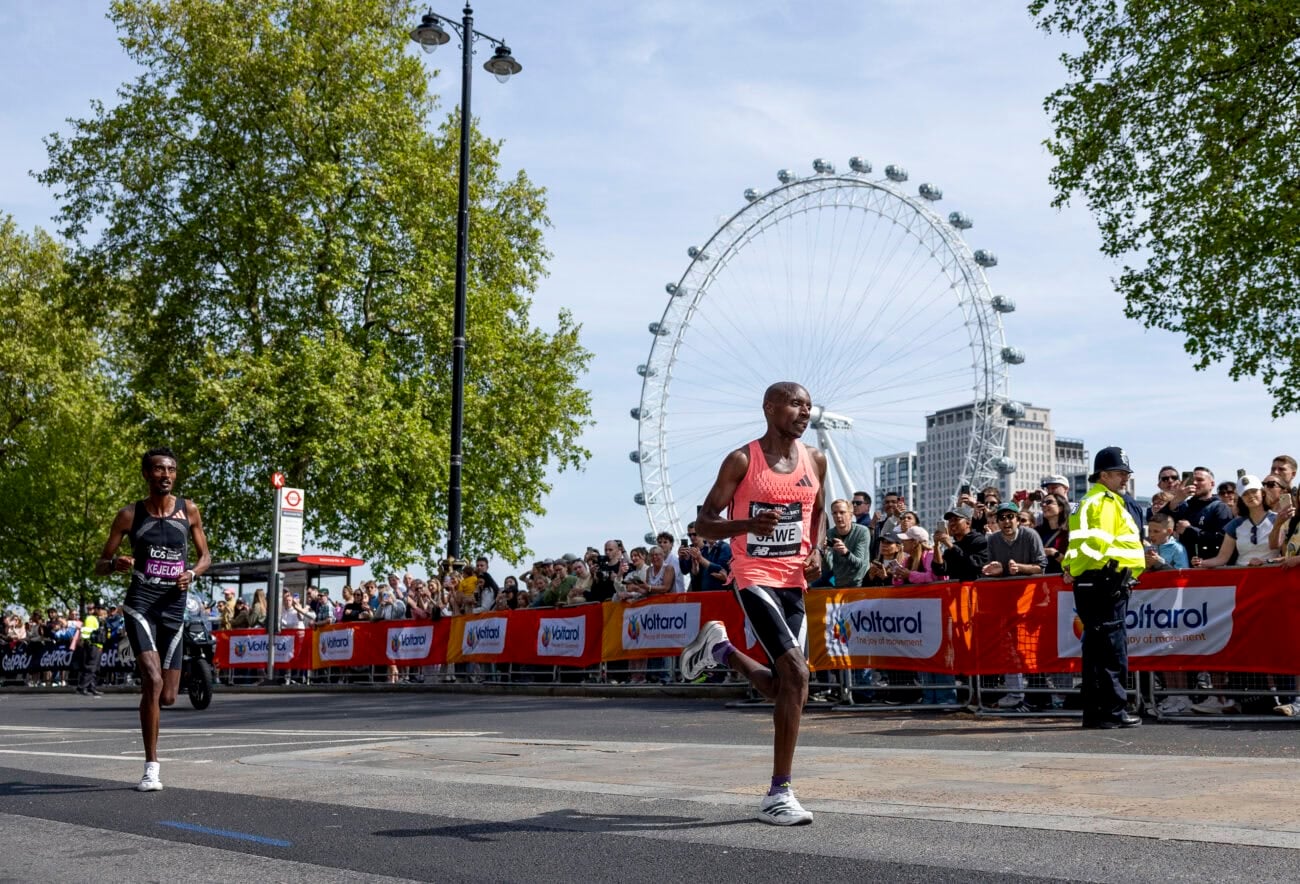
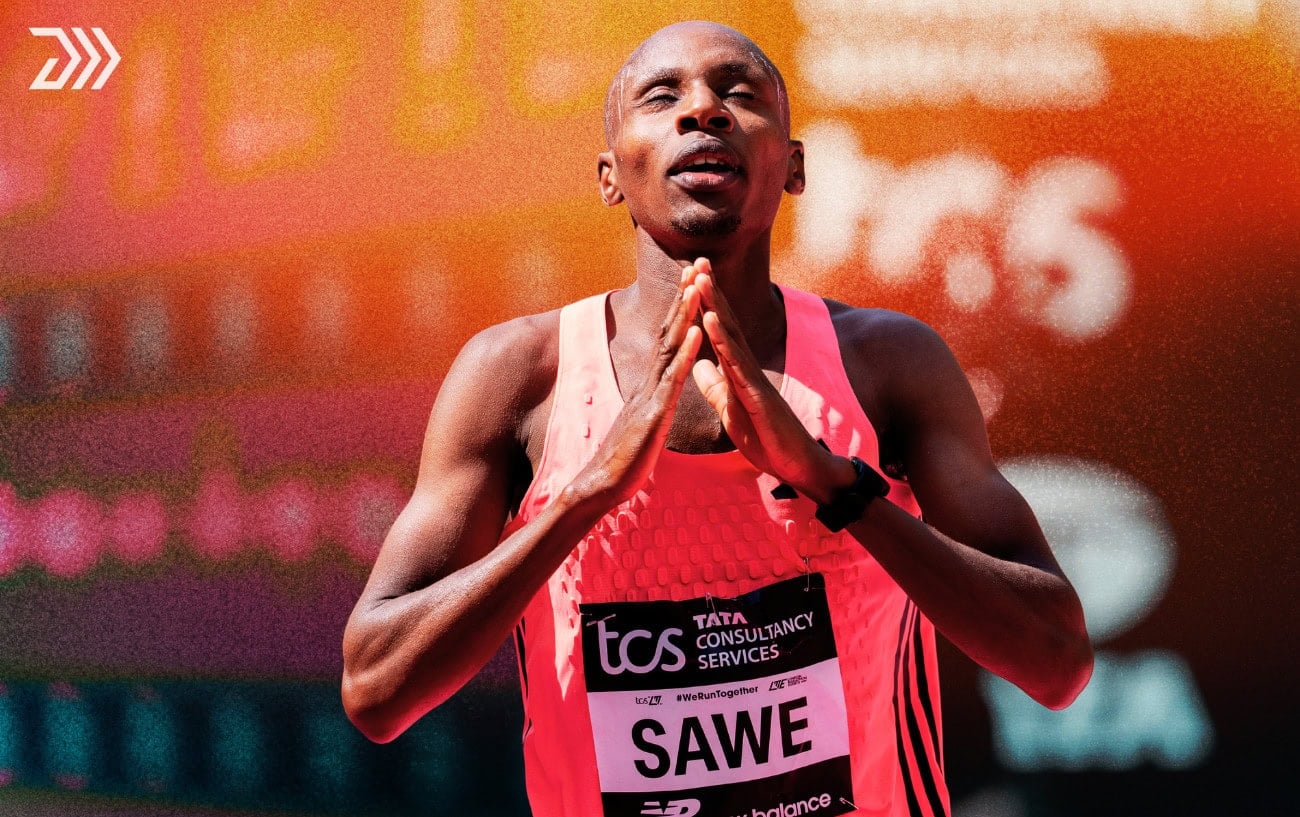
On Sunday morning, Sabastian Sawe ran 1:59:30 in a London Marathon that will be ratified as a world record. Yomif Kejelcha came home in 1:59:41, eleven seconds behind him. Jacob Kiplimo took third in 2:00:28, also under the previous absolute world record. Three men inside Kiptum’s old time. Two of them under two hours. The barrier didn’t fall. It got run through.
I want to argue something that might sound counterintuitive after a morning like that: the marathon is harder, more interesting, and more open than it has ever been. We didn’t kill the final boss. We just got introduced to the next one.
Depth is the new ceiling
The headline is the time. The story is the field. Six men finished London 2026 inside 2:04. Six. That number does not sound staggering until you set it down next to the eras that built this sport.
In 1999, Khalid Khannouchi ran 2:05:42 in Chicago and became the first man under 2:06 — the only one in history at that moment. In 2018, when Eliud Kipchoge ran 2:01:39 in Berlin to set a then-world record, he was the only finisher in his own race under 2:04. The runner-up that day was four and a half minutes behind him.
On Sunday in London, six men were under 2:04 in a single morning, and the slowest of them — Deresa Geleta in 2:03:23 — ran a time that would have been the absolute world record at any point before 2014.
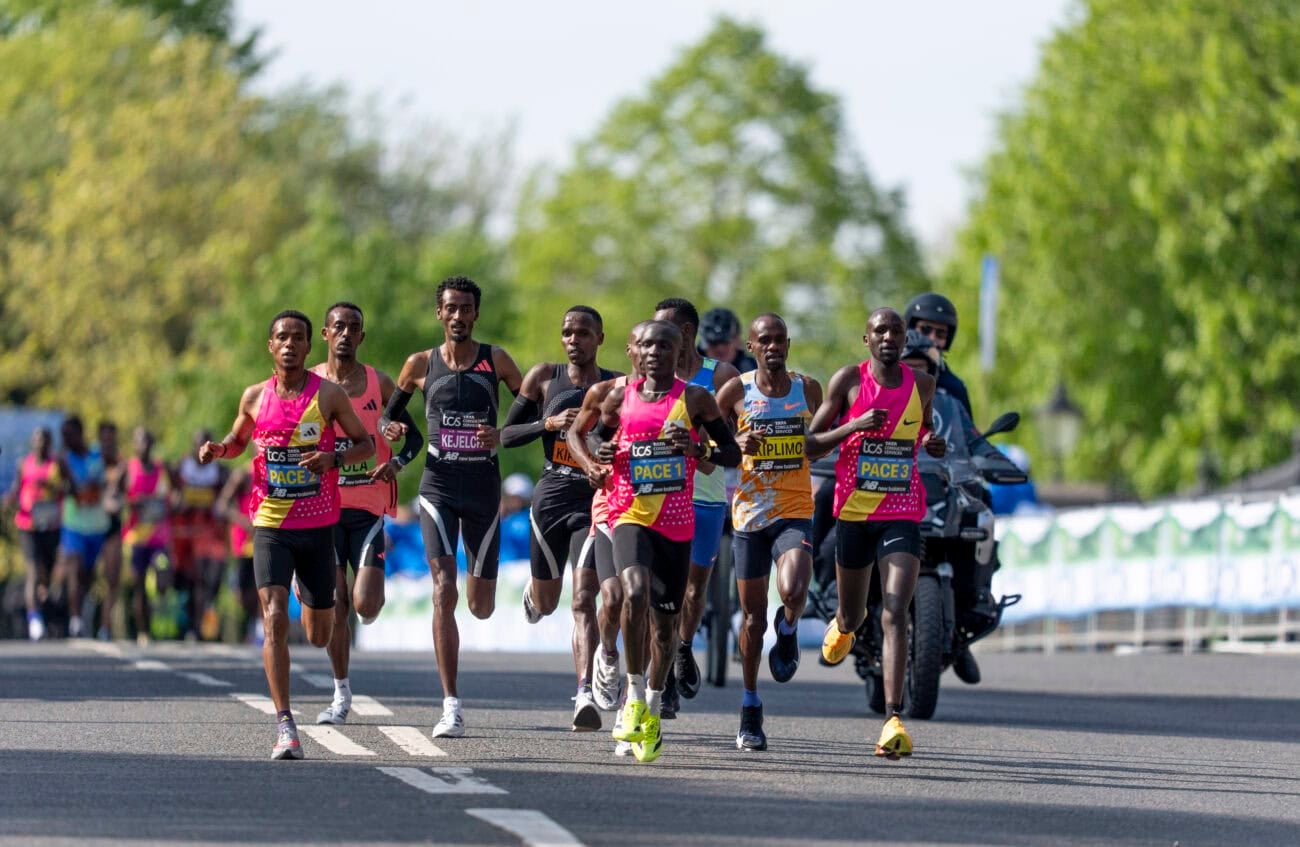
Behind the podium is where the new floor lives. Amos Kipruto ran 2:01:39 for fourth place, a personal best by more than a minute, on a day in which it earned him no flowers. Tamirat Tola, an Olympic and World Championships medallist, ran 2:02:59 for fifth. Geleta took sixth. The first six men averaged 2:01:17 — fifty-eight seconds faster than Kipchoge’s first official world record.
The implications of this for how the sport is actually run are concrete. Ten years ago, you could put yourself in the lead pack at London with 2:05 fitness, count on attrition to thin the group, and let your training tell you what to do at 35K.
In 2026, the front pack went through halfway in 1:00:29 — Kiptum’s old world-record pace — six men deep and unblinking. Sawe then ran the back half in 59:01, a negative split of nearly ninety seconds in a marathon already on world-record pace.
There was no attrition to wait for. There was no place in the pack to hide. There was a hammer being passed from runner to runner for two hours, and the man who won was the man who could keep swinging it longest.
Selection effects are going to follow. The 2:05 marathoner who used to be a serious major contender now isn’t one. The 2:06 marathoner who used to anchor a national team is now mid-pack at a domestic trial. In a sport where every spot on a major start line is paid for in years of work, the ladder just had two rungs lopped off the bottom.
That changes who gets sponsored, who gets a Berlin invite, whose career is even financially viable in a country with one or two professional contracts to give. London 2026 was not just a fast race. It was an inflection point in what the floor of the professional marathon now is.
Championship racing is going to matter again
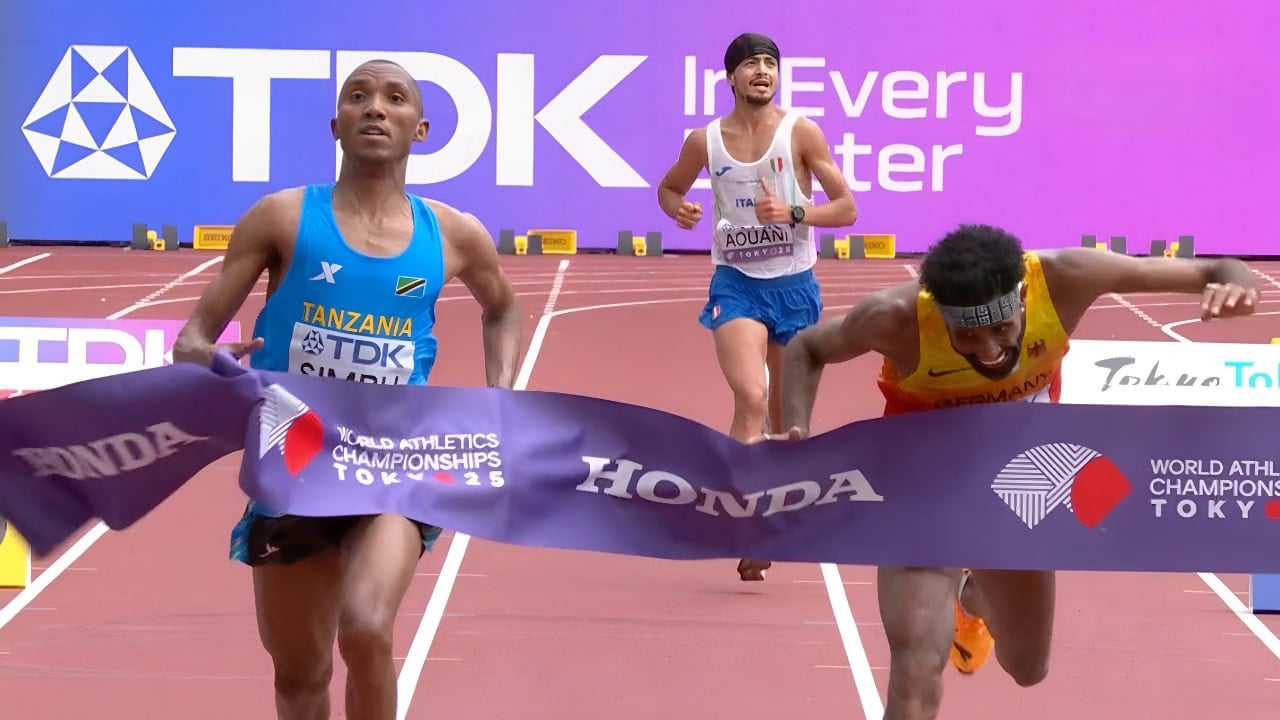
There are two marathons left on the immediate horizon that the sport actually uses to settle its hierarchy. The 2027 World Championships in Beijing. The Los Angeles Olympic Games in 2028, on a course that will climb out of the coastal flats, work its way through the Santa Monica Mountains, and finish in late-summer Southern California heat.
Neither will be run in 1:59:30. Neither has been. Neither needs to be.
The Olympic marathon record sits at 2:06:26 — Tamirat Tola in Paris in 2024. In the sixteen years since Sammy Wanjiru ran 2:06:32 in Beijing in 2008, the Olympic record has come down by six seconds. In the same span, the men’s world record has dropped by more than five minutes.
The gap between the fastest flat-course marathon ever recorded and the fastest Olympic marathon ever recorded has gone from about two minutes to nearly seven. The pacers don’t show up to championships. The shoes still do, but the conditions don’t cooperate, and the field can’t lean on a steady metronome at the front of the pack.
That gap is the actual frontier of this sport. It is the marathon’s most stubborn ceiling, and London 2026 just made it more conspicuous.
Sawe’s 1:59:30 happened in optimal weather, on a closed and certified course, with a rotating pace train through much of the race and a calculated pace plan. None of those conditions exist in Los Angeles on a hot August Sunday in 2028. The runner who wins LA will likely run thirty to sixty seconds per mile slower than Sawe did on Sunday. He will need a different toolkit. Tactical patience. Heat adaptation. The capacity to break a man at 38K with a 4:35-mile surge rather than a metronome. The willingness to be in fourth place at 30K with the lead pack still ten strong, and not panic.
This is why the most interesting marathoner of the next two years might not be a 1:59 man at all.
The runners who are betting their careers on Beijing 2027 and LA 2028 are training for an entirely different physiological problem — one that almost no current sub-2:02 marathoner has yet solved at the highest level. The historical pattern is unambiguous. Track 5,000m and 10,000m champions who can survive heat. Cross-country specialists rooted in unpaced racing. Athletes from federations with championship-first cultures, where you train for medals first and time second.
These are the names that win Olympic marathons. They are not, more often than not, the names that win Berlin and Chicago.
The champion of the next two years may not be the man who runs the fastest. He is going to be the man who runs the smartest in the worst conditions. That is the older form of the sport — the one we partly forgot during a decade of paced, flat-course time-chasing. London 2026 just made it the one frontier left where the existing toolkit is not enough.
So we end up back to the same question: Where does the marathon go from here?
The honest answer I see is: in more directions than it ever has before. Faster. Deeper. Younger. Wider — Sawe is Kenyan, Kejelcha is Ethiopian, Kiplimo is Ugandan, the depth pyramid widening rather than narrowing. Onto championship courses where the shoes matter less, and the lungs matter more.
In 2019 I set an alarm to watch a man chase a number we weren’t sure existed. That was an invitation to imagine. On Sunday morning I watched Sabastian Sawe write his finish time on the side of his shoe and hold it up for the cameras, and the invitation didn’t end. It just changed shape.
The final boss isn’t dead. The next boss just walked into the arena. The marathon is bigger than the barrier we just broke. We are going to find that out in the next ten years the same way we found it out in the last ten — by discovering, again, that the limit we thought we knew was a story we told ourselves, and the truth is wider, and stranger, and still being written.
RunClub
Get more running stories — join RunClub
Daily running news, a community of 300,000+ runners, free training plans for every distance, and a daily running game. Free to join — no card.
Already a member? Log in →




Start the conversation