


Towards the end of every year, we sit down and try to make sense of the last twelve months in the running world, which never feels like a simple task.
2025 was loud, unpredictable, emotional, record-breaking, and honestly, a joy to follow.
And when we hit “record” on the podcast to choose our Runners of the Year, we immediately remembered why this is one of our favorite episodes: because it forces us to look back at all the athletes who pushed the sport forward.
By the time we hit “stop” on the recording, we’d argued over tight races in Tokyo, weather in Berlin, pacers in Paris, and what exactly it means to “move the sport forward.”
The list below is where we landed: our women’s and men’s finalists, our runners of the year, and a handful of honorable mentions we couldn’t ignore.
We’re not pretending this is definitive. But it is honest to how this year felt to us. So without further ado, here are our finalists for Marathon Handbook’s Runners of the Year.
Women’s Finalists

Sharon Lokedi
Lokedi gave us one of the most jaw-dropping road performances of the year when she tore up the Boston Marathon course in 2:17:22, smashing the women’s course record by more than two minutes and outdueling the legendary Hellen Obiri in the final miles.
Boston isn’t a place where you just show up and run fast.
The hills, the weather, the depth of the field. You have to be tough and patient and a little bit ruthless.
Lokedi is all three.
Watching her hold form through the Newton hills and then refuse to give an inch over the final stretch felt like a coming-of-age story in real time.
What we kept coming back to, though, was that Boston wasn’t an isolated miracle. In New York, she came back with a 2:20:07 for second place on one of the most tactical, unforgiving marathon courses in the world.
Throw in a 65-flat half marathon win in Copenhagen, and you get the full picture: Lokedi has the speed, the strength, and the consistency to sit in the top tier of women’s marathoning now, not “someday.”
When we talked about her on the podcast, we kept describing her Boston run as something of a “line in the sand” moment: the kind of performance that forces everyone else to recalibrate what’s possible on a course we thought we already understood.
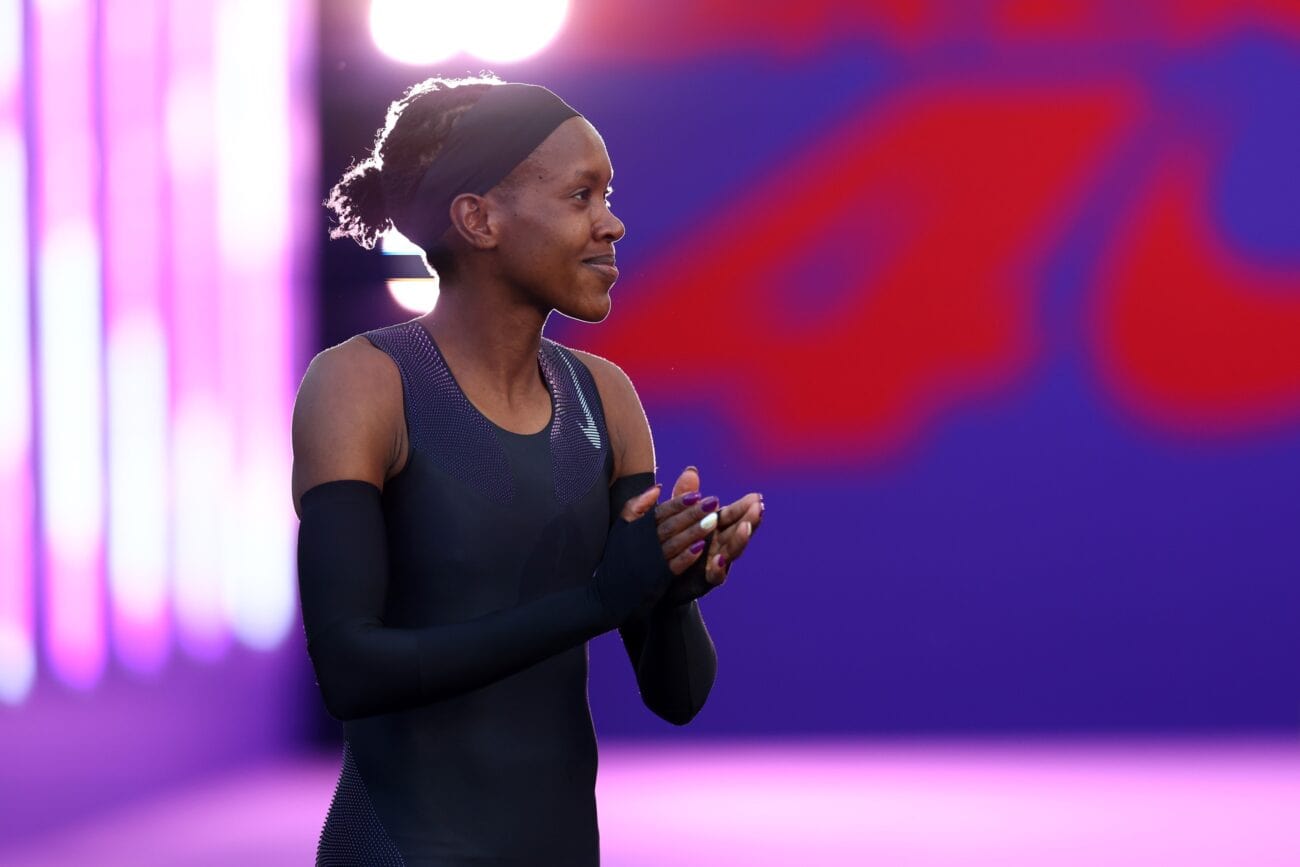
Faith Kipyegon
If we’re honest, the women’s side started as a debate and ended as a coronation.
Kipyegon’s 2025 season has three pillars: Breaking4, Eugene, and Tokyo.
First, Paris.
On a warm June evening at Stade Charléty, she toed the line for Nike’s Breaking4 mile attempt, trying to become the first woman ever under four minutes for the mile.
She didn’t make it. She hit 1200m in around 3:01 and faded to 4:06.42. But that “failure” may have been one of the most important moments of the year.
For weeks, the entire running internet argued about the setup, the pacers, the tech, the legitimacy… but underneath all of that was something bigger: millions of people, many of them casual fans, suddenly talking about a woman trying to break four minutes for the mile.
And then she went to Eugene and did what she always does: deliver.
At the Prefontaine Classic, she closed the meet with a 3:48.68 1500m, taking down her own world record and becoming the first woman under 3:49.
The field behind her was stacked, PBs and SBs everywhere, and she still made it look like a glorified time trial.
By the time we got to the World Championships in Tokyo, it almost felt unfair.
She took a fourth world title in the 1500m in 3:52.15, once again turning the final into a race against the clock more than against the field.
Then she stepped up to the 5000m and took silver in 14:55, only losing out to Beatrice Chebet in a furious last-lap sprint that gave us one of the races of the meet.
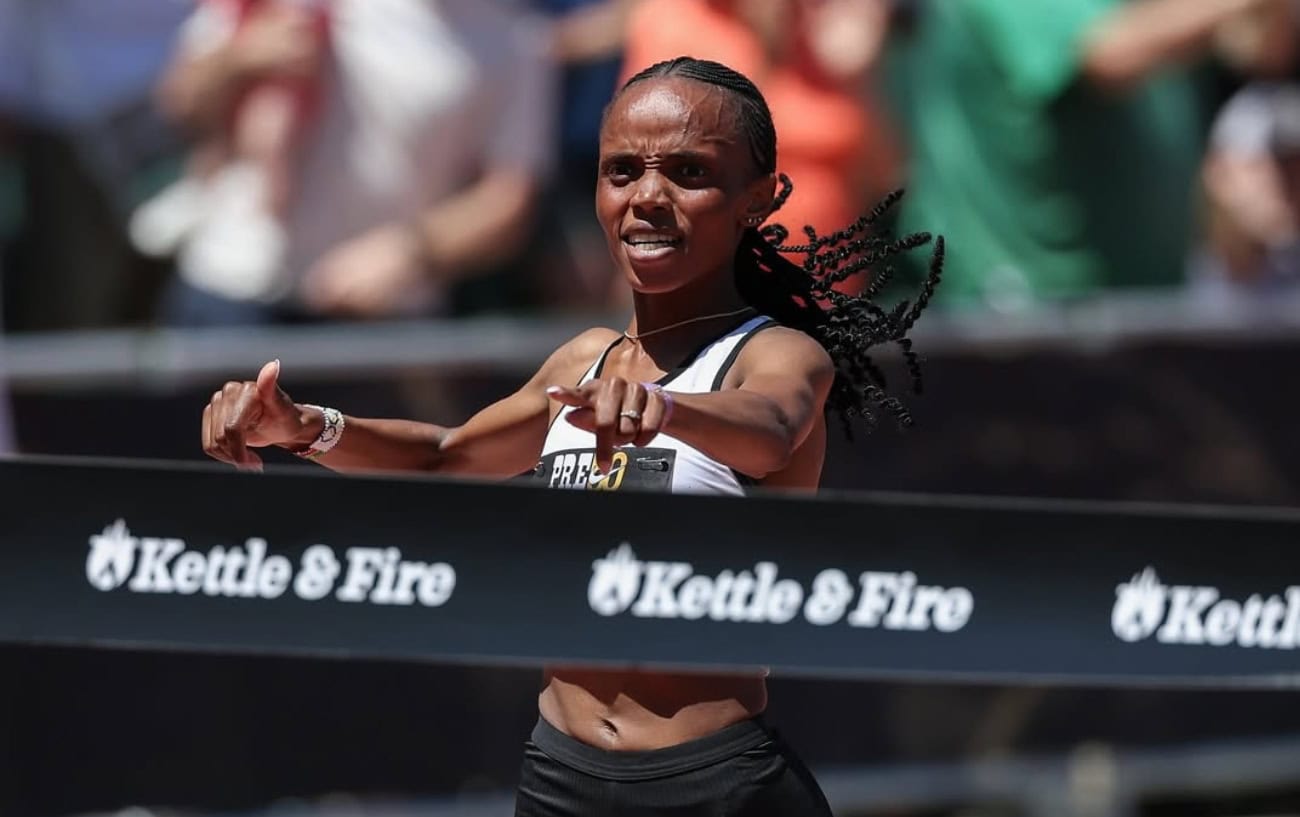
Beatrice Chebet
If Kipyegon was the queen of the metric mile, Chebet was the queen of everything longer in spikes.
In Tokyo, she pulled off the distance double: 10,000m gold in 30:37.61 on the opening weekend, then 5000m gold in 14:54.36 a week later, outkicking Kipyegon herself in a last-lap showdown.
What impressed us wasn’t just that she won (we’re used to that by now) but it was how she did it.
In the 10,000m, she rode a tight pack through humid conditions, then unleashed a vicious final lap to claim Kenya’s first gold of the championships.
In the 5000m, she played it cooler, staying patient as the race dawdled and then ripping the last 400m in a way that made the rest of the field look like it had accidentally wandered into the wrong race.
And as if the track titles weren’t enough, Chebet went and ripped up the record books too.
At the Prefontaine Classic in Eugene, she became the first woman ever to break 14 minutes in the 5,000m, stopping the clock at 13:58.06. That barrier has loomed over women’s distance running for years, and the way she went under it felt like a seismic shift for the event.
We kept saying she’s building one of the all-time great distance resumes, and if you only watched marathons this year, you might have missed that the most dominant long-distance runner in the world is still operating on the track.

Sydney McLaughlin-Levrone
There’s something deliciously unfair about watching an all-time great in one event casually move to another and immediately operate at historic levels. That’s what Sydney McLaughlin-Levrone did this year in the flat 400.
In Tokyo, she ran 47.78 in the 400m final. That’s the second-fastest time in history, a World Championships record, and the fastest women’s 400 in 40 years. Not bad if you ask us.
She beat Olympic champion Marileidy Paulino in a race where two women broke 48 seconds, something that had never happened before in a single race.
And think about it. She didn’t have to chase the flat 400. She could have stayed in the 400 hurdles, where she already owns the world record and two Olympic titles. Instead, she chose to test herself against one of the oldest, most storied records in women’s sprinting, and then came within two tenths of it in her first full season really targeting the distance.
Throw in another relay gold and the sense that she’s only just beginning to understand her ceiling in the flat event, and it felt wrong not to include her. Even from our distance-running bubble, you could feel the shockwaves from 47.78.

Sifan Hassan
Hassan is chaos in the best possible way.
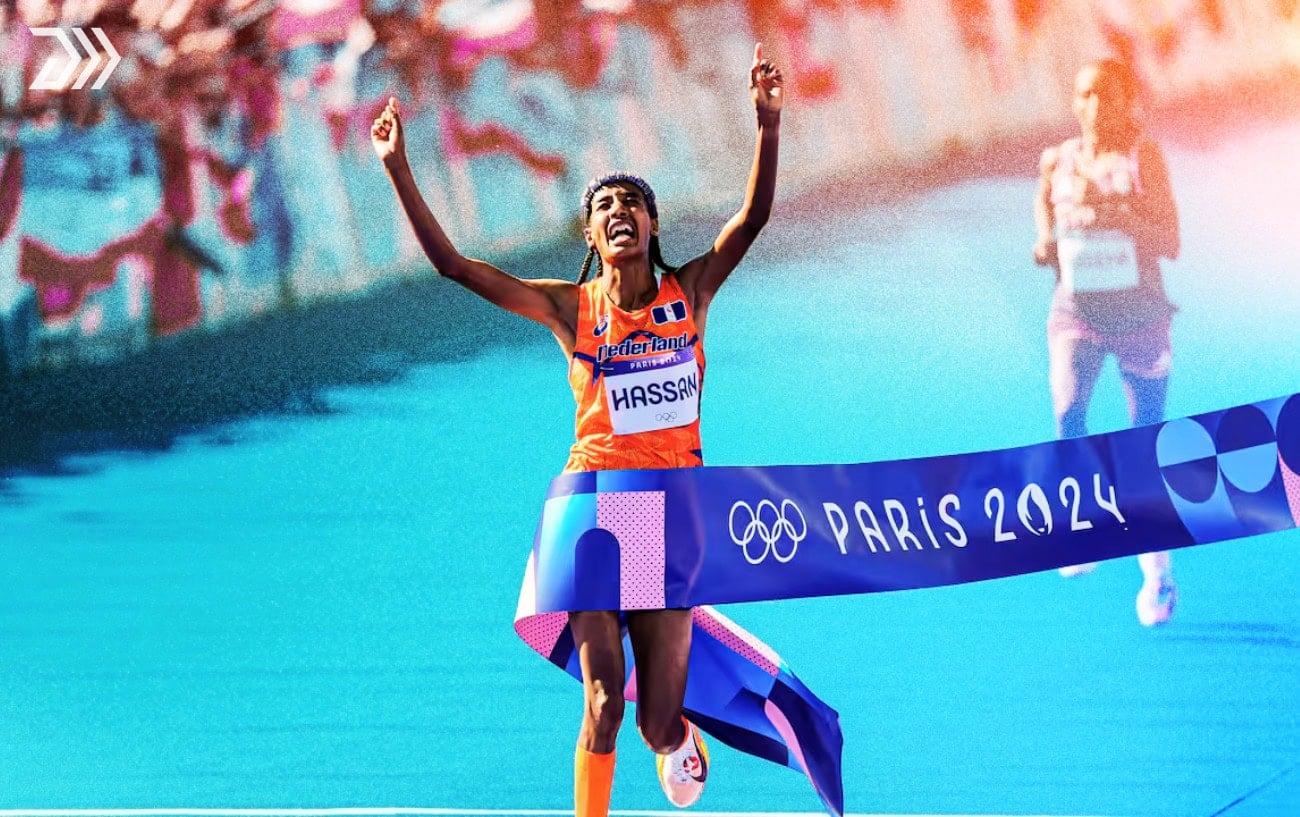
In 2025, she took on three World Marathon Majors, London, Sydney, and New York, and somehow made each race feel like part of a larger experiment in how far you can stretch a human season.
She opened with third place in London in around 2:19, mixing it up in a race where Tigst Assefa broke the women-only world record.
Then she went to Sydney for the first edition of the race as part of the World Marathon Majors and won it in 2:18:22, taking the course record on a tough, rolling route that didn’t give away anything for free.
By the time she got to New York, the fatigue finally showed, and she finished sixth in 2:24:43 (still a good day by normal standards, but very human by hers).
We didn’t include her because everything went perfectly. We included her because she chose the hard path and still came out of it with a major win, two sub-2:20’s, and another year where she was central to the conversation around women’s marathoning.
When you run three Majors in a year and your “off day” is still a top-six in New York, you’ve earned your spot on this list.

Peres Jepchirchir
There’s a particular kind of athlete you simply trust in a championship-style race. Peres Jepchirchir is that athlete.
In Tokyo, she added a world marathon title to a resume that already included Olympic gold and London wins. She won in 2:24:43 on a brutally hot and humid day, outkicking Tigist Assefa in the final 100m inside the stadium after 42 km of chess-match tactics and attritional racing.
We spent a lot of time on the podcast talking about how she wins.
Jepchirchir doesn’t always run the fastest times, but when the conditions are rough, the stakes are high, and the race turns into survival with a finishing kick, she’s almost untouchable.
Men’s Finalists
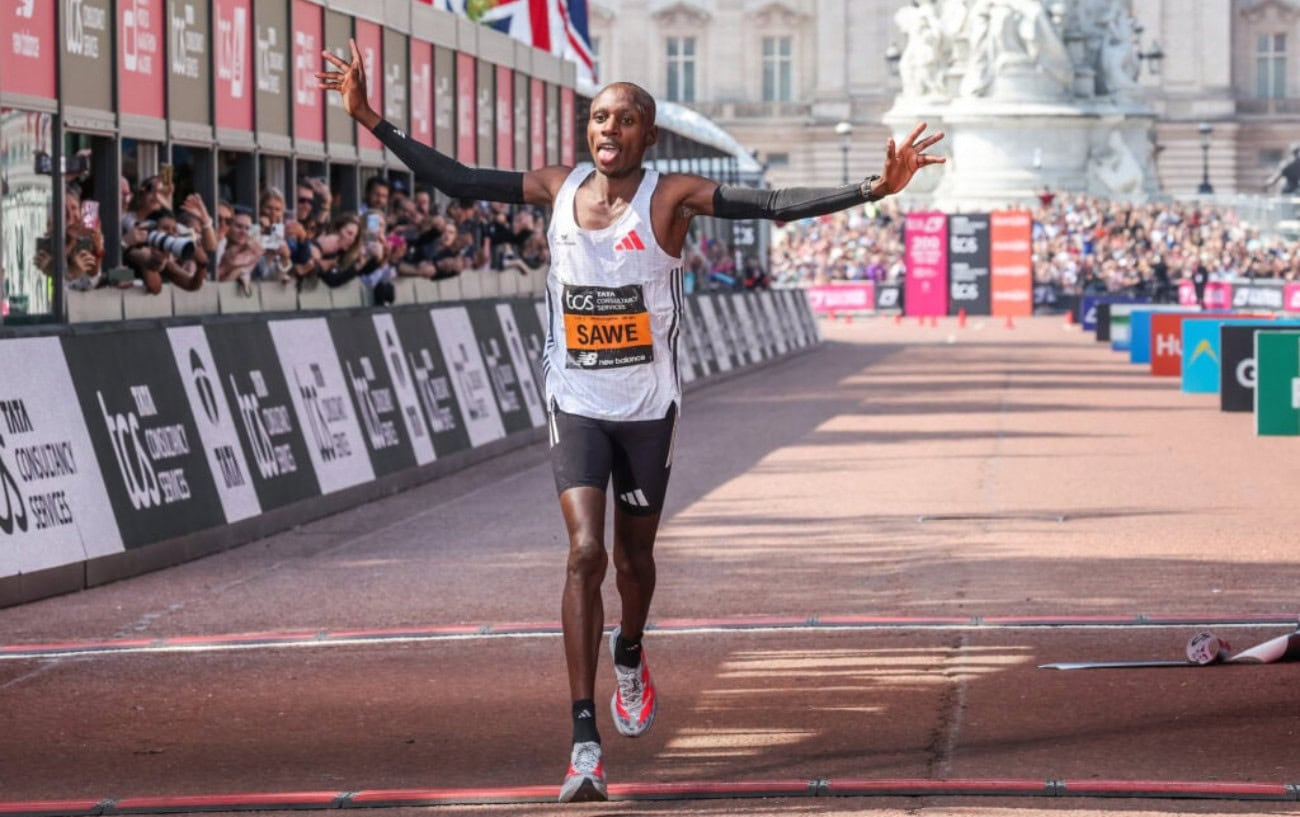
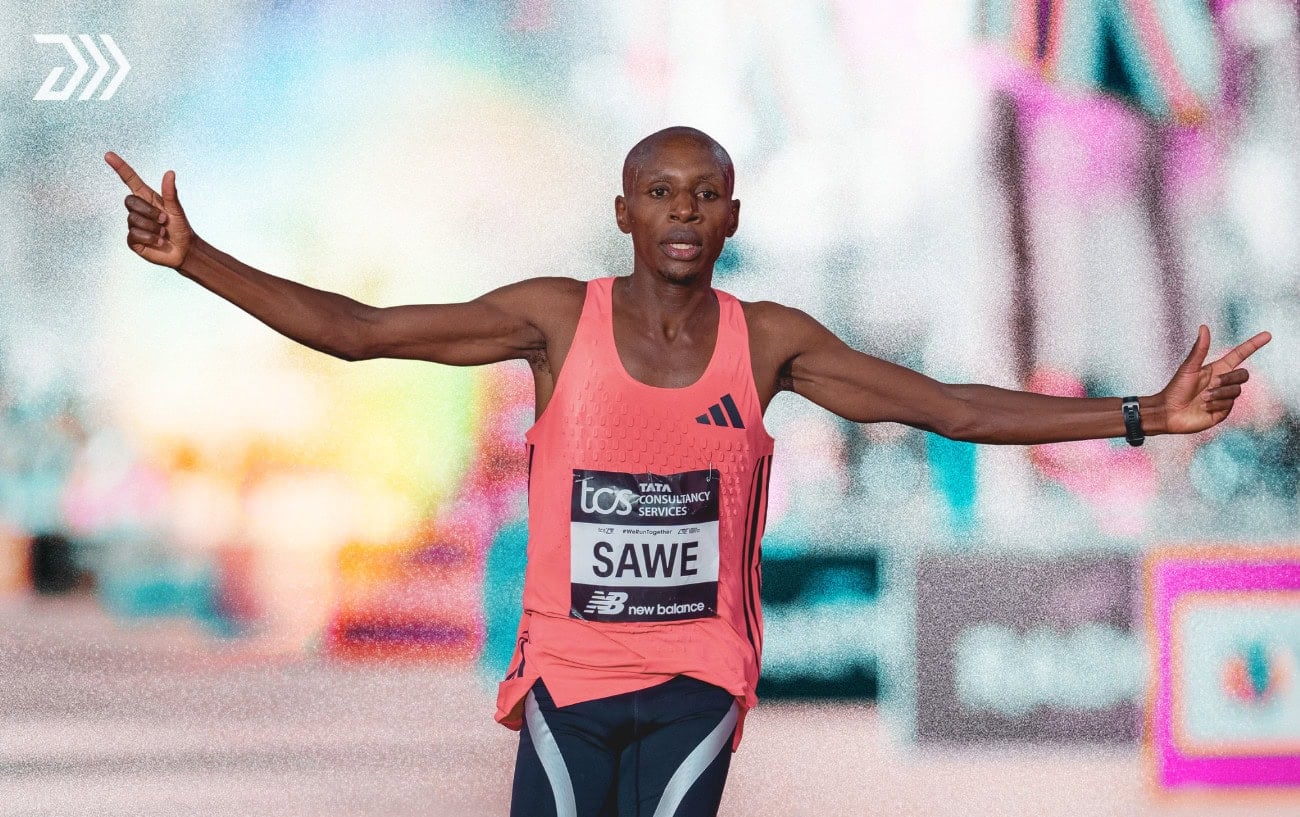
Sabastian Sawe
If you only looked at marathons this year and nothing else, there’s a strong argument that Sabastian Sawe is your men’s Runner of the Year.
He started by winning the London Marathon in 2:02:27, pulling away from a loaded field that included Eliud Kipchoge, Jacob Kiplimo, Tamirat Tola, and others. His decisive move came between 30 and 35km with a savage 13:56 5K split that simply cracked the race open.
Then he went to Berlin and did something almost more impressive: 2:02:16 in warm, 20–25°C conditions, the world-leading time and the ninth-fastest marathon ever run, despite being way too hot for ideal performance.
Race organizers even joked about a “warm-weather world record” because no one had ever gone that fast on such a warm day.
On the podcast, we talked about Berlin as a glimpse of the future.
If he can run 2:02 in those conditions, what happens on a cool day on a fast course with everything aligned? We’re not saying he’s guaranteed to break two hours in a record-legal race — but for the first time since Kipchoge and Kiptum, you can squint and see the outline of someone who might at least make us ask the question again.

Jacob Kiplimo
Kiplimo’s year felt like watching someone unlock a cheat code.
In February, he ran 56:42 at the Barcelona Half Marathon, taking a sledgehammer to the world record and carving nearly a minute off what used to be considered “peak human” over 21.1 km.
The splits looked like a misprint; the footage looked like a tempo run.
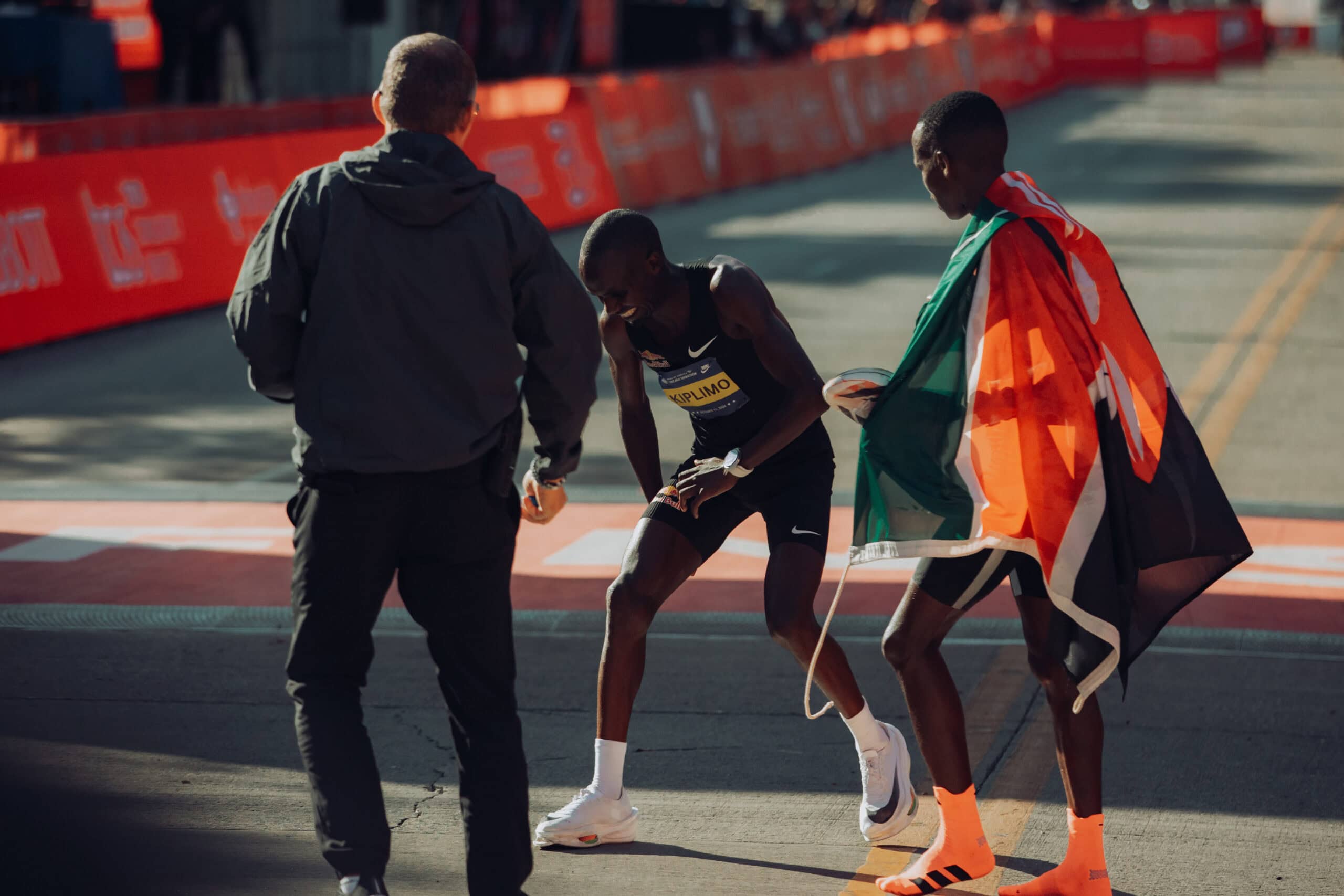
Then he made his marathon debut in London and ran 2:03:37 for second place behind Sawe, about as strong a debut as we’ve seen outside the few outliers who’ve flirted with world records on day one.
In Chicago, his second marathon ever, he won in 2:02:23, the seventh-fastest time in history, pulling away decisively around 30km.
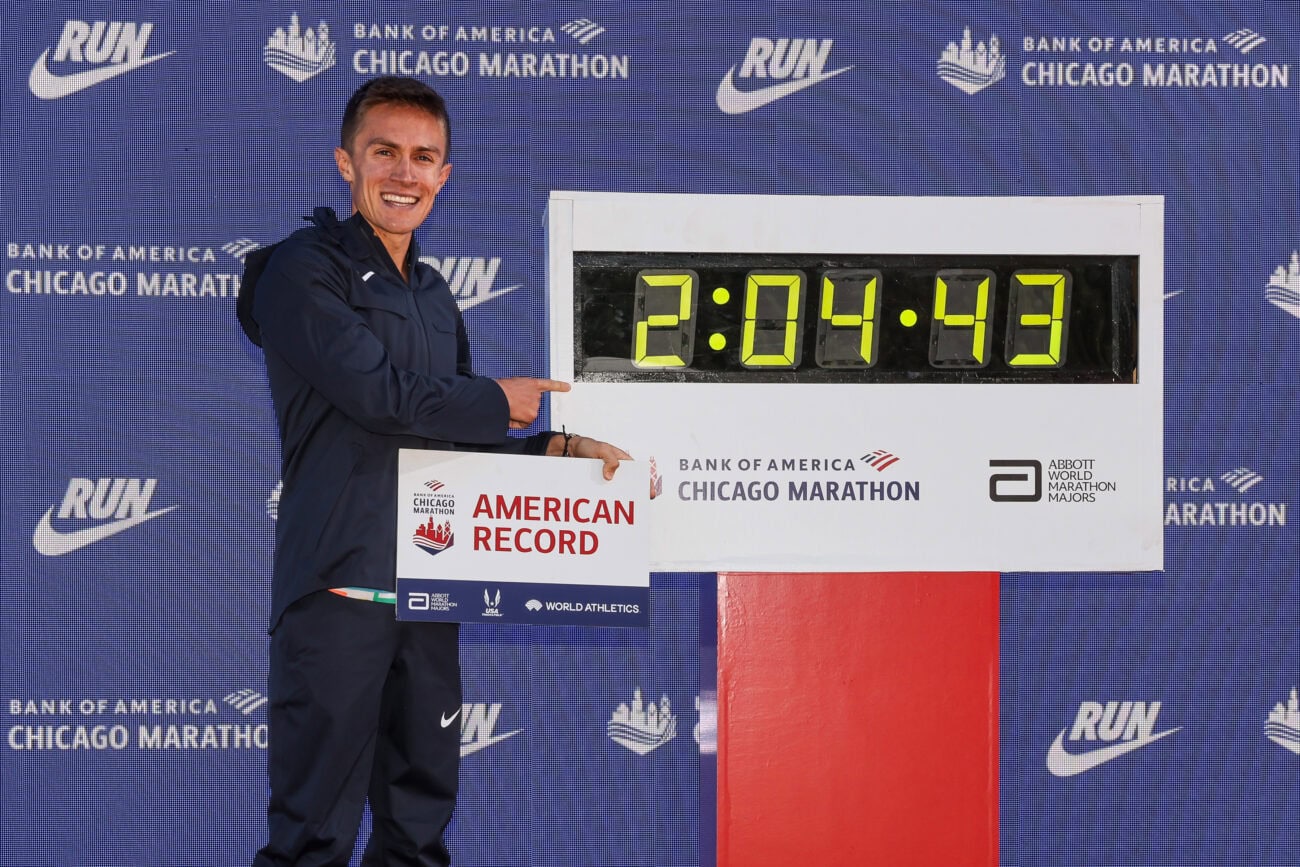
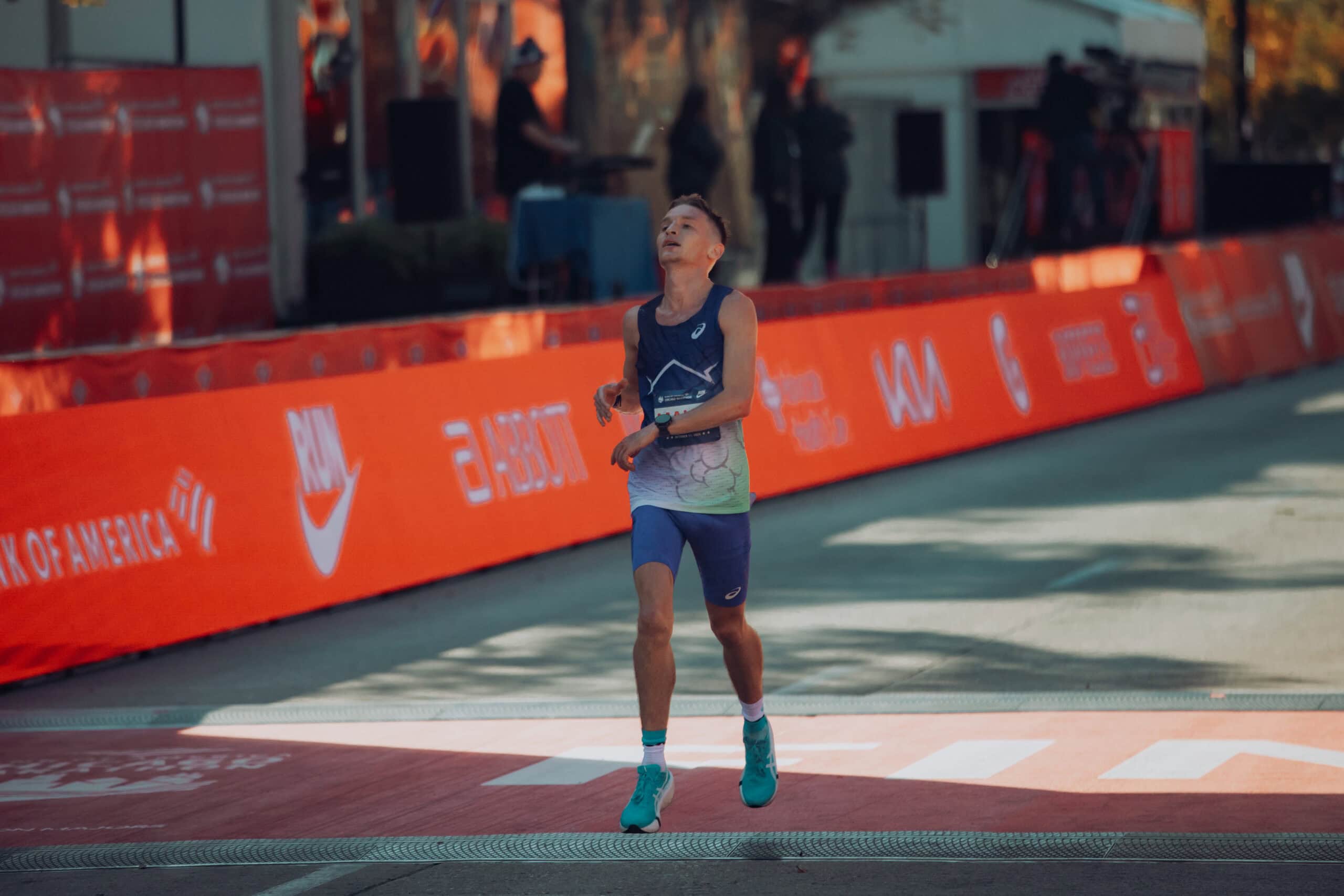
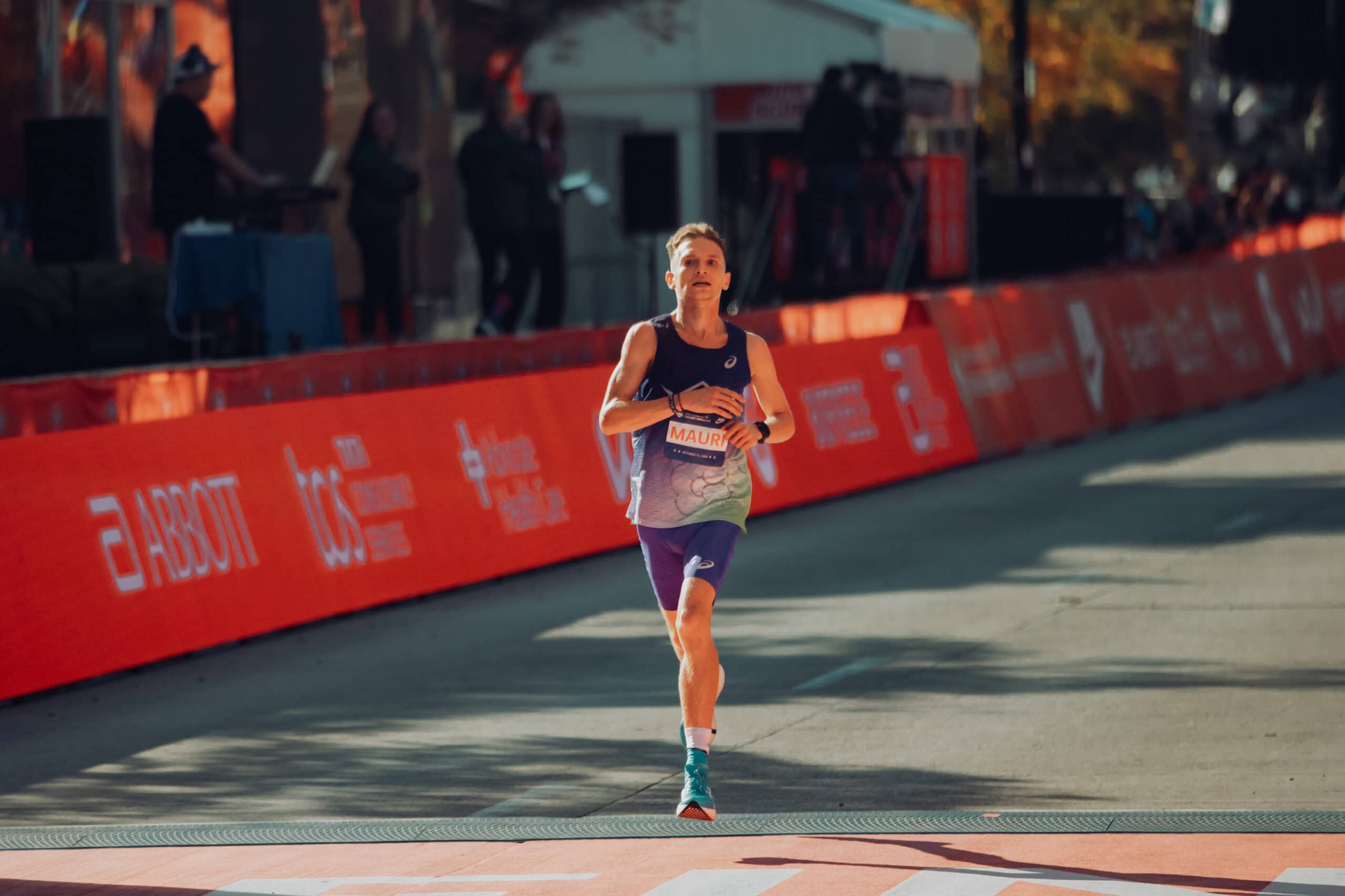
Conner Mantz
For the men, our conversation kept circling back to one idea: who had the most complete season?
That’s why we landed on Conner Mantz.
He started 2025 by taking down Ryan Hall’s 18-year-old American half-marathon record, running 59:17 in Houston.
Two months later, he went even faster at the NYC Half, 59:15 for second place, on a course that isn’t record-eligible but absolutely sent a message: this wasn’t a one-off.
In April, he went to Boston and finished fourth in 2:05:08, the second-fastest time ever by an American on that course, running aggressively through the Newton hills and hanging with a world-class pack deep into the race.
On Memorial Day, he won BOLDERBoulder in 28:20, becoming the first man ever to three-peat the pro race in its 45-year history.
He followed that by breaking the Beach to Beacon 10K course record in 27:26, becoming just the second American man to win the race since 2003.
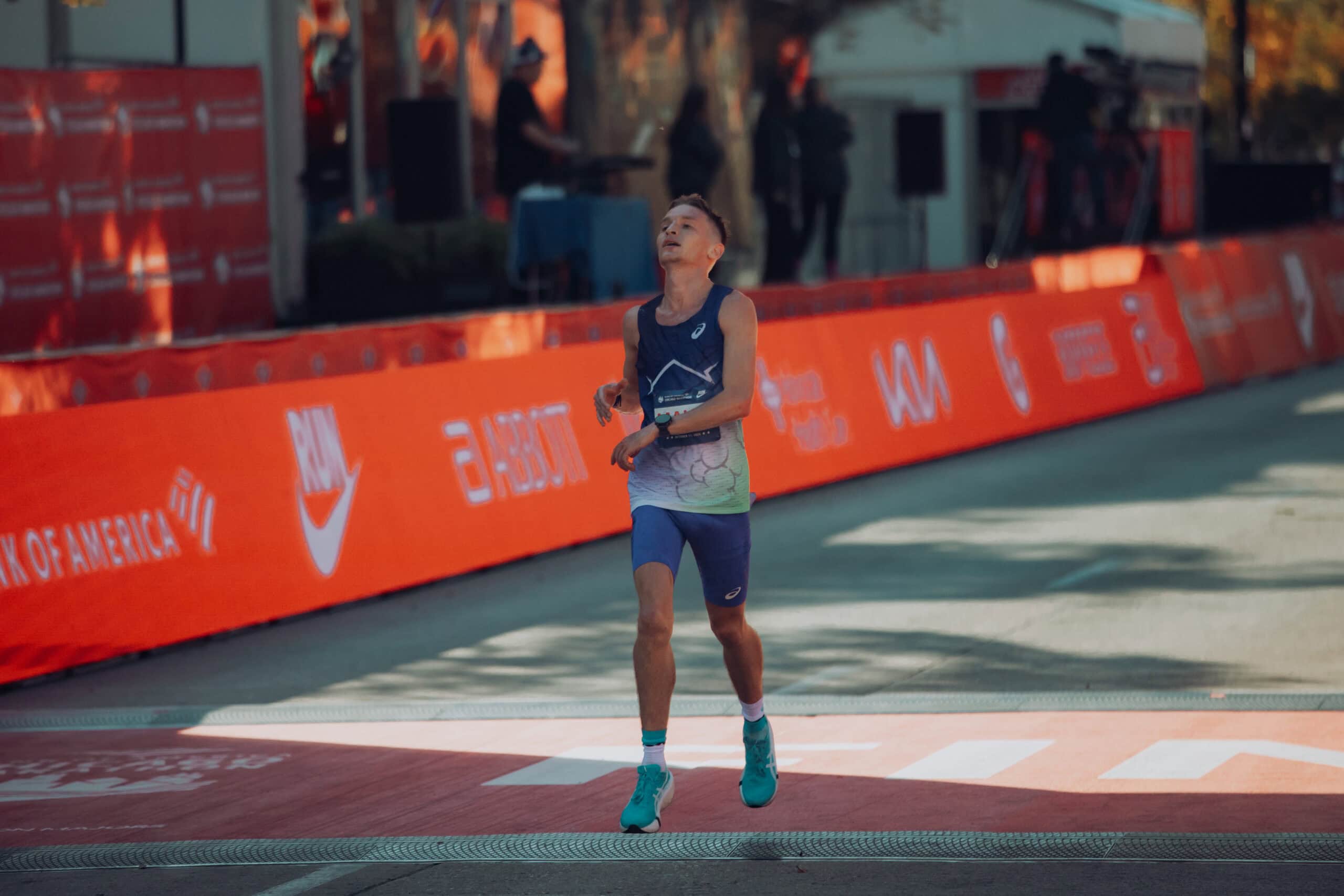
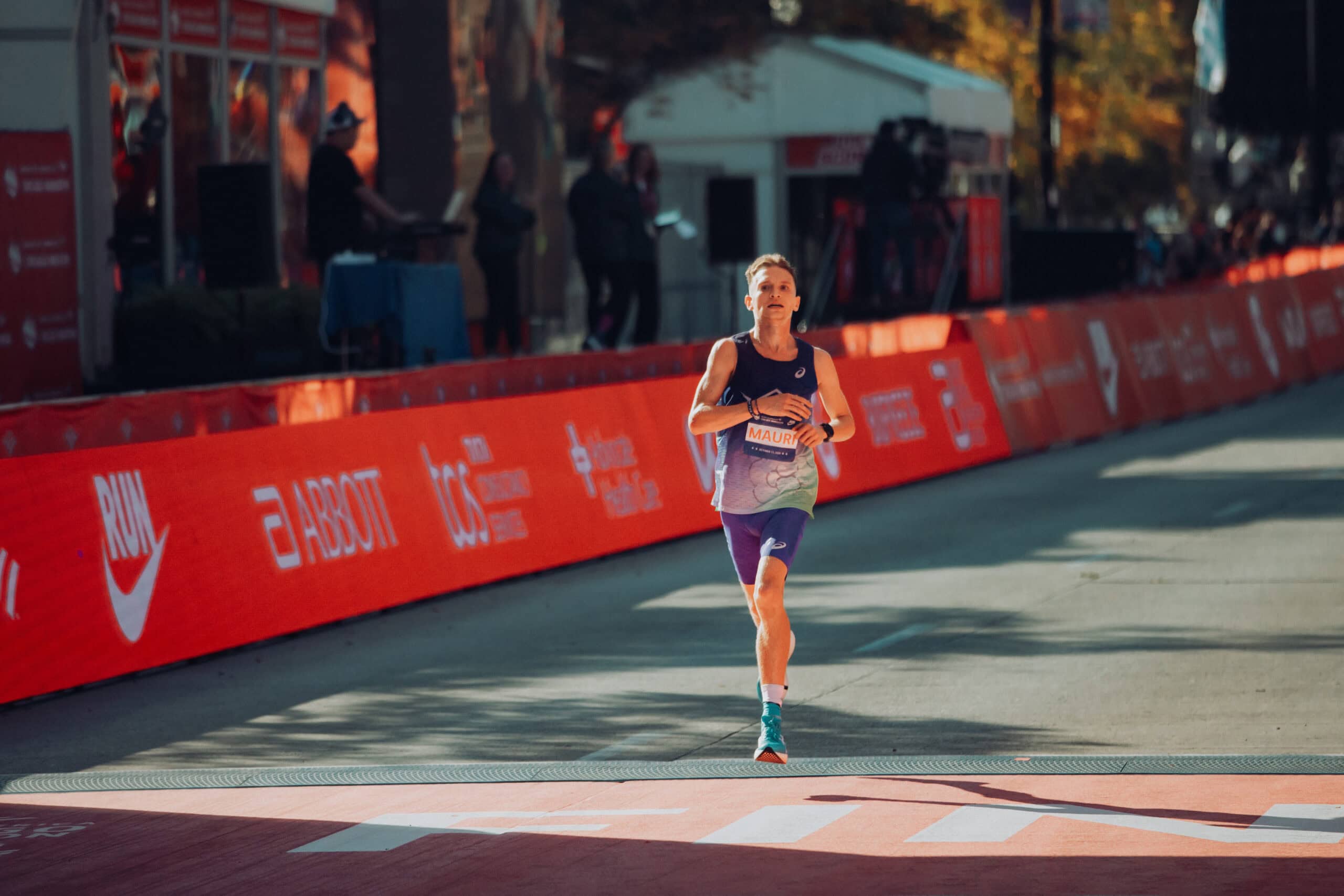
And then, in Chicago, he closed the loop with a 2:04:43 American marathon record, finishing fourth in one of the fastest fields ever assembled and breaking a U.S. mark that had stood for 23 years.
We also talked about his impact.
Mantz has made American distance running feel relevant in the global marathon conversation again. When he lines up now, it doesn’t feel like “top American” is the ceiling. It feels like he’s there to win, or at the very least to force the pace and make the race honest.

Cole Hocker
Hocker makes this list not just because of what he won, but because of the way his season told a story.
He started the year indoors, pushing Grant Fisher to a 3000m world record at Millrose, where both men dipped under the old mark, Fisher in 7:22.91 and Hocker in 7:23.14, both quicker than Lamecha Girma’s previous record.
It was a little preview: Hocker wasn’t just a 1500m guy anymore; he was building range.
Then came Tokyo.
In his signature 1500m, he was disqualified in the semifinal for impeding, a call that sparked a lot of debate and left him furious.
Six days later, instead of sulking, he came back in the 5000m, sat in 11th at the bell, and then blasted a 52-second last lap to win world gold in 12:58.30, only the second American ever to win a world title in that event.
If you were writing a movie script about redemption at a World Championships, you’d struggle to do better than Cole Hocker’s week in Tokyo.
Eliud Kipchoge
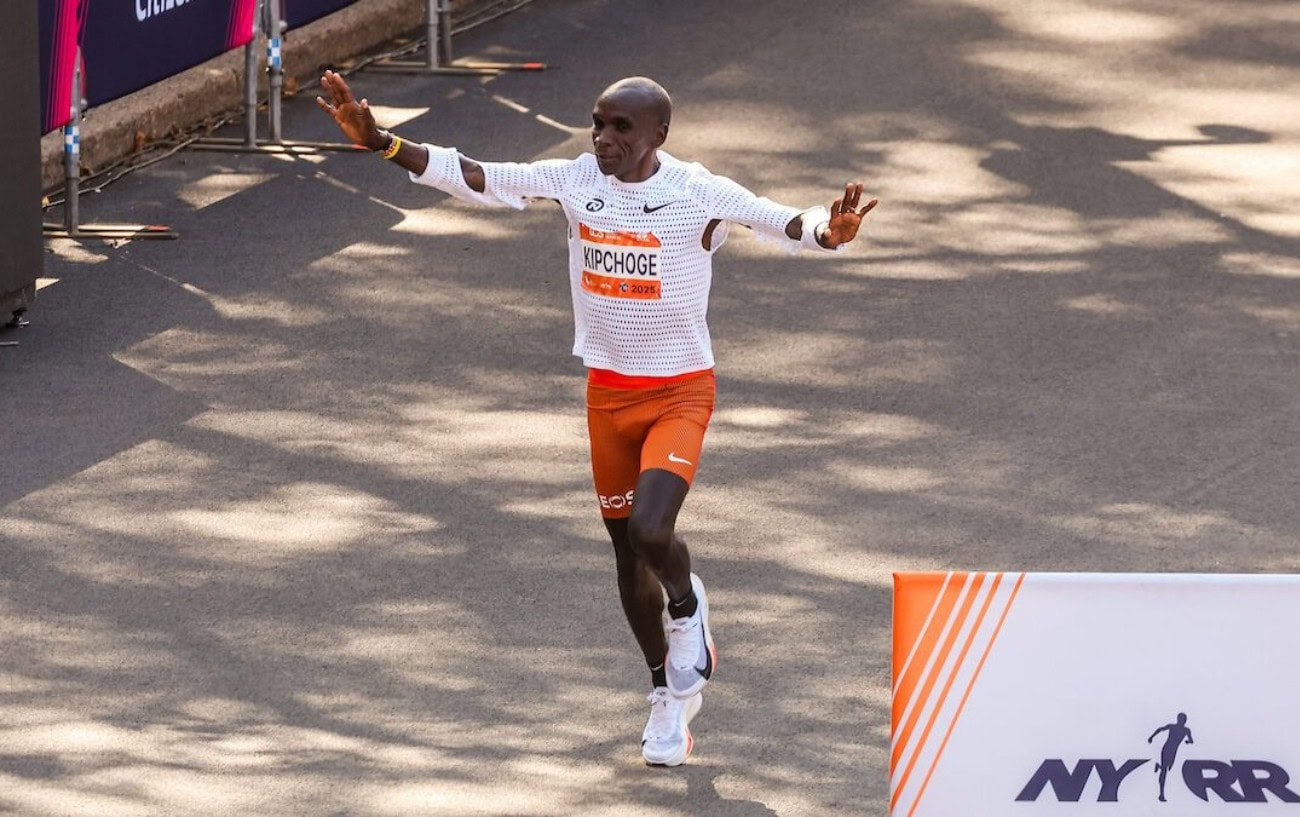
Yes, Kipchoge is past his absolute prime. Yes, his results column this year looks modest next to Sawe and Kiplimo. But we felt pretty strongly that you can’t tell the story of 2025 without him.
In London, at 40 years old, he ran 2:05:25 for sixth in his 22nd career marathon, showing flashes of his old front-running self in the early kilometers.
Later in the year, he officially stepped aside from the World Championships team, saying it was time for younger athletes to have the opportunity on that stage.
We talked a lot about legacy.
Even when he’s not winning, Kipchoge changes the temperature of any race he’s in. The cameras follow him. The crowds show up for him. When he hints at future projects, including more global “running is for everyone” type tours, you’re reminded that his impact is now as much cultural as it is competitive.
In a year where so many people pushed the sport forward, he remained the north star the rest of the marathon world orbits around.

Kilian Jornet
Kilian is the one person on this list who didn’t do anything on a track or a road marathon, and it didn’t matter for a second.
In 2025, he launched States of Elevation, a human-powered project to link 14,000-foot peaks across the American West, Colorado, California, and Washington, by bike and on foot.
Over 31 days he climbed 72 “14ers”, gained about 404,000 feet of elevation, and covered more than 3,100 miles, riding between ranges and then running or scrambling up and along the high ridges day after day.
Trail and mountain running has always had this mythic, quest-like layer, long routes, big traverses, personal projects that exist halfway between a race and a pilgrimage.
We added him here because, even if you never lace up for a single-track run, it’s hard not to feel inspired by someone spending a month living that far out in the deep end of what the human body can handle.
Our Runners of the Year
Women’s Runner of the Year: Faith Kipyegon
We chose Kipyegon because she checked every box we care about:
- Performance: A 3:48.68 world record and another world title in the 1500m.
- Range: A 1500m gold at Worlds, breaking her own world record, and a serious, public tilt at the four-minute mile.
- Impact: An entire global conversation about women’s potential in the mile, and running in general.
When we thought about who defined this year, whose performances we’ll still be talking about in five or ten years, we kept landing on Faith. That made the women’s pick easy, and it made the overall pick pretty easy too.
Men’s Runner of the Year: Conner Mantz
On the men’s side, it was closer. Sawe and Kiplimo had enormous claims.
But Mantz gave us something uniquely satisfying: a year-long arc, start to finish.
From the American half-marathon record in January to the American marathon record in October, via Boston, BOLDERBoulder, and Beach to Beacon, he stitched together a season where every performance felt connected to the next.
He’s also changed the way we talk about American men in the marathon. It doesn’t feel like wishful thinking anymore; it feels like he’s genuinely in the mix with the very best on the planet. For us, that combination of results and broader impact was enough to tip it his way.
Overall Runner of the Year: Faith Kipyegon
Honorable Mentions
We couldn’t wrap up without nodding to a few other athletes who lit up 2025:
- Grant Fisher: Broke the world indoor 3000m record in 7:22.91 at Millrose, then the indoor 5000m record in 12:44.09 in Boston less than a week later. Two world records in six days is the stuff of legend.
- Sarah Perry: Set a new women’s record at Big’s Backyard Ultra with 95 yards — nearly 400 miles of 4.167-mile loops, one per hour, until everyone else stopped. That’s as much a psychological achievement as a physical one.
- Katie Schide: Added a world title in the long trail race at the World Mountain and Trail Running Championships, dominating the 82km race in 9:57:59 and winning by more than 25 minutes.
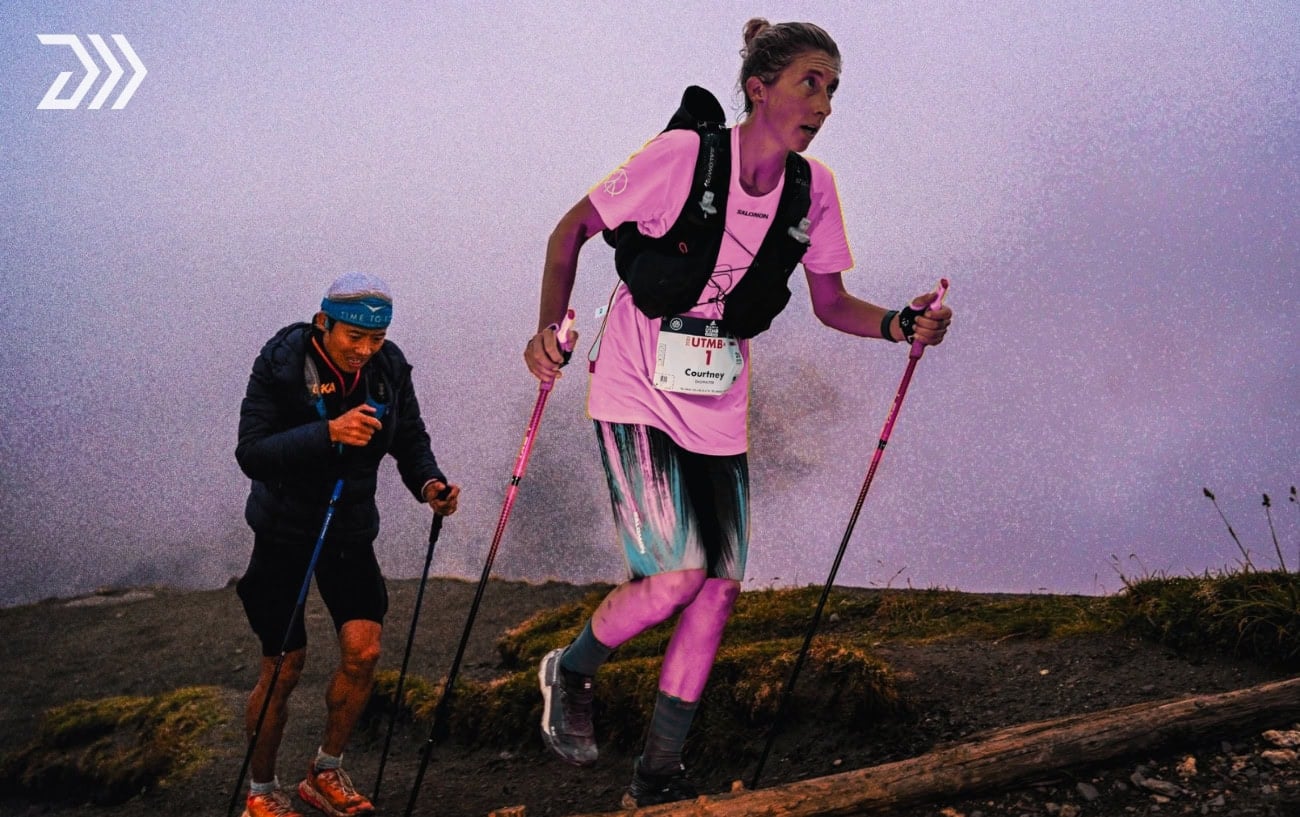
- Ruth Croft: Finally claimed the big one at UTMB, winning the women’s race in appalling conditions and completing a career that already included wins at CCC and OCC.
- Caleb Olson: Had a breakout year in ultras: setting a course record at Transgrancanaria’s 126km race early in the year, then winning Western States 100 in 14:11, the second-fastest time in race history and just minutes off the course record.
RunClub
Get more running stories — join RunClub
Daily running news, a community of 300,000+ runners, free training plans for every distance, and a daily running game. Free to join — no card.
Already a member? Log in →


Start the conversation