


Kristian Blummenfelt has long been considered one of the most aerobically gifted endurance athletes in the world. This month, a laboratory test put a number on it.
The Norwegian triathlete, an Olympic gold medalist, and Ironman world champion, shared results from a recent VO₂ max test showing a value of 101.1 milliliters of oxygen per kilogram of body weight per minute. According to the data displayed in the test video, it is the highest VO₂ max ever recorded under laboratory conditions.
Blummenfelt shared footage of the test on Instagram, showing himself running on a treadmill while wearing a respiratory mask as oxygen consumption was measured. The final slide showed the result clearly.
What Exactly Is VO₂ max?
VO₂ max is a measure of how much oxygen the body can take in and use during maximal effort exercise. It reflects the combined capacity of the lungs, heart, blood, and muscles to transport and use oxygen.
In practical terms, higher VO₂ max values are associated with higher aerobic ceilings. Among recreational runners, values often fall between 40 and 50. Well-trained competitive runners and triathletes typically test in the 60s and 70s. Elite endurance athletes sometimes reach the 80s.
Values above 90 are rare.
Before Blummenfelt’s test, the highest widely cited VO₂ max belonged to Norwegian cyclist Oskar Svendsen, who recorded a value of 97.5 at age 18. Svendsen later retired from professional cycling due to heart rhythm issues.
Blummenfelt’s reported value clears that mark by a long shot.
A record set by an athlete still racing
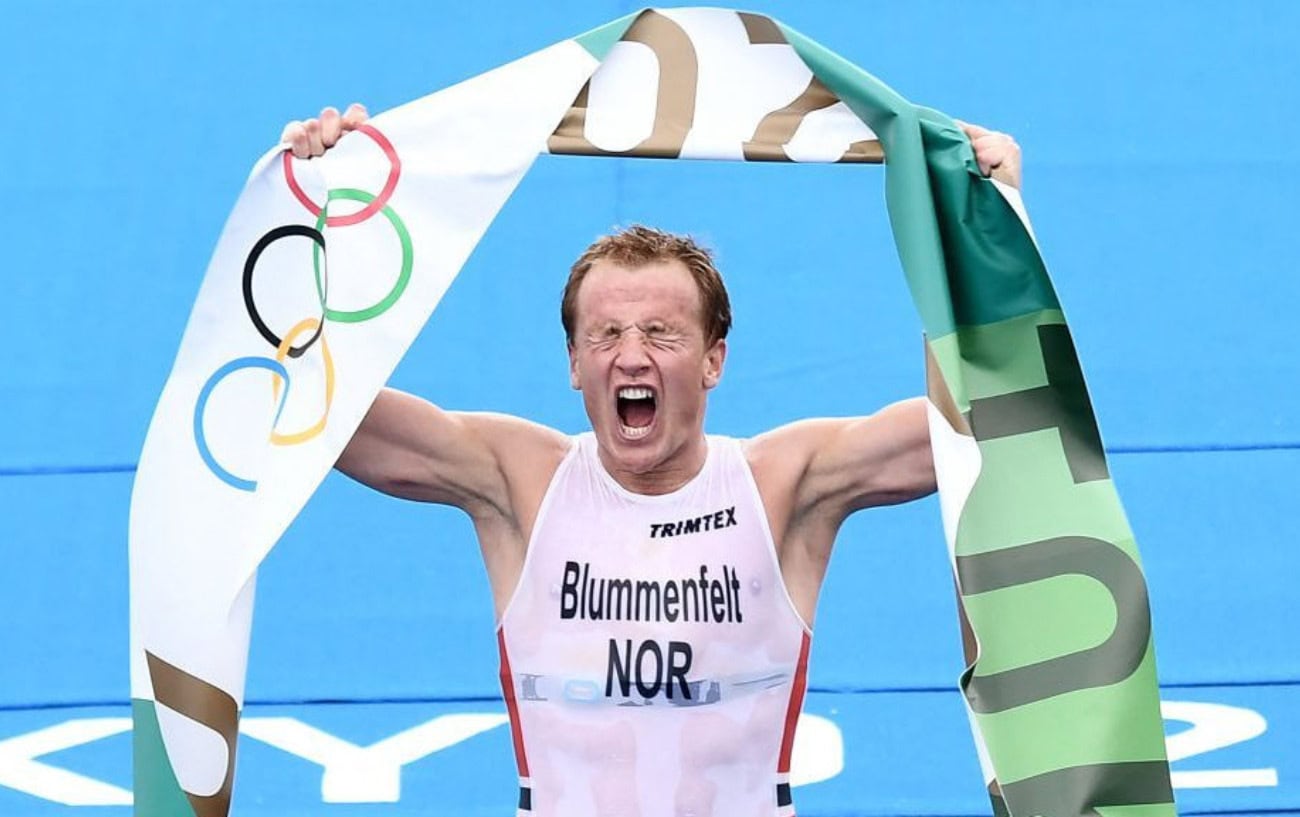
What separates this test from earlier headline numbers is context. Blummenfelt is not a retired athlete or a lab subject removed from competition. He is actively racing and training at the highest level of long-course triathlon.
He won the Ironman World Championship in 2021 and the Ironman 70.3 World Championship in 2022. At the Tokyo Olympics, he claimed gold in the men’s triathlon. In 2025, he won the Ironman Pro Series, earning a $200,000 season bonus, along with $153,500 in individual race prize money.
When he won the Ironman World Championship in St. George, he posted a 49:40 swim, a 4:18:42 bike split over 112 miles, and closed with a 2:38:01 marathon.
Those performances already placed him among the strongest endurance athletes of his generation. The VO₂ max test offers physiological confirmation of what has been visible in racing.
The training behind the test
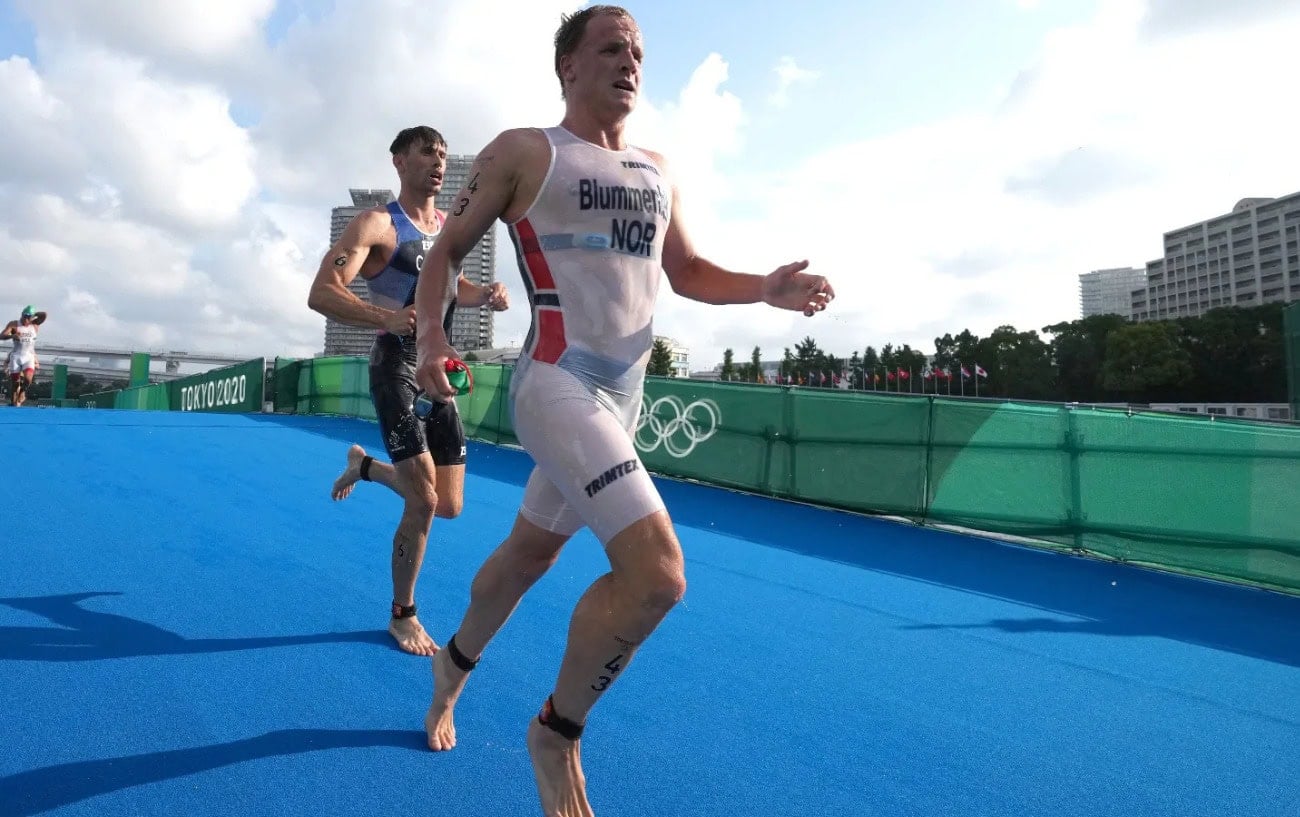
Blummenfelt’s recent training data, publicly visible on Strava, shows the volume behind the number.
During the week of Jan. 19 to Jan. 25, he logged just over 25 hours of training and covered approximately 304 kilometers across swimming, cycling, and running. That week included multiple double sessions, long aerobic runs, and hilly rides around Bergen, Norway.
One day included a 105-kilometer ride with 1,730 meters of elevation gain, followed by a 16-kilometer run later the same evening. Another featured a swim-run session totaling more than 24 kilometers. His logged swimming volume for the week approached 26 kilometers.
Blummenfelt has previously described a typical training load of roughly 10 kilometers of swimming, 300 kilometers of cycling, and 100 kilometers of running per week.
Full Training Breakdown
Week of Jan. 19–25, 2026 (Bergen & Oslo, Norway)
Monday, Jan. 19
- Morning swim: 515 meters in 15:50
- Morning run: 13.0 km in 1:03:00 (4:51/km)
- Afternoon ride: 2:13:00
Tuesday, Jan. 20
- Lunch run: 8.66 km in 50:38 (5:51/km)
Wednesday, Jan. 21
- Morning run: 12.64 km in 1:00:00 (4:46/km)
- Lunch swim: 1:32:00
- Afternoon ride: 48.50 km in 2:50:00 with 2,104 m of elevation gain
Thursday, Jan. 22
- Morning treadmill run: 17.45 km in 1:34:00
- Workout: 5 × 10 minutes at 5% incline
- Pool swim: 2,458 meters in 1:16:00
- Evening ride: 36.09 km in 1:26:00 with 465 m of elevation gain
Friday, Jan. 23
- Morning swim: 2,811 meters in 1:18:00
- Afternoon run: 15.71 km in 1:15:00 (4:50/km)
Saturday, Jan. 24
- Morning swim: 1:38:00
- Swim-run session: 24.22 km in 2:06:00 (5:14/km)
- Additional run (logged separately): 22.56 km in 1:55:00 (5:07/km)
Sunday, Jan. 25
- Evening run: 16.37 km in 1:31:00 (5:37/km)
- Long ride: 105.63 km in 3:45:00 with 1,730 m of elevation gain
What the number does (and does not) say
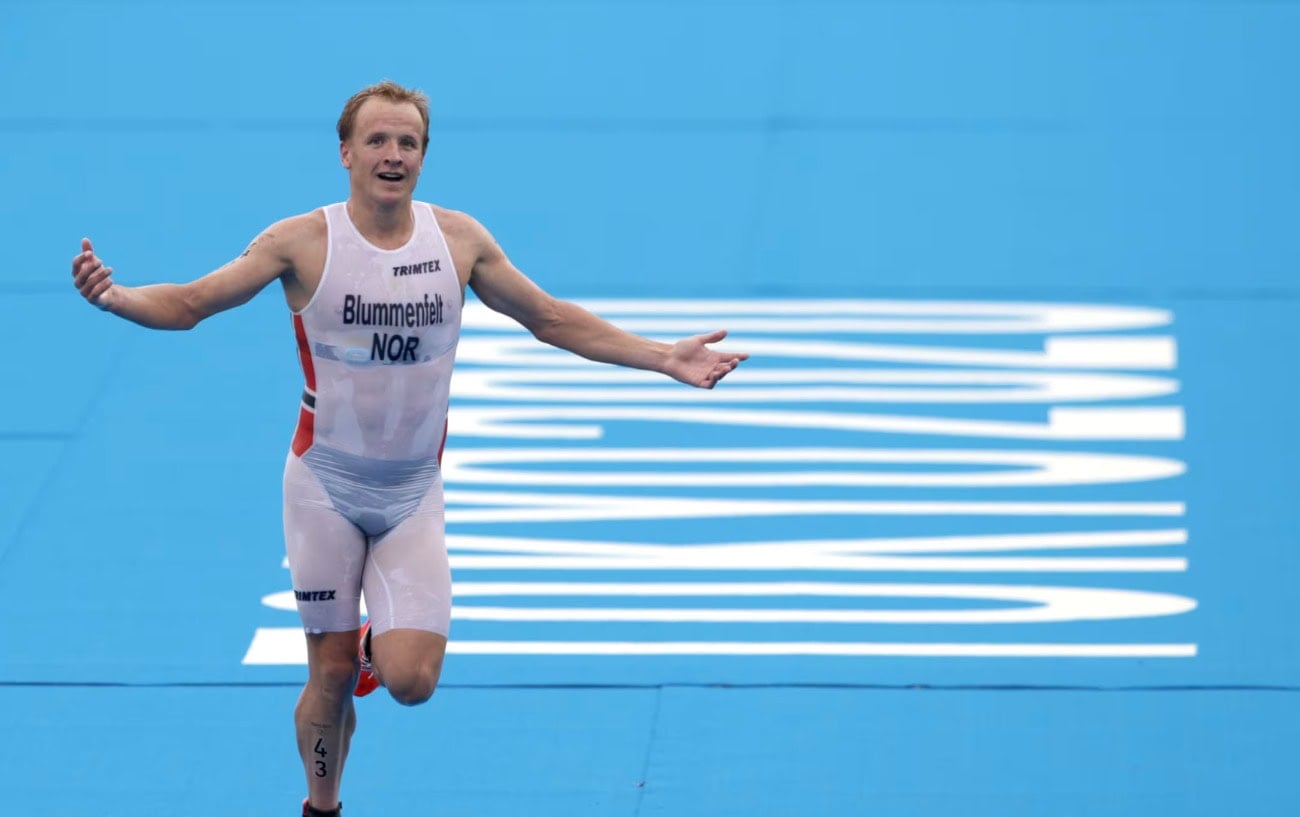
A VO₂ max score, even one this high, does not predict race results on its own. It does not account for efficiency, fueling, heat tolerance, or pacing, all of which decide Ironman races and marathons long before raw oxygen uptake does.
But among elite endurance athletes, numbers like this are rare enough to stand on their own. Laboratory-verified VO₂ max values above 90 are unusual. Crossing 100 places Blummenfelt in a category that, until now, had effectively consisted of one retired cyclist.
Blummenfelt is not posting the figure in an off-season lab experiment. He is in full training, logging weeks of 25 hours or more, and continuing to race at the top level of the sport. The test aligns closely with what has been visible in competition for years — an athlete able to sustain high outputs late in races, run sub-2:40 marathons off the bike, and recover quickly enough to repeat the effort.
For runners and triathletes following along, the takeaway is narrow. A lab-measured VO₂ max of 101 is not something training alone can deliver. Genetics play a role, as does a lifetime of volume.
What Blummenfelt’s data provides is a reference point. This is what the upper edge of aerobic capacity looks like when it is measured carefully and backed by results that have already reshaped the sport.
RunClub
Get more running stories — join RunClub
Daily running news, a community of 300,000+ runners, free training plans for every distance, and a daily running game. Free to join — no card.
Already a member? Log in →




Start the conversation