


Julia Paternain crossed the finish line in Tokyo unsure if the race was even over.
Exhausted from the punishing heat of the women’s marathon at the World Athletics Championships, the 25-year-old raised her head and asked an official if she could finally stop running. Only then did she discover that she had just won a bronze medal, Uruguay’s first ever at a global athletics championships.
For a runner ranked 288th in the world before the race, and competing in only her second marathon, the achievement was extraordinary. Even more so given who finished ahead of her, Kenya’s Peres Jepchirchir, the Olympic champion from 2021, and Ethiopia’s Tigist Assefa, the world record holder.
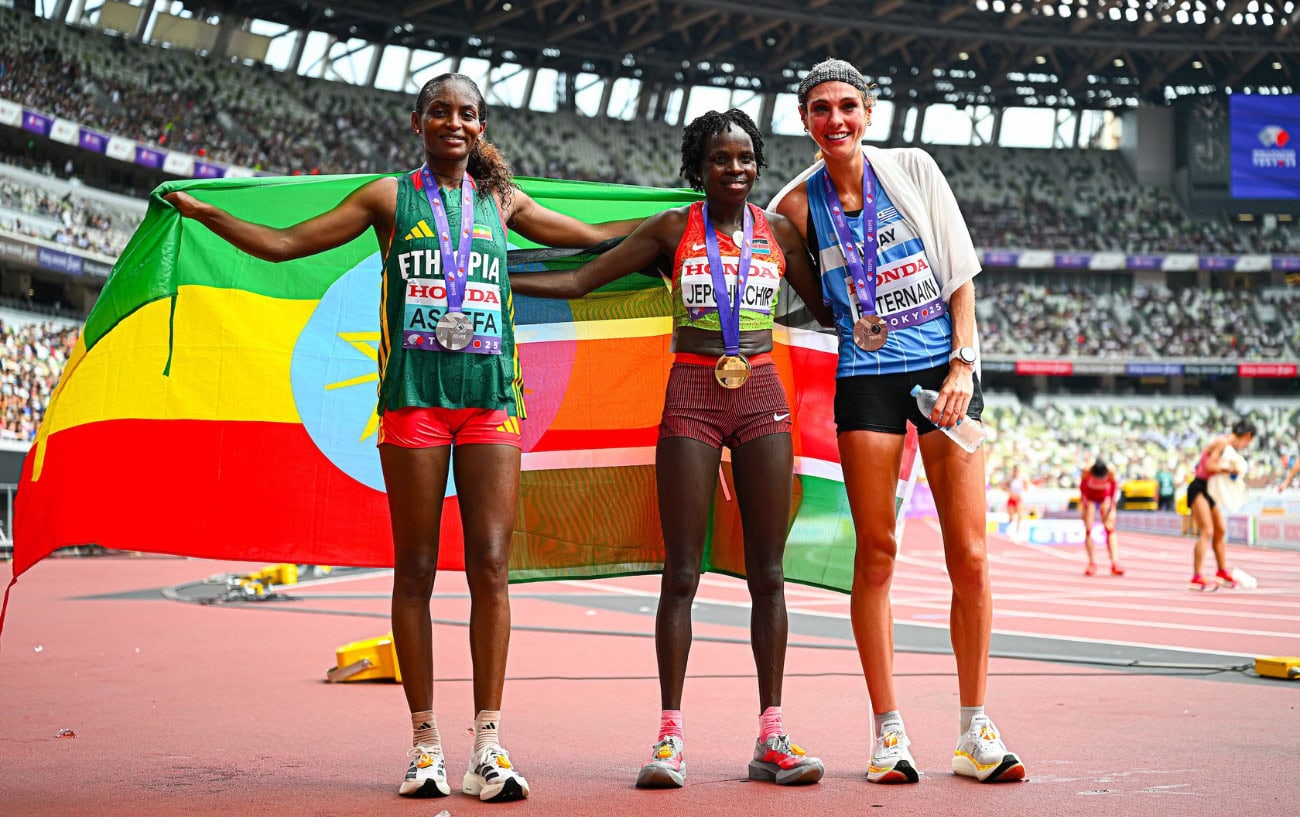
Paternain’s time of 2:27:23 came within seconds of the national record she had set on her debut back in March.
“I was terrified that wasn’t the finish,” she said afterwards. “I couldn’t believe it. I thought maybe there was another 400 metres to go.” The disbelief never quite left her, even after the medal ceremony.
Paternain’s story is unusual not just because of the medal, but because of the path that brought her there. She was born in Mexico to Uruguayan parents, raised in Cambridge, England, and educated in the United States.
“I have three passports and a green card,” she explained. “I’ve run for Great Britain before at the European Under-23 Championships, and now I run for Uruguay. My whole family is from there, mi sangre es uruguaya.”
In Cambridge, she raced for Cambridge & Coleridge Athletics Club, winning two English Schools titles and training under longtime coach Mark Vile. She later moved to the NCAA system, competing first at Penn State and then at Arkansas.
But success never fully came.
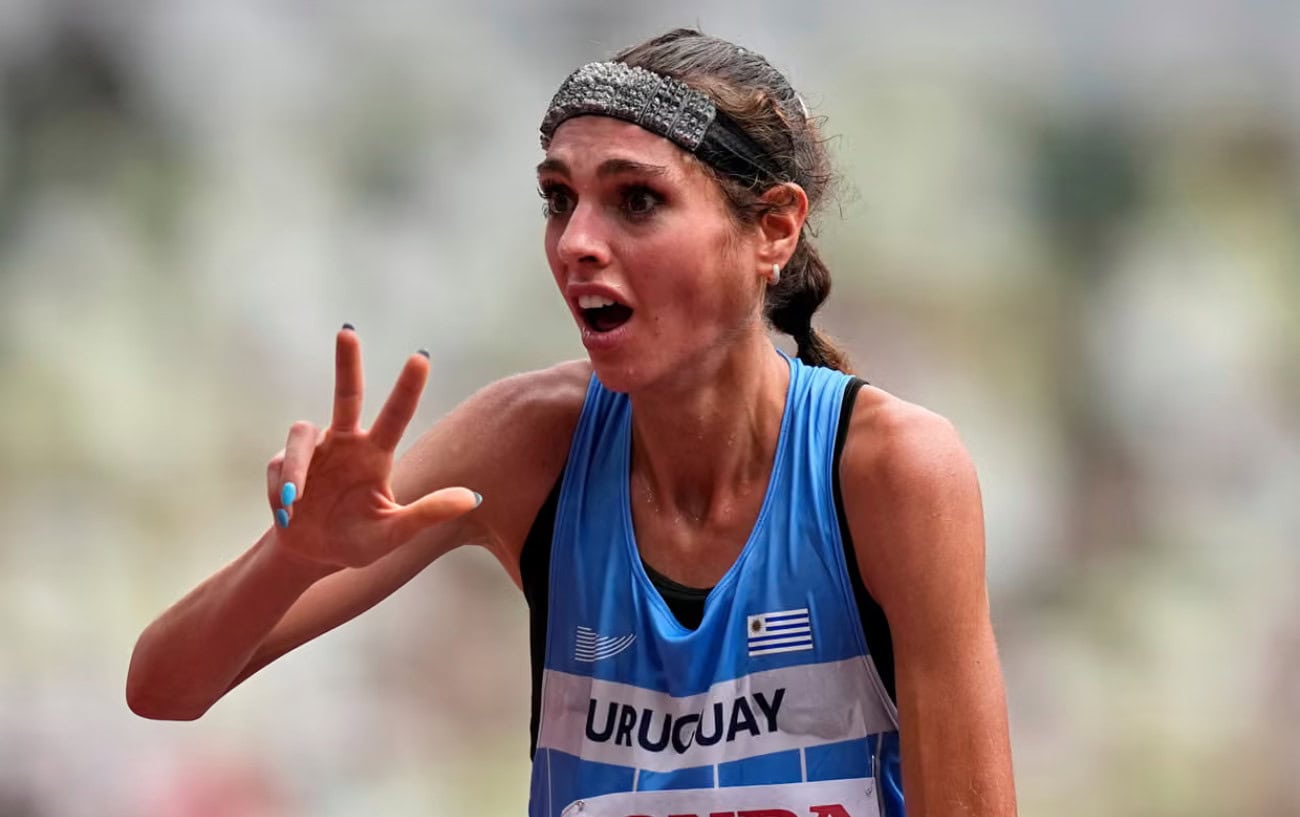
“I was never an All-American,” she said. “My career was kind of a mess.” The pandemic, transfers, and coaching changes left her without rhythm. She eventually stepped away from structured training, living in California and running casually while working remotely.
Her return was almost accidental. Visiting a friend in Flagstaff, Arizona, she rediscovered the sport through the high-altitude trails and training community there. She linked up with coach Jack Polerecky and his wife Dani, along with James McKirdy’s training group. “I started enjoying running again,” she said. “I raced a 10-miler, then a half marathon, and thought: OK, maybe I want to try a marathon.”
Her debut stunned her as much as anyone, 2:27:09, a national record for Uruguay and fast enough to qualify for the World Championships. In Tokyo, the only goals were modest, finish, maybe crack the top 30, perhaps the top eight if everything went right.
A medal wasn’t even a consideration.
But by halfway she was moving steadily through the field, quietly picking off athletes in the heat.
“Usually you have people yelling your position, but everything was in Japanese, so I had no idea where I was,” she said. When she entered the stadium, there were no other runners in sight. She assumed she was somewhere around fifth or sixth.
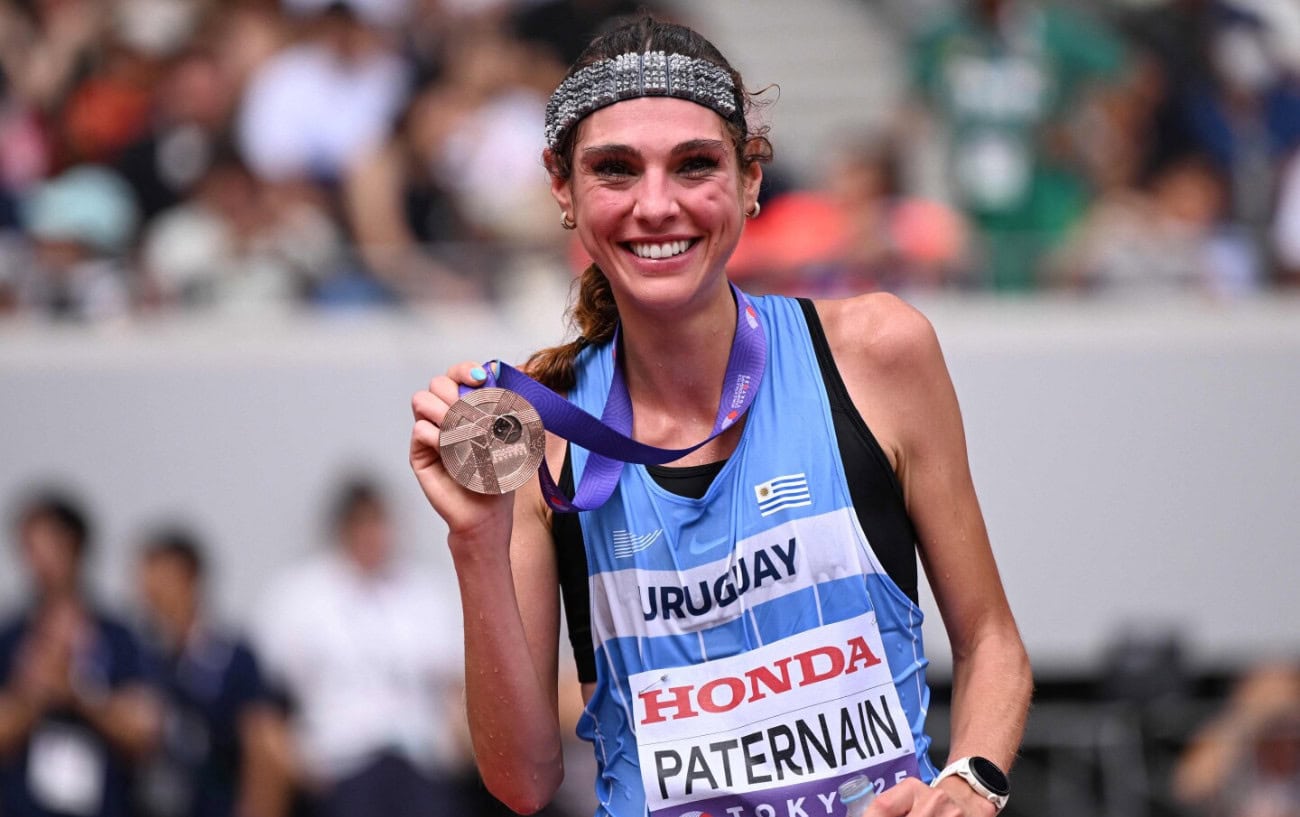
Only after crossing the line, legs buckling and lungs burning, did she learn the truth, bronze. “I was in so much shock. Hence that video of me looking very confused,” she said with a grin.
For Uruguay, a country of just over three million, fiercely proud of its sporting heritage but rarely represented on the global athletics stage, the moment was enormous. Messages of support poured in from home. “Uruguay is small, but it’s a country with a big heart,” she said. “If my bronze shows anything, it’s that anyone can put in the work.”
What happens next is less certain. Paternain is refreshingly open about her lack of a long-term plan. “If you’d asked me a year ago whether I’d even be running a marathon, I’d have said no. Right now, I’m taking it month by month,” she said.
The dream, of course, is clear enough, to line up at the Los Angeles 2028 Olympics. But for now, the story is simpler, the runner who didn’t know she’d finished, and didn’t know she was in third, but ended up on a podium making history for Uruguay.
RunClub
Get more running stories — join RunClub
Daily running news, a community of 300,000+ runners, free training plans for every distance, and a daily running game. Free to join — no card.
Already a member? Log in →




Start the conversation