


Whether you’re toeing the line in Hopkinton this year or dreaming of one day making the cut, the Boston Marathon holds a mystique unmatched in the running world. It’s steeped in history, layered in challenge, and wrapped in community pride.
Here, we answer some of the most common—and most curious—questions about this legendary race.
Our staff will provide live coverage of the 2025 Boston Marathon, including moment-by-moment updates and insights of both the elite races and the experience of the oldest World Marathon Major. Coverage begins Monday, April 21 at 9:00 a.m. ET.
Also be sure to live stream our Boston Marathon Watch Along Show, hosted by editors Alex Cyr and Michael Doyle on YouTube, also starting at 9 a.m. ET. We’ll embed the stream right here on race morning.

1. How Long Is the Boston Marathon, and What Route Does It Follow?
The Boston Marathon is the traditional marathon distance of 26.2 miles (42.195 km). But what sets Boston apart is its point-to-point course—not a loop, but a journey.
- Start: Hopkinton, Mass.
- Finish: Boylston Street in Boston, near Copley Square
- Route: Runners travel through Ashland, Framingham, Natick, Wellesley, Newton, and Brookline before arriving in Boston. Landmarks include the Wellesley Scream Tunnel, the Newton Hills, and of course, the infamous Heartbreak Hill around mile 20.
2. Why Is Boston Considered Such a Difficult Marathon?
It’s not just the distance—it’s the layout. Boston’s net downhill profile lures runners into starting too fast, only to confront a relentless series of hills starting at mile 16.
As coach Jeff Gaudette of RunnersConnect explains, “The Boston course has its own lifestyle. It demands patience early and strength late. It’s not about hill sprints—it’s about managing rolling terrain and a pounding descent that trashes your quads.”
3. How Do You Qualify for the Boston Marathon?
Boston is a qualifier-only race for most entrants, and the standards are famously tough.
- For example, men aged 18–34 need a 3:00:00 marathon; women in the same age group need 3:30:00.
- Qualifying times increase with age, but meeting the standard doesn’t guarantee entry. Runners often need to be several minutes faster than their qualifying time due to entry caps.
That said, a limited number of charity bibs allow runners to bypass the time requirements by fundraising.

4. Is It Really That Hard to Get In? And Is It Worth the Effort?
Yes—and yes.
Qualifying for Boston can take multiple years and training blocks. Jeff Gaudette suggests most runners aim for 7–8% improvement per cycle, stressing incremental gains over Hail Mary attempts. “The runners who succeed,” he says, “are the ones who take it step-by-step.”
And for many, crossing that finish line—especially after a long journey—is the ultimate running achievement.
5. Why Is a Unicorn the Symbol of the Boston Marathon?
You’ve probably seen the unicorn on jackets, medals, and signage. Why?
The mythical creature was adopted by the Boston Athletic Association (BAA)—which predates the marathon—as a symbol of purity, strength, and pursuit of excellence. The unicorn represents the unattainable, making it a fitting icon for a race that demands so much from its entrants.
Oh, and the unicorn’s name is Spike.
6. What’s the Story Behind Heartbreak Hill?
The name was born in 1936, when defending champ Johnny Kelley caught up to Ellison Brown and gave him a friendly pat on the back at the climb around mile 20.
Brown wasn’t having it—he surged ahead, reclaimed the lead, and crushed Kelley’s hopes. A Boston Globe writer later said the moment “broke Kelley’s heart,” and the name stuck.
7. Why Is the Boston Marathon Always on a Monday?
The race is traditionally held on Patriots’ Day, the third Monday in April. This Massachusetts holiday commemorates the Revolutionary War’s opening battles and gives locals the day off—making it the perfect occasion for a community-wide celebration.
It’s also one of the only major marathons regularly held on a Monday, adding to its unique character.

8. What Should You Be Doing in the Final Weeks Before Race Day?
Not much—seriously. “The work is already done,” says Gaudette. In the final 2–3 weeks:
- Back off your mileage and emphasize recovery.
- Test your race-day shoes and outfit in a few short runs.
- Don’t try anything new—no new nutrition, gear, or training tricks.
Mentally, start focusing on logistics, race-day pacing, and visualizing success. Save your energy for the course, not the expo.
9. What Are the Spectator Tips and Can’t-Miss Viewing Spots?
First: Don’t try to cross Boylston Street on race day—you’ll get stuck.
Second: Getting to Hopkinton by Uber? Forget it. Roads close early. Runners should take the official bus from Boston Common.
Best places to spectate:
- Wellesley College (mile 13): Famous for the “Scream Tunnel.”
- Newton Hills (miles 16–21): See runners fight through the toughest terrain.
- Kenmore Square (mile 25): The home stretch drama is electric.
Pro tip from Gaudette: “Stick to one or two spots. Trying to crisscross the course will only stress you out.”
10. What’s the Vibe Like on Race Weekend?
Boston Marathon weekend feels more like a city-wide festival than just a race. Restaurants, hotels, and residents all roll out the red carpet.
Runners can soak in:
- Panels, shakeout runs, and pop-ups from top brands like Saucony, Adidas, and Brooks.
- Historic sightseeing (but wait until after your race to explore on foot!).
- An electric finish line scene on Boylston Street.
“It’s more than a race—it’s a pilgrimage,” says Gaudette. “For one weekend, the entire city becomes your cheer squad.”
11. What Time Does the Boston Marathon Start?
Start times are staggered to accommodate elite athletes, para-athletes, and the tens of thousands of qualified runners.
- 6:00 a.m. – Military March
- 9:02 a.m. – Men’s Wheelchair
- 9:05 a.m. – Women’s Wheelchair
- 9:30 a.m. – Handcycles and duos
- 9:37 a.m. – Professional Men
- 9:47 a.m. – Professional Women
- 10:00 a.m. and after – Wave starts for general field
Your assigned corral and wave depend on your qualifying time. One rule: you can move back to a slower wave or corral, but never forward—a disqualification risk if caught.

12. What Should You Pack for the Start in Hopkinton?
Here’s the trick: there’s no bag drop in Hopkinton. Anything you bring needs to be:
- Worn,
- Carried, or
- Donated (discarded).
Most runners wear throwaway layers (often donated to charity after the race), pack snacks, hydration, and use a small belt or pocketed shorts for essentials like gels, salt tabs, or a phone. Plan ahead for long waits at the start—blankets, plastic ponchos, and even inflatable cushions are fair game.
13. How Should I Pace the Boston Marathon?
Boston is a course that punishes impatience. Nearly all veterans agree: start slow.
- Miles 1–6: Net downhill. Let the pack go, settle in.
- Miles 7–16: Rollers. Stay calm. Stay consistent.
- Miles 16–21: The Newton Hills—including Heartbreak—demand respect.
- Mile 21–26.2: Now you can start racing.
Coach Jeff Gaudette notes, “It’s not the hills that get you—it’s what you did before the hills that makes them hard.”
14. What’s the Deal With Wellesley’s “Scream Tunnel”?
At mile 13, you’ll encounter a wall of noise: the legendary Wellesley College “Scream Tunnel.”
It’s a decades-old tradition where students line the course, brandishing signs like “Kiss me, I’m a chem major!” and cheering runners so loudly it’s audible from half a mile away.
No need to stop for a kiss—though some runners do—but soaking in the energy is practically mandatory.
15. Are There Aid Stations, and What Do They Offer?
Yes—and they are plentiful. Expect hydration stations roughly every mile, with:
- Gatorade Endurance Formula (lemon-lime)
- Water
- Maurten gels at designated tables around mile 17 and 21
Many stations are staffed by volunteers from local schools and running clubs, and some offer Vaseline sticks for chafing emergencies.
Pro tip: Practice with Gatorade Endurance and Maurten before race day if you plan to use them.

16. Is the Boston Marathon a Good Course for a Personal Best?
In a word: no—but it depends on the day.
While Boston has a net downhill, the rolling terrain and unpredictable weather make it a poor choice for most PR attempts. Wind, heat, or rain can derail plans fast.
Still, if you’re well-prepared, patient, and weather conditions align, PRs and even course records (like Geoffrey Mutai’s blistering 2:03:02 in 2011) can happen.
17. How Can I Train Specifically for Boston’s Downhills?
Don’t ignore the downs. They aren’t “easy” but instead are creating micro tears in your quads.
Here’s how to prepare:
- Run downhill intervals in training (gradual slopes, 2–5 minutes)
- Do long runs on net-downhill routes
- Include eccentric strength training: squats, lunges, single-leg step downs
18. What Are the Fastest Times Ever Recorded at Boston?
Here are the current course records:
- Men’s Open: Geoffrey Mutai, 2:03:02 (2011)
- Women’s Open: Bizunesh Deba, 2:19:59 (2014)
Because the Boston course is point-to-point and downhill, times don’t qualify for world records—but they’re still legendary.
19. Can I Still Run If I Don’t Qualify?
Yes—charity entries are an alternative path. Each year, the BAA designates bibs to over 30 official nonprofit partners. To run for one:
- Apply early (many fill by fall)
- Commit to fundraising, usually $5,000–$10,000
- Still train like a qualifier—Boston is no joke
This is a popular option for first-timers and those aiming to give back.
20. What’s It Like to Finish on Boylston Street?
There’s nothing quite like it.
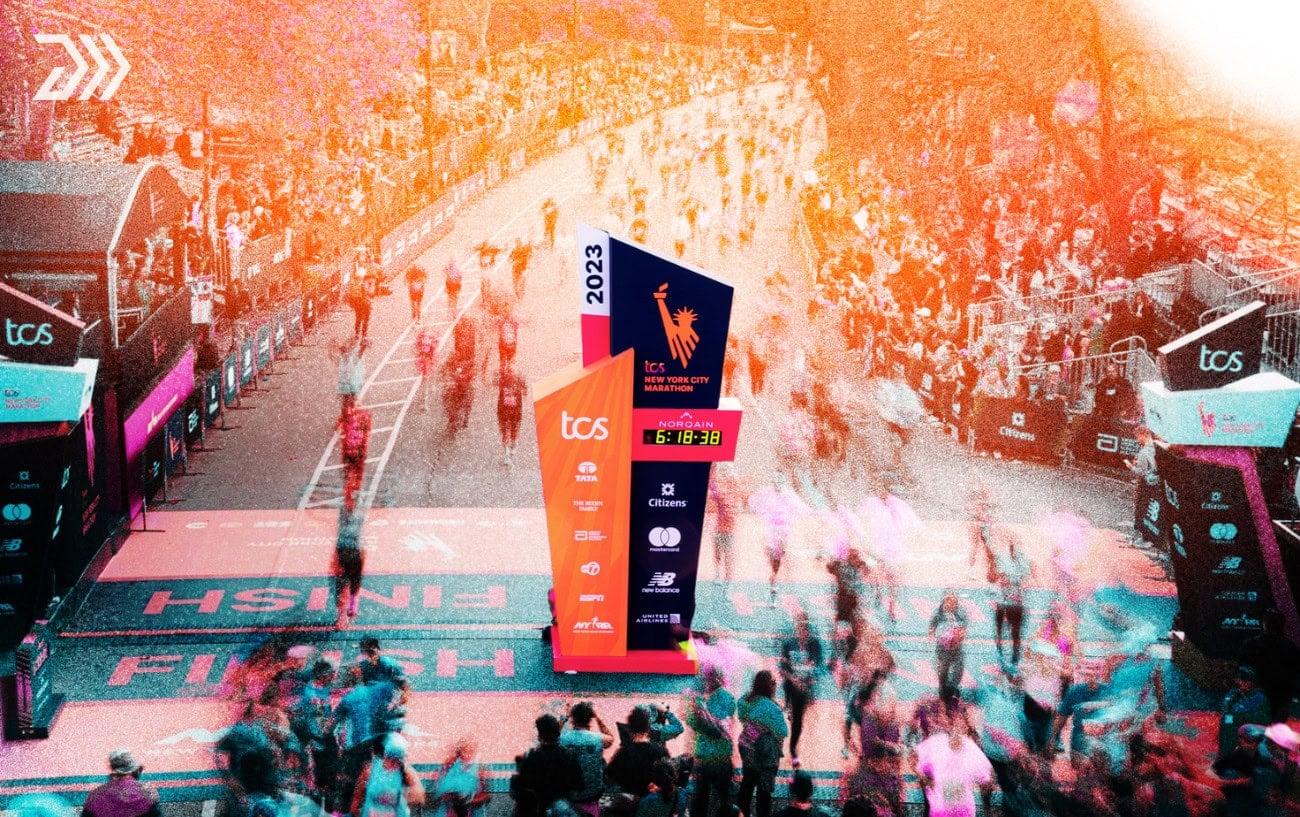
You turn right on Hereford, left on Boylston, and the iconic blue-and-yellow finish line comes into view. Thousands of screaming fans. The Boston skyline in your periphery. Your name on the jumbotron.
Jeff Gaudette calls it “our Super Bowl.”
If you’re lucky enough to make it there—whether in 3 hours or 6—you’ve joined a century-old tradition that runners around the world dream of.
RunClub
Get more running stories — join RunClub
Daily running news, a community of 300,000+ runners, free training plans for every distance, and a daily running game. Free to join — no card.
Already a member? Log in →


Start the conversation