


Steep descents can leave your legs wrecked. Would a road marathon really cause more lingering fatigue than a trail race with substantial climbing and descent?
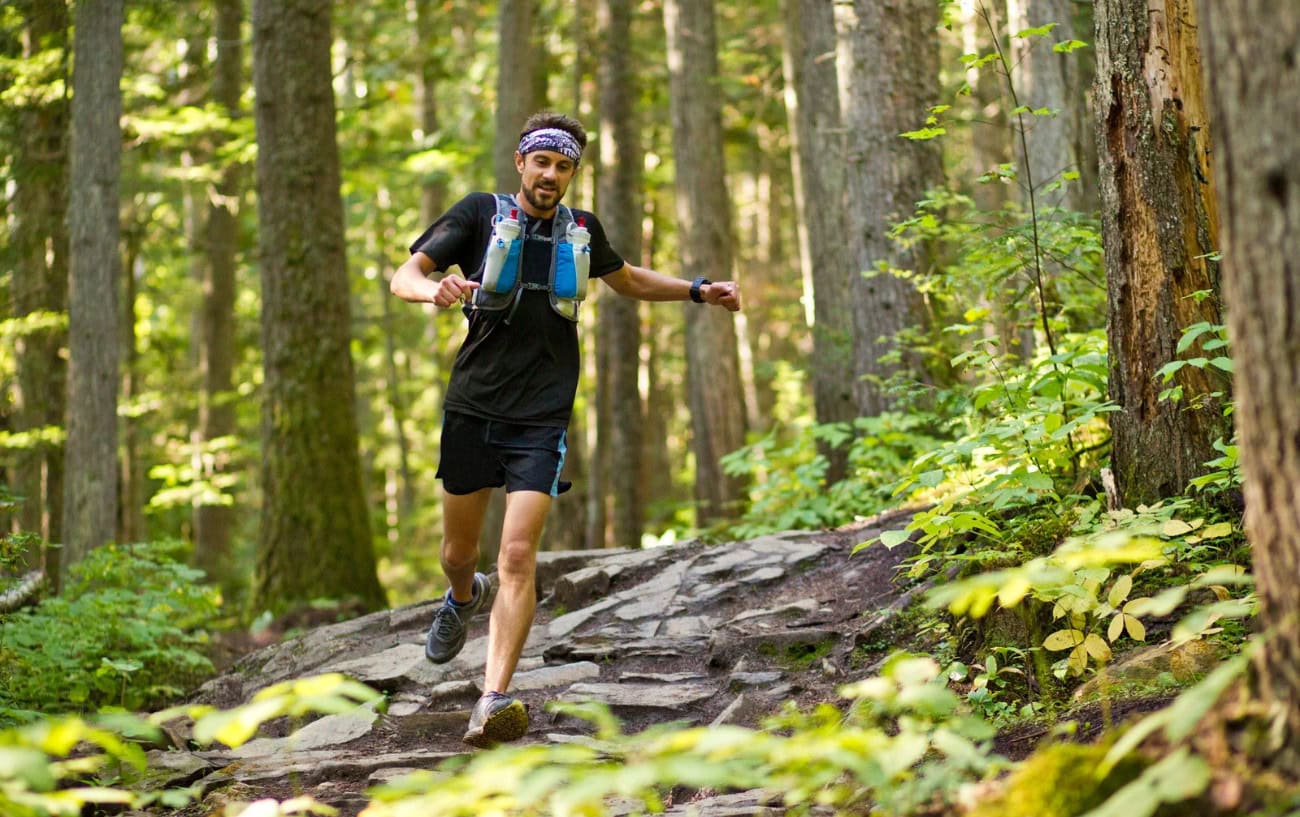
In a comparison of 41 trained runners, athletes completed one of three events according to their specialty: a simulated treadmill marathon, a simulated 18 mi/29 km trail run with roughly 1,400 m of ascent and descent, or an outdoor trail run of the same distance and elevation change. Researchers assessed muscle activation, force, jumping, blood markers, and recovery after the events.1Metra, M., Féasson, L., Ravel, A., Espeit, L., Rossi, J., Blagrove, R. C., & Millet, G. Y. (2026). Neuromuscular fatigue and recovery: Are marathon and trail running different? Medicine and Science in Sports and Exercise, 10.1249/MSS.0000000000004200. PubMed. https://doi.org/10.1249/MSS.0000000000004200
- The marathon group had the larger immediate drop in the ability to fully drive a group of muscles in the knee—23.5%, versus 9.2% and 13.0% in the two trail groups.
- Squat-jump height fell 11.7% after the marathon but rose in the trail groups.
- A blood marker of muscle damage was also higher the next day.
- Knee-extensor activation, jump height, and soreness took longer to recover after the marathon. Several other neuromuscular measures did not differ clearly between groups.
What this means for runners
Give your legs room after a hard marathon even if soreness starts to fade. Event duration and your actual leg function are better guides for returning to hard sessions than a simple road-versus-trail label. Lots of variables come into play besides the surface you were running on.
References
RunClub — Free
Join 300,000+ runners in RunClub
Free training plans for every distance, a daily running game, exclusive coaching content, and a real community of runners. Create your free account in 20 seconds — no card.
Already a member? Log in →











Start the conversation