


Elite marathon results are not supposed to work like this.
In a typical major race, the podium is a mix. The winner runs well. Second place might match or nudge a personal best. Third is often someone hanging on. Conditions affect some runners differently than others. The times spread across a range.
At the 2026 Zurich Barcelona Marathon on Sunday, the top three women and the top three men all improved their personal bests. Not by seconds. By minutes.
That is worth looking at carefully.
The Men’s Numbers
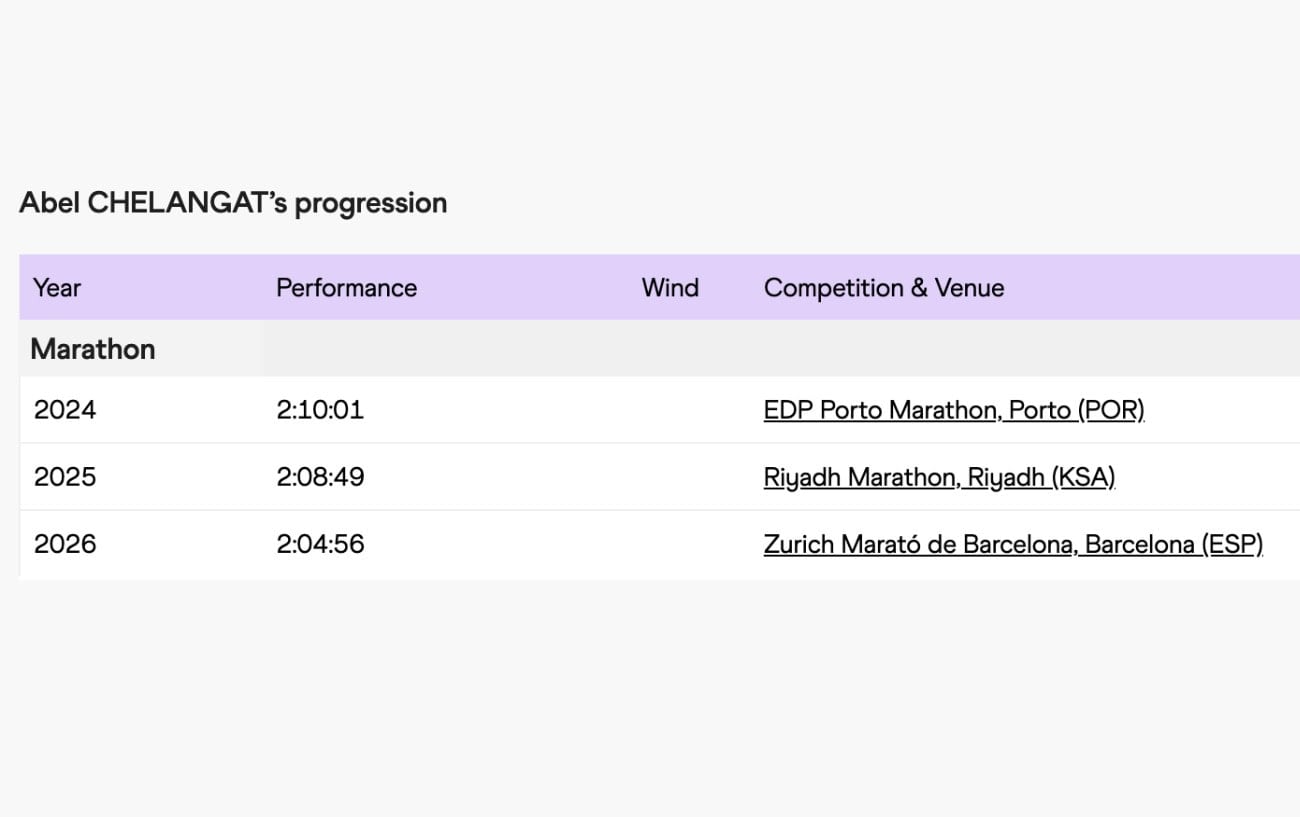
Abel Chelangat of Uganda won the men’s race in 2:04:56. His previous personal best, set at the Riyadh Marathon in February 2025, was 2:08:49. Sunday’s time was an improvement of 3 minutes and 53 seconds.
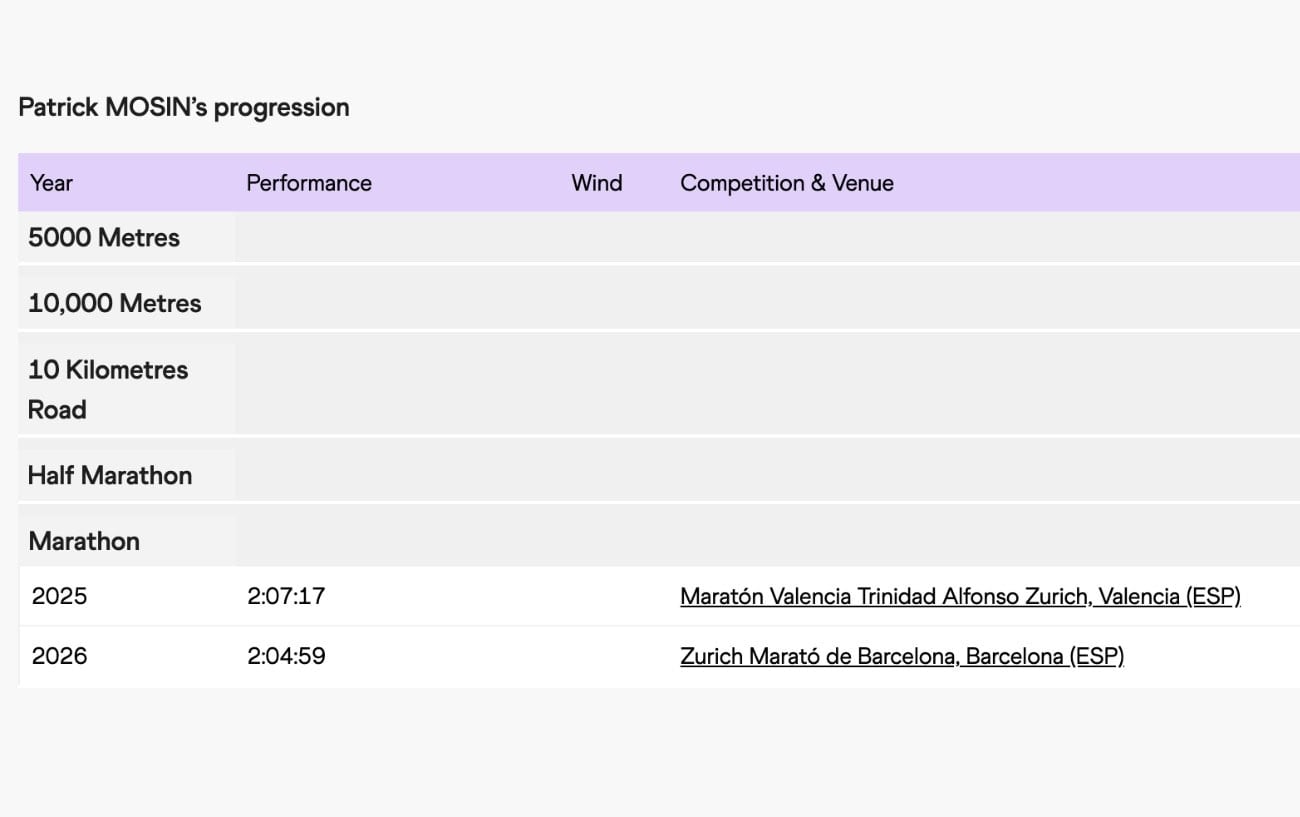
Patrick Mosin of Kenya finished second in 2:04:59. His previous best was 2:07:17, run at Valencia in December 2025. An improvement of 2 minutes and 18 seconds.
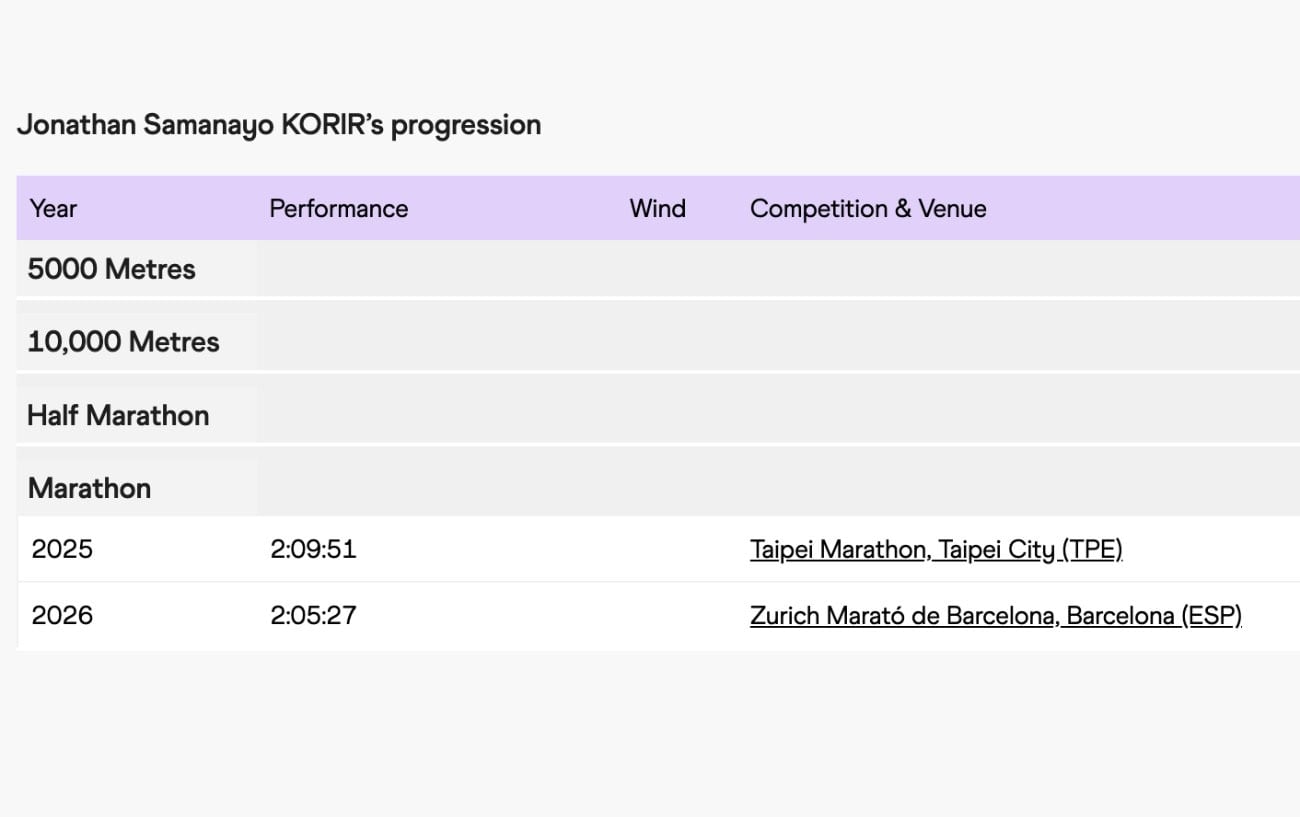
Jonathan Samanayo Korir of Kenya finished third in 2:05:27. His previous marathon best was 2:09:51, run at Taipei in December 2025. An improvement of 4 minutes and 24 seconds.
Korir’s numbers carry an additional layer of context. His recent half marathon personal best of 1:01:30 feeds into World Athletics’ equivalency tables as a projected marathon time of approximately 2:08:20. He ran 2:05:27 — nearly three minutes faster than his half marathon pedigree would predict.
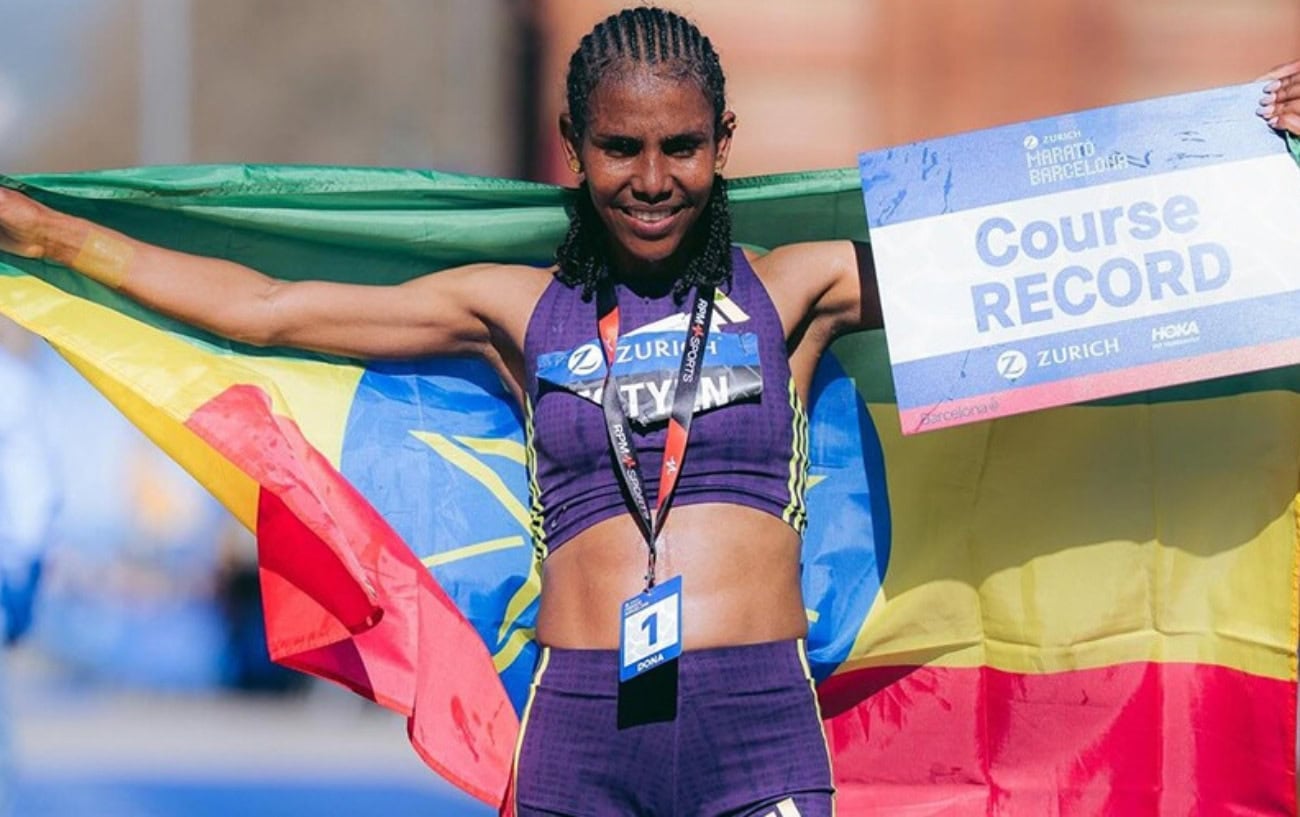
The Women’s Numbers
The women’s side tells the same story, with one number that dwarfs everything else on the podium.
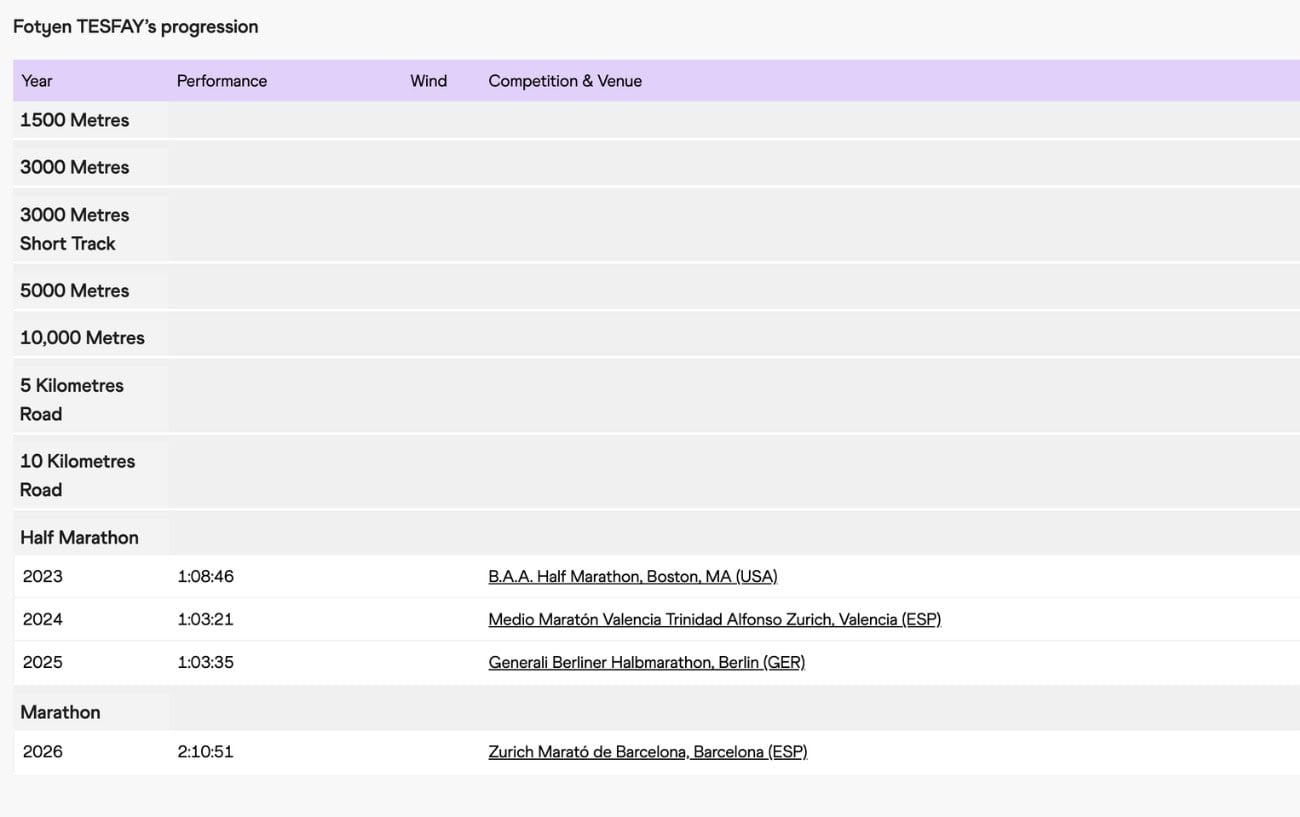
Fotyen Tesfay won in 2:10:51 on her marathon debut — a performance we covered in detail here. Her half marathon personal best of 1:03:21 projects, per World Athletics’ tables, to a marathon of approximately 2:14. She ran more than three minutes faster than that on her first attempt at the distance.
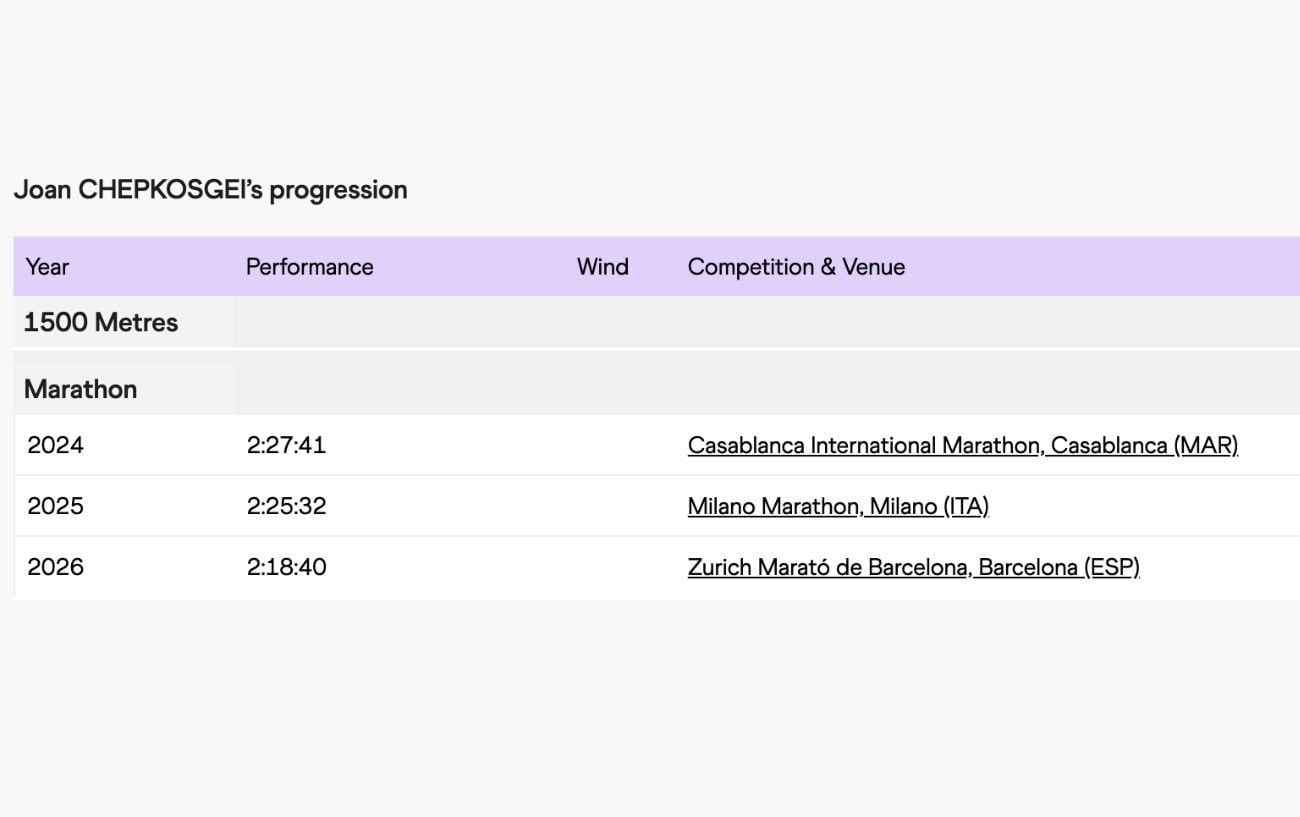
Joan Chepkosgei of Kenya finished second in 2:18:40. Her previous marathon best, run in Milan in April 2025, was 2:25:32. An improvement of 6 minutes and 52 seconds — the single largest improvement of any of the six podium finishers on Sunday, and one of the most dramatic single-race improvements seen at a major marathon in recent years.
Chepkosgei is 22 years old and only in her third year of marathon racing. Her progression has been rapid: 2:27:41 in Casablanca in October 2024, 2:25:32 in Milan in April 2025, 2:18:40 in Barcelona on Sunday. A seven-minute improvement across three races in 18 months.
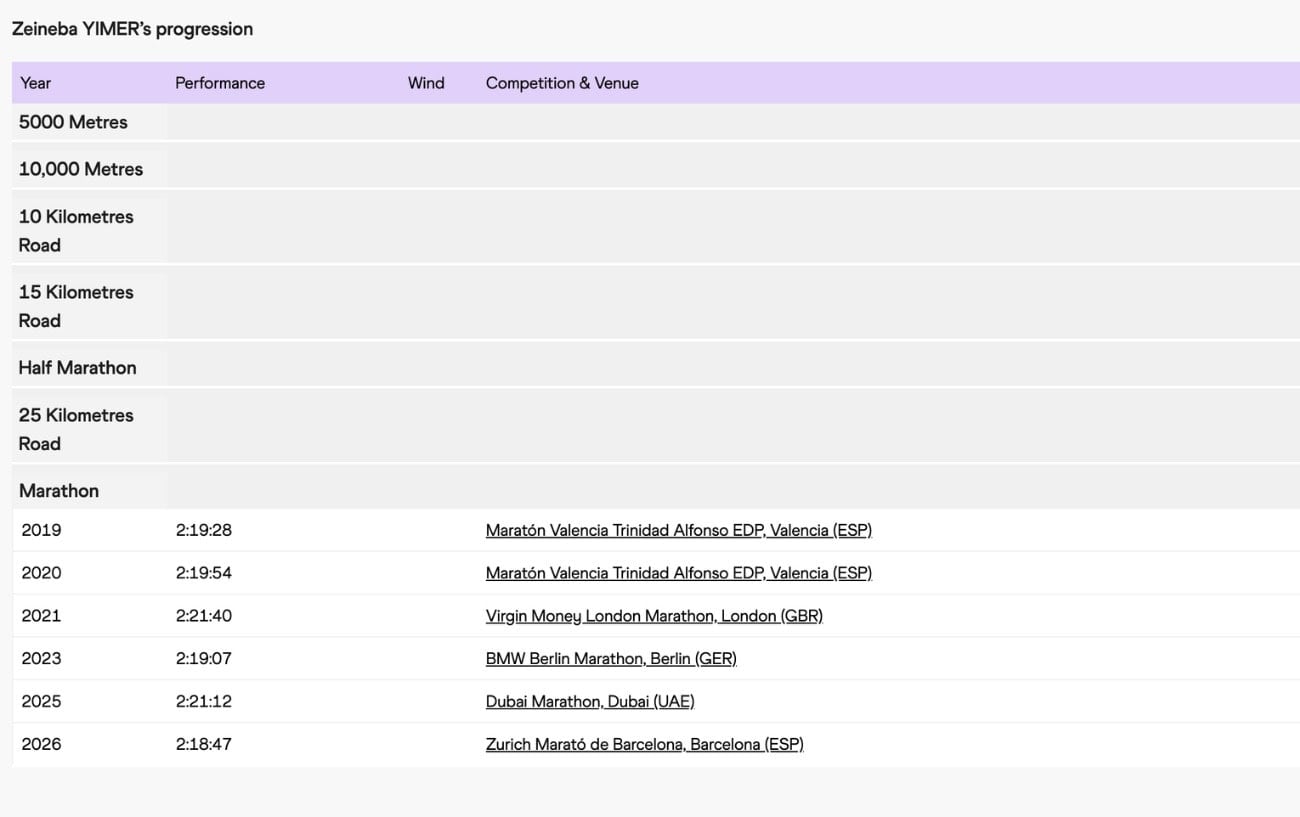
Zeineba Yimer of Ethiopia took third in 2:18:47, a 20-second improvement on her previous best of 2:19:07 — the most modest number of the six.
What Could Explain It — And What Makes It Harder To
Before drawing any conclusions, the legitimate explanations deserve a fair hearing. Barcelona’s course is fast, flat, and well-organised. The pacemakers in the men’s race were aggressive from the start. Several of these athletes are young and improving year-on-year. Fast courses with competitive fields produce fast times.
But there is a problem with the “perfect day” explanation. The day was not, by several accounts, perfect.
In her post-race interview, Fotyen Tesfay said: “My plan was to attack the world record, but today there was a lot of wind. I was not able to push in the last part of the race.”
Wind in the final seven kilometres of a marathon is not a minor inconvenience. It is precisely the kind of condition that costs time — slowing athletes when they are already depleted and have the least capacity to fight it. Tesfay, who had been tracking ahead of the world record pace through 30 kilometres, explicitly cited wind as the reason her final stretch fell away.
And yet, despite those same conditions in those same final kilometres, all six podium finishers still ran significant personal bests. The athlete who said the wind cost her the world record still ran the second-fastest women’s marathon in history. The men around her ran two to four and a half minutes faster than they ever had.
If conditions were difficult enough that the winner noticed them, they were difficult enough to have suppressed times. They didn’t.
So, What Are We Left With
Sunday’s race may have been exactly what it looked like: a remarkable morning of marathon running produced by genuine talent on a fast course. That happens.
What makes it harder to simply accept is the accumulation of details. Six podium finishers, all improving. Improvements ranging from two minutes to nearly seven. Predictions outrun by significant margins. And conditions that the winner herself described as difficult — yet which appear to have done nothing to suppress the historic nature of the times.
The sport has asked its audience to take extraordinary performances on faith before. It has broken that trust before too. What Sunday’s results demand, at minimum, is prompt and rigorous out-of-competition testing of everyone on that podium, transparency from the race organisers and brands involved, and — if everything comes back clean — the sport saying so loudly and with the receipts.
Extraordinary performances require extraordinary verification. That is not an accusation. It is the only standard that means anything anymore.
RunClub
Get more running stories — join RunClub
Daily running news, a community of 300,000+ runners, free training plans for every distance, and a daily running game. Free to join — no card.
Already a member? Log in →








Join the conversation
100% agree!