


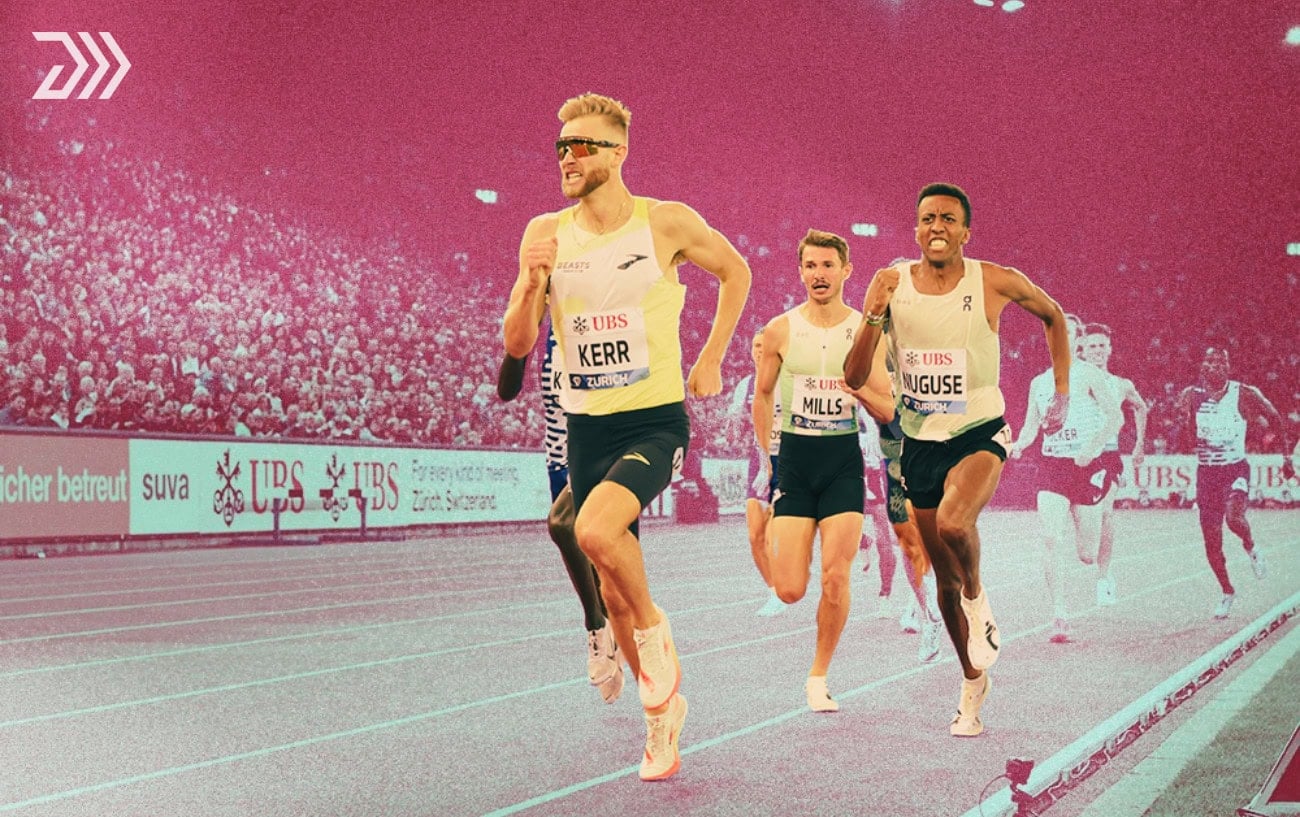
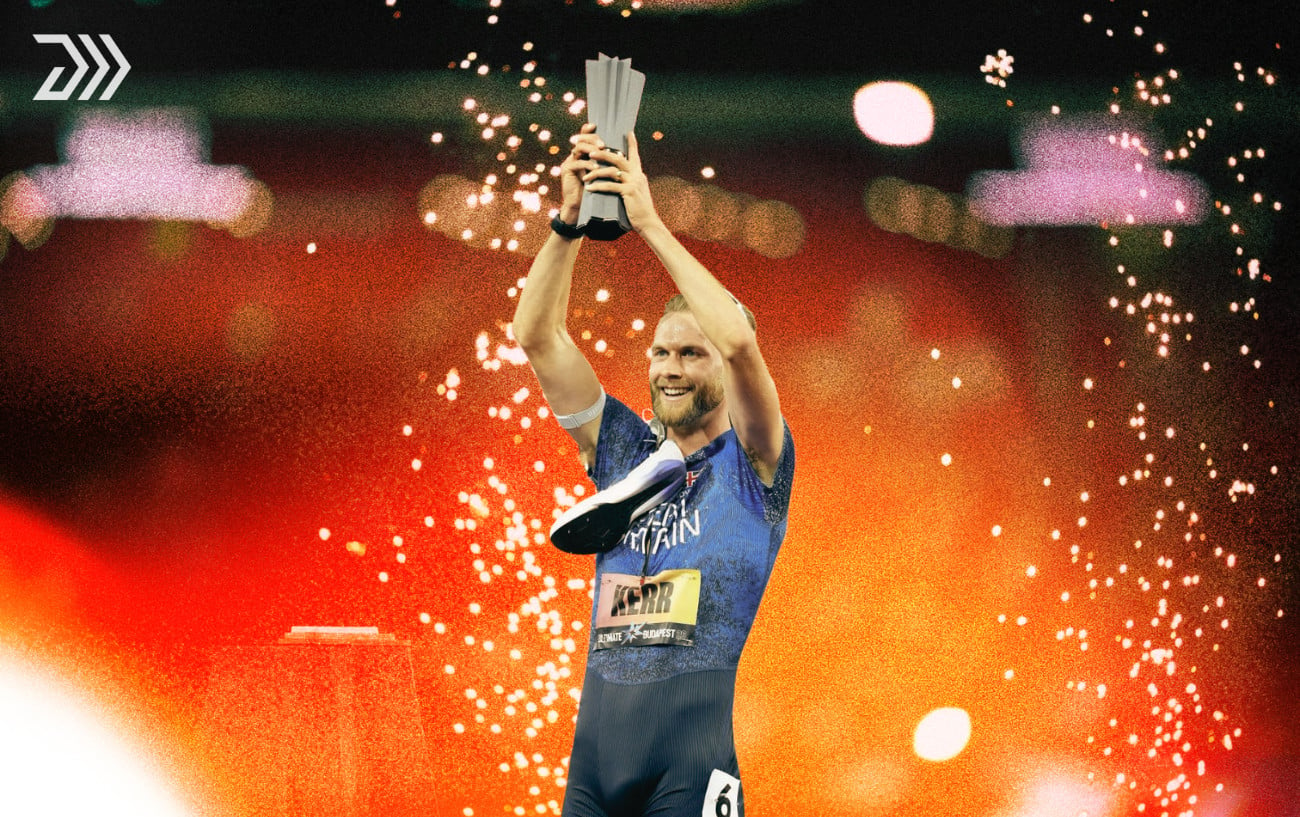
The official timing from Saturday’s mile world record settles how the race was actually run, and the decisive number sits at the end: Josh Kerr covered his final lap in 54.9, the fastest of the four. From the stands, alone in front over the last 600 meters, he looked like he was holding on. The data shows him accelerating.
Kerr passed 400m in 55.3, 800m in 1:51.1 (a 55.8 lap), and 1,200m in 2:46.5 (55.4) before the 54.9 brought him to the 1,600m mark in 3:41.4, with 1.2 seconds for the final 9.34 meters of a mile. Breaking 3:43.13 required averaging 55.45 per lap; he averaged 55.34. The halves tell the same story more sharply. His first 800m took 1:51.1. The second half, factoring in the extra nine meters fo a mile, 809.34 meters, took 1:51.56, which works out to roughly four-tenths per lap faster.
Sixteen Segments, Eight-Tenths Apart
Broken into 100m segments, the run barely moves. Kerr’s fastest 100 was 13.5, his slowest 14.3, and both came in the first lap. The full 100m breakdown, first assembled from the timing data by CITIUS Mag:
- 100m: 13.8
- 200m: 27.5 (13.7)
- 300m: 41.0 (13.5)
- 400m: 55.3 (14.3)
- 500m: 1:09.3 (14.0)
- 600m: 1:23.2 (13.9)
- 700m: 1:37.0 (13.8)
- 800m: 1:51.1 (14.1)
- 900m: 2:05.1 (14.0)
- 1,000m: 2:18.8 (13.7)
- 1,100m: 2:32.6 (13.8)
- 1,200m: 2:46.5 (13.9)
- 1,300m: 3:00.3 (13.8)
- 1,400m: 3:14.0 (13.7)
- 1,500m: 3:27.7 (13.7)
- 1,600m: 3:41.4 (13.7)
- Finish, 1,609.34m: 3:42.66 (1.2 for the last 9.34 meters)
Splits as per Citius Mag
From 900 meters home, every segment sat between 13.7 and 13.9, a spread of two-tenths across the entire closing kilometer, while the deepest mile field in years ran personal bests behind him and still lost ground.
Measured Against Rome 1999
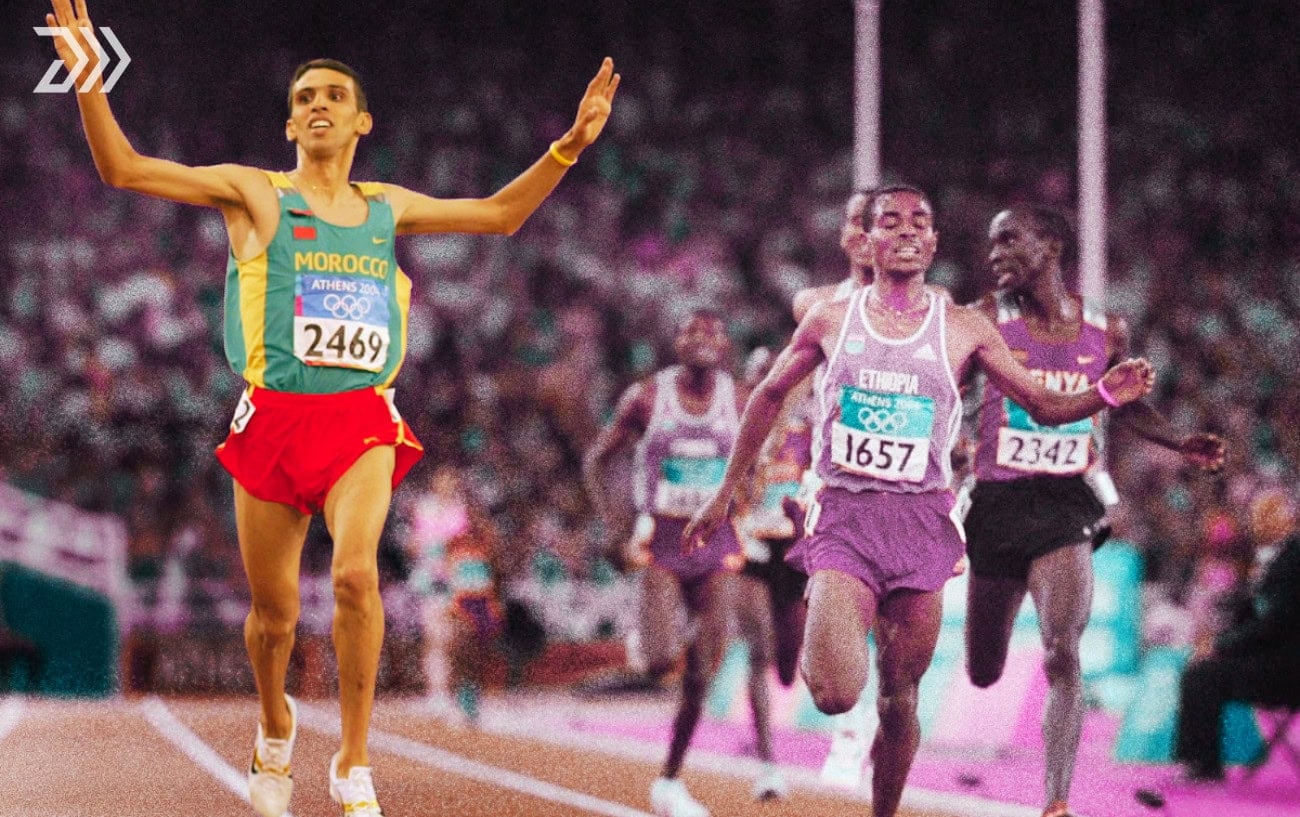
Set beside the race it erased, the shape is nearly identical and the execution is steadier. According to World Athletics’ report from Rome, Hicham El Guerrouj’s 1999 field passed 400m in 55.07, halfway in 1:51.58, and three-quarters in 2:47.91 before El Guerrouj closed in 55.22. Kerr conceded about two-tenths to Rome’s opening quarter, drew half a second ahead by 800m, was 1.4 seconds up at 1,200m, and out-closed El Guerrouj’s final quarter by three-tenths. Both records were finished with the fastest lap of the race. El Guerrouj was dragged to his by Noah Ngeny, who finished 0.27 behind him. Kerr ran his after Yared Nuguse had lost contact, with only the Wavelight beside him.

The 1,500m Inside the Mile
The split likely to circulate longest is at 1,500m: 3:27.7. Kerr’s official 1,500m personal best is 3:27.79, set winning Olympic silver in Paris in 2024. En-route splits are not ratified marks, but the comparison stands: he matched the fastest 1,500m of his life inside a longer race and ran another 109 meters at 13.7-per-100m pace afterward.
The execution also departed from every rehearsal. In his final Albuquerque time trial, Kerr covered 1,200m in 2:42.45 with a running start and a 51.88 last lap, a session built on aggression. The race plan, with Brannon Kidder pacing to roughly 950 meters and Zan Rudolf slightly beyond, called for even 55s instead, and that is what the ledger shows: no lap faster than 54.9, none slower than 55.8, in a race engineered from the start to be ratified.
The splits now go to World Athletics as part of the standard ratification file, alongside the doping-control paperwork from the London Diamond League. The number they document is 222.66 seconds, distributed almost evenly across four laps, with the fastest saved for last.
RunClub
Get more running stories — join RunClub
Daily running news, a community of 300,000+ runners, free training plans for every distance, and a daily running game. Free to join — no card.
Already a member? Log in →




Start the conversation