


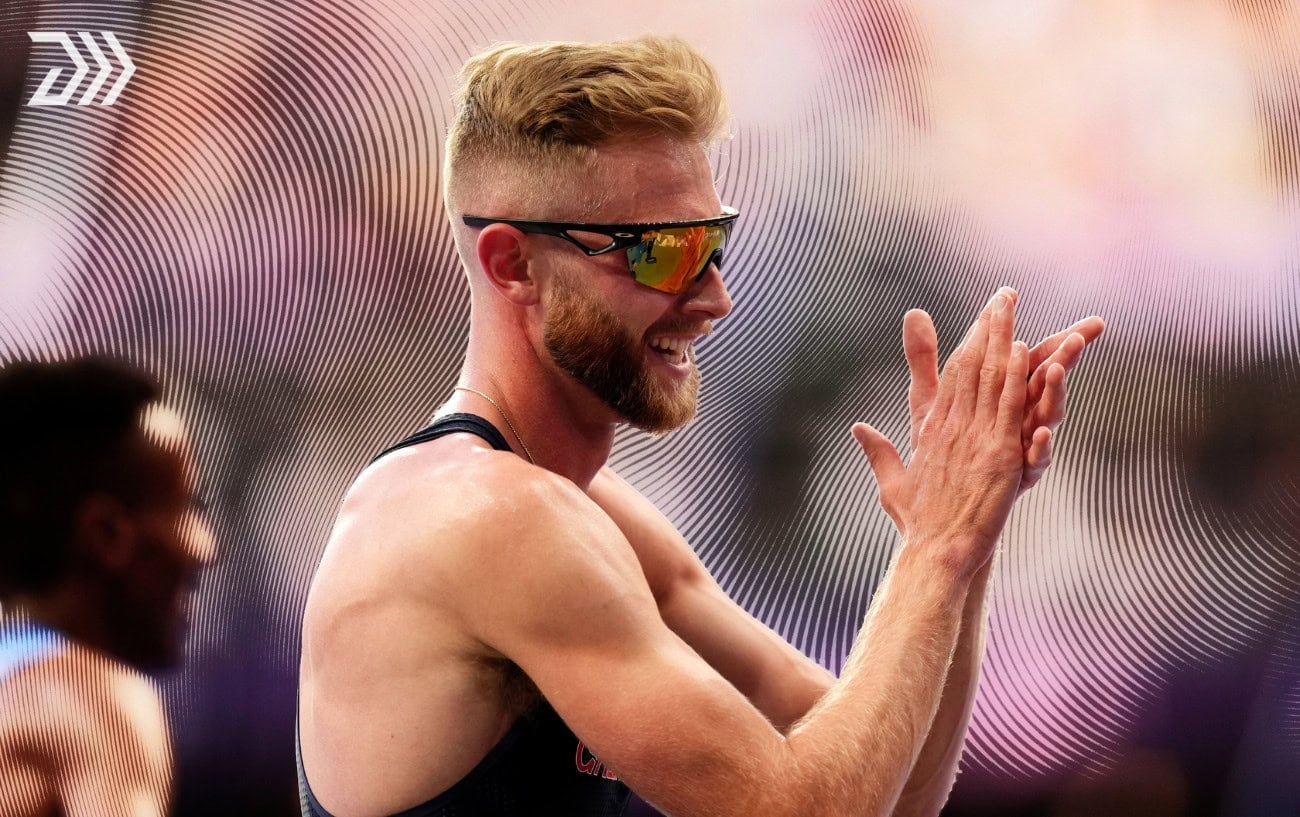
As far as the record book is concerned, two of the most famous distance runs of this century never happened. Eliud Kipchoge’s 1:59:40 in Vienna in 2019 was not the marathon world record. Faith Kipyegon’s 4:06.42 mile in Paris last June, more than a second faster than her own world record, appears nowhere beside her name. Both were exhibitions, built outside the rules that make a mark official, and both were understood that way before the gun. Josh Kerr’s attempt on Hicham El Guerrouj’s mile record at Saturday’s London Diamond League comes from the same tradition of sponsor-built record attempts, with one decisive difference. If Kerr runs 3:42.00, or anything under 3:43.13, the record is his, ratifiable the moment he crosses the line.
The mechanics of the attempt, two pacers carrying him deep into the race, Wavelight pacing lights on the rail, a one-off Brooks spike, are laid out in our full preview, and the case for and against him beating Yared Nuguse to the line in our head-to-head analysis. The pacing plan was first reported by LetsRun.com from inside Kerr’s camp. This piece is about the older question behind Saturday: where the manufactured record attempt came from, and how it’s finally evolved into a strategy that can be made official.
Nine Years of Engineered Barrier Runs
Breaking2 went off at 5:45 a.m. on May 6, 2017, on the Monza Formula One circuit in 12 C drizzle, and Nike did not choose the date at random: it was 63 years to the day since Roger Bannister first broke four minutes for the mile. I covered the spectacle in person, trackside. Kipchoge’s 2:00:25 fell 26 seconds short and was ineligible for ratification because his pacers rotated in and out of the race. It still pushed running into mainstream news coverage, something the sport manages only rarely, and it established the model: a brand builds the event from nothing, casts an athlete as its protagonist, and tells one story for months. Two years later the INEOS 1:59 Challenge in Vienna took the model further. Kipchoge ran 1:59:40.2 behind rotating pacers in formation on a closed course, no ratification possible, and drew a worldwide audience even so. I remember watching a news report on CNN about the performance from a bar in Kona, where I was covering the Ironman World Championship (and was perhaps the only person on Hawaii wishing they were somewhere else that day).
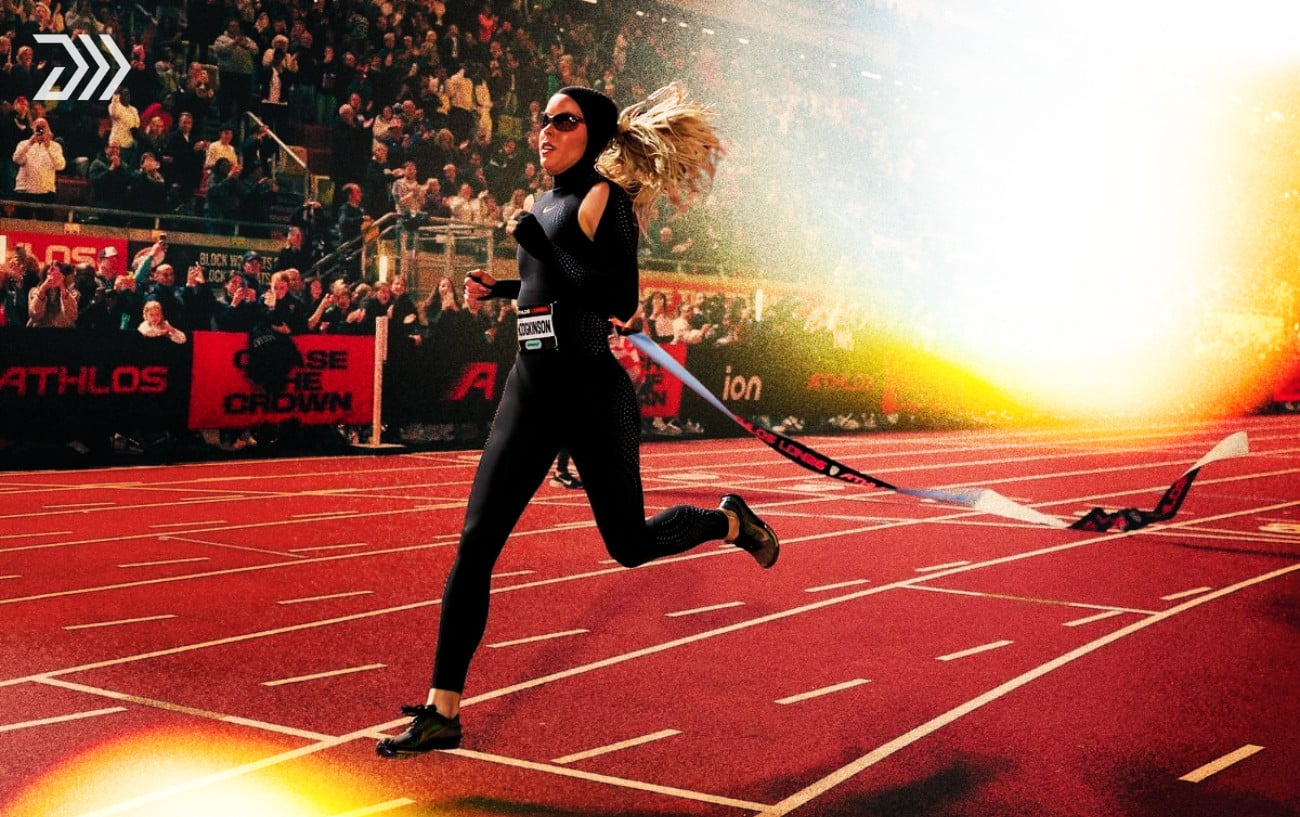
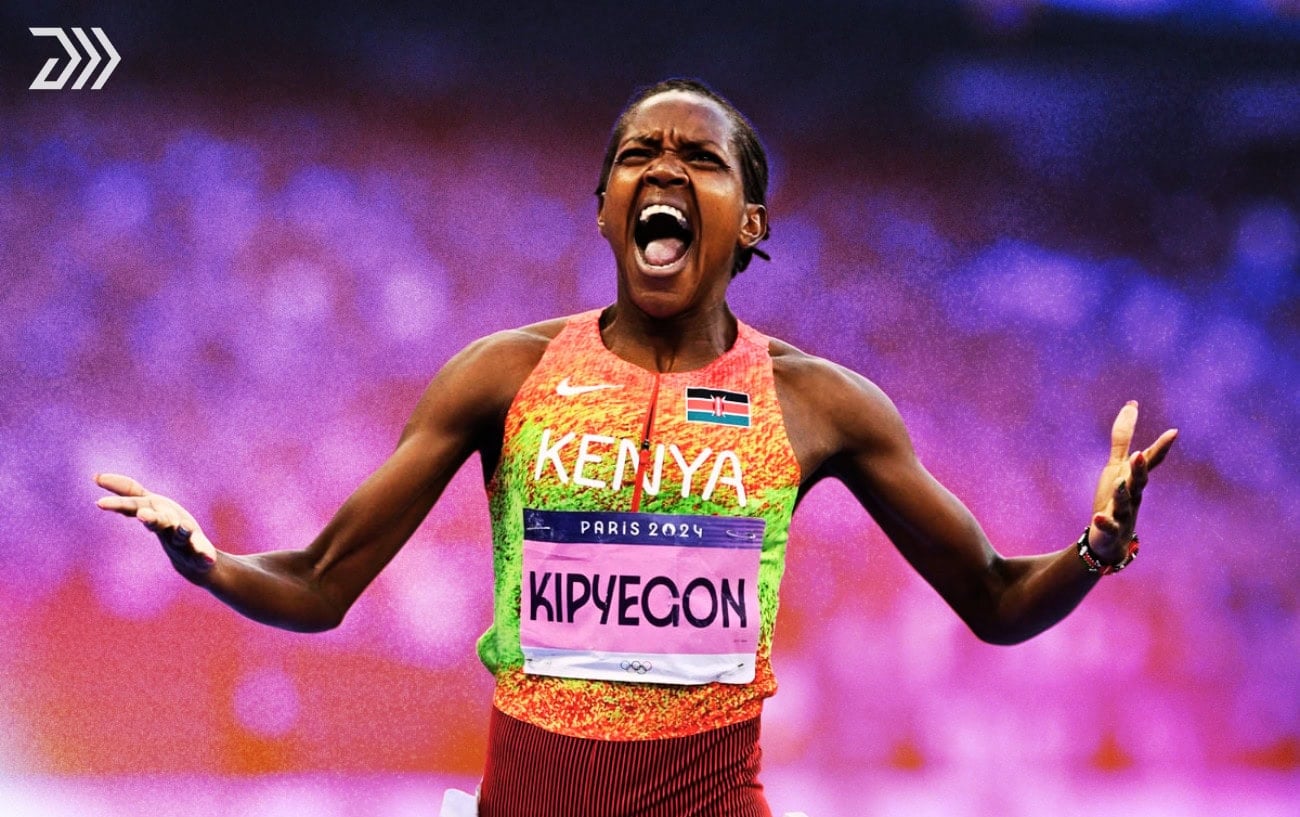
Breaking4, at Stade Charléty in Paris last June, refined the formula again, and I covered that one, too. Kipyegon ran 4:06.42 behind a crew of 13 pacers, five arranged in a formation her team called “the shield.” The time was ineligible on several grounds but more than a second inside her official world record of 4:07.64. Nike had a second story prepared in case the first fell short: the fastest mile ever run by a woman, whatever the book said, and a surge of attention for women’s track running. Both claims were true. Little of the coverage noted that the company generating the attention was the same one claiming credit for it. A clever marketing move.
What Project 222 Learned
Project 222 has taken nearly everything from that playbook, the countdown announced back in March, the custom gear, the athlete as protagonist, and corrected the playbook’s one persistent failure by moving the attempt inside the rules. Saturday’s Emsley Carr Mile is a sanctioned Diamond League race. Kerr’s pacers, Brannon Kidder and Zan Rudolf, will start the race and step off, which is how record pacing has worked for generations. Wavelight technology, which illuminates the track rail with the previous record’s pace, was written into the World Athletics rulebook in 2020 and has paced a dozen ratified world records since, according to its maker. The custom Hyperion 222 spike is within World Athletics guidelines. And the field is real: Nuguse, the fastest miler entered, is just 0.84 from the record himself, and his coach told LetsRun Nuguse will go with any pace.
One Breaking4 lesson may matter most: that Project 222’s creators have its consolation narrative prepared in advance. Neither Brooks nor Kerr has said publicly what happens if the record survives Saturday, but the attempt is structured so that a failure still produces a story: Kerr’s best is 3:45.34, so nearly any hard, clean race gives him the fastest mile of his life, and his coach Danny Mackey has already enumerated the many external factors could ruin the day regardless of fitness.
The Case for the Spectacle
The timing favors the project. This is an Olympic off-year, and Jakob Ingebrigtsen, the only miler of this generation to finish within a second of the record, has been sidelined since Achilles surgery. Kerr suits the protagonist role better than almost anyone available: outspoken, unusually generous with the press, and unafraid of creating a bit of drama. His rivalry with Ingebrigtsen dates to Budapest in 2023, where Kerr took the world title from him. Beneath the two of them, the event is unusually deep. Nuguse and Olympic 1,500m champion Cole Hocker are established; Niels Laros of the Netherlands caught Nuguse on the line to win the 2025 Bowerman Mile by a hundredth; Cameron Myers won this year’s edition in an Australian record 3:46.06; Jake Wightman, the 2022 world champion, took silver last year and ran 3:29.95 for 1,500m in Paris last month; and Sam Ruthe of New Zealand broke four minutes at 15. If Saturday pulls new fans into the event, there is plenty for them to follow afterward.
Mainstream attention is rare in running. It took Sabastian Sawe’s 1:59:30 in London in April, the first sub-two-hour marathon in a record-eligible race, for mainstream news outlets to cover a running result this year. A mile world record on a Saturday afternoon of British television could do it again.
Why the Mile
Choosing the mile over the 1,500m may be the shrewdest decision in the project. No number in running means more to the public than four minutes for the mile, and American and British outlets that would never preview a 1,500m will cover an assault on Bannister’s event. The history is less tidy than the legend, though. Bannister’s 3:59.4 on May 6, 1954 came in a dual meet planned around the attempt, with Chris Brasher and Chris Chataway pacing him by arrangement, per World Athletics. A year earlier, Bannister had run 4:02.0 in a mile staged for him inside a school meet at Motspur Park, and the British Amateur Athletic Board refused to ratify it, ruling the race was not genuine competition. The staged mile attempt, and the argument over whether it should count, has existed as long as the barrier. Nike knew this history when it scheduled Breaking2 for Bannister’s anniversary.
What Rome Still Holds
The record Kerr is chasing was set on July 7, 1999, at Rome’s Stadio Olimpico, and the whole race is on YouTube: one main broadcast angle, no lights on the rail, pacemakers doing the early work, and El Guerrouj pressed the entire way by Noah Ngeny, who finished in 3:43.40, still the second-fastest mile ever run. In 27 years, no engineered attempt has reproduced that: a record set with a runner-up finishing inside the old mark. If Nuguse is still on Kerr’s shoulder at the bell, Saturday would have the chance. The gun goes at 3:36 p.m. in London.
RunClub
Get more running stories — join RunClub
Daily running news, a community of 300,000+ runners, free training plans for every distance, and a daily running game. Free to join — no card.
Already a member? Log in →






Start the conversation