


Lower blood lactate during exercise sounds like an automatic performance win. But lactate isn’t just fatigue waste, and a lower reading doesn’t necessarily mean an athlete can ride or run faster.
That’s why I’m a bit skeptical of the hype around certain supplements promising to dramatically reduce lactate during exercise—including one made from a compound present in kale and broccoli sprouts that was tested in a recent randomized study.1Vinge, F., Tillqvist, E., Horwath, O., Apró, W., Larsen, F. J., & Sundqvist, M. L. (2026). Effects of a glucosinolate‐rich beverage on blood lactate concentrations during submaximal exercise. Physiological Reports, 14(16). https://doi.org/10.14814/phy2.71081
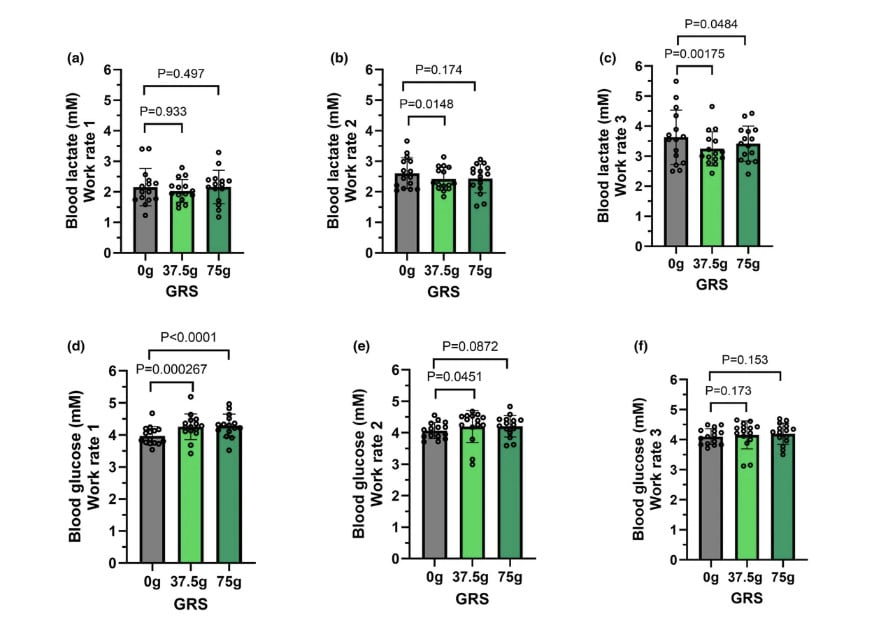
A total of 15 healthy adults—11 women and four men—completed three cycling sessions. Three hours before exercise, they drank a beverage made with the equivalent of 37.5 grams of red kale sprouts, 75 grams of sprouts, or an alfalfa-sprout placebo. Researchers added mustard seed to the kale drinks to help convert compounds known as glucosinolates into isothiocyanates such as sulforaphane (the compound speculated to account for the performance benefits). Participants then cycled for five minutes at each of three submaximal work rates.
- At the middle work rate, the 37.5-gram condition reduced lactate by 0.2 millimoles per liter compared with placebo.
- At the highest work rate, lactate was 0.4 millimoles per liter lower with 37.5 grams and 0.3 millimoles per liter lower with 75 grams.
- Oxygen uptake and perceived exertion did not differ between the conditions, and the study did not include a performance test.
What this means for runners
This is a mechanistic signal, not proof of better endurance performance. A small drop in lactate without a change in oxygen use, effort, time to exhaustion, or race performance should not change your lactate-threshold targets or supplement routine.
Kale can still be part of a healthy diet… if you like it.
References
RunClub — Free
Join 300,000+ runners in RunClub
Free training plans for every distance, a daily running game, exclusive coaching content, and a real community of runners. Create your free account in 20 seconds — no card.
Already a member? Log in →











Join the conversation
Folks who fall for this kind of argument clearly don\'t understand physiology. Blood lactate is a proxy for blood acidity, not its cause. To improve performance by maintaining a higher PH at a given intensity, you need to improve your fitness/buffering capacity (or consume baking soda :-))