


The soreness after a steep downhill run, race, or workout is familiar. What is easier to miss is that the loss of our power output can persist even when the run itself (and the accompanying soreness) is long over—and it may not be distributed evenly across the different thigh muscles.
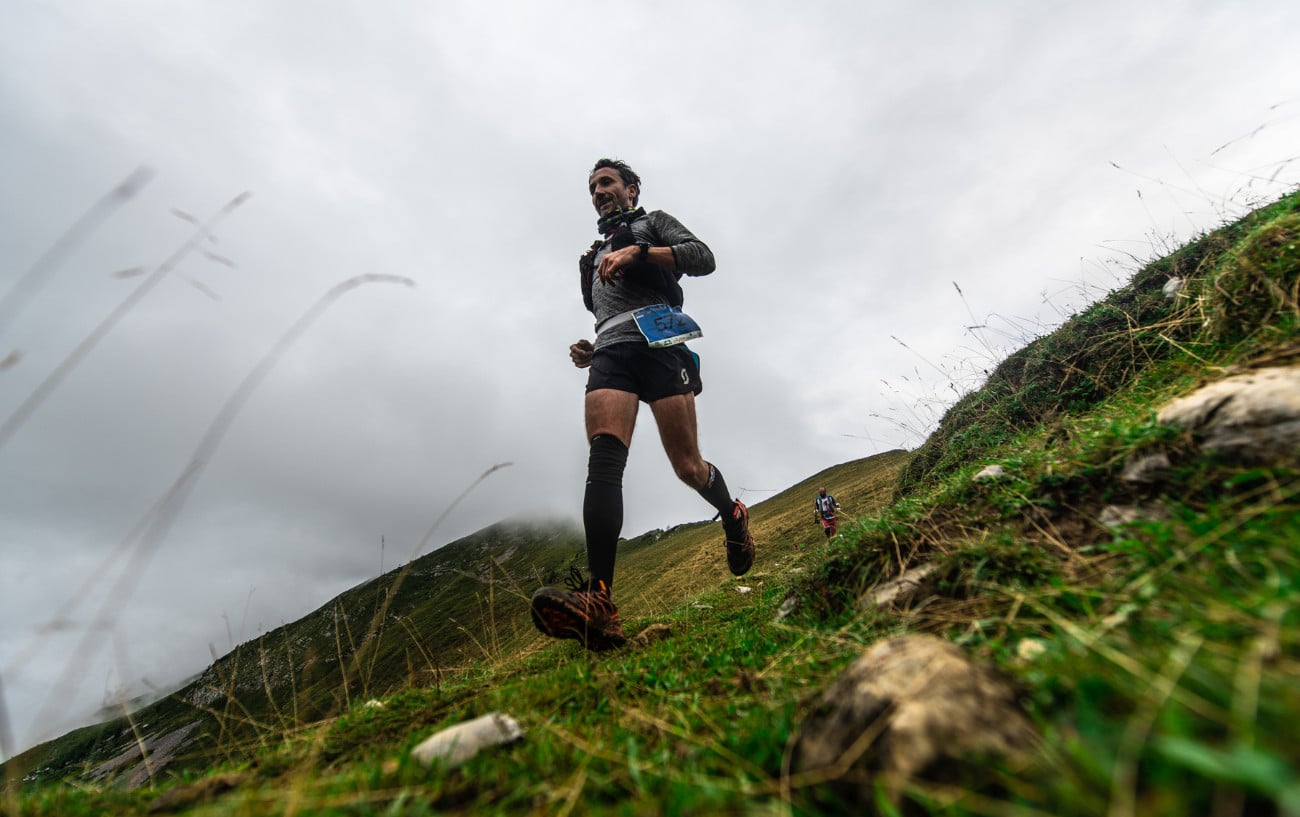
In a recent controlled experiment, eight sedentary or recreationally active men completed 60 minutes of downhill treadmill running at a -14% grade and 70% to 85% of age-predicted maximum heart rate. Seven men completed 30 minutes of level walking as a control.1Rawdon, C., Ingalls, C. P., Yang, F., Otis, J. S., Brandenberger, K. J., Jackson, M. H., & Middleton, R. (2026). Downhill Running Differentially Reduces Stimulated Contraction Torque in Human Quadriceps Muscles. Journal of Applied Physiology. https://doi.org/10.1152/japplphysiol.00765.2025
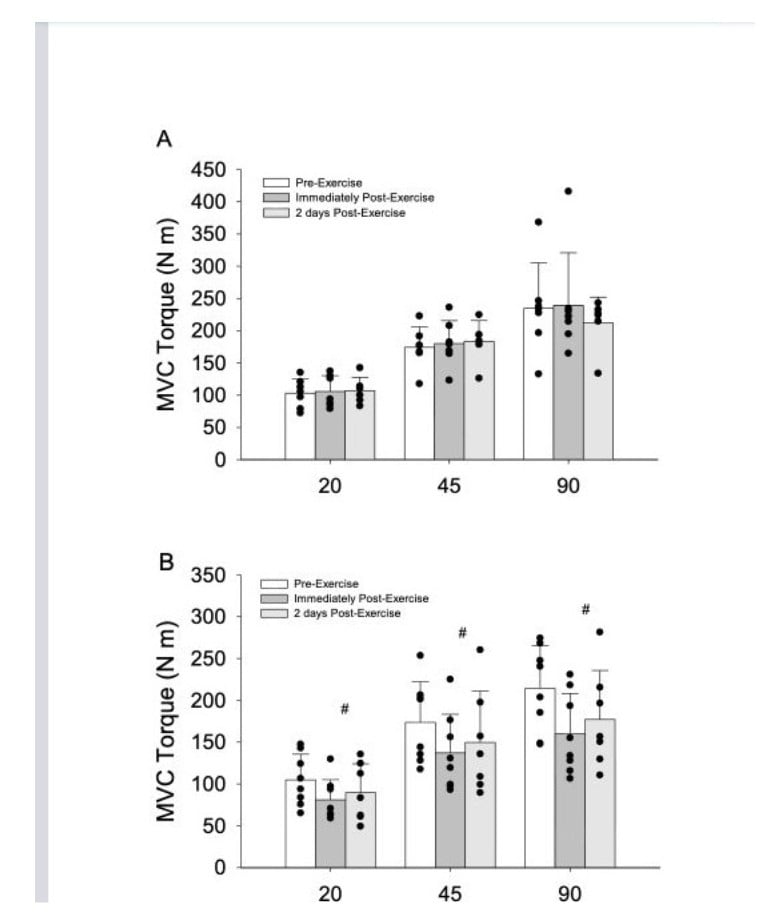
- In the downhill group, the ability to produce force from the thigh muscles fell from 214.5 newton-meters before the run to 160.2 immediately afterward—a drop of roughly one-quarter.
- Two days later, force production had recovered only to 177.1 and remained below baseline.
- The control group showed no meaningful change.
- The vastus lateralis (a muscle located on the outer thigh) showed a greater deficit than the vastus medialis (a muscle located in the inner thigh) and greater soreness two days later.
What this means for runners
Treat steep downhill running as a specific training stress. Introduce it progressively rather than dropping a long, aggressive descent into training close to a goal race. The force deficit here was still present two days later, so soreness alone may not tell you that your legs are ready for another demanding session.
For trail runners and athletes preparing for hilly road races, repeated exposure can build up some leg resilience, but the dose matters. Begin with shorter descents, preserve good mechanics, and allow recovery before stacking another hard workout.
References
RunClub — Free
Join 300,000+ runners in RunClub
Free training plans for every distance, a daily running game, exclusive coaching content, and a real community of runners. Create your free account in 20 seconds — no card.
Already a member? Log in →











Start the conversation