


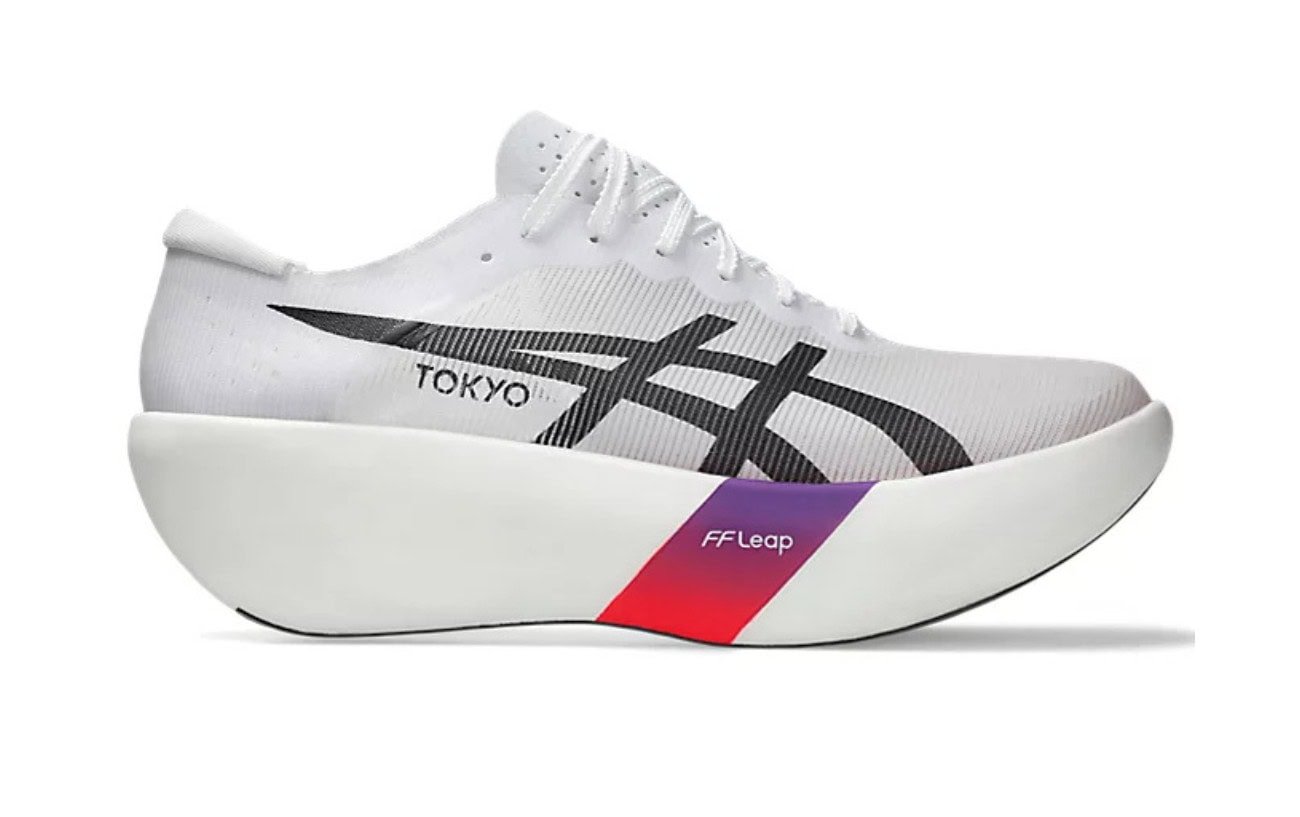
In the latest twist in the ever-evolving world of super shoes, two of triathlon’s top stars, Hayden Wilde and Sam Long, have been spotted racing in a not-yet-approved model: the Asics Metaspeed Ray. And while neither athlete has been accused of wrongdoing, the incident has reignited conversations about rule enforcement, transparency, and accountability in elite racing.
The issue stems from an official update issued by Asics on Aug. 1, which clearly stated that only approved inline versions of the Metaspeed Sky and Edge Tokyo models may be used in competition.
Athletes were told to switch to these models immediately and to remove any prototypes, including ones that had previously passed World Athletics’ shoe checker system, from their race kits.
“Using any prototype version could result in your disqualification, even if previously verified,” read the memo from Asics’ service desk team.
Days later, World Triathlon followed up with an internal clarification: the Metaspeed LD 2F and Metaspeed Ray are not authorized for WTCS racing until Sept. 11, 2025, the earliest date World Athletics will allow their use based on internal approval timelines.
The shoes do not appear on the official World Athletics certified list and are therefore barred from any WTCS start line.
But that didn’t stop the new Metaspeed Ray from appearing on course.
At the WTCS London event, Sam Long was seen racing in what appears to be the model, based on images circulated by media and fans.
More recently, Hayden Wilde, one of the sport’s biggest names, was filmed running in the same shoes. Wilde even acknowledged in post-race footage that the model was not yet cleared for competition.
This hasn’t gone unnoticed.
Triathlon outlets like ProTriNews have publicly asked why the shoe made it to the start line in the first place.
While careful not to criticize the athletes themselves, the outlet questioned the lack of consistent enforcement: “This isn’t a shot at the athletes—their performances stand. This is about consistent rule enforcement and a level field. If a shoe isn’t approved yet, it shouldn’t make it to the start line.”
That sentiment was echoed by filmmaker and longtime triathlon supporter Talbot Cox, who emphasized that the bigger concern lies with the governing bodies.
“If you don’t enforce [rules] consistently, it sets a precedent,” Cox wrote. “Today it might be shoes. Tomorrow it could be something far bigger… that’s why a standard has to exist—not because every rule is perfect, but because without them, the whole system breaks down.”
To date, neither Long nor Wilde has been penalized for wearing the shoes, and their race results remain intact.
World Triathlon has not yet responded publicly to the matter. As it stands, the Metaspeed Ray won’t be legal for use in WTCS competition until Sept. 11, when its certification window opens per World Athletics’ internal review process.

The larger question looming over the situation is simple but unresolved: Who’s responsible for making sure illegal shoes don’t show up on race day? Is it the athlete, the team, the brand, or the organizer?
Some athletes have admitted that navigating shoe legality can be confusing, especially when prototype models look nearly identical to approved versions.
But with brands pushing new tech faster than governing bodies can approve it, and with prize money, rankings, and Olympic spots on the line, the burden of compliance may soon fall more heavily on pre-race checks and clearer oversight.
Because right now, it’s not just about shoes. It’s about trust in the rules that govern the sport.
RunClub
Get more running stories — join RunClub
Daily running news, a community of 300,000+ runners, free training plans for every distance, and a daily running game. Free to join — no card.
Already a member? Log in →











Start the conversation