


The standoff between the world’s leading anti-doping officials is turning increasingly public. This week, U.S. Anti-Doping Agency (USADA) chief Travis T. Tygart accused World Anti-Doping Agency (WADA) president Witold Bańka of using the “Enhanced Games” as a distraction from what he called WADA’s own “abject failures,” reigniting one of sport’s most personal rivalries.
Bańka had urged USADA to “do something” to stop the Enhanced Games, a controversial new event set for May 2026 in Las Vegas that plans to allow performance-enhancing drugs under medical supervision.
In his remarks to reporters, Bańka called the project “dangerous and irresponsible,” adding that it “threatens the foundation of clean competition.”

Tygart’s response was scathing. In a statement shared with Athletics Illustrated, he said Bańka’s comments were a “telling smoke screen” meant to divert attention from WADA’s handling of doping cases in China.
“His attempts to smear America and our U.S. Olympic and professional athletes is a desperate attempt to divert attention away from his failure in allowing China to sweep 23 positive tests under the carpet,” Tygart said.
That line refers to the “China 23” scandal, where twenty-three Chinese swimmers tested positive for the banned substance trimetazidine ahead of the Tokyo 2021 Olympics.
WADA accepted China’s explanation that the results came from contaminated food, a decision that outraged USADA and sparked investigations in multiple countries.
The New York Times later reported that several of those athletes went on to win medals at the Games, deepening questions about fairness and transparency.
A New Signing Brings More Scrutiny To the Enhanced Games
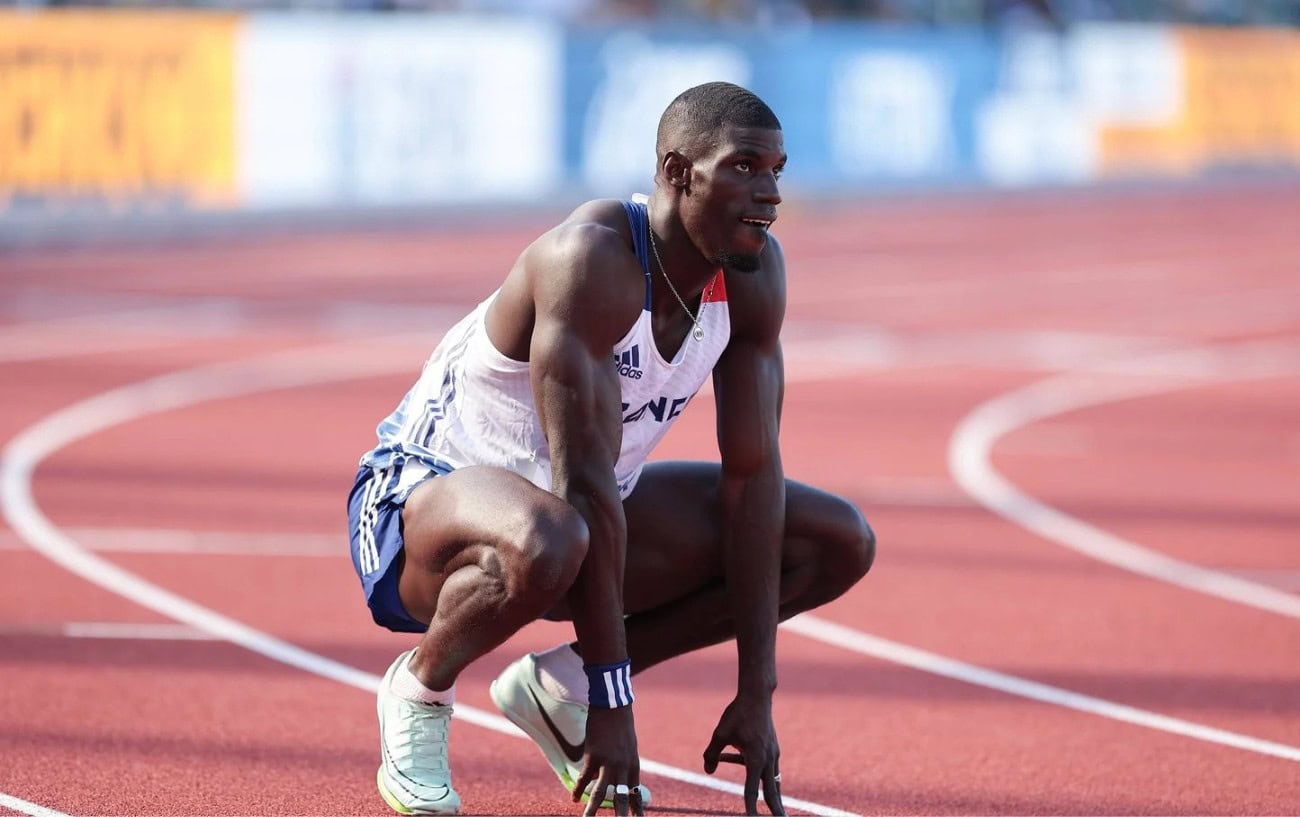
Tygart’s latest broadside came just as the Enhanced Games unveiled one of its most provocative announcements yet, the signing of French sprinter Mouhamadou Fall.
The former national champion, currently serving a doping ban that runs until July 2026, became the first French athlete to join the event. In an interview with Le Monde, Fall said he viewed the Games as “a chance to explore the limits of the human body” rather than a rejection of anti-doping rules.
Fall’s decision has drawn fury from France’s anti-doping authorities and sports ministry, which issued a joint statement condemning the Games as a “negation of the sporting spirit and a serious threat to athlete health.”
His signing follows that of American Olympic champion Fred Kerley, who confirmed in September that he would compete in Las Vegas next spring, one of several elite athletes testing the boundaries of the traditional sports system.

The Enhanced Games’ founder, Australian scientist Aron D’Souza, insists the project is about “scientific freedom,” not defiance. Prize money reportedly exceeds $500,000 per event, with million-dollar bonuses for record-breaking performances.
WADA has repeatedly denounced the project, but it remains unclear what, if any, legal tools agencies like USADA have to intervene in a privately funded event outside the Olympic system.
Tygart, for his part, seems less concerned with Las Vegas than with WADA’s leadership itself. His statement ended by emphasizing USADA’s cooperation with FIFA and the International Testing Agency to ensure the 2028 Los Angeles Olympics are “the cleanest on record.”
The subtext was unmistakable, while WADA calls for action against the Enhanced Games, USADA believes the real threat to clean sport lies within the institutions charged with protecting it.
The Enhanced Games may still be more spectacle than substance, but they’ve forced sport’s gatekeepers into open confrontation, one that reveals a growing fracture in the global anti-doping movement.
Whether the Games themselves ever become a legitimate alternative or fade as a provocation, they’ve already achieved something significant, exposing just how fragile consensus around clean sport has become.
RunClub
Get more running stories — join RunClub
Daily running news, a community of 300,000+ runners, free training plans for every distance, and a daily running game. Free to join — no card.
Already a member? Log in →








Start the conversation