


Running a marathon is hard. Running seven marathons in seven days is harder. Running them across seven continents, beginning in Antarctica and ending in Miami, is something very, very few people will ever attempt.
That is the premise of the 777 World Marathon Challenge, an annual event, which will begin January 28, 2026, that has drawn runners from around the world since 2015. Organized by the endurance race company Runbuk, the challenge asks participants to complete seven standard 42.2-kilometer marathons within 168 hours, flying by charter jet between continents while the clock continues to run.
The next edition begins on January 31, 2026, with registration already open for future editions, including 2027. The cost to enter: $49,500 (that’s like…a really nice car).
For some runners, the event will be seen as the ultimate challenge. But for others, it raises broader questions about accessibility, sustainability, and where the limits of marathon racing should lie.
A Global Race That Starts in Antarctica
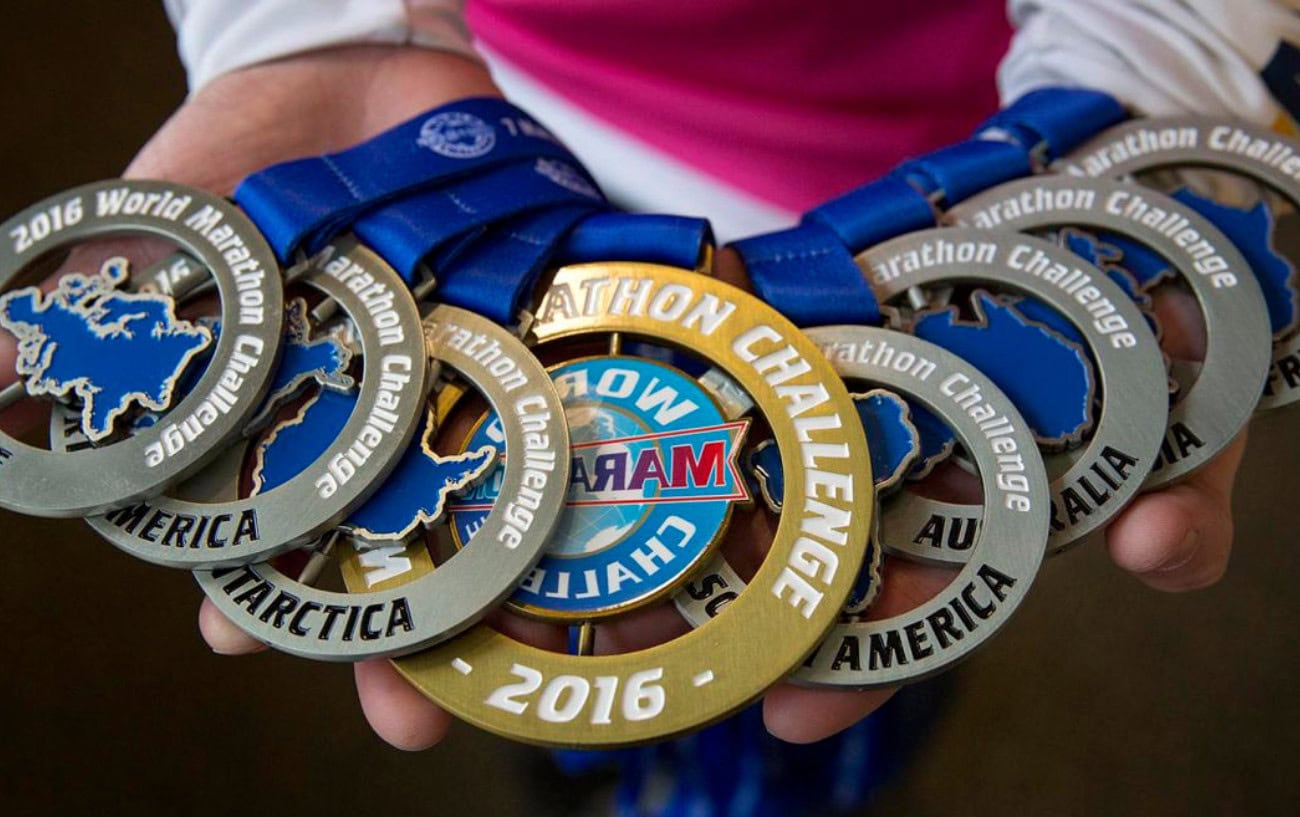
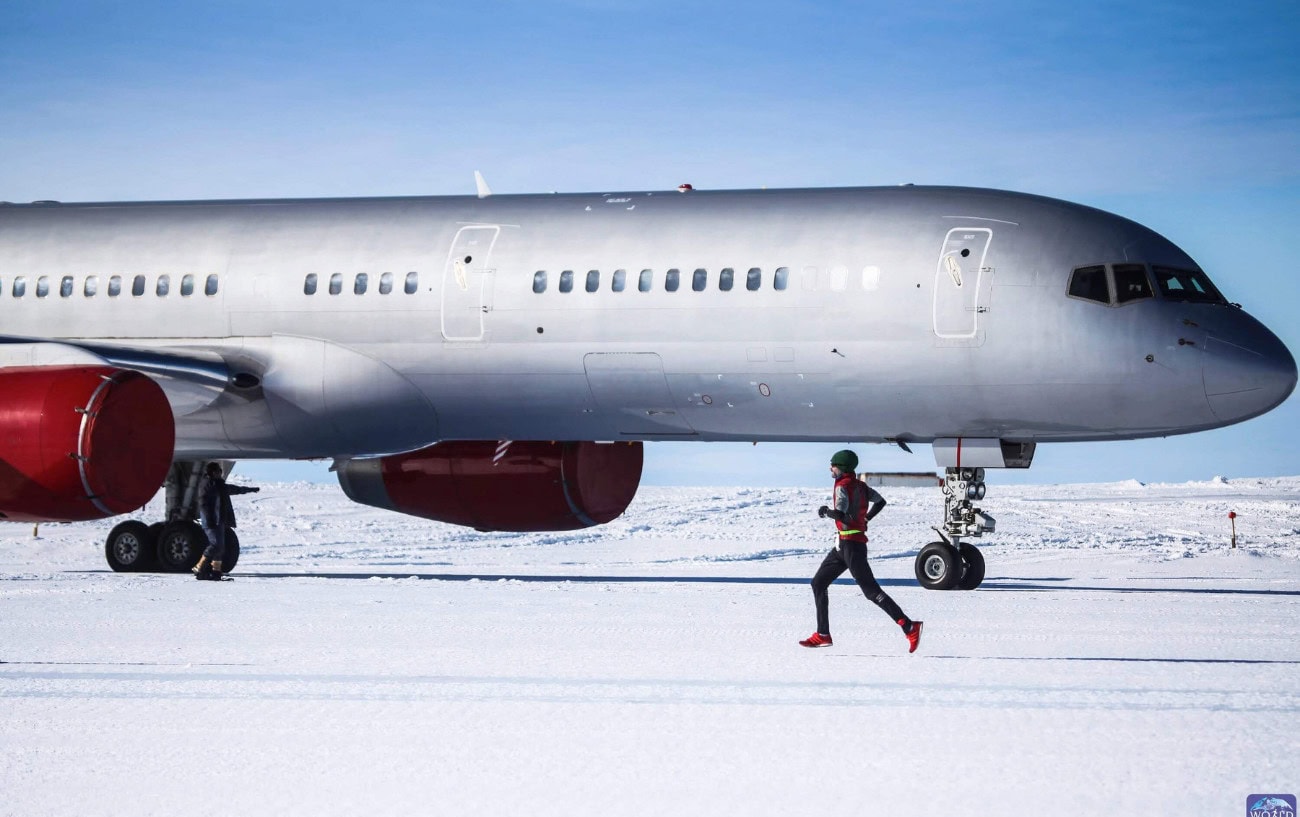
The World Marathon Challenge always begins on mainland Antarctica, at Ultima Base, located within the Antarctic Circle at 71 degrees south. From there, competitors fly to Cape Town, Perth, Dubai, Madrid, Fortaleza and Miami, completing one marathon per day.
Participants cover a total of 295 kilometers (183 miles) over the course of the week and spend roughly 60 to 68 hours in the air, according to race organizers. Temperatures can vary widely, from around -10°C in Antarctica to 30°C in more tropical locations.
Each race has an eight-hour time limit and is officially measured and sanctioned. The event is recognized by the Association of Marathons & Distance Races and acknowledged for record-setting purposes by Guinness World Records and the Book of Alternative Records.
“There is always a possibility of weather delays when flying to or from Antarctica,” the organizers note, which is why the race begins there rather than ends. The 168-hour clock does not start until the first marathon begins.
Who Runs This Race?
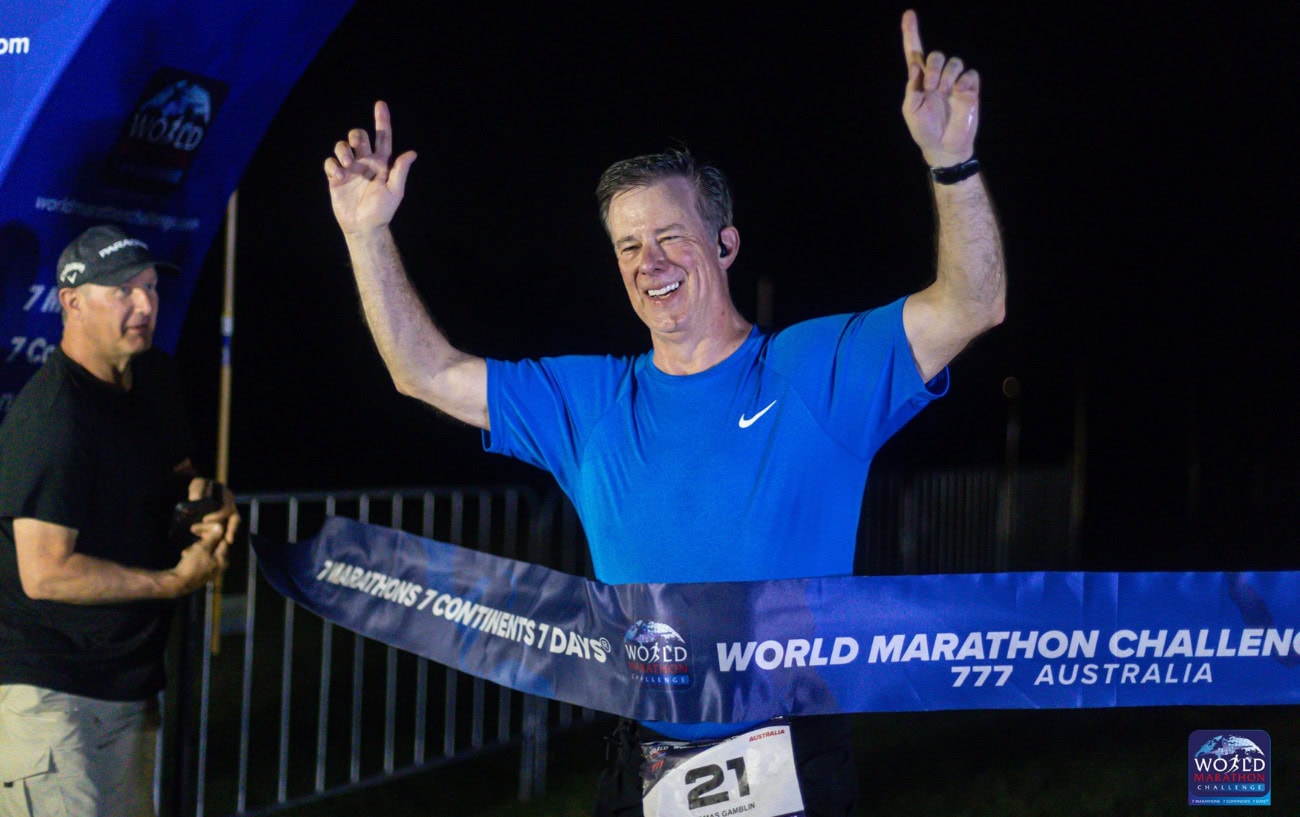
Despite the relentless travel and minimal recovery time, finishing times can be still be pretty fast.
The men’s record for fastest average marathon time belongs to Michael Wardian, who averaged 2:45:57 per marathon during the 2017 challenge. The women’s record was set in 2025 by Estefania Unzu Ripoll, who averaged 3:18:30 across seven consecutive days.
But fast times aren’t the only notable performances that come out of this wild event. Sinead Kane became the first blind athlete to complete the challenge in 2017, running with guide John O’Regan. Dan Little finished the event at age 80 in 2023. In 2025, Lisa Norton-Motulsky and Molly Sheridan, both 68, became the oldest female finishers.
Since 2015, 244 runners, 175 men and 69 women, have completed the full challenge, earning membership in the Intercontinental Marathon Club, an exclusive group recognized by the event.
“There is a competition element,” the organizers say, with winners determined by the fastest combined times across all seven marathons. Team competitions, requiring mixed-gender scoring teams, have also been added in recent editions.
A High-Cost, Low-Capacity Event
The logistical complexity of the race comes with a steep price. The $49,500 entry fee covers charter flights between continents, race organization, medical support, aid stations, and official photography and video. It does not include flights to Cape Town, accommodation before the race, or the flight home from Miami.
Participation is capped at 60 runners, primarily due to aircraft capacity. In recent years, available spots have sold out.
Supporters argue that many participants offset the cost through sponsorships or fundraising, and organizers say runners have raised millions of dollars for charity over the years. Still, the price places the event well beyond the reach of most recreational runners, reinforcing its status as an exclusive, experience-driven race rather than a mass-participation marathon.

Environmental Impact Under Growing Scrutiny
The challenge’s most persistent criticism centers on its environmental footprint.
Flying a charter jet around the world in a single week generates substantial carbon emissions. While Runbuk emphasizes contingency planning and logistical necessity, the race stands in contrast to a growing sustainability push within major road marathons.
In 2025, several of the world’s largest races expanded concrete environmental initiatives.
The TCS New York City Marathon, for example, reported diverting hundreds of thousands of pounds of waste in recent editions through composting, recycling, and donation programs, while increasing the use of electric and hybrid vehicles for race operations.
The TCS London Marathon has experimented with recycled medals, electric lead vehicles, and waste-to-resource programs, including pilot projects that convert waste from portable toilets into agricultural fertilizer.
Meanwhile, races like the Toronto Waterfront Marathon have earned third-party sustainability certifications after diverting more than 90 percent of event waste from landfills, repurposing discarded race materials, and reducing single-use plastics.
These efforts reflect a broader shift in endurance sports toward minimizing environmental impact without fundamentally altering race formats.
The World Marathon Challenge, by design, prioritizes global movement and speed. That makes it difficult to reconcile with sustainability models focused on reduced travel and lower emissions.
As running grapples with climate responsibility, ultra-travel-heavy events are facing tougher questions about their long-term viability.
Inspiration or Over The Top?
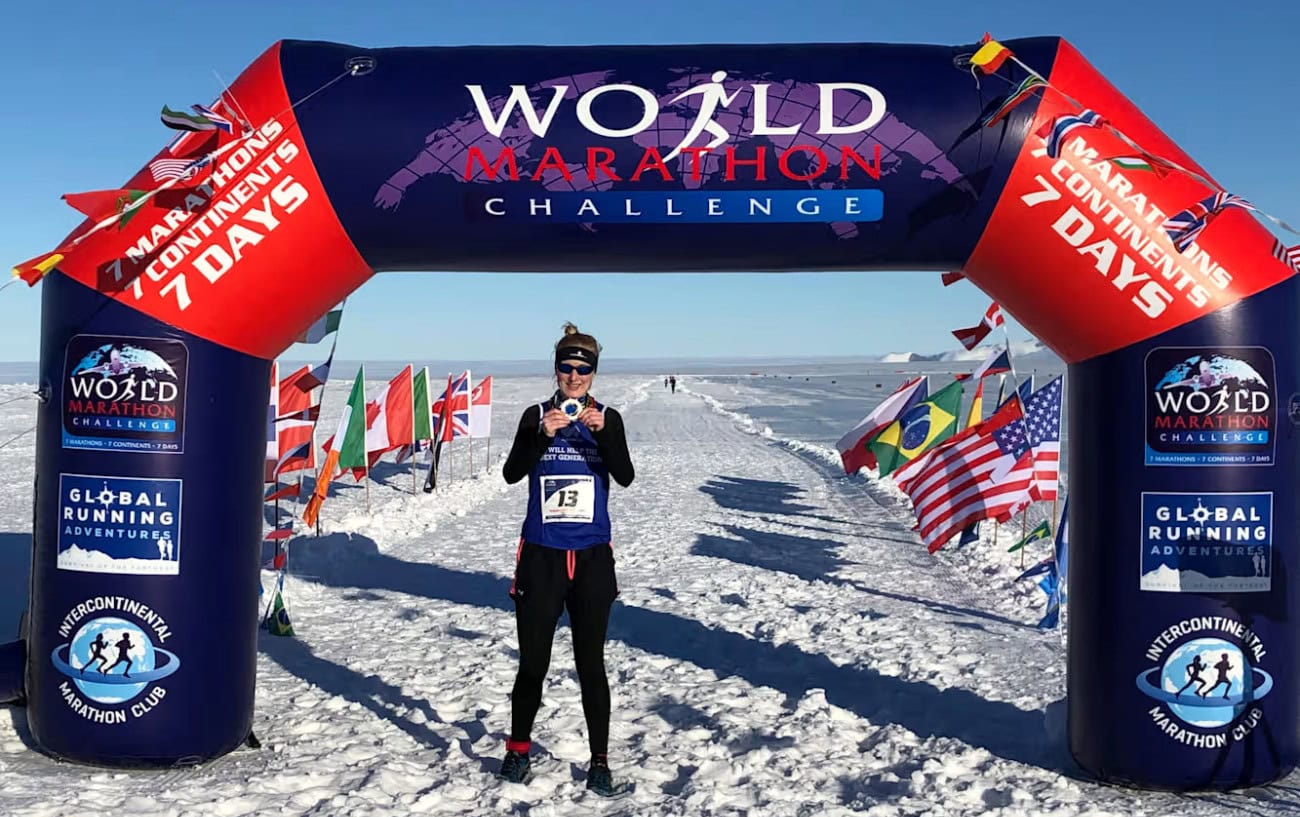
Runbuk describes the World Marathon Challenge as “turning dreams into reality” and showcasing that “no human is limited.” For participants, the experience can be transformative, combining athletic ambition with global travel and personal storytelling.
At the same time, the event reflects a broader trend in the running world toward high-cost, high-novelty “bucket list” challenges. Supporters see inspiration, charitable fundraising and boundary-pushing achievement. Detractors see excess, exclusivity and a growing disconnect from the everyday runner.
What is clear is that few races demand as much, physically, financially, or logistically, as seven marathons in seven days on seven continents.
As marathon culture continues to evolve, the World Marathon Challenge sits at the far edge of the spectrum, celebrated by some, questioned by others, and emblematic of the debates shaping the future of endurance sport.
RunClub
Get more running stories — join RunClub
Daily running news, a community of 300,000+ runners, free training plans for every distance, and a daily running game. Free to join — no card.
Already a member? Log in →












Start the conversation