


Editor’s note: we last updated this article on 2 January 2026 based on the latest shoes on the market. We continue to update this article whenever a new shoe is released that merits inclusion; most of the daily running shoe models for 2025 are already released.
It’s been about six months since we last sat down to power-rank the super shoes currently on the market, and in super shoe years, that’s basically a lifetime.
The last time we did this was summer 2025. Since then, we’ve seen a flood of new releases, quiet updates that turned out to be massive, and a handful of shoes that went from obscure to unavoidable almost overnight. Some of the most talked-about shoes of the year didn’t even exist the last time we did rankings. Others that once felt untouchable suddenly look… a little old.
So this felt like the right moment to stop, take stock, and try to make sense of where we actually are.
What follows is the definitive master list we landed on after a lot of debate, disagreement, and introspection. We’ll get into the overall rankings, our individual lists, shoes that disappointed us, and where we think the super shoe world is headed next. We’ll also ground all of this in something we’ve never had access to before: a truly massive dataset from the Chicago and New York City Marathons.
But first, a bit of context.
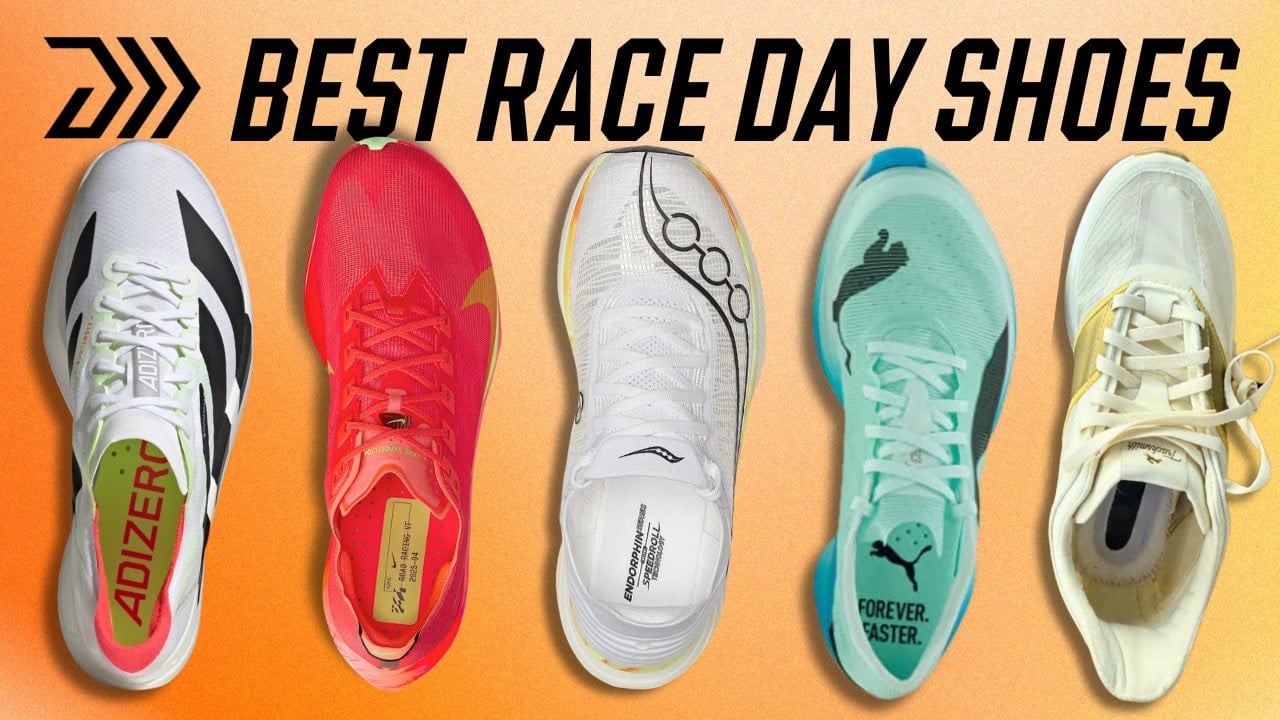
The Top Super Shoes On The Market Right Now:
#10 Best For Cushioning: New Balance FuelCell SuperComp Elite v5
#9 Most Reliable Shoe: Adidas Adios Pro 1
#8 Most Fashionable Shoe: On Cloudboom Strike LS
#7 Best Shoe For Efficient Runners: ASICS Metaspeed Ray
#6 Best Shoe For Any Type Of Runner: Adidas Adios Pro 4
#5 Most Underrated Shoe: Saucony Endorphin Elite 2
#4 Most Trusted Shoe: Nike Alphafly 3
#3 Best Shoe For Durability: ASICS Metaspeed Sky & Edge Tokyo
#2 Best Shoe For Your Next PR: Puma Fast-R Nitro Elite 3
#1 Best Overall: Adidas Adios Pro Evo 2
Why now is the right time to rank super shoes
In the running shoe world, there’s release season and there’s peace time.
Spring and fall are chaos. Brands rush shoes out so elites can race in them. New models drop constantly. Everyone’s scrambling. But between November and February, things slow down. This is the window where you can actually step back and reflect on what’s already out there, what worked, and what didn’t.
If you’re shopping for super shoes right now, this is honestly one of the best times to do it. The models are established, reviews are real, and the hype cycle has calmed down enough to see things clearly.
And 2025, as a whole, has been a genuinely great year for super shoes.
Just in the second half of the year alone, we saw the Puma Fast-R Nitro Elite 3 become more widely available, the Adidas Pro Evo 2 quietly take over podiums, ASICS release the entire Metaspeed Tokyo lineup, Saucony’s Endorphin Elite 2 finally get real exposure, Tracksmith launch their first-ever super shoe, and Nike roll out the Vaporfly 4.
That’s a lot of movement in a short amount of time.
The data that changed how we think about super shoes
Before we get into rankings, we need to talk about Chicago and New York.
We were given access to a detailed analysis of every single finisher at both the 2025 Chicago Marathon and the 2025 New York City Marathon. That’s roughly 55,000 runners in Chicago and nearly 60,000 in New York. Every pair of shoes worn by finishers was categorized.
The results were genuinely surprising.
At Chicago, 64 percent of runners wore carbon-plated super shoes. In New York City, it was 62 percent. Nearly two-thirds of all runners, across every pace group, were racing in super shoes.
This is no longer an elite or sub-elite phenomenon. This is everyone.
In Chicago, 70 percent of men and 57 percent of women wore super shoes, both sharply up from 2024. Nike held the largest share at 27.4 percent, followed by ASICS at 17 percent, Adidas at 15 percent, New Balance at 8.6 percent, Brooks at 7.9 percent, and all other brands combined at just over 20 percent.
The single most popular shoe? The Nike Alphafly 3. About 16 percent of all Chicago finishers wore it.
New York City told a similar story. Nike again led the field, ASICS was second, and New Balance jumped into third — likely helped by the fact that New York is a New Balance race. Adidas slipped to fifth. Hoka didn’t even crack the top six, which was genuinely surprising given how many recreational runners still wear Hoka.
The most popular shoes in New York were the Alphafly 3, the Adidas Adios Pro 4, and the New Balance SuperComp Elite.
What this data makes clear is that super shoes are now the default marathon shoe, not a niche option. That reality mattered when we built these rankings.
How we ranked the shoes
There’s no single clean way to rank super shoes, but we built our list around a few core criteria.
First, elite-level success. We tracked every podium from all seven World Marathon Majors, the World Championship marathon, and Valencia, which featured some of the fastest performances of the year. We paid close attention not just to results, but to which shoes athletes chose when they had multiple options within the same brand.
Second, ubiquity and trust. What people actually race in matters.
Third, technology. Foam compounds, plate design, geometry, weight, and how current the shoe really is.
Fourth, exclusivity and desirability. Some shoes matter precisely because they’re rare, limited, and built for the very top end.
And finally, our own experience. We’ve run in all of these shoes. That counts.
With that in mind, here’s where we landed.
The 2026 Super Shoe Power Rankings
#10 Best For Cushioning: New Balance FuelCell SuperComp Elite v5
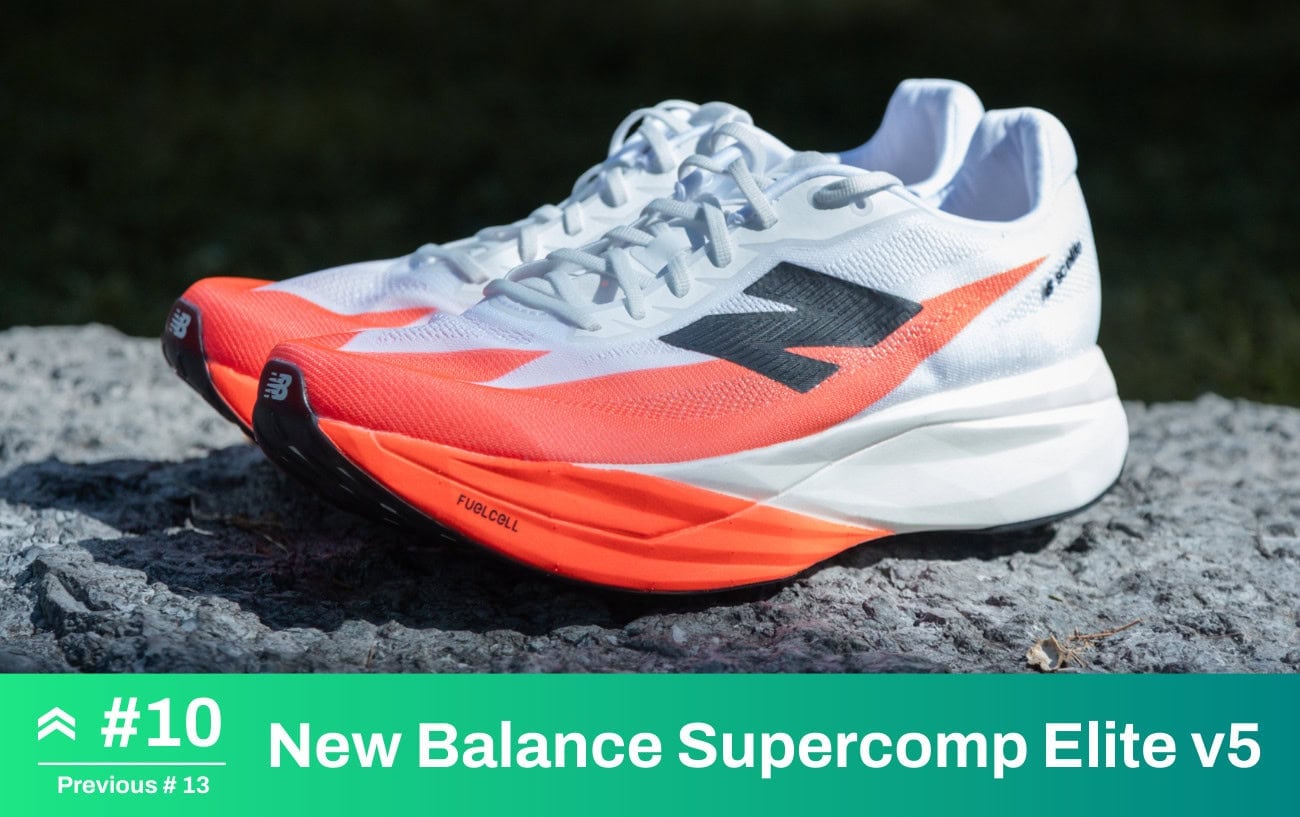
In tenth place, we’ve got the New Balance FuelCell SuperComp Elite v5.
And we’ll be honest right off the top, we rarely put New Balance in the top ten for super shoes. Historically, since the super shoe era really kicked off around 2017, it always felt like New Balance was behind. Nike was ahead. Adidas caught up. ASICS caught up. Saucony had moments. But New Balance always felt like they were playing catch-up.
And they still kind of are.
That said, this shoe did enough this year that we couldn’t ignore it. The performance that really solidified it was Alex Yee running 2:06 in Valencia. That’s a world-class performance, and it forces you to take the shoe seriously whether you want to or not.
We’ve run pretty extensively in both the SuperComp Elite v4 and the v5. The v5 is better — no question. But it’s not a radical leap forward. It still feels like a very PEBA-heavy, bulky super shoe. New Balance seems to be leaning hard on foam volume rather than doing anything especially clever with geometry or plate interaction.
And that’s where we think they’re still behind.
When you look at where Adidas and Puma are going with geometry, or what ASICS is doing with weight and efficiency, New Balance feels like it’s playing a slightly older version of the game.
But — and this matters — as far as that type of shoe goes, this is about as good as it gets. We’ve actually enjoyed running in it. We’ve even liked it for workouts, which is not something we’ve always said about New Balance super shoes. It’s comfortable. It’s predictable. It’s not weird.
So it barely makes the list, but it makes it.
The Deets: Tech Specs For The New Balance FuelCell SuperComp Elite v5
- Launch date: June 2025
- Weight: 7.0 oz/198 g M9
- Stack height: 32 mm/40 mm
- Offset: 8 mm
- Price: $250 USD
#9 Most Reliable Shoe: Adidas Adios Pro 1
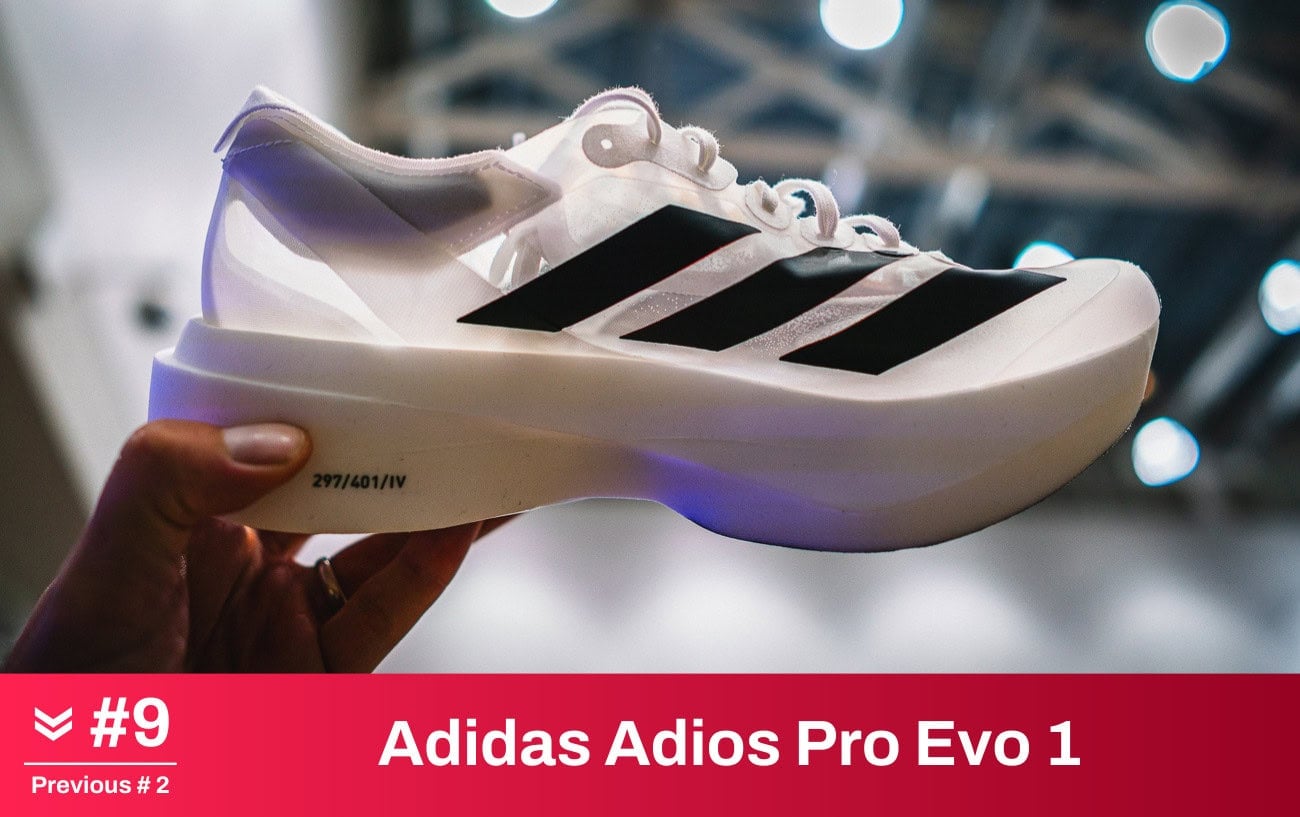
This is one of the most important shoes ever made, full stop. It first appeared on Tigist Assefa’s feet in September 2023 when she ran that astonishing 2:11.
This shoe changed everything. It felt like the second revolution in super shoes.
The first was Nike breaking the four-minute barrier with Vaporfly tech. This was the next leap: lighter, more extreme, more singularly focused on speed than anything we’d seen.
But here’s the problem: it barely lasts.
We have a pair in-house, but after about 50 kilometers total, they were basically done.
When this shoe came out, we were willing to excuse durability because the speed was so insane. But in 2025, our standards have changed. There are now shoes that are almost as fast and last much longer.
That’s why this shoe has dropped so far.
It’s not that it suddenly got worse. It’s that the category moved on. But what’s wild is that a shocking number of elite athletes are still using it. So it’s not gone. It’s just no longer the benchmark.
The Deets: Tech Specs For The Adidas Adios Pro Evo 1
- Launch date: September 2023
- Weight: 4.87 oz/138 g M9
- Stack height: 33 mm/39 mm
- Offset: 6 mm
- Price: $500 USD
#8 Most Fashionable Shoe: On Cloudboom Strike LS
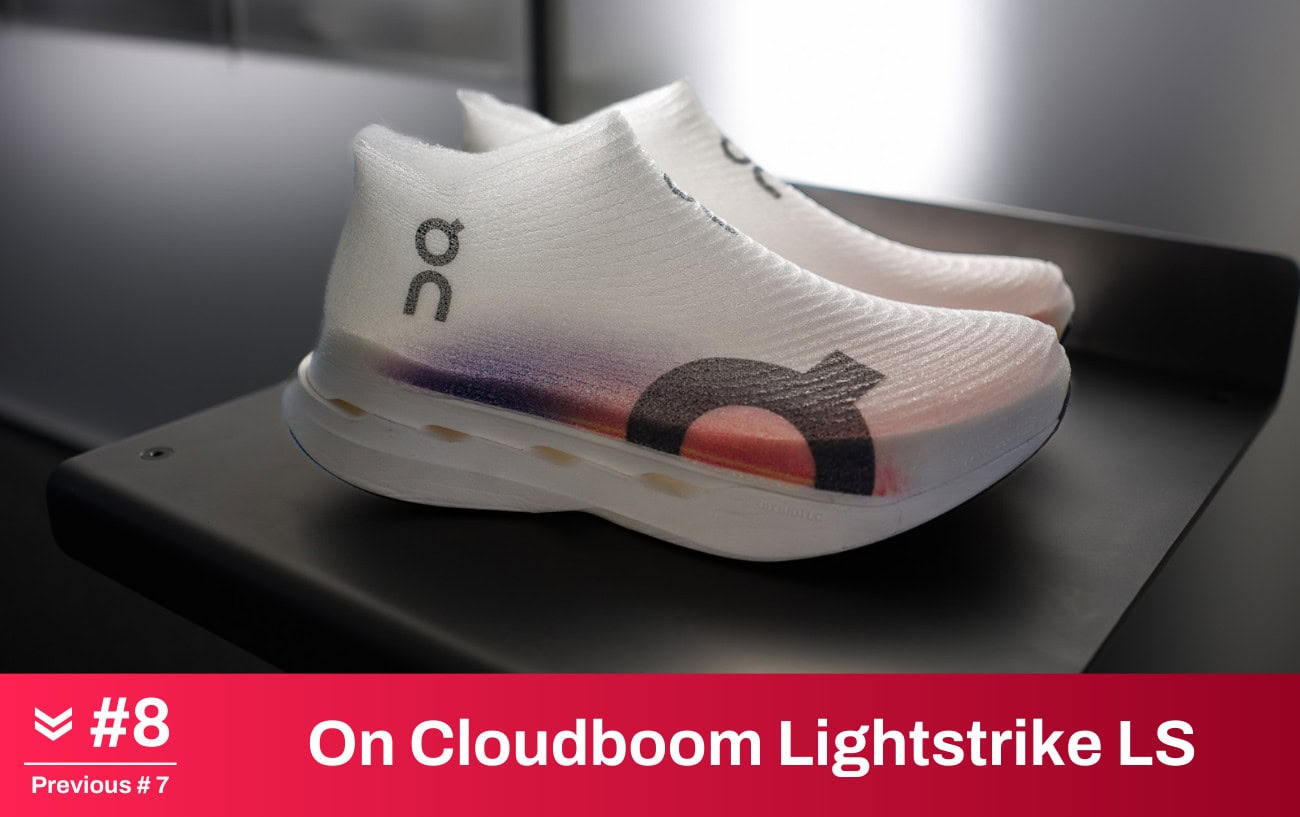
The robot shoe.
This is the Cloudboom Strike LS: the laceless one, woven by robotic arms in Zurich. It’s made from a single filament that’s molded into a foot shape. It somehow stays on your foot without laces. It’s one of the weirdest and coolest things in running shoes.
Hellen Obiri has worn this shoe to win major races, and for a while it felt like this was the future. We were enamored by it earlier this year.
But the glow has faded a bit.
First, it’s still incredibly hard to get. Second, outside of Obiri, it hasn’t exactly destroyed podiums. And third (and this matters) the midsole is the same as the standard Cloudboom Strike. There’s no new foam story here.
So what you’re really getting is an incredible upper innovation paired with a midsole that hasn’t moved on.
It almost feels like a fashion-forward super shoe. And we don’t mean that dismissively. It’s an important shoe. It’s a statement. But I can’t rank it above shoes that are doing more from a performance and technology standpoint.
We’re also starting to notice that when I see it on start lines, my first thought is, “Is this person an influencer?” Which is probably unfair, but it says something about accessibility.
The Deets: Tech Specs For The On Cloudboom Strike LS
- Launch date: April 2024
- Weight: 4.8 oz /183 g M9
- Stack height: 33.5 mm / 39.5 mm
- Offset: 6 mm
- Price: $330 USD
#7 Best Shoe For Efficient Runners: ASICS Metaspeed Ray
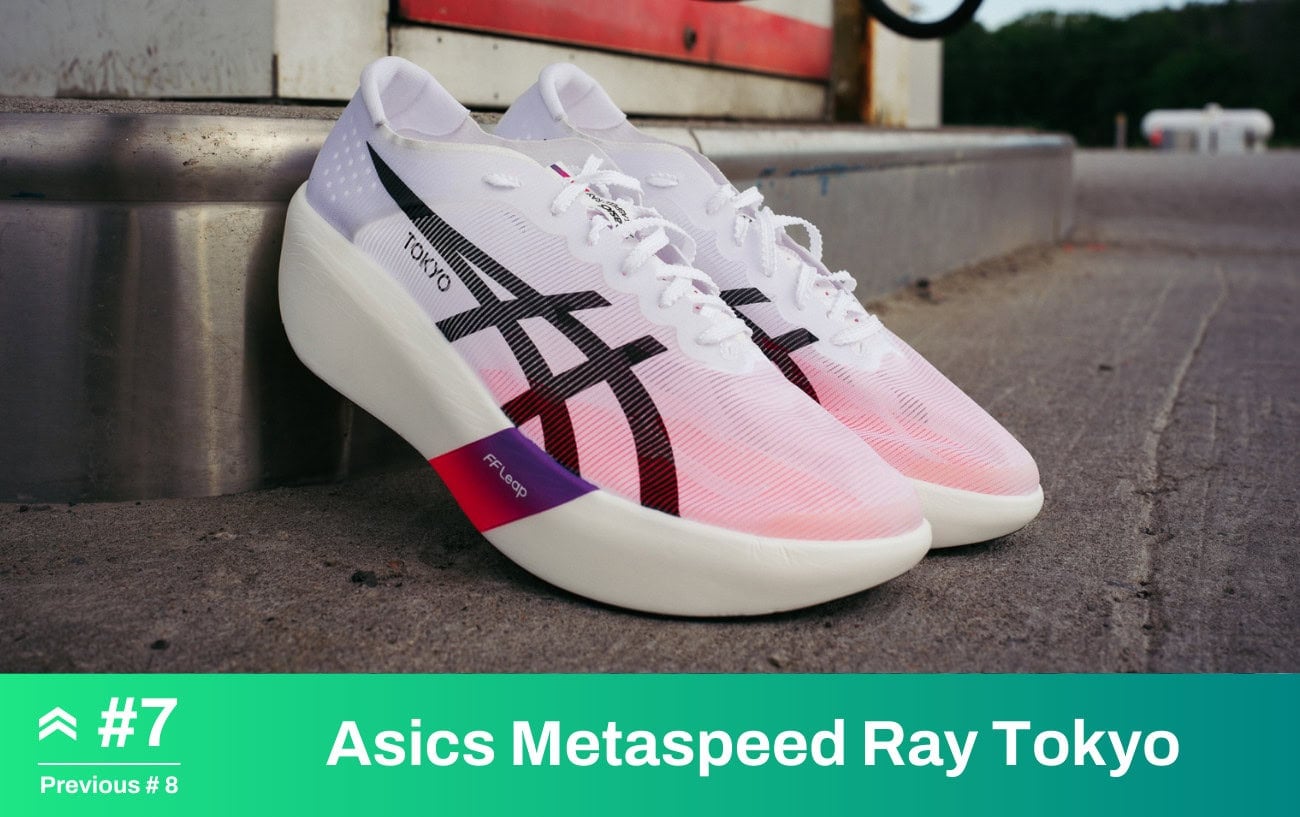
This shoe is fascinating, and ASICS deserves credit for how transparent they’ve been about it.
They’re very clear: this shoe is not for everyone. If you’re not an extremely efficient runner, we’re talking elite, knocking on the door of 2:15 or faster, this shoe probably isn’t for you.
And that’s okay.
This is currently the lightest super shoe in the world. About four and a half ounces. It feels like a slipper. It’s absurdly light.
We’ve put some real time into it. It’s faster than it has any right to be. But it’s also fragile. More durable than the Pro Evo 1, but not by a huge margin. It’s also narrow. It doesn’t have guardrails. ASICS assumes the person wearing it doesn’t need them.
That limits who this shoe is for.
It’s also relatively affordable for a bleeding-edge shoe, about $300, which is wild considering what it is. But availability is still limited, and it’s very specialized.
That’s why it sits here.
The Deets: Tech Specs For The ASICS Metaspeed Ray
- Launch date: August 2025
- Weight: 4.3 oz/121 g M9
- Stack height: 34.5 mm/39.5 mm
- Offset: 5 mm
- Price: $300 USD
#6 Best Shoe For Any Type Of Runner: Adidas Adios Pro 4
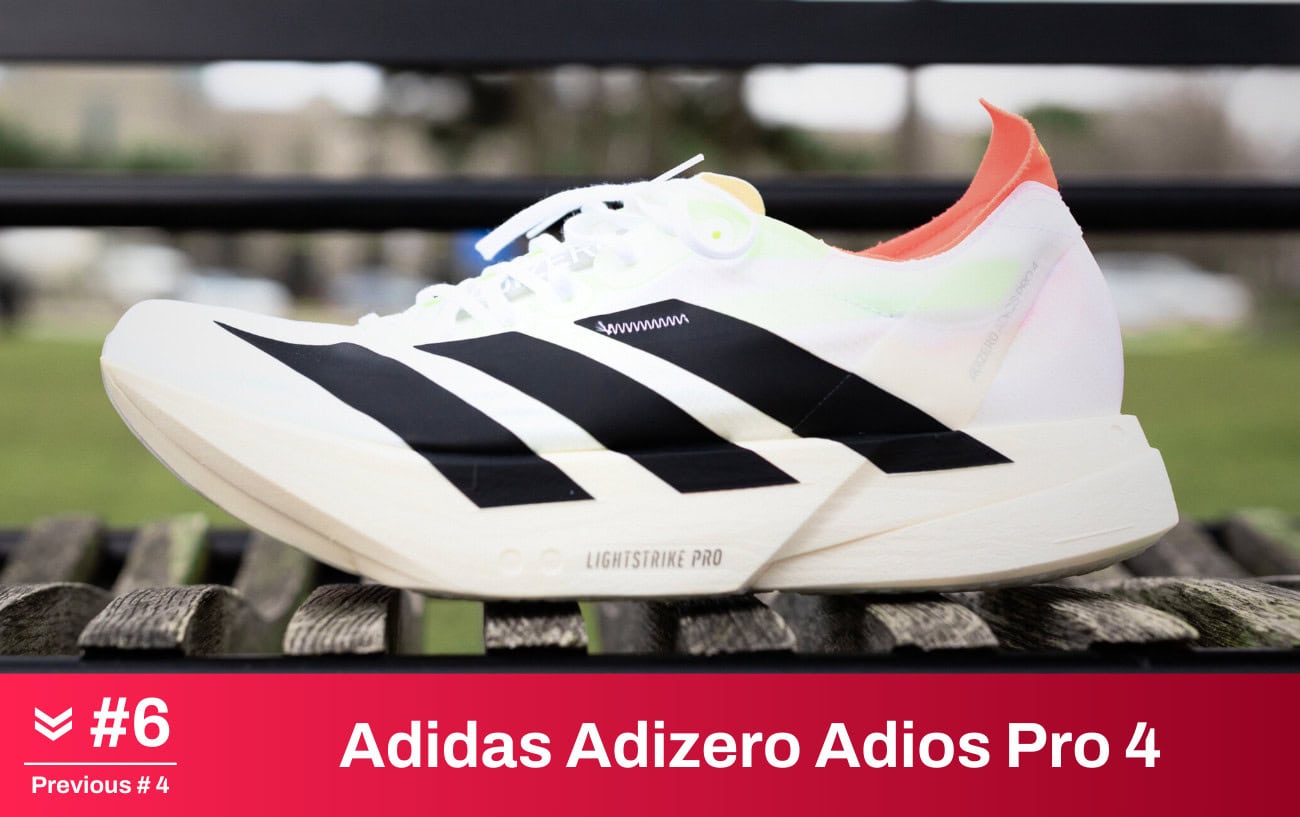
This might be the opposite of the Ray. This is the every-person super shoe.
And I don’t mean that in a negative way at all. The Adios Pro 4 is fast, durable, stable, and comfortable. It works for elites, and it works for recreational runners.
We saw this at New York City. Adidas athletes with access to the Pro Evo 2 still chose the Pro 4. Alexander Mutiso finished second in New York wearing it. Sheila Chepkirui wore it for third on the women’s side. That tells you something.
Imagine you have access to the most exotic shoe in the world, and you don’t choose it, that’s meaningful.
This is probably the shoe we recommend most often to people who are curious about super shoes but don’t want something that feels weird or punishing. Whether you’re trying to break three hours or just want the best shot at your goal, this shoe makes sense.
It’s tough. It’s a workhorse. And that’s an underrated quality in this category.
The Deets: Tech Specs For The Adidas Adios Pro 4
- Launch date: September 2024
- Weight: 7.1 oz/200 g M9
- Stack height: 33 mm/39 mm
- Offset: 6 mm
- Price: $250 USD
#5 Most Underrated Shoe: Saucony Endorphin Elite 2
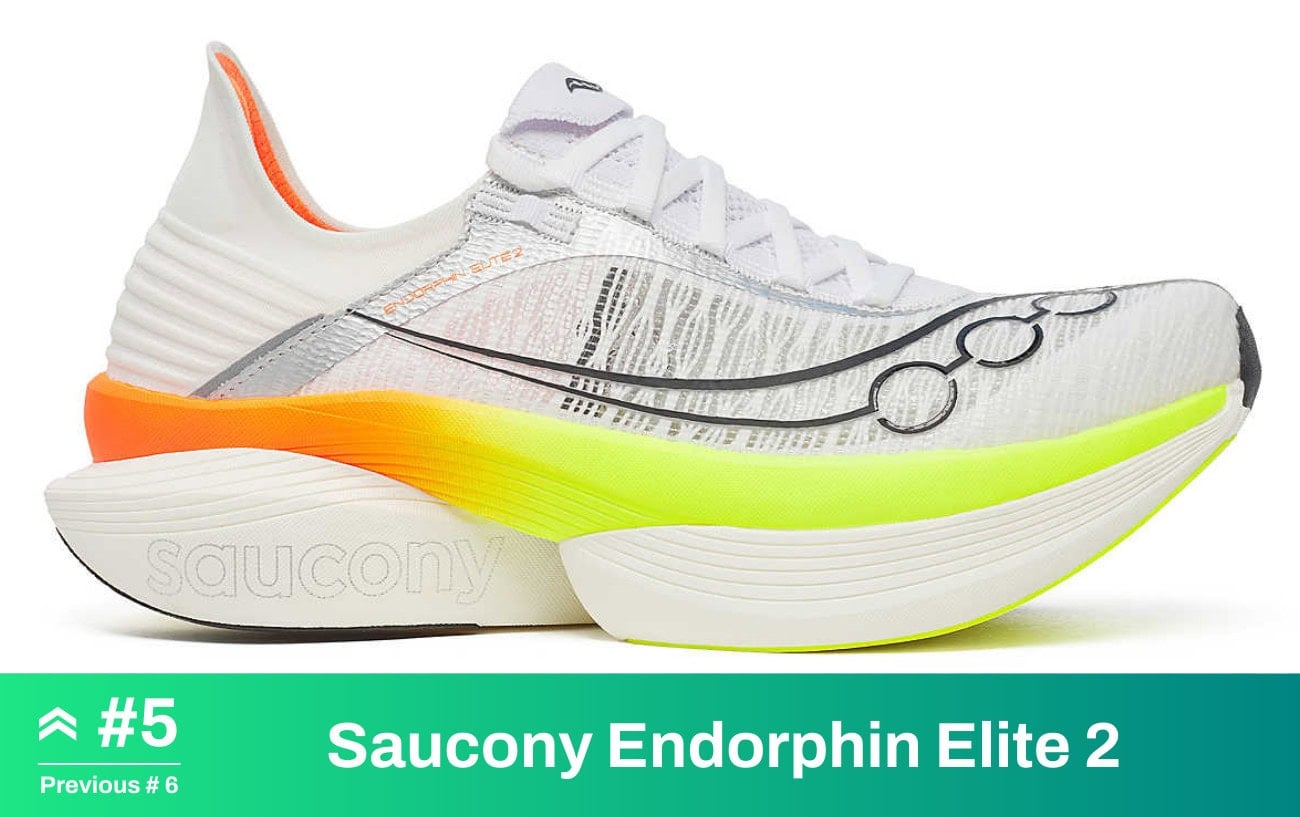
This is the shoe I keep coming back to as the most underrated super shoe of the year. And we’ve been saying that all year.
The Endorphin Elite 2 just never quite got the love it deserved. Part of that is timing. Part of it is marketing. And part of it is that a lot of the very top athletes in the world aren’t sponsored by Saucony, so the shoe didn’t naturally find itself on podiums early in the year.
But when it finally did, it mattered.
Julia Paternain wearing it to bronze at the World Championship marathon was huge. And the finish was chaotic; she didn’t even know she’d finished third. That moment alone validated this shoe in a way that specs never could.
The foam is wild. It’s soft, bouncy, and feels totally different from most of the PEBA-based shoes out there. Some people find it too squishy. I actually love it.
The one real critique is stability. If you’re a pronator, this shoe can feel a little wobbly. It’s not the most forgiving platform. But if it works for your stride, it really works.
What is frustrating is that Saucony didn’t make a bigger deal out of this shoe. They should’ve leaned into it harder, built more hype, maybe even built a whole campaign around it. Because the product is there.
And here’s the key thing: the Endorphin Elite 3 isn’t coming for a while. So if you buy the Elite 2 now, you’re not getting hit with that “iPhone syndrome” where the next version drops two weeks later and your shoe suddenly feels outdated.
This is a really good shoe, and the stock is still weirdly low on it.
The Deets: Tech Specs For The Saucony Endorphin Elite 2
- Launch date: February 2025
- Weight: 7.0 oz/200 g M9
- Stack height: 31.5 mm/39.5 mm
- Offset: 8 mm
- Price: $275 USD
#4 Most Trusted Shoe: Nike Alphafly 3
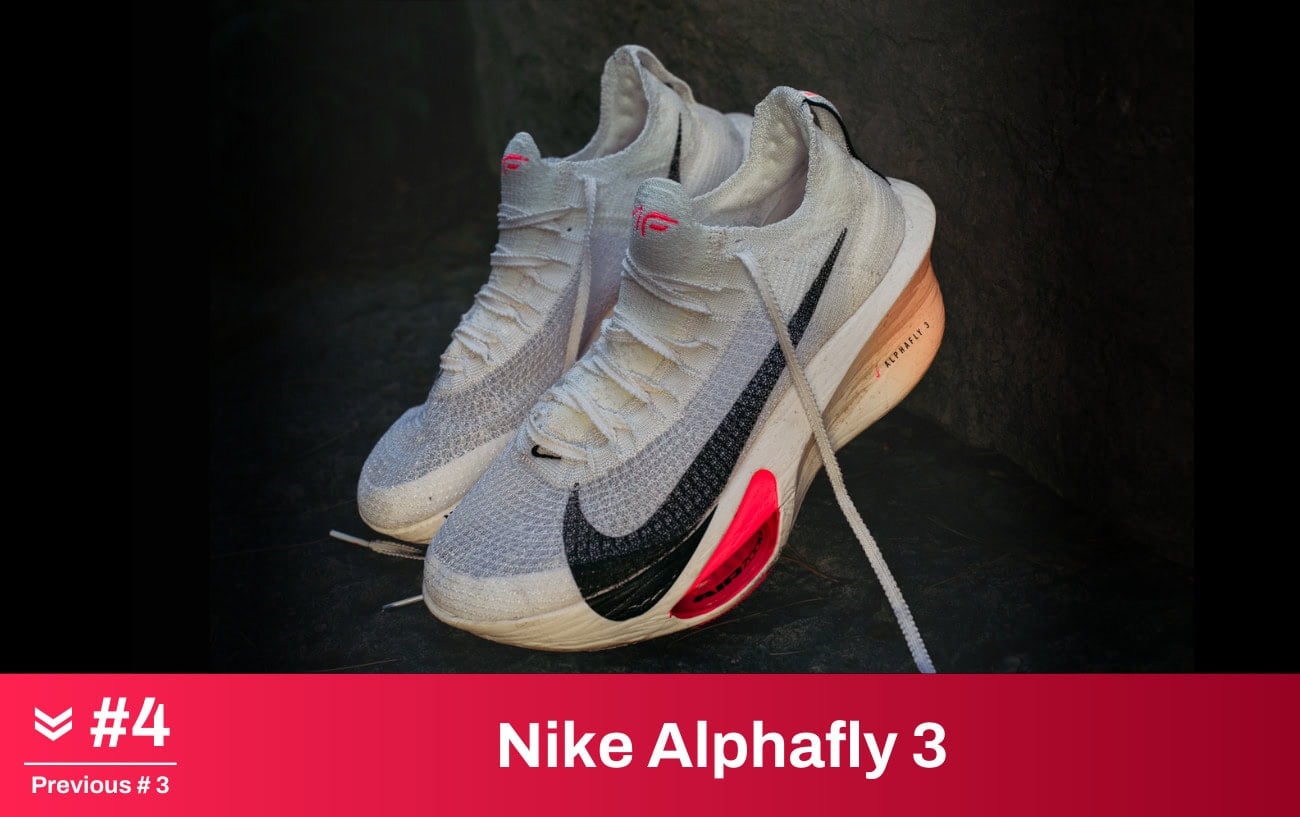
This is the shoe we disagree on the most. By far.
But, it’s everywhere.
It was the most popular shoe in Chicago. It was the most popular shoe in New York. Nearly 10,000 runners wore it at the New York City Marathon alone.
Elites still wear it. Recreational runners love it. And maybe most importantly, it seems to last forever.
This might have been the first truly durable super shoe. You can beat it up, race in it multiple times, and it still feels fast. That matters to a huge segment of runners.
You can’t ignore the fact that this shoe has become the default super shoe for the entire sport. From the very front of the field to people finishing their first marathon, it’s trusted.
And that earns it this spot.
And we already know a new version is coming. We’ve seen prototypes on the feet of Connor Mantz, Jacob Kiplimo, Sifan Hassan. Nike’s not standing still. But for now, the Alphafly 3 still deserves to be here.
The Deets: Tech Specs For The Nike Alphafly 3
- Launch date: October 2023
- Weight: 7.7 oz/218 g M10
- Stack height: 32 mm/40 mm
- Offset: 8 mm
- Price: $285 USD
#3 Best Shoe For Durability: ASICS Metaspeed Sky & Edge Tokyo
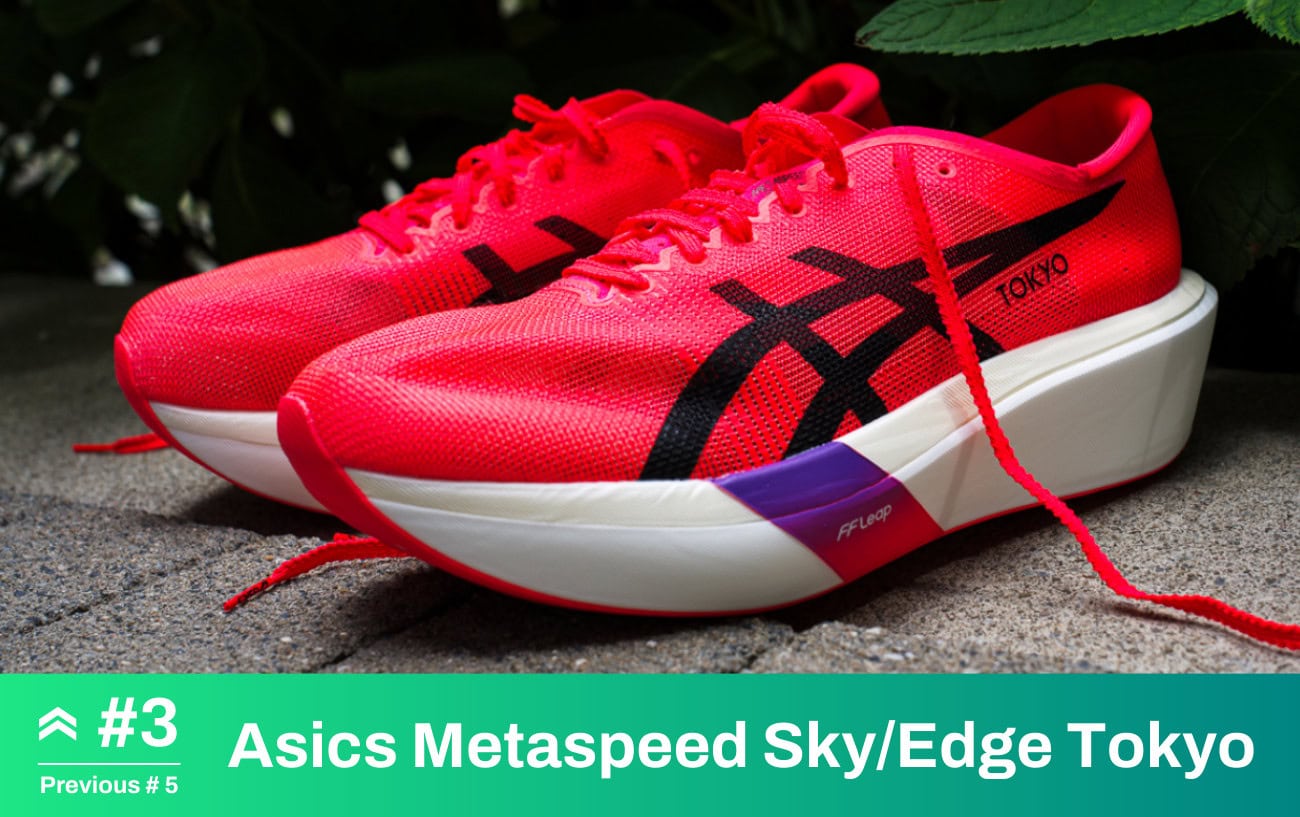
ASICS is quietly having an unbelievable run right now.
The Metaspeed Sky and Edge Tokyo models are both excellent, and we’re grouping them together because functionally, they’re very similar. The cadence-versus-stride distinction actually works, but the overall experience is consistent across both shoes.
These are fast, stable, and durable. The new FF Leap foam is light, responsive, and doesn’t compromise structure. That’s a hard balance to strike.
These feel stable late in a race. They feel quick. The full slab of foam underfoot feels elegant, not clunky. The upper is beautiful. This is just a really well-executed shoe.
What impresses us the most about ASICS right now is that they’re not sacrificing durability to chase marginal gains. These shoes last. You get your money’s worth. And they’re still genuinely fast.
That’s not easy to pull off.
The Deets: Tech Specs For The ASICS Metaspeed Sky & Edge Tokyo
- Launch date: July 2025
- Weight: 6.0 oz/170 g M9
- Stack height: 34.5 mm/39 mm
- Offset: 5 mm
- Price: $270 USD
#2 Best Shoe For Your Next PR: Puma Fast-R Nitro Elite 3
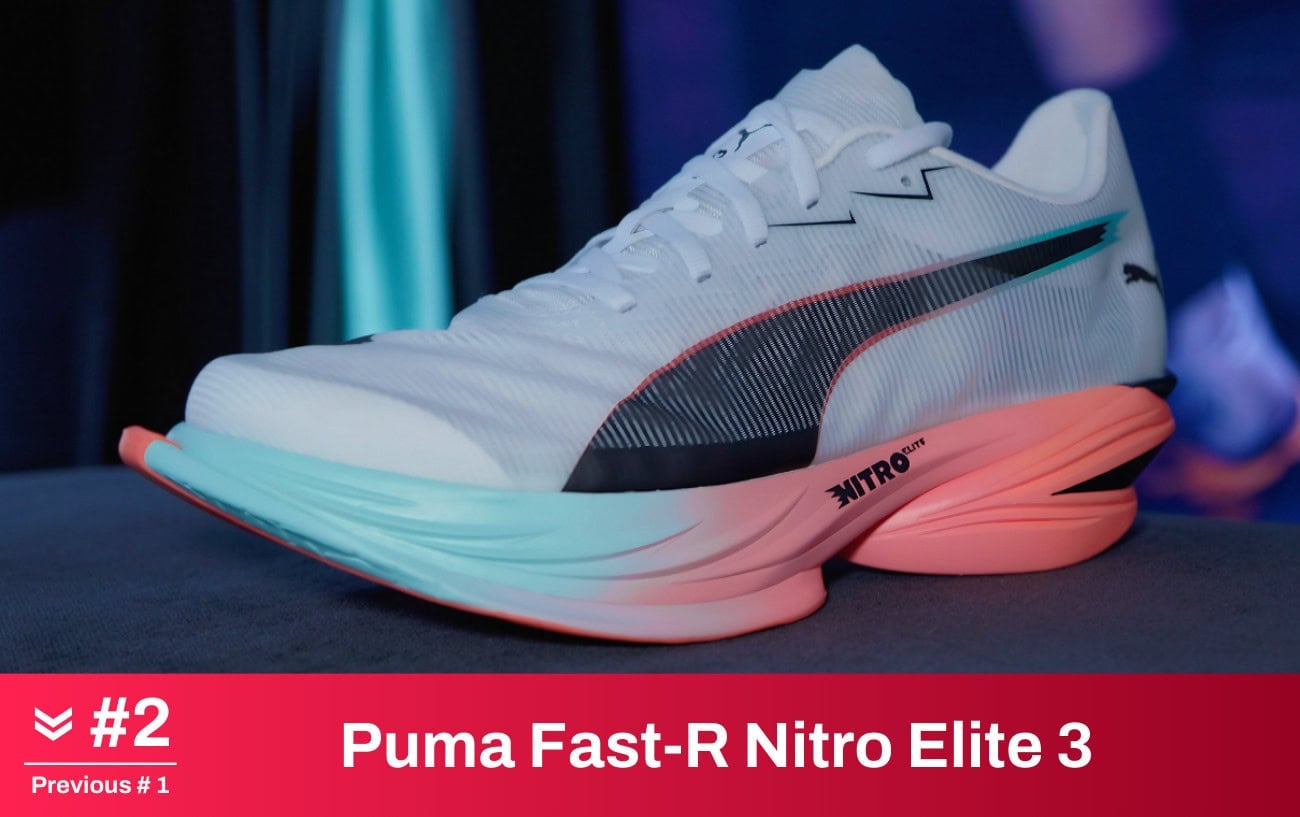
This was our summer number one, so it hurts a little to knock it down.
So, Puma didn’t just tweak foam here. They went full engineer. The foam is ATPU-based, incredibly light and responsive. The cutouts are aggressive. The carbon plate is thin, layered, and extends past the toes. The geometry is wild.
This shoe feels like a track spike, and that scared a lot of people at first.
The assumption was that it would be uncomfortable or beat your legs up over long distances, but that just hasn’t been the case.
It doesn’t look like it has much support, but it does. It’s one of the lightest shoes in the category, and somehow it still works over long distances.
If every runner in the world could choose freely, without sponsorships or availability issues, I genuinely wonder if this shoe wouldn’t come out on top.
It’s a marvel.
The Deets: Tech Specs For The Puma Fast-R Nitro Elite 3
- Launch date: April 2025
- Weight: 6 oz/170 g M9
- Stack height: 31 mm/39 mm
- Offset: 8 mm
- Price: $300 USD
#1 Best Overall: Adidas Adios Pro Evo 2
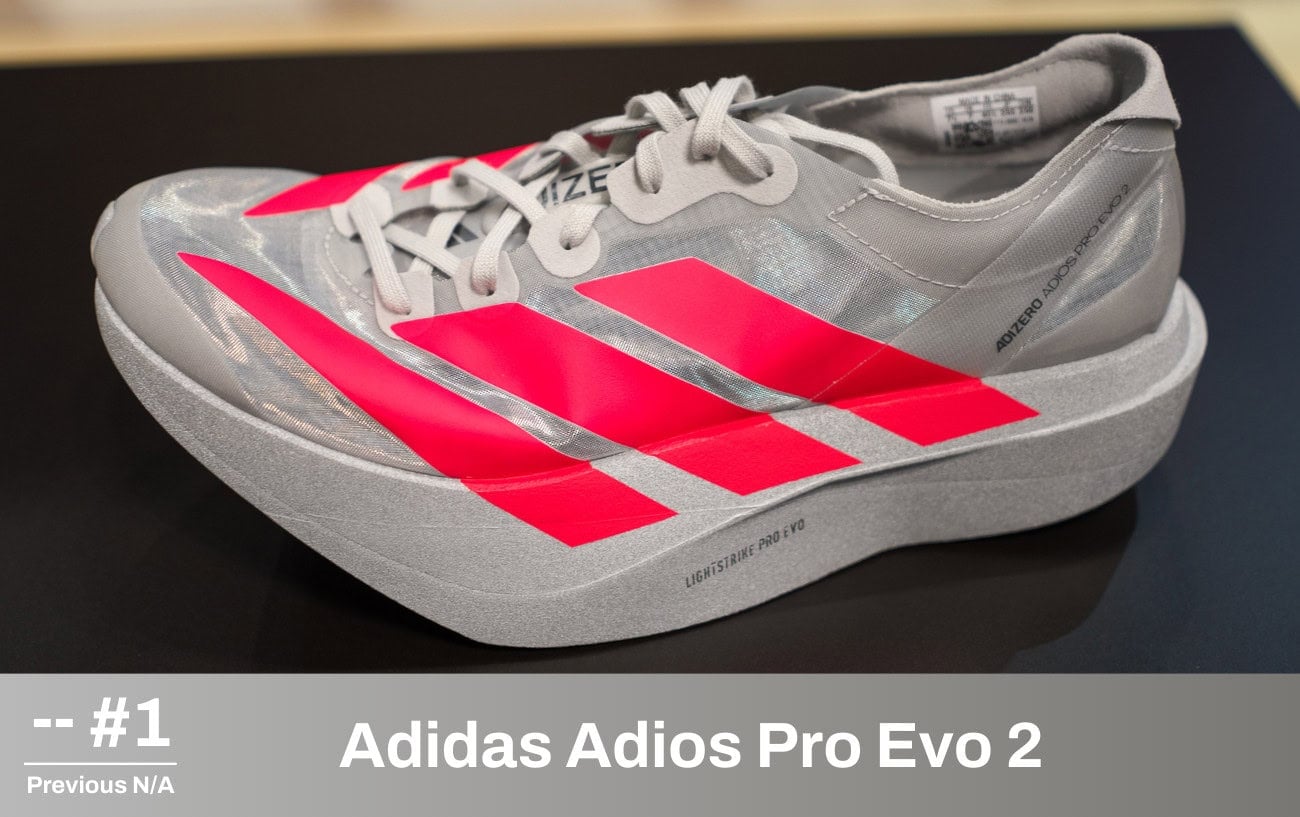
This is the best super shoe in the world right now.
Adidas absolutely dominated elite podiums in 2025, and the Pro Evo 2 is the clearest expression of why. This shoe is the culmination of years of R&D, and it shows.
The biggest change from the Pro Evo 1 is the forefoot. Adidas shifted more foam forward, lowered the drop slightly, and created a more powerful toe-off. It’s lighter, more balanced, and more functional.
And it actually lasts longer.
Now, it’s still not durable in the traditional sense, but better than the Pro Evo 1.
But it’s also insanely hard to get. It’s $500. You basically have to be at a World Marathon Major and get lucky when Adidas drops a handful of pairs.
But purely on performance, podiums, fastest times, athlete preference, nothing touched this shoe in 2025.
Sebastian Sawe’s 2:02 in Berlin. The dominance across majors. The consistency. This shoe leads the category.
The Deets: Tech Specs For The Adidas Adios Pro Evo 2
- Launch date: April 2025
- Weight: 4.8 oz/138 g M9
- Stack height: 36 mm/39 mm
- Offset: 3 mm
- Price: $500 USD
Where super shoes are headed next
We’re moving toward two clear tiers: elite experimental shoes and more durable, mass-market racers. Expect ATPU foams to become more common, PEBA to trickle down, platforms to get wider, and stability to matter more.
We’ve likely hit peak lightness. The next gains will come from efficiency, geometry, and power delivery.
Adidas is setting the pace. ASICS is right behind. Nike is due for a response.
The arms race isn’t slowing down. It’s just getting smarter.
Quick-Pick Guide: Which Carbon Plate Shoe Is Right for You?
With so many super shoes on the market, picking the right one depends on your running style, race distance, and budget. Here’s a quick decision framework.
If you’re a heel striker who wants maximum cushion, the Nike Vaporfly 3 or New Balance SuperComp Elite v5 are your best bets — both offer generous foam stacks that protect your legs during the marathon’s final miles.
If you’re a midfoot or forefoot striker looking for a snappy, responsive ride, the ASICS Metaspeed Sky+ or Adidas Adios Pro 4 deliver that aggressive, propulsive feel that rewards efficient runners.
If you’re racing shorter distances (5K-half marathon), lighter options like the Saucony Endorphin Elite 2 or ASICS Metaspeed Edge+ sacrifice some cushioning for lower weight and faster turnover.
If you’re on a budget, the Saucony Endorphin Speed line offers carbon-plate-adjacent performance at roughly half the price of top-tier racers.
Carbon Plate Running Shoes FAQ
Do carbon plate shoes really make you faster?
Yes. Research published in Sports Medicine found that carbon-plated super shoes improve running economy by 4-6% on average, which translates to roughly 2-3 minutes faster over a marathon distance. The combination of curved carbon fiber plates and energy-returning foam creates a “rocker” effect that reduces the work your calf muscles need to do at toe-off.
How long do carbon plate running shoes last?
Most carbon plate shoes last 150-250 miles before the foam degrades enough to lose their performance advantage. This is significantly less than daily trainers (400-500 miles), which is why most serious runners reserve their super shoes for races and key workouts only. At current prices, that works out to roughly $1-2 per mile of racing.
Are carbon plate shoes worth the price?
For competitive runners targeting a PR, carbon plate shoes offer the single biggest legal performance gain available. A 4% improvement in economy is worth roughly 8 minutes in a 4-hour marathon. For casual runners or those not racing, the high price and limited lifespan make daily trainers a more practical choice. Check our full running shoe rankings for alternatives at every price point.
Can beginners wear carbon plate shoes?
Beginners can wear super shoes, but the benefits are less pronounced at slower paces. The carbon plate’s energy return mechanism works best at paces faster than approximately 8:00/mile. Beginners may also find the aggressive rocker geometry destabilizing. We’d recommend building a solid running form foundation first, then trying super shoes for your first goal race.
What’s the difference between the Nike Vaporfly and Alphafly?
The Vaporfly is lighter and more versatile across distances (5K to marathon), while the Alphafly offers more cushioning and stability for longer races thanks to its additional Air Zoom pods. Most elite marathoners choose the Vaporfly for its lighter weight, but heavier or less efficient runners often prefer the Alphafly’s extra cushion for marathon distance.
More shoe guides: Find the right shoes for every run with our guides to the best marathon running shoes, best daily running shoes for training, and best running shoes for workouts.
Want to get the most out of your new shoes? Learn how to run faster and check out our guide to training for a marathon.
Head-to-Head Shoe Comparisons
Can’t decide between two popular shoes? Our detailed comparison guides break down the differences:
- Hoka Clifton vs Bondi
- Nike Vomero vs Pegasus
- Brooks Glycerin vs Ghost
- ASICS Gel Nimbus vs Kayano
- Hoka Bondi vs Brooks Ghost
- Nike Pegasus vs ASICS Nimbus



I would warn anyone who has ankle or knee stability issues to reconsider the Endorphin Elite 2. I ran in mine a total of three times before I decided to put it on the curb because it hurt my ankle and knee so bad. Just cautioned!