


The Hoka Clifton and Hoka Bondi are two of the most popular running shoes on the market — and they come from the same brand. If you’re trying to decide between these two Hoka heavyweights, you’re not alone: thousands of runners search for this comparison every month.
Having tested both shoes extensively, I can tell you they serve quite different purposes despite sharing the same DNA. Here’s the short version: the Clifton is lighter and more versatile for daily training, while the Bondi delivers maximum cushioning for easy runs and recovery days. But the full picture is more nuanced than that.
The Honest Truth: Clifton vs Bondi Is About Stack, Not Brand Loyalty
Both the Clifton and Bondi sit firmly in the Hoka maximalist family, but the 6 mm of stack between them is enough to put them in genuinely different running niches. The biomechanics literature is more useful here than spec-sheet comparisons.
1. Stack height shifts where the load goes
The Bondi 9 sits at roughly 39 mm under the heel; the Clifton 10 around 32 mm. The lab work on midsole thickness shows that taller stacks reduce peak vertical loading rates and shift force distribution more distally — toward calf and forefoot — while lower stacks preserve more proprioception and a slightly more efficient mid-foot strike1Chambon N, Delattre N, Guéguen N, et al. Is midsole thickness a relevant parameter to control running shoe comfort? Footwear Science. 2014;6(1):S3–S5.. The 7 mm difference between Clifton and Bondi isn’t cosmetic; it’s the difference between a daily trainer that lets you feel the road and a recovery-day shoe that absorbs it for you.
2. Foam chemistry isn’t identical between the two
The Clifton runs on a supercritical EVA blend tuned for a balance of softness and responsiveness; the Bondi uses a slightly softer compression-moulded EVA that sacrifices return for impact protection. Energy-return measurements consistently show the Clifton returning a small but measurable amount more energy per stride than the Bondi at marathon pace2Worobets J, Wannop JW, Tomaras EK, Stefanyshyn DJ. Softer and more resilient running shoe cushioning properties enhance running economy. Footwear Science. 2014;6(3):147–153.. So if you’re training for a goal race, the Clifton is consistently the better daily-driver pick; the Bondi earns its keep on long, slow recovery days, post-injury return-to-running, or for runners who simply want maximal cushioning across all mileage.
3. Weight matters more than the spec-sheet implies
The Clifton weighs around 8.7 oz (men’s 9); the Bondi roughly 10.4 oz. Lab studies on shoe-mass effects on running economy reliably find that every 100g of added shoe mass costs about 1% in oxygen cost at submaximal pace3Hoogkamer W, Kipp S, Frank JH, et al. A comparison of the energetic cost of running in marathon racing shoes. Sports Medicine. 2018;48(4):1009–1019.. So at marathon pace, Bondi vs Clifton is a roughly 0.5% economy penalty for the heavier shoe. That’s small for easy mileage and recovery runs (where it doesn’t matter) and meaningful for tempo days (where it does). If you’re mixing both into a rotation, save the Bondi for easy and recovery; reach for the Clifton on quality days.
4. Last shape and toe-box: subtle differences that matter
Both shoes share Hoka’s Meta-Rocker geometry and a similar last in standard width, but the Bondi tends to fit slightly more secure through the midfoot while the Clifton has a touch more forefoot volume. Restricted toe-splay during loading is associated with progressive bunion and metatarsalgia risk, so if you’re wide-footed or have a history of pinky-toe rubbing, both shoes ship in genuine wide-fit SKUs and that’s worth taking seriously rather than sizing up4Goldmann JP, Sanno M, Willwacher S, Heinrich K, Brüggemann GP. The potential of toe flexor muscles to enhance performance. Journal of Sports Sciences. 2013;31(4):424–433..
5. The clean rotation answer
If you can only own one, the Clifton is the more versatile pick — light enough for tempos, cushioned enough for long runs, more energy return for marathon-pace work. The Bondi earns its keep as the second shoe in a rotation: easy days, recovery runs, post-long-run shakeouts, and rehab miles. Multi-shoe rotations are associated with lower injury rates than single-shoe training in the literature, so owning both isn’t indulgent — it’s evidence-aligned. If you’re still mapping picks to a goal race, the best marathon running shoes guide works through the model-level picks across Hoka and the wider field.
Hoka Clifton vs Bondi: Quick Verdict
Choose the Hoka Clifton 10 if you want a lighter, more responsive daily trainer that can handle a range of paces. It’s the better all-around shoe for runners who want one shoe to do most of their training in.
Choose the Hoka Bondi 9 if you prioritize maximum cushioning above everything else. It’s ideal for easy runs, recovery days, long slow distance, and runners who want the plushest possible ride — or who spend a lot of time on their feet outside of running.
Key Specs Compared
| Spec | Hoka Clifton 10 | Hoka Bondi 9 |
|---|---|---|
| Weight (Men’s) | 8.9 oz / 252g | 10.8 oz / 306g |
| Heel-Toe Drop | 5mm | 4mm |
| Stack Height | 32mm / 27mm | 38mm / 34mm |
| Midsole | Compression-molded EVA | Compression-molded EVA |
| Best For | Daily training, tempo runs | Easy runs, recovery, walking |
| Price | $150 | $165 |
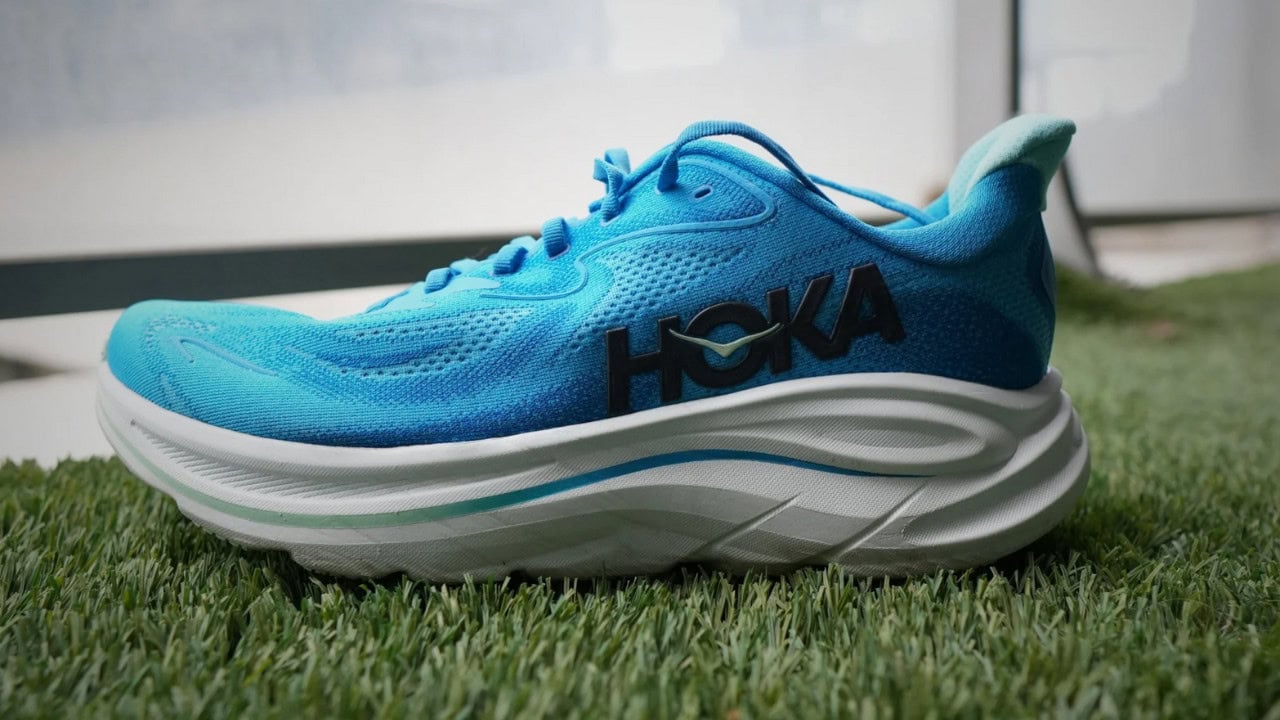
Cushioning: Bondi Wins
This is where the Bondi shines and where the key difference lies. The Bondi 9 has a significantly taller stack height (38mm heel vs the Clifton’s 32mm), which translates to noticeably more foam underfoot. If you’re a runner who craves that cloud-like, sink-into-it feeling with every step, the Bondi is in a league of its own.
The Clifton 10 is no slouch in the cushioning department — it’s still a well-cushioned shoe by any standard — but it uses less foam to create a ride that feels more balanced between soft and responsive. For many runners, this is actually the sweet spot.
Weight and Responsiveness: Clifton Wins
At 8.9 oz, the Clifton 10 is nearly two ounces lighter than the Bondi 9 (10.8 oz). You feel this difference immediately, especially on longer runs or when you pick up the pace. The Clifton transitions more quickly through the gait cycle and has a snappier toe-off that makes it genuinely enjoyable for faster efforts.
The Bondi, by contrast, feels more lumbering at speed. It’s not designed for tempo runs, and trying to push the pace in a Bondi always feels like you’re fighting the shoe. This is the trade-off for that extra cushioning.
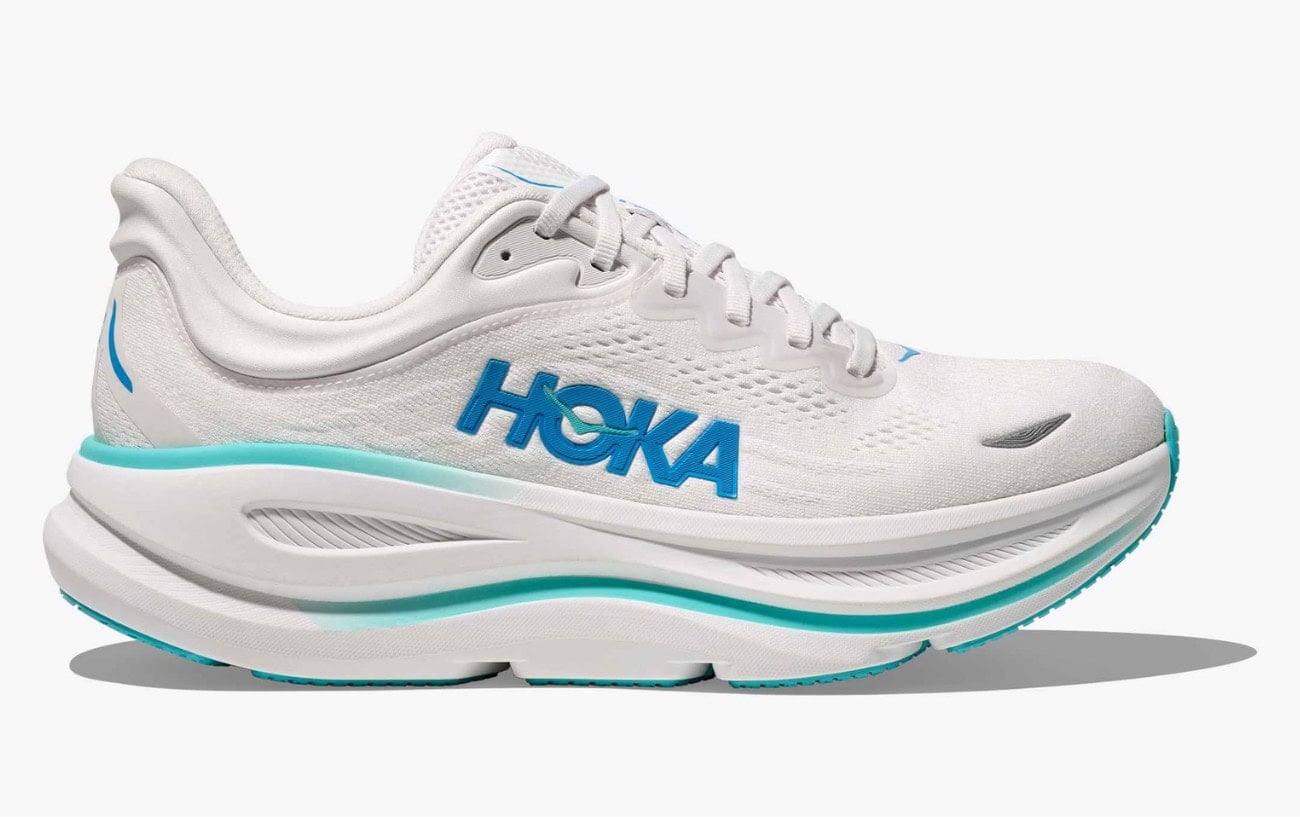
Versatility: Clifton Wins
If you could only own one running shoe, the Clifton is the clear choice. It handles easy runs comfortably, transitions well to moderate tempos, and doesn’t feel out of place on a progression run. It’s the true “daily trainer” in Hoka’s lineup.
The Bondi is more of a specialist — it does max-cushion easy runs and recovery days exceptionally well, but that’s essentially its whole range. Many runners buy the Bondi as their second shoe, pairing it with something faster for workouts.
Durability: Close Call
Both shoes use Hoka’s compression-molded EVA midsole and similar rubber outsole configurations. In practice, both hold up for roughly 300-400 miles before the midsole starts to feel dead. The Bondi’s extra foam volume can sometimes give it a slight edge in longevity since there’s more material to compress before it bottoms out, but the difference isn’t dramatic.
Fit and Comfort
Both shoes use Hoka’s signature rocker geometry, which promotes a smooth heel-to-toe transition. The Bondi 9 has a slightly wider base to accommodate its taller stack height, which some runners find more stable. The Clifton 10 feels a touch narrower and more locked-in, especially through the midfoot.
The upper mesh on both is comfortable and breathable, though neither shoe is particularly known for exceptional airflow in hot weather. Both work well for medium-width feet; wide-footed runners may want to try the wide option that Hoka offers for both models.
Price: Clifton Is Cheaper
The Clifton 10 retails at $150 while the Bondi 9 comes in at $165. For the better all-around shoe, you’re actually paying less — which makes the Clifton an even more compelling value proposition.
Durability: Both Are Built To Last
Both the Clifton and Bondi are built with durable rubber outsoles and hold up well over 300-500 miles. The Bondi’s thicker midsole means the cushioning may compress slightly faster, but the overall lifespan is comparable. The Clifton’s lighter construction puts less stress on the midsole foam, which can help it maintain its bounce longer. If you’re averaging 30+ miles per week, expect to replace either shoe every 4-5 months.
Fit and Comfort: Similar DNA, Different Feel
Both shoes share Hoka’s signature wide toe box and comfortable upper materials, but the fit experience differs. The Clifton has a snugger midfoot lockdown that feels more secure during faster efforts, while the Bondi wraps the foot in a plusher, more padded collar and tongue. The Bondi’s extra padding creates a “slipper-like” comfort that’s ideal for recovery days, while the Clifton strikes a better balance between comfort and performance feel.
Best For Different Runner Types
The Clifton is the better choice if you want one shoe that works for most of your runs — from easy days to moderate tempo efforts. It’s also the go-to for runners who prefer a lighter shoe or who find the Bondi too bulky. The Bondi excels as a dedicated easy day and recovery shoe, especially for heavier runners who want maximum cushioning or anyone dealing with joint issues who needs extra impact protection. Many experienced runners own both — the Clifton as their daily trainer and the Bondi for recovery days.
Price Comparison
The Bondi typically retails for $10-15 more than the Clifton, reflecting its extra cushioning material. Both shoes offer excellent value for premium running shoes, but if budget is a factor, the Clifton gives you more versatility per dollar. Previous model year versions of both shoes can often be found at significant discounts and still offer excellent performance.
FAQs
Is the Hoka Clifton or Bondi better for beginners?
The Clifton is generally better for beginners because it is more versatile and lighter. It works well across different paces and distances, making it a great first running shoe. The Bondi can feel heavy for new runners still building their form.
Can you run a marathon in Hoka Clifton or Bondi?
Yes, both shoes can handle marathon distance. The Clifton is the better marathon choice due to its lighter weight and more responsive ride. The Bondi is better suited for slower-paced marathons where maximum cushioning is the priority.
Are Hoka Clifton and Bondi good for flat feet?
Both are neutral shoes without built-in stability features. Runners with mild flat feet often find them comfortable due to the wide platform and generous cushioning. Runners with severe overpronation may need a stability shoe like the Hoka Arahi instead.
How often should you replace Hoka Clifton and Bondi?
Both shoes typically last 300-500 miles. At 20 miles per week, that is roughly 4-6 months. Replace them when the midsole feels flat, the outsole is worn through, or you start feeling more impact in your joints.
What is the difference between Hoka Clifton 9 and Bondi 8?
The main differences are weight (Clifton is about 1.5 oz lighter), stack height (Bondi has more cushioning), and ride feel (Clifton is more responsive while Bondi is plushier). The Clifton is more versatile while the Bondi prioritizes maximum comfort.
The Bottom Line
For most runners, the Hoka Clifton 10 is the better buy. It’s lighter, more versatile, cheaper, and handles a wider range of training paces. The Bondi 9 is the right choice only if maximum cushioning is your top priority — for easy-day-only runners, heavier runners who need extra impact protection, or people who also want a plush walking shoe.
Shop The Hoka Clifton 10
Shop The Hoka Bondi 9
More Shoe Roundups From Marathon Handbook
- Best Hoka Running Shoes
- Best Running Shoes for Beginners
- Best Daily Running Shoes
- Best Running Shoes Reviewed
More Shoe Comparisons From Marathon Handbook
- Brooks Glycerin vs Ghost
- Nike Vomero vs Pegasus
- ASICS Gel Nimbus vs Kayano
- Hoka Bondi vs Brooks Ghost
- Brooks Ghost vs Nike Pegasus
- Hoka Clifton vs Brooks Ghost
- New Balance 1080 vs Brooks Glycerin
- Hoka Clifton vs Nike Pegasus
- ASICS Gel Nimbus vs Brooks Glycerin
- Brooks Glycerin vs Hoka Bondi
- New Balance 1080 vs Hoka Clifton
- Brooks Ghost vs ASICS Gel Nimbus
References
RunClub — Free
Join 300,000+ runners in RunClub
Free training plans for every distance, a daily running game, exclusive coaching content, and a real community of runners. Create your free account in 20 seconds — no card.
Already a member? Log in →







Start the conversation