


The big misconception with Hoka is that they only makes big, bulky cushioned shoes.
That’s no longer the case; they now offer a much broader range.
If you’ve never tried their shoes before, they tend to follow a formula: most Hoka shoes have a generous amount of cushioning, a pretty aggressive rock-forward profile, and a very comfortable instep. But every shoe in this lineup is quite different.
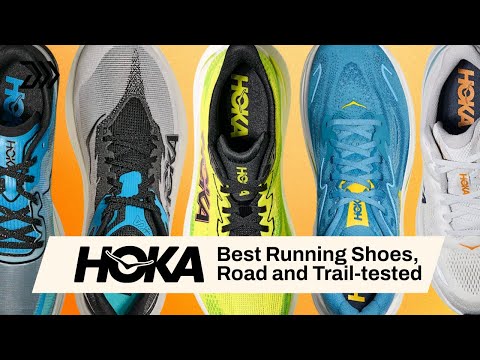
As the main shoe reviewer at Marathon Handbook – and the “shoe guy” in my social circles people often ask me: I want to buy a Hoka, where do I start? So let’s go through all of the best hoka running shoes, from most cushioned to most aggressive, and I’ll recommend the right shoe depending on your needs and ability.
Shoe Comparison Guides From Marathon Handbook
- Hoka Clifton vs Bondi
- Hoka Bondi vs Brooks Ghost
- Hoka Clifton vs Brooks Ghost
- Hoka Clifton vs Nike Pegasus
- Brooks Glycerin vs Hoka Bondi
- New Balance 1080 vs Hoka Clifton
Hoka’s Current Running Shoe Lineup:
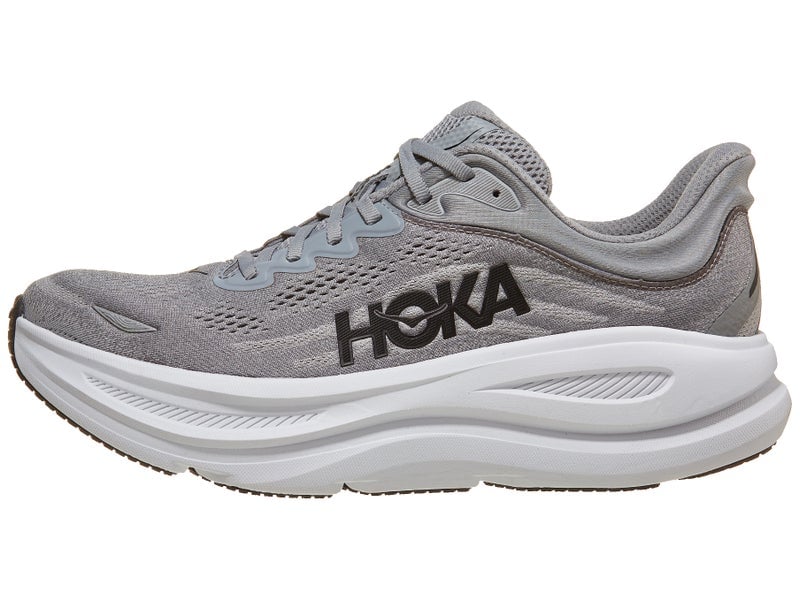
1. The Go-to Cushioned Shoe For Newer Runners: Hoka Bondi 9
2. The Solid Stability Shoe: Hoka Arahi 8
3. Hoka’s Quintissential Training Shoe: Hoka Clifton 10
4. The Underappreciated All-Rounder: Hoka Skyflow
5. Hoka’s Best Faster Session Shoe: Hoka Mach X3
6. Their Accessible Super Shoe: Hoka Rocket X3
7. Hoka’s Aggressive Race Shoe: Hoka Cielo X1 (v2)
1. The Go-To Cushioned Shoe For Newer Runners:
Hoka Bondi 9
Score: 7.4
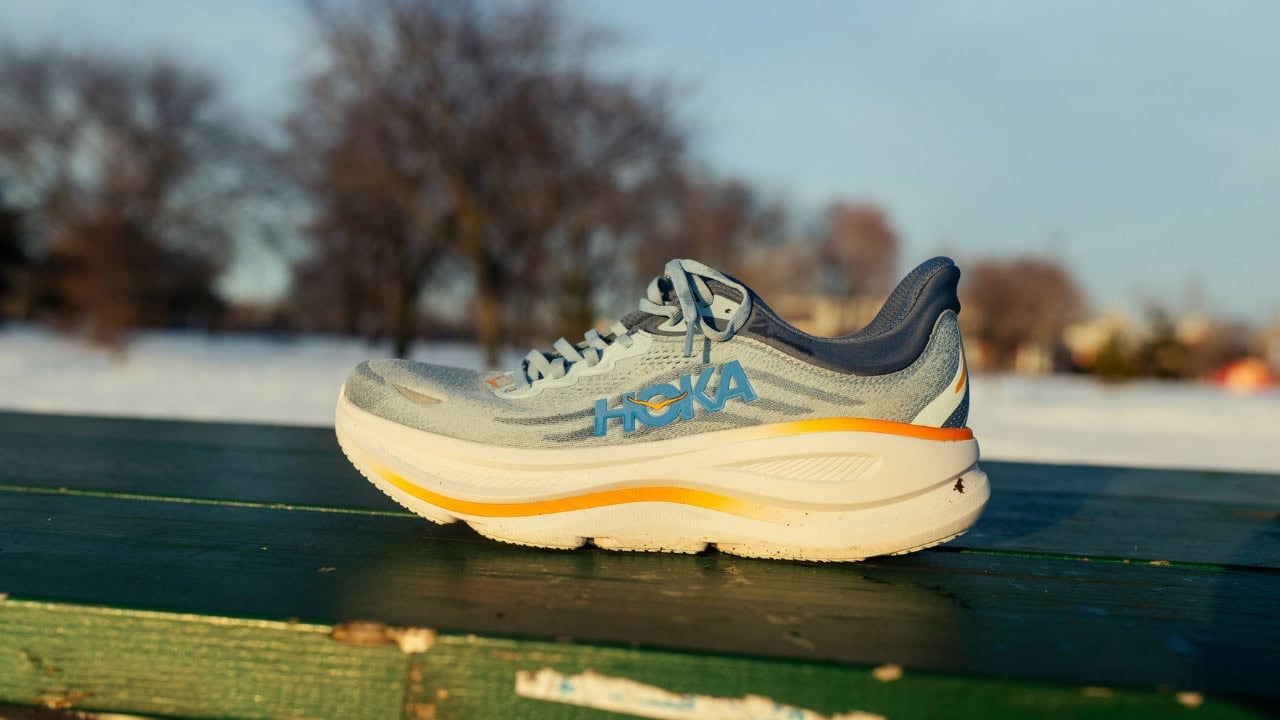
This is Hoka’s most cushioned training shoe to date, designed for runners who want a ton of support underfoot, especially beginners. It’s incredibly soft, almost like running on a cloud.
That doesn’t mean it’s slow. The Bondi 9’s midsole is made from a supercritical EVA foam that’s lighter and a bit more responsive than the standard EVA in their older models. You do get a little bounce off the ground.
Changes from the Bondi 9 include a more breathable upper, a new heel flare for comfort, and added rubber pods underneath for better grip. We gave the Bondi 9 a rating of 7.4, scoring high on comfort but noting it could use a little more “bite.”
Get the Bondi 9 if:
- You’re new to running and want a forgiving shoe
- You love lots of cushioning
- You prefer a roomy toe box
Avoid it if:
- You like to feel the ground under you
- You prioritize speed

The Deets: Tech Specs For The Hoka Bondi 9
- MSRP: $175 USD
- Stack height: Heel: 43mm; Forefoot: 38mm
- Weight: 10.5oz (297g)
- Heel-to-toe drop: 5mm
2. The Solid Stability Shoe:
Hoka Arahi 8
Score 7.8
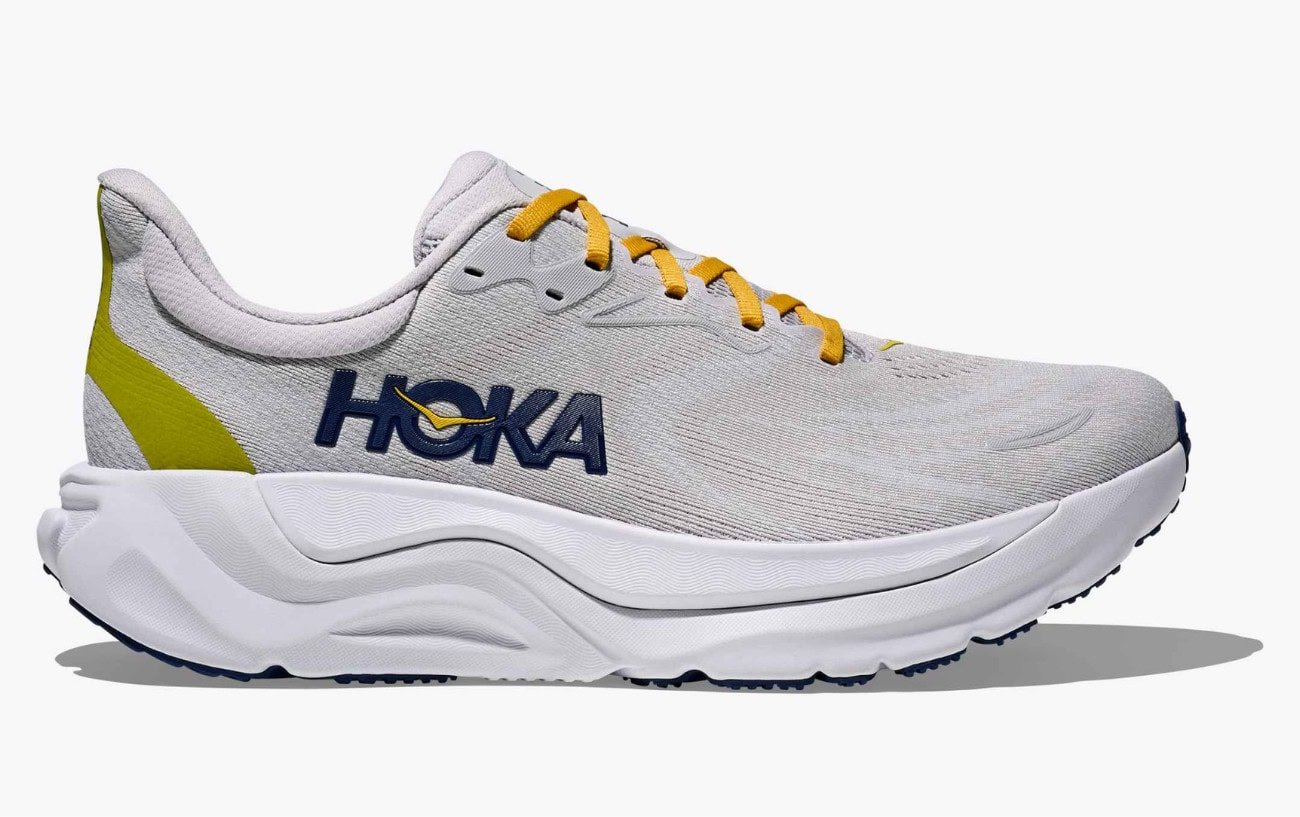
This is Hoka’s flagship stability shoe. It’s made for runners who need help with overpronation or supination. The Arahi features an “H-frame” of rigid foam to guide your foot and prevent excessive rolling.
Hoka added 3 mm of stack height at the heel this year, raising the heel-to-toe drop from 5 mm to a more standard 8 mm. We rated the Arahi 8 a 7.8, scoring it high on comfort and value—it’s reasonably priced, especially for a stability shoe.
Get the Arahi 8 if:
- You’ve been advised to wear stability shoes
- You value support and comfort on easy runs
Avoid it if:
- You’re looking for a faster workout shoe
- You’re a neutral runner without any stability issues
The Deets: Tech Specs For The Hoka Arahi 8
- MSRP: $150 USD
- Stack height: Heel: 37mm; Forefoot: 29mm
- Weight: 9.8oz (278g)
- Heel-to-toe drop: 8mm
3. The Quintissential Training Shoe:
Hoka Clifton 10
Score: 7.8
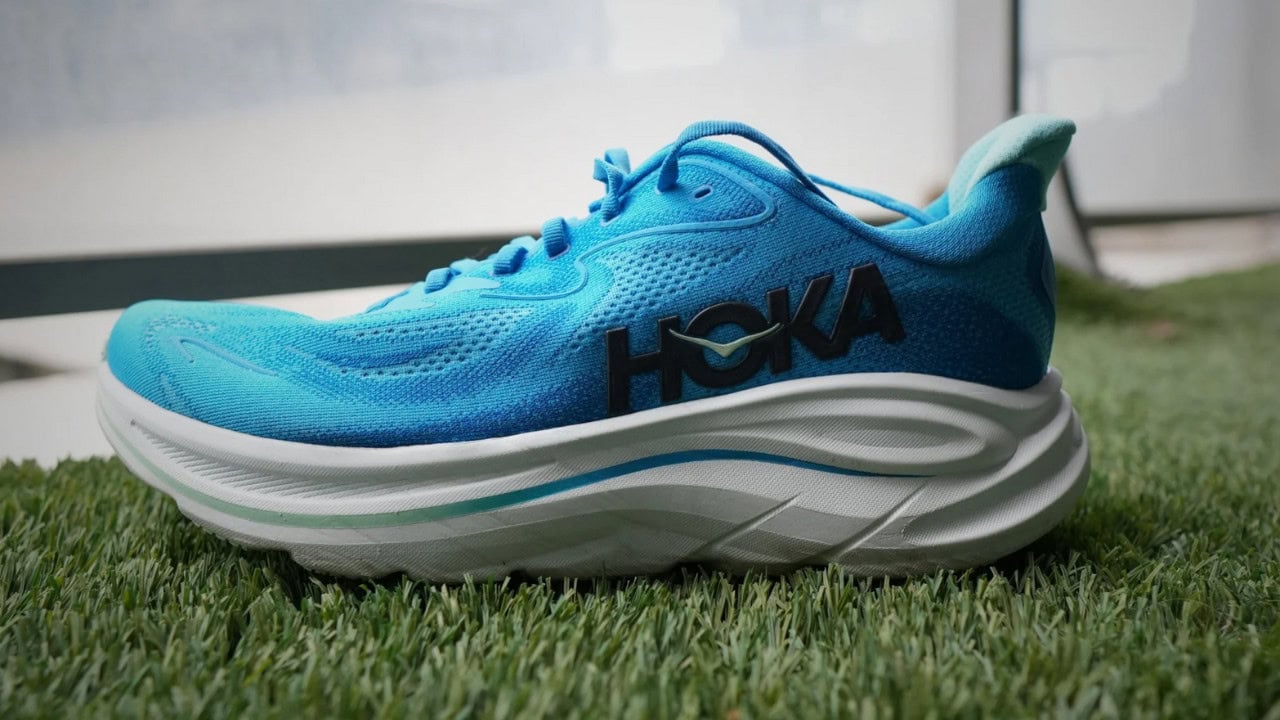
This is Hoka’s quintessential training shoe and the heart of its lineup. The Clifton is a hybrid—it’s great for easy runs, but it can also “hack” a workout thanks to its rock-forward profile and bounce.
The Clifton 10 was worth the wait. It has a widened toe box, an improved midsole with more bounce, and an updated drop (8 mm instead of 5 mm). We gave it a 7.8, scoring high on comfort but docking points for durability. I usually get around 600 km out of them—less than other daily trainers.
Get the Clifton 10 if:
- You want one shoe to do it all
- You value comfort, cushion, and a little versatility
- You want a running shoe that can double as a walking shoe
Avoid it if:
- You want a shoe that does one thing extremely well
- Durability is your top priority

The Deets: Tech Specs For The Hoka Clifton 10
- MSRP: $155 USD
- Stack height: Heel: 42mm; Forefoot: 34mm
- Weight: 9.8oz (278g)
- Heel-to-toe drop: 8mm
4. The Underappreciated All-Rounder Shoe:
Hoka Skyflow
Score: 7.7
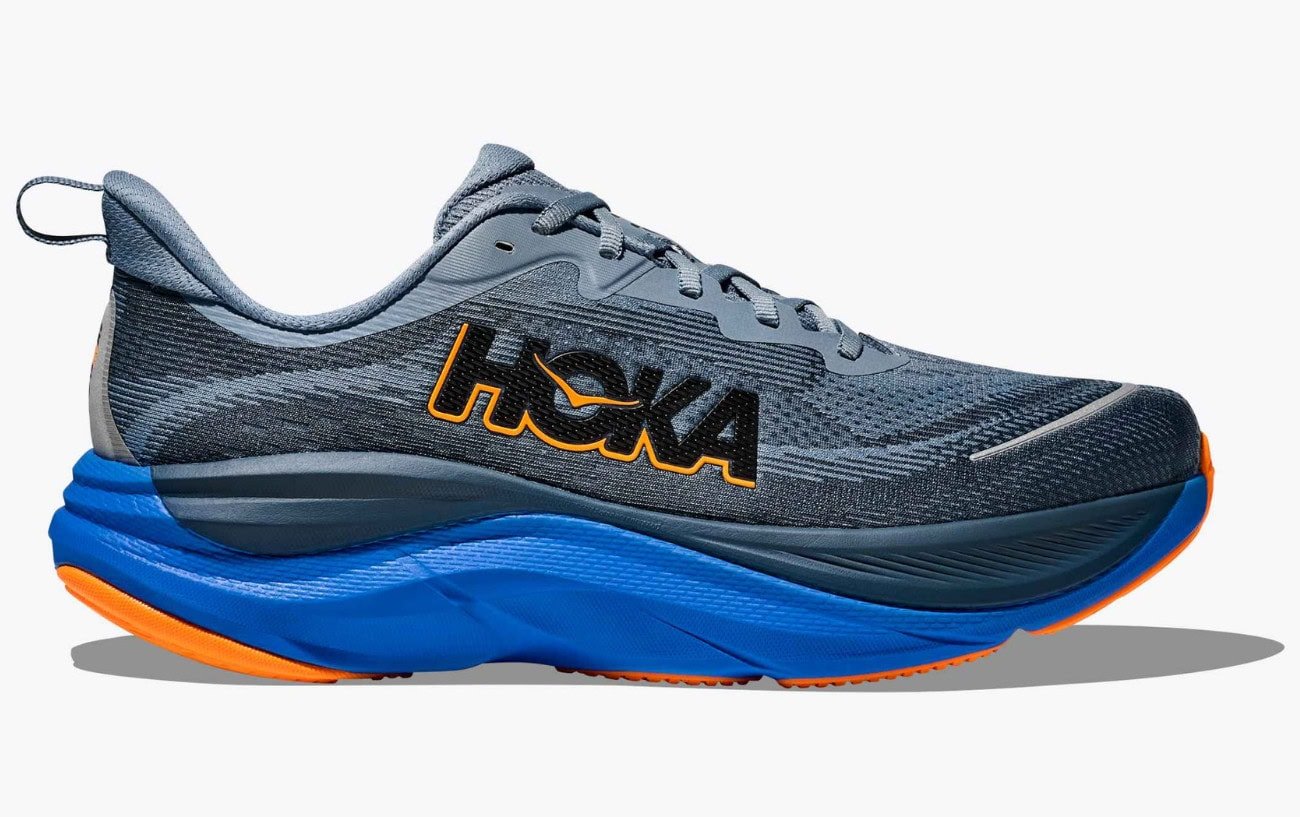
The Skyflow is like the Clifton’s under-the-radar cousin. It hasn’t gotten the hype, but it’s excellent. Think of it as a Clifton with slightly better midsole foam—lighter, firmer, more responsive.
It bounces a bit harder, feels more stable, and gives you a touch more performance. We rated it 7.7—higher on performance, a bit lower on comfort.
Get the Skyflow if:
- You like the Clifton but want a bit more “pop”
- You want something versatile, responsive, and lightweight
Avoid it if:
- You want a shoe that’s super plush
- You prefer the Clifton’s softness

The Deets: Tech Specs For The Hoka Skyflow
- MSRP: $160 USD
- Stack height: Heel: 39mm; Forefoot: 34mm
- Weight: 10oz (283g)
- Heel-to-toe drop: 5mm
5. Best Faster Session Shoe: Hoka Mach X3
Score: 7.4
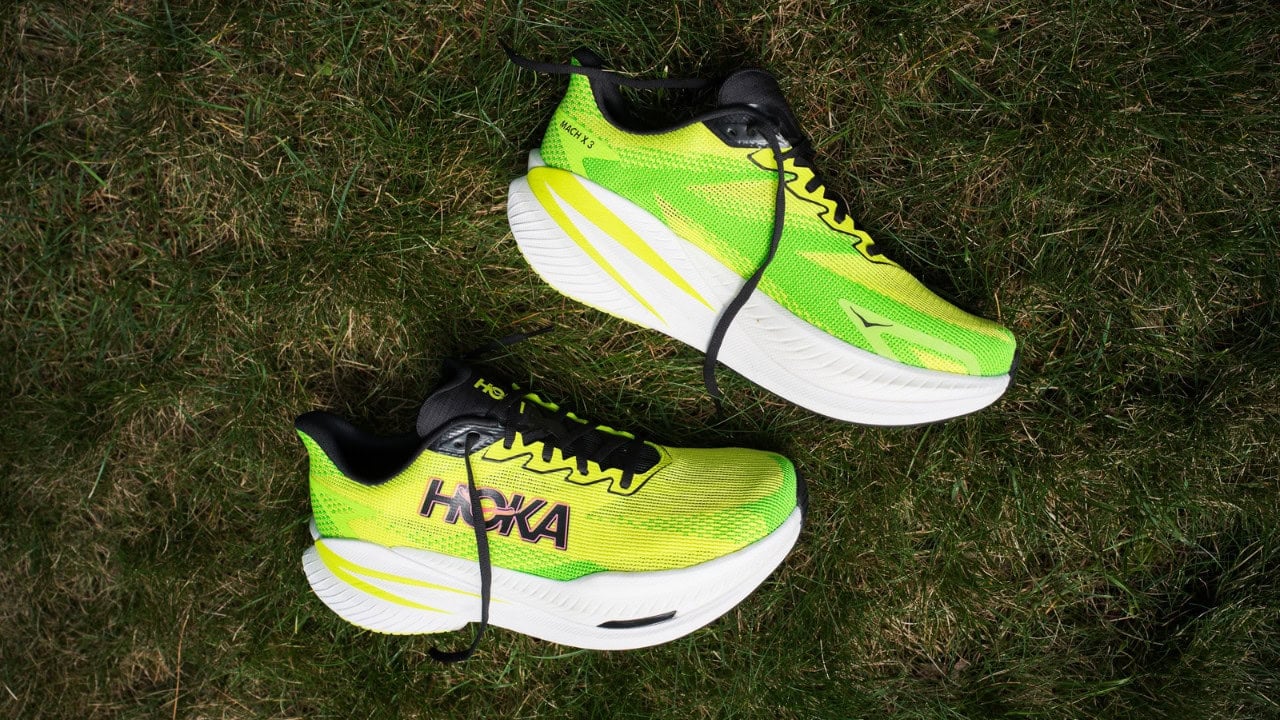
The Mach X3 is Hoka’s most conservative workout shoe (workouts, in this context, meaning faster runs like threshold and race pace runs).
It combines two foams—one used in their easy trainers and the other in their race shoes—and adds a carbon plate for propulsion. That makes it a hybrid: a cushioned trainer with speed potential.
It’s perfect for workouts with pace changes like fartleks or progressions. Compared to the Mach X2, it’s heavier (a full ounce), likely due to a thicker upper and new heel design that fixed the blistering issue I had last year.
We gave it a 7.4, with high marks for comfort but lower for performance.
Get the Mach X3 if:
- You’re new to carbon-plated shoes
- You want comfort and support in workouts
Avoid it if:
- You overheat easily or need a lightweight shoe
- You want something truly fast
The Deets: Tech Specs For The Hoka Mach X3
- MSRP: $190 USD
- Stack height: Heel: 46mm; Forefoot: 41mm
- Weight: 10.2oz (289g)
- Heel-to-toe drop: 5mm
6. The Accessible Super Shoe:
Hoka Rocket X3
Score: 7.5
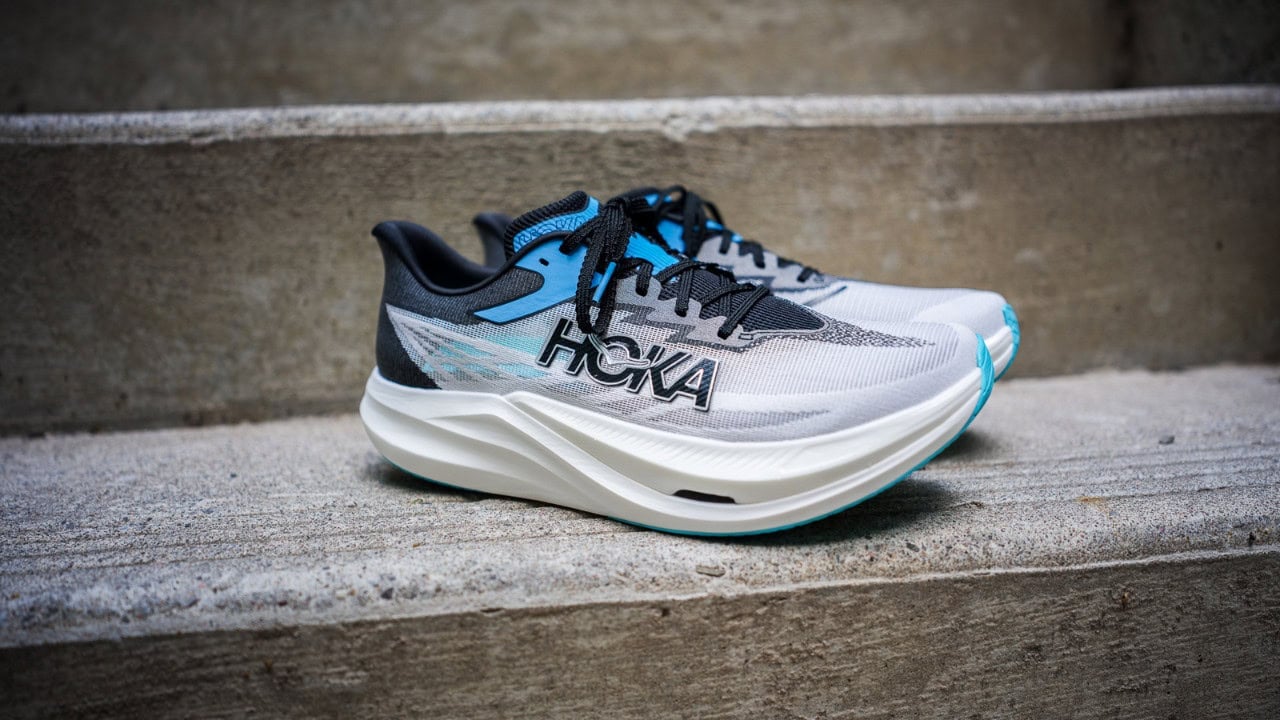
This is Hoka’s accessible super shoe. It has all the basics of a top-tier racer: dual-density PEBAX foam, a curved carbon plate, and a rockered design that pushes you onto your toes. The upper is feather-light and breathable, with a snug ankle collar.
We gave it a 7.5, scoring highest on comfort but dinging it on price. It’s not the fastest racing shoe out there—but it’s a solid, comfortable option.
Get the Mach X3 if:
- You want a comfortable, versatile super shoe
- You don’t mind an aggressive toe-off
- You want to race fast—but not obsess over every second
Avoid it if:
- You want max cushioning
- You need a wide toe box (it runs narrow)
- You want the absolute fastest shoe on the market

The Deets: Tech Specs For The Hoka Rocket X3
- MSRP: $250 USD
- Stack height: Heel: 40mm; Forefoot: 33mm
- Weight: 8oz (227g)
- Heel-to-toe drop: 7mm
#1 The Aggressive Race Day Shoe: Hoka Cielo X1 (v2)
Score: 7.4
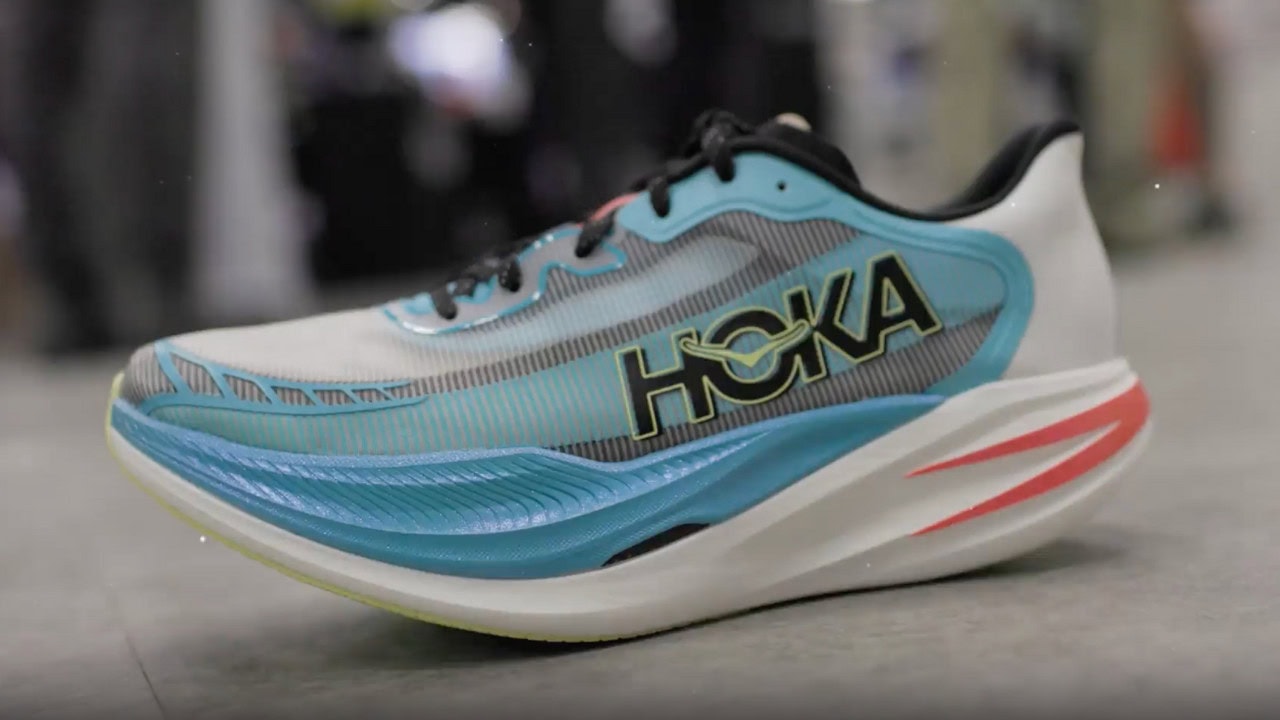
This is Hoka’s most aggressive shoe yet, and maybe its most divisive. It’s similar to the Rocket X3 in construction, but the rock-forward profile is wildly exaggerated. It feels like running on a half-wheel, constantly tilting you onto your toes.
If you’re a forefoot striker, you’ll love it. If you’re a midfoot or heel striker like me, it can feel a little too much. That said, it’s extremely fast.
We didn’t rate it higher than the Rocket, but it might be your perfect match if you crave that dramatic propulsion.
Get the Mach X3 if:
- You want the most aggressive ride possible
- You race at max speed and want toe-off power
Avoid it if:
- You need heel comfort
- You want versatility or cushioning
- You’re looking for the fastest overall racer (look beyond Hoka)

The Deets: Tech Specs For The Hoka Cielo X1 (v2)
- MSRP: $275 USD
- Stack height: Heel: 46mm; Forefoot: 39mm
- Weight: 8.1oz (229g)
- Heel-to-toe drop: 7mm
Frequently Asked Questions
How did you test these running shoes?
Our testing team logs at least 50 miles in each shoe across different surfaces, paces, and weather conditions. We evaluate cushioning, stability, responsiveness, durability, and fit before making our recommendations.
How often should you replace running shoes?
Most running shoes last between 300-500 miles, depending on the shoe construction, your running style, and the surfaces you run on. Signs it is time to replace include visible midsole compression, worn outsole tread, or new aches and pains during runs.
What is the difference between neutral and stability running shoes?
Neutral shoes work for runners with a normal gait or slight underpronation, offering cushioning without corrective features. Stability shoes include a medial post or guide rail to counter overpronation, where your foot rolls excessively inward during the stride.
Are expensive running shoes worth it?
Not always. Price often reflects premium materials and brand positioning rather than performance gains. Many mid-range shoes ($120-$150) offer excellent cushioning and durability. The best shoe is the one that fits your foot and running style, regardless of price.
Can’t decide between Hoka models? Read our in-depth Hoka Clifton vs Bondi comparison to find your perfect match.
More Shoe Roundups From Marathon Handbook
- Best Running Shoes Reviewed
- Best Marathon Running Shoes
- Best Daily Running Shoes
- Best Running Shoes For Beginners
- Best Half Marathon Shoes
- Best Trail Running Shoes
- Best Carbon Plate Running Shoes
RunClub — Free
Join 300,000+ runners in RunClub
Free training plans for every distance, a daily running game, exclusive coaching content, and a real community of runners. Create your free account in 20 seconds — no card.
Already a member? Log in →




Start the conversation