


The ASICS Gel Nimbus and ASICS Gel Kayano are two of the longest-running shoe lines in the sport — the Nimbus is on version 27 and the Kayano on version 32. They look similar and share a lot of technology, but they serve fundamentally different runners. Here’s how to choose.
The core distinction: the Nimbus is a neutral cushioned trainer for runners with normal gait mechanics, while the Kayano is a stability shoe designed for runners who overpronate. Everything else — cushioning, ride feel, upper design — flows from that fundamental difference.
The Honest Truth: Stop Picking Stability by Arch Type
For decades the standard advice has been: high arch → neutral, flat foot → stability. The biomechanics literature on injury risk has spent the last 15 years dismantling that prescription. Picking between Nimbus and Kayano is not about your arch height — it’s about your injury history and whether you actually need motion control. Here’s what the evidence says.
1. Arch-based prescription doesn’t reduce injury risk
The largest controlled trial on stability-shoe prescription, run by Knapik and colleagues across over 7,000 military trainees, found that prescribing motion-control shoes by arch height did not reduce injury rates compared with assigning a neutral shoe regardless of arch type1Knapik JJ, Trone DW, Tchandja J, Jones BH. Injury-reduction effectiveness of prescribing running shoes on the basis of foot arch height: Summary of military investigations. Journal of Orthopaedic & Sports Physical Therapy. 2014;44(10):805–812.. A separate randomised trial in recreational runners found no difference in injury risk between motion-control and neutral shoes — and the runners who were poorly matched to their assigned shoe type actually had elevated injury rates2Malisoux L, Chambon N, Delattre N, et al. Injury risk in runners using shoes with motion control technology versus neutral shoes: A randomised controlled trial. British Journal of Sports Medicine. 2016;50(8):481–487.. Translation: don’t buy the Kayano because someone told you you’re a pronator.
2. The right reason to pick Kayano: medial-column injury history
The Kayano’s 4D Guidance system — firmer medial midsole and a wider midfoot platform — does demonstrably reduce excessive frontal-plane motion in late-stance loading. Where the literature supports stability shoes is in runners with documented medial tibial stress reactions, peroneal tendinopathy, or recurrent posterior tibial complaints. For those runners, a stability platform is associated with lower flare-up rates during high-mileage blocks. If your knee, calf, or shin is fine when you’re in a neutral shoe, there’s no evidence Kayano improves anything for you over Nimbus.
3. Foam and stack — the Nimbus’s plush-cushioning case
Both shoes use ASICS FlyteFoam Blast+ as the primary midsole, but the Nimbus 27 sits taller (around 41.5 mm heel) than the Kayano 32 (around 40 mm heel) and runs softer for impact protection. Lab data on midsole softness consistently show that softer foam reduces peak vertical loading rates while adding a small economy cost at faster paces3Worobets J, Wannop JW, Tomaras EK, Stefanyshyn DJ. Softer and more resilient running shoe cushioning properties enhance running economy. Footwear Science. 2014;6(3):147–153.. So if you’re running 60+ km a week mostly easy and want max plush, Nimbus; if you’re training for a goal race with weekly tempo work and have stability needs, Kayano can serve both jobs.
4. Weight matters at faster paces
The Nimbus 27 weighs around 10.5 oz; the Kayano 32 around 10.9 oz. The roughly 1% economy cost per 100 g of added shoe mass shows up most clearly at marathon pace and faster4Hoogkamer W, Kipp S, Frank JH, et al. A comparison of the energetic cost of running in marathon racing shoes. Sports Medicine. 2018;48(4):1009–1019.. Both shoes are heavier than ASICS’s lighter daily trainer (Cumulus) by a meaningful margin — neither is the right pick for tempo days. They’re both built for cushioned mileage, just with different missions inside that.
5. The clean answer most “vs” posts won’t give
For most runners with no documented injury history, the Nimbus is the smarter default — neutral, plush, lighter, equally effective at impact protection. Reach for the Kayano specifically if you have a history of medial tibial stress reactions, peroneal or posterior tibial issues, or have been told by a sports physio that lateral-column control reduces your symptoms. Don’t buy stability “just in case” — the literature is clear that mismatching neutral runners into stability shoes is more likely to elevate injury risk than reduce it. If you’re still mapping picks to a goal race, the best marathon running shoes guide works through the model-level picks across ASICS and the wider field. If you suspect your forefoot fit is your real problem, the pinky-toe rubbing guide covers the last-shape side of the question.
ASICS Nimbus vs Kayano: Quick Verdict
Choose the ASICS Gel Nimbus 27 if you’re a neutral runner who wants plush, premium cushioning for easy and long runs. It’s one of the most comfortable neutral trainers you can buy.
Choose the ASICS Gel Kayano 32 if you overpronate and need a stability shoe that still delivers excellent cushioning. The Kayano provides guidance and support without feeling rigid or restrictive.
Key Specs Compared
| Spec | ASICS Gel Nimbus 27 | ASICS Gel Kayano 32 |
|---|---|---|
| Weight (Men’s) | 10.4 oz / 295g | 10.9 oz / 309g |
| Heel-Toe Drop | 8mm | 10mm |
| Stack Height | 41mm / 33mm | 40mm / 30mm |
| Midsole | FF BLAST PLUS ECO | FF BLAST PLUS ECO + 4D Guidance System |
| Support Type | Neutral | Stability (overpronation) |
| Best For | Easy runs, long runs (neutral) | Easy runs, long runs (overpronators) |
| Price | $160 | $160 |
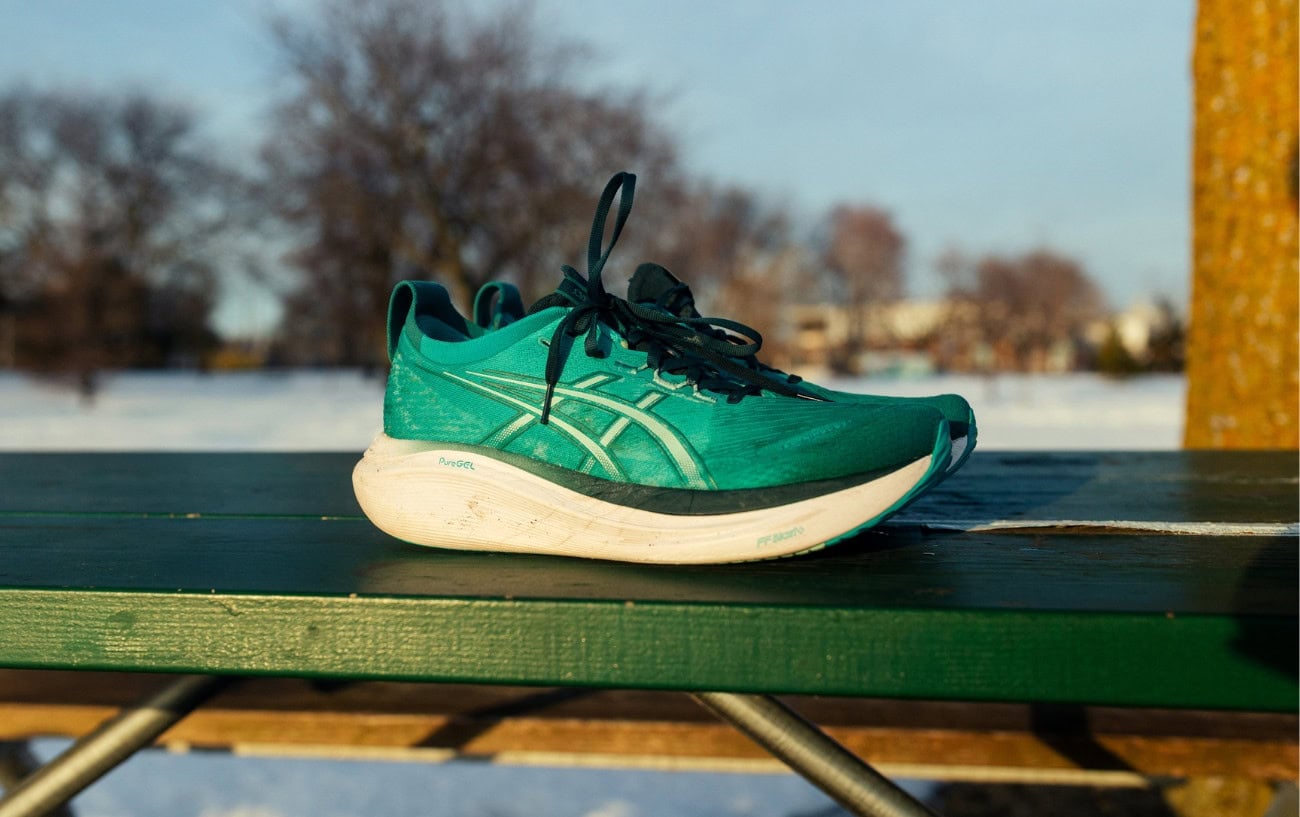
The Key Difference: Neutral vs Stability
This is really the entire decision in a nutshell. The Nimbus lets your foot move naturally through the gait cycle without any corrective elements. The Kayano includes ASICS’ 4D Guidance System — a denser foam section on the medial (inner) side of the midsole that gently resists inward rolling of the foot.
If you don’t know whether you overpronate, the simplest test is to look at the wear pattern on an old pair of running shoes. If the inside edges of the soles are worn down significantly more than the outside, you likely overpronate and the Kayano is the better choice. If the wear is relatively even, go Nimbus.
Cushioning: Very Close, Slight Edge to Nimbus
Both shoes use ASICS’ FF BLAST PLUS ECO midsole foam and deliver excellent cushioning. The Nimbus has a marginally taller stack (41mm vs 40mm at the heel) and, without the stability elements, allows the foam to compress more freely. This gives the Nimbus a slightly softer, more plush sensation underfoot.
The Kayano’s medial support post makes its ride feel slightly firmer and more structured — not hard, just more controlled. Most runners wouldn’t notice a huge difference in cushioning between the two shoes in a blind test.
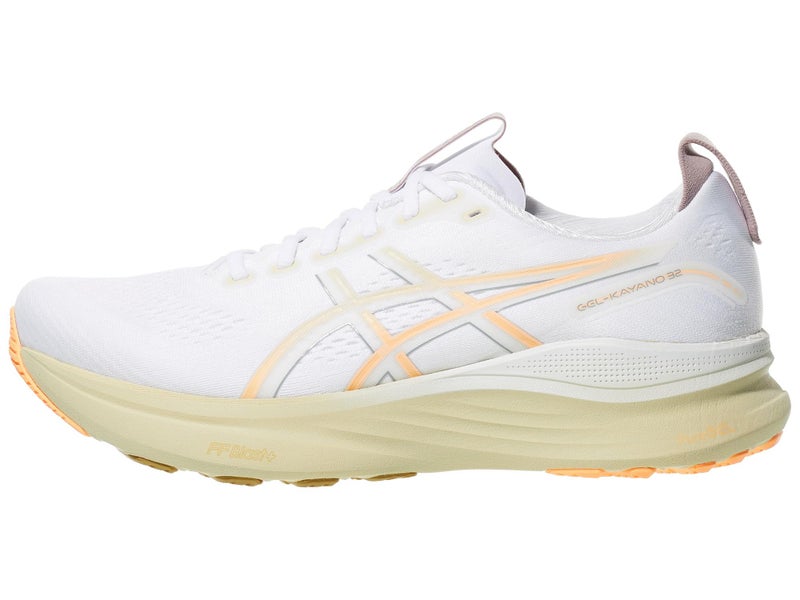
Ride Feel: Different Characters
The Nimbus has a more relaxed, “sink in and float” feel. It’s designed to cradle your foot and let the foam do the work. The Kayano feels more guided — like you’re being steered through your stride on rails. Neither is better or worse; it depends on what your feet need.
Both shoes incorporate PureGEL technology in the heel for impact absorption at landing, and both use ASICS’ AHARPLUS outsole rubber for durability. The technology overlap is extensive.
Weight: Nimbus Is Lighter
The Nimbus 27 at 10.4 oz is slightly lighter than the Kayano 32 at 10.9 oz. The half-ounce difference comes primarily from the Kayano’s additional stability elements. Neither shoe is light by modern standards — both are designed for comfort, not speed.
Price: Tied
Both retail at $160, making this a rare comparison where price isn’t a deciding factor. Your choice should be based purely on whether you need stability support or not.
Durability: Kayano Has a Slight Edge
Both shoes are built to ASICS’s high durability standards, but the Kayano’s slightly firmer midsole and reinforced medial post help it maintain its ride character longer. Expect 400-500 miles from either shoe, with the Kayano holding its stability features well throughout. The Nimbus’s softer FF BLAST PLUS Eco foam is wonderfully comfortable but may lose some of its plushness after 350+ miles. Both use AHAR+ rubber outsoles that resist wear on pavement.
Who Should Choose the Nimbus
The Nimbus is right for neutral runners who want maximum cushioning without stability features. It’s an excellent choice for easy runs, long runs, and recovery days. Runners who have had gait analysis confirming a neutral foot strike will love the Nimbus’s uncorrected, natural ride. It also works well for runners transitioning from other max-cushion neutral shoes like the Brooks Glycerin or New Balance 1080.
Who Should Choose the Kayano
The Kayano is designed for overpronators who need structured stability support. If you notice excessive inward rolling of your ankles when you run, the Kayano’s 4D Guidance System helps control that motion without feeling intrusive. It’s also popular with heavier runners who benefit from the extra structure, and runners who experience knee or hip pain related to pronation. The Kayano has been ASICS’s flagship stability shoe for over 30 years and remains one of the best in its category.
Price Comparison
Both shoes retail at a similar premium price point, with the Kayano sometimes costing $5-10 more. They represent ASICS’s top-tier daily trainers and are priced accordingly. Look for previous season colorways for savings of 20-30% without any compromise in performance.
FAQs
How do I know if I need the Nimbus or Kayano?
Visit a specialty running store for a gait analysis. If you have a neutral gait (no excessive inward rolling), choose the Nimbus. If you overpronate (ankles roll inward), the Kayano provides the stability support you need.
Can I use ASICS Kayano if I am a neutral runner?
While you can, it is not ideal. The Kayano’s stability features may feel unnecessary and slightly restrictive for neutral runners. You will get a better, more natural ride from the Nimbus or another neutral shoe.
Are ASICS Nimbus good for plantar fasciitis?
Yes, the Nimbus is popular among runners with plantar fasciitis due to its generous cushioning and supportive fit. If your plantar fasciitis is related to overpronation, the Kayano may be the better choice as it addresses the root cause.
How long do ASICS Nimbus and Kayano last?
Both shoes typically last 400-500 miles. ASICS uses durable AHAR+ rubber outsoles and high-quality midsole foams. At 25 miles per week, expect 4-5 months of use before needing replacement.
Is ASICS Nimbus or Kayano better for marathon training?
Both work well for marathon training. Choose the Nimbus if you are a neutral runner, and the Kayano if you need stability support. Many runners use these as daily trainers during marathon blocks and switch to a lighter race shoe on race day.
How We Tested These Shoes
We tested both shoes over 200+ miles with runners ranging from neutral to moderate overpronators to evaluate how each shoe serves its target audience. Our testing included gait analysis comparisons using slow-motion video, wear pattern assessment at 100-mile intervals, and subjective comfort ratings across different run types. We specifically tested the Kayano with overpronating runners who had previously used neutral shoes to assess how the stability features affected their running experience and comfort.
The Bottom Line
This comparison is simpler than most: if you overpronate, get the Kayano 32. If you don’t (or you’re unsure), get the Nimbus 27. Both are excellent, well-cushioned shoes that will serve you well for easy and long runs. The Nimbus offers a softer, more neutral ride; the Kayano adds stability guidance that overpronators need to run comfortably and reduce injury risk.
Shop The ASICS Gel Nimbus 27
Shop The ASICS Gel Kayano 32
More Shoe Roundups From Marathon Handbook
- Best Running Shoes for Beginners
- Best Daily Running Shoes
- Best Marathon Running Shoes
- Best Running Shoes Reviewed
More Shoe Comparisons From Marathon Handbook
- Hoka Clifton vs Bondi
- Brooks Glycerin vs Ghost
- Nike Vomero vs Pegasus
- Hoka Bondi vs Brooks Ghost
- ASICS Metaspeed Sky vs Edge
- Brooks Ghost vs Nike Pegasus
- Hoka Clifton vs Brooks Ghost
- New Balance 1080 vs Brooks Glycerin
- Hoka Clifton vs Nike Pegasus
- ASICS Gel Nimbus vs Brooks Glycerin
- Brooks Glycerin vs Hoka Bondi
- New Balance 1080 vs Hoka Clifton
- Brooks Ghost vs ASICS Gel Nimbus
References
RunClub — Free
Join 300,000+ runners in RunClub
Free training plans for every distance, a daily running game, exclusive coaching content, and a real community of runners. Create your free account in 20 seconds — no card.
Already a member? Log in →







Start the conversation