


Let’s be real. Boston isn’t exactly built for speed—unless you’ve got a strong tailwind and legs of steel. Between the relentless ups and downs, unpredictable New England weather, and crowded, narrow roads at the start, this course is more challenge than cruise.
But if you can pull off a PR here, that’s not just impressive—that’s superhero-level stuff. Here’s my hot take: Boston’s not where PRs go to die, but it’s where they go to fight for their lives.
Sure, it’s a net downhill, but the course is deceptively brutal. If you’ve managed to PR here, you didn’t just race—you outsmarted a course that’s broken some of the best. I want your strategy, your mindset, your playlist. Teach me your ways.
I went into Boston this year in peak shape. I hit every long run, nailed my workouts, and was more than ready. And yet… Boston still crushed me. Not because I wasn’t fit enough, but because Boston is just stronger. It doesn’t care how prepared you are—it will test you in ways no other race can.
Boston may be one of the hardest marathons out there, but it’s also the most unforgettable. It’s not just a race—it’s a rite of passage. The history, the roar of the crowds, the feeling of running through streets lined with tradition, it all hits differently there.
No course carries the same weight. No finish line feels quite as earned. Boston is heart, grit, and celebration rolled into 26.2 legendary miles. And that’s exactly why pulling off a PR here isn’t just rare—it’s extraordinary. Because Boston doesn’t hand out fast times. It makes you battle for every single second.
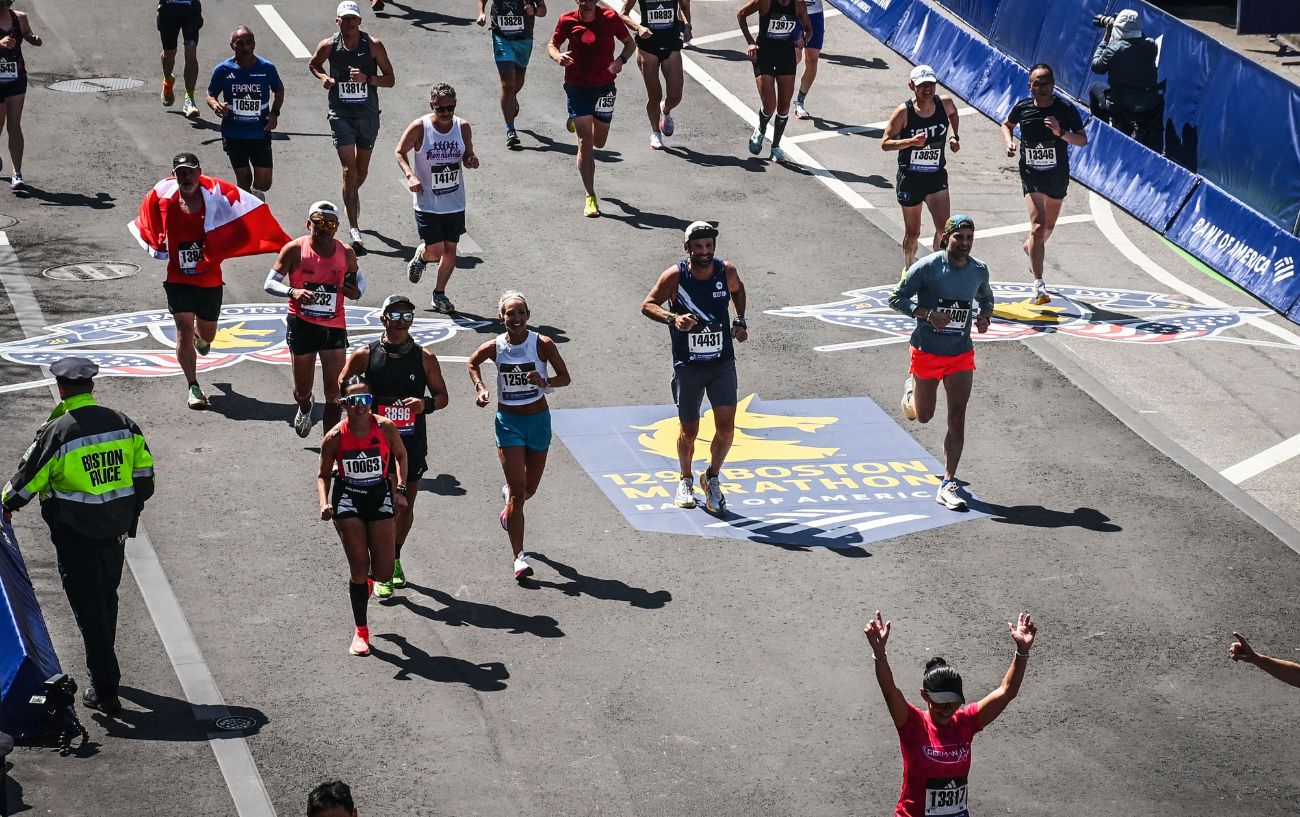
The Course Doesn’t Care About Your Training Cycle
We’ve heard it from the greats, even Amby Burfoot warned me the day before my race—Boston’s early downhills are a trap.
They lure you in with that easy, effortless feeling, and if you somehow manage to navigate around the crowds in those early miles without burning up all of your energy weaving and surging, that downhill will still come for your quads.
It’s like the course is rigged to wear you down, no matter how smart you think you’re running.
You can train your race pace all you want, but with so little truly flat terrain, it’s nearly impossible to lock into a steady rhythm. Boston’s course profile is the ultimate confidence trap: it seduces you early, makes you feel strong, and then punishes you later.
And honestly? I should’ve known better. I’m a trail runner—I pride myself on having downhill legs of steel. I’ve flown down technical descents, quads untouched. I thought Boston’s early drops wouldn’t faze me. But they did. Hard. I wasn’t as invincible as I thought. I knew what was coming, and I still fell for it.
Pro tip to beat the Boston course? Prepare for it—more than you’ve ever prepared for any race. Study the downhills, calculate the grades and distances, and train specifically for the terrain.
That means doing long runs on rolling routes to simulate the constant ups and downs. Not only will this strengthen your legs, but it’ll sharpen your pacing strategy, too.
Expect to run the uphills a little bit slower than your calculated marathon pace, the downhills and flats a bit faster (but just a bit!). You’ll be adjusting constantly, so knowing your body, your effort, and your rhythm is everything.
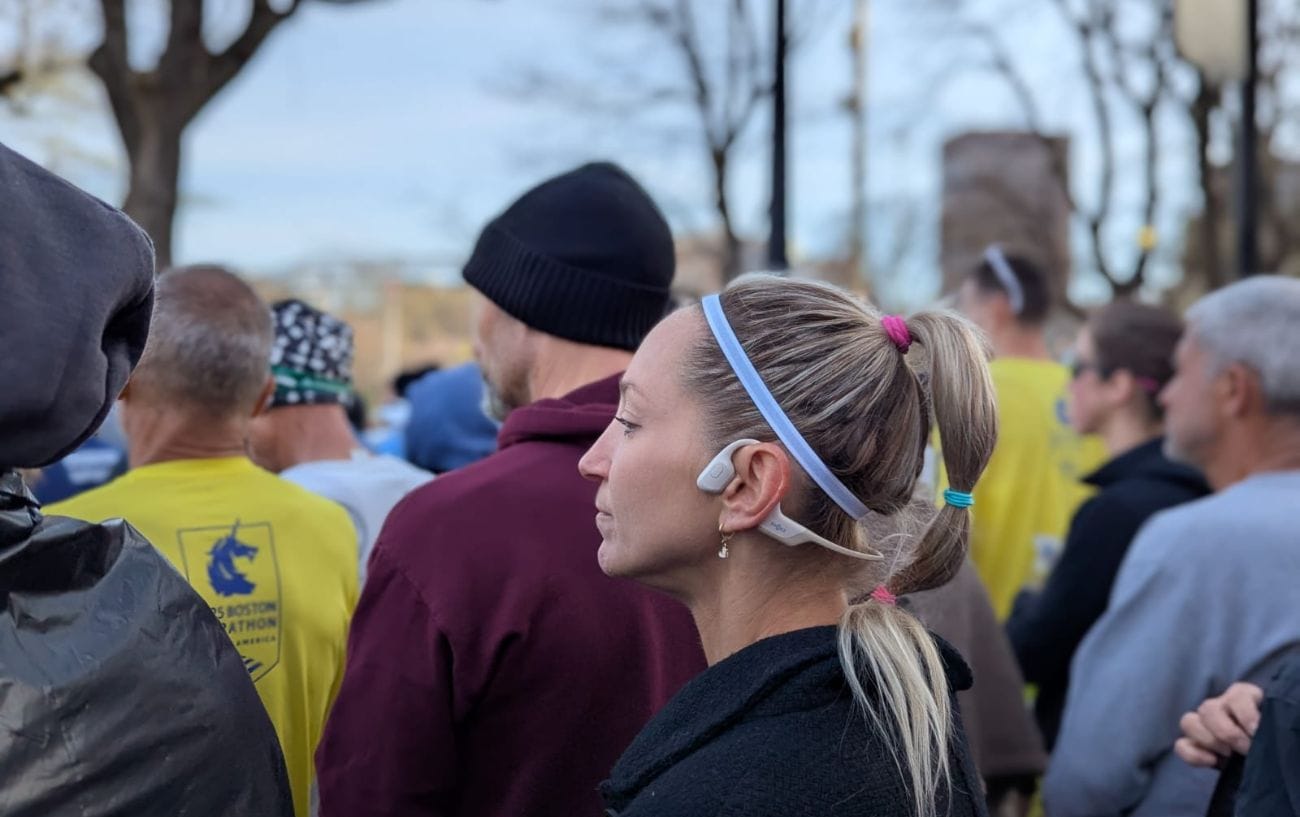
The Marathon Before the Marathon
The logistics of Boston are no joke either. Between the early wake-ups, train rides, and what feels like hours of standing around, you can easily burn through a surprising amount of energy before the race even starts.
You’ll do more walking and waiting than you’d expect—but the energy? It’s electric. There’s nothing quite like being surrounded by thousands of excited runners, all bundled up and buzzing with nerves just like you are.
Still, here’s my take: Boston is the only marathon where mile one feels like mile five, simply because of how much you’ve already gone through just to get to that start line.
In my case, our bus missed the exit to Hopkinton, taking an unexpected detour. We had to run to our corral to get to the start line before the gun went off. I took it as a warm-up. However, that adrenaline hit hard.
I know some runners opt to get dropped off closer to the start and skip the shuttle experience altogether, but honestly? I think they miss out on something special. That pre-race anticipation is part of what makes Boston … Boston.
Soak it in and feel the hype from the crowds. Just be smart about it—bring your own hydration and snacks, and definitely spend the entire day before off your feet. You’ll need every ounce of energy saved for race day.
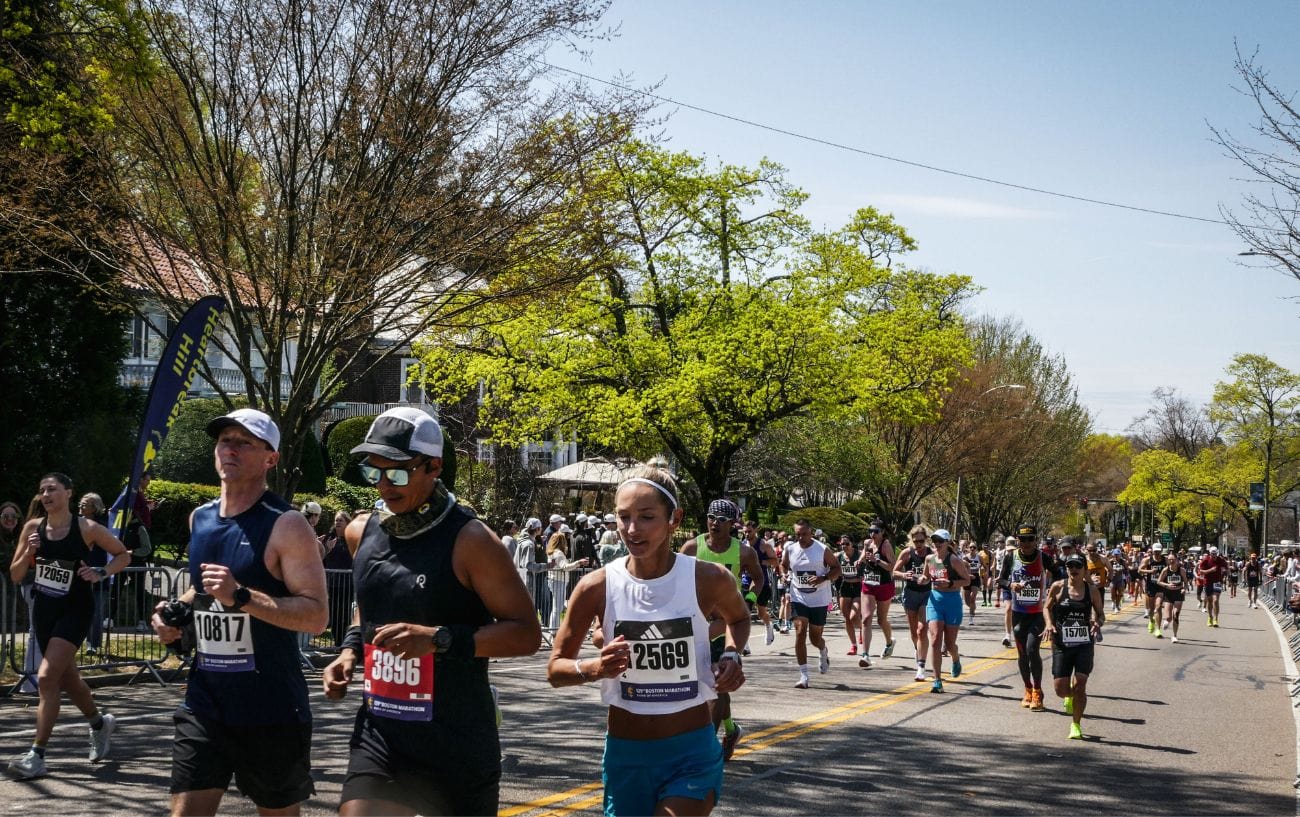
Boston Weather Is The Ultimate Plot Twist
Wind, heat, cold—Boston’s race-day weather is pure roulette, and whatever the forecast says? Treat it as a loose suggestion at best.
I was a little overdressed this year, thinking it would stay cool, but with the late start, the sun came out fast and turned up the heat. I quickly stripped off layers and found myself stopping at every single aid station just to stay hydrated.
Boston’s weather isn’t just a variable, but it’s the final twist in the game. You never really know what you’re going to get. One year could bring blazing sun and heatstroke conditions (like when I ran in 2003); the next, it’s freezing rain and headwinds à la Des Linden’s legendary win in 2018.
And if you’re lucky enough to land on that rare perfect race day with cool temps and a tailwind from Hopkinton to Boston? You just won the lottery.
The best advice? Prepare for absolutely anything. If it’s chilly, wear plenty of layers you don’t mind losing as you go, and if it’s hot, don’t underestimate your hydration. Because in Boston, the weather doesn’t care how ready you are—it’s just doing its thing.
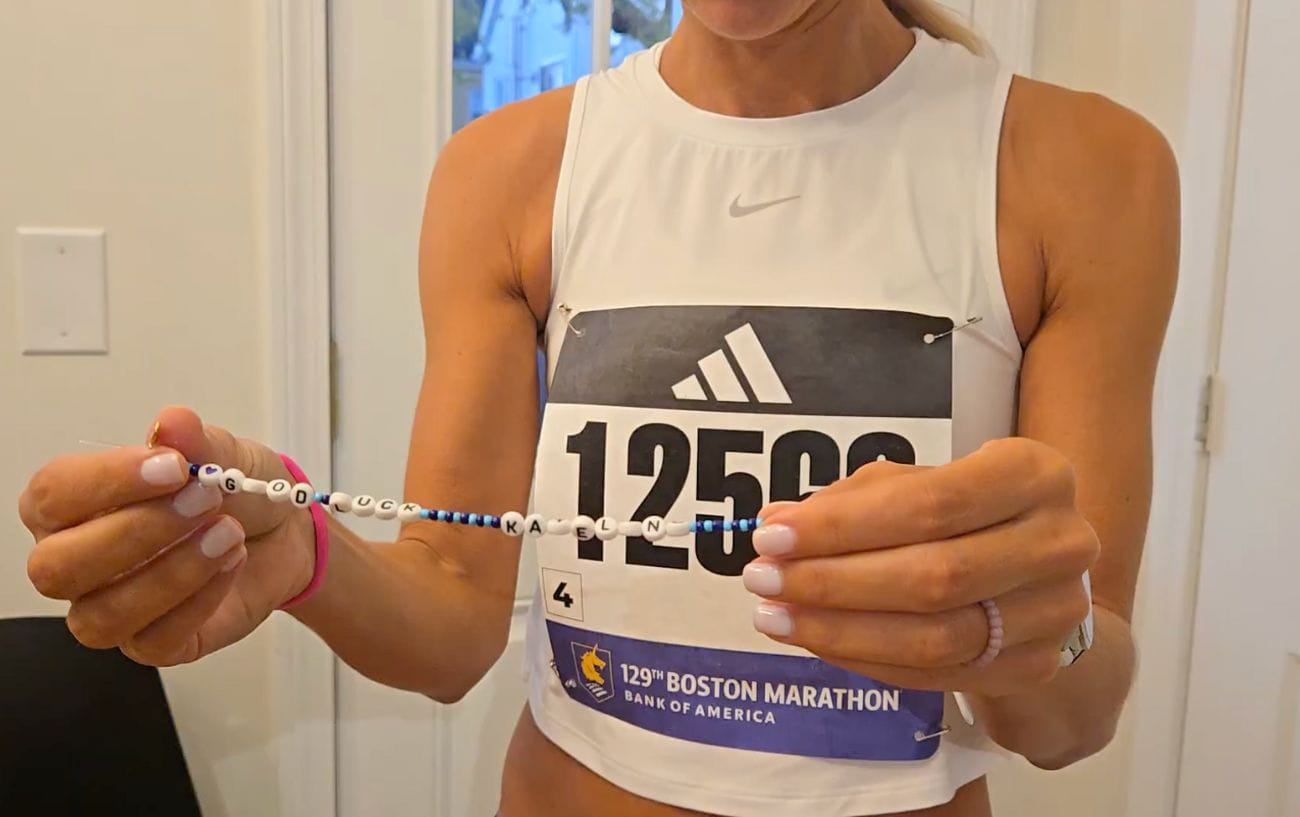
The Emotional Terrain is Even Harder
Everyone brings something personal to Boston. Maybe you’re like me, with every mile steeped in childhood memories, family ties, and the streets I traveled for the first 20 years of my life.
Maybe it’s been a years-long journey chasing a BQ and finally earning that bib. Or maybe you’re running for a charity that’s close to your heart, carrying someone’s name on your back the entire way. Whatever the reason, Boston is never just about the time on the clock. It always means more.
In my case, I ran this race in memory of my mother, just as I did more than 20 years ago in 2003 when she passed. For me, returning to Newton after all this time was deeply emotional—familiar streets filled with memories, yet touched by the weight of everything that’s changed.
That kind of purpose doesn’t stay silent; it stays with you every step of the way. And that means everything.
You Can Do Everything Right—And Still Miss It
You can show up to Boston in tip top shape, ready to run your best race, and still miss your goal. Peak-level fitness doesn’t guarantee a PR here. The crowds, the terrain, the logistics, the emotion of the day all adds up, and it can throw even the most prepared runners off their game.
A Boston PR isn’t just about being fit; it’s about being able to execute perfectly under pressure, on a course that refuses to make anything easy.
If You Do PR in Boston, You’re My Hero
I am genuinely in awe if you’ve managed to run a personal best in Boston. That means you navigated the mental, emotional, physical, and logistical chaos and still found a way to run your absolute fastest.
You dodged every trap the course set, nailed your pacing, stayed calm through the crowds, and didn’t let the weather or emotion throw you off.
That’s not just impressive—that’s elite, and looking back on the past 20 years, less than 25% of Boston winners hold their PRs there. A Boston PR deserves its own trophy shelf.
No PR? No Problem. Boston Still Wins.
Sometimes, the real magic of Boston has nothing to do with the time on the clock. It’s all in the meaning. Many of us don’t run Boston just for a fast split. We run it for the story, the emotion, the journey.
This race has a way of showing you who you really are as a runner, especially when things don’t go according to plan.
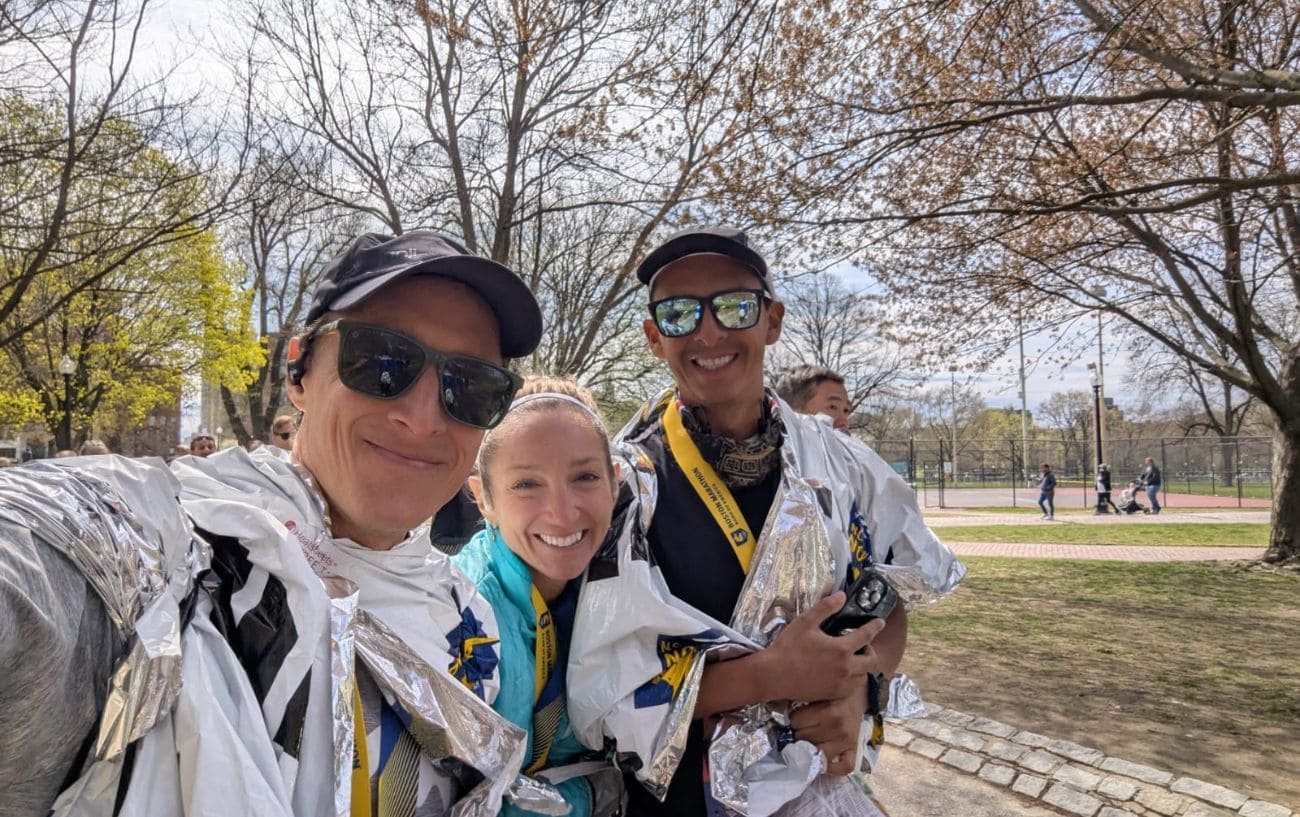
For me, this year wasn’t the race I had hoped for. I didn’t hit my A goal, or my B goal, or even my C goal. But it ended up being the race I needed. It reminded me that showing up, being present, and finishing strong—even without a PR—can be just as powerful as any podium-worthy performance.
So… Can You Achieve a PR in Boston?
Technically, yes. It’s possible. But realistically? It’s rare. Boston throws everything at you and asks you to rise above it all.
If you’re one of those superhumans who somehow managed to PR on the streets of Boston, frame that bib. Print out the splits. Tell everyone who’ll listen. Because you didn’t just run fast—you ran flawlessly on one of the toughest stages in the sport. (And again, please share your secrets!)
And if you don’t? You still earned your Boston badge. You earned your place in the legacy, and no finish time can measure that.
But here’s the thing—you wouldn’t want it any other way because Boston isn’t just a race. It’s the race. It’s the most historic, prestigious, emotionally charged marathon in the world, and it holds a place in my heart that no other event ever could.
From the electric energy on Boylston to the tears you fight back crossing the finish line, Boston is pure magic. It’s tradition, grit, and community all wrapped into one unforgettable experience. No city rallies for its runners like Boston. No course carries this much meaning.
So yes, it’s hard, but that’s what makes it beautiful. If you’re lucky enough to run it, don’t let your watch distract you from the wonder. Take it all in. High-five the kids. Smile at the strangers screaming your name you printed on your shirt.
Boston is more than a marathon. It’s a celebration of everything running stands for. There is simply no better race in the world.
And if you’re listening, Boston, I’ll be back. Not for redemption, but because you are part of me. And if I ever do PR there? That’s not just a win. That’s a transformation.
Interested in hearing more about my Boston journey? Check out this next video:

RunClub — Free
Join 300,000+ runners in RunClub
Free training plans for every distance, a daily running game, exclusive coaching content, and a real community of runners. Create your free account in 20 seconds — no card.
Already a member? Log in →







Join the conversation
I pr’d at Boston this year but I live and train in Boulder Colorado so the extra oxygen makes a big difference. This was my first Boston and I did specific downhill training that helped me , even though my quads still got super tight and I had to slow down at the end. For next year, I plan to do even more hill training! Thanks for the great tips!
I ran Boston 2023, normal training, my third marathon, rainy day so there was no way to get warm, I didn't find it a big difficulty to run Boston.
Of my seven marathons, this is the only one where I've had to use the bathroom. Two minutes lost, however, at the end at mile 25 I had to enter the Medical care where I spent over 8 minutes trying to get over some cramps. However, I think it's a great marathon, and I'll definitely do it again. I ran my second-best time of 3 hours, 44 minutes, 41 seconds. I was 66 years old at the time.
I always read your posts. Thank you so much for sharing all your knowledge and that of your collaborators. Best regards.
Oh my gosh, YES — Boston is absolutely no joke! You said it perfectly — no amount of prep, YouTube deep dives, or advice from seasoned vets can truly prepare you for that course until you live it yourself.
Major kudos to you for bouncing back and crushing another marathon just 20 days later with a massive PR! That’s the ultimate power move. Proof that Boston didn’t take your fitness, it just demanded everything else. I’ll be back soon as well, hopefully smarter, tougher, and definitely humbler after getting schooled by the course. Here's to applying those hard-earned lessons and inching closer to that sub-3 goal. You’ve got this!! Let’s gooo!
I've run the Boston Marathon 5 times and my PB was done in 2006 at Boston. I did a lot of hill training and added some weight training in the mix. I don't know if it was the training or maybe it was just that all the stars were aligned for me on that particular day. It was one of my best marathons ever, I felt strong all the way through. My family commented after the marathon that, when they saw me at approximately mile 22, I looked really strong. My strategy was simple, stick to the outside at the start to avoid having to zig-zag too much, avoid the temptation to run to fast on the downhills and, attack the Newton hills relying on my training to get me through. It worked for me on that particular day but, I've had other marathons that weren't quite as successful despite a similar training regiment. We all know that there are many factors that can affect the human body, I guess on that particular day all systems were green.
Thank you for sharing your experience, Michael ! Huge congratulations on your Boston PR, what an unforgettable achievement, especially on such a demanding course. It’s so true what you said: every race day brings something different. You can follow the same training plan, but how your body responds on the day—mentally, physically, even emotionally—can vary so much. Sounds like 2006 was one of those rare, magical days where everything just clicked, and it's awesome that your hard work paid off so strongly. Thanks again for adding your insight and experience!
I PB'd at Boston (my 1st), but due to a horrific race week/day I didn't do nearly as well as I had trained for. I also was unable to push as hard as I had planned to, and the next day after Boston my legs left like I had run a typical long run workout. So after consulting my coach, training partner and spouse, I signed up for my local marathon 20days after Boston. And as suspected, I had A LOT more in the tank, PB'ing again by 6:40min. Boston is no joke. No amount of research, real world advice, video watching prepares you for the course and logistics. You just have to run it and learn the hardway. I will run Boston again next year, applying everything I learned from my 1st (and there is A LOT) so I can hopefully execute how I should and get me 1 more step closer to my sub 3hr as a 50+yr old.