


I never paid much attention to core training. It seemed far-fetched, both literally and figuratively.
We all know that we run with our legs, not our stomach muscles. Strengthen the legs— that was always my approach. The core is too far away to make much difference.
Now, however, I’m reconsidering. An exciting new study suggests that a weak core, and not weak legs, is the primary cause for a diminished running economy (RE).
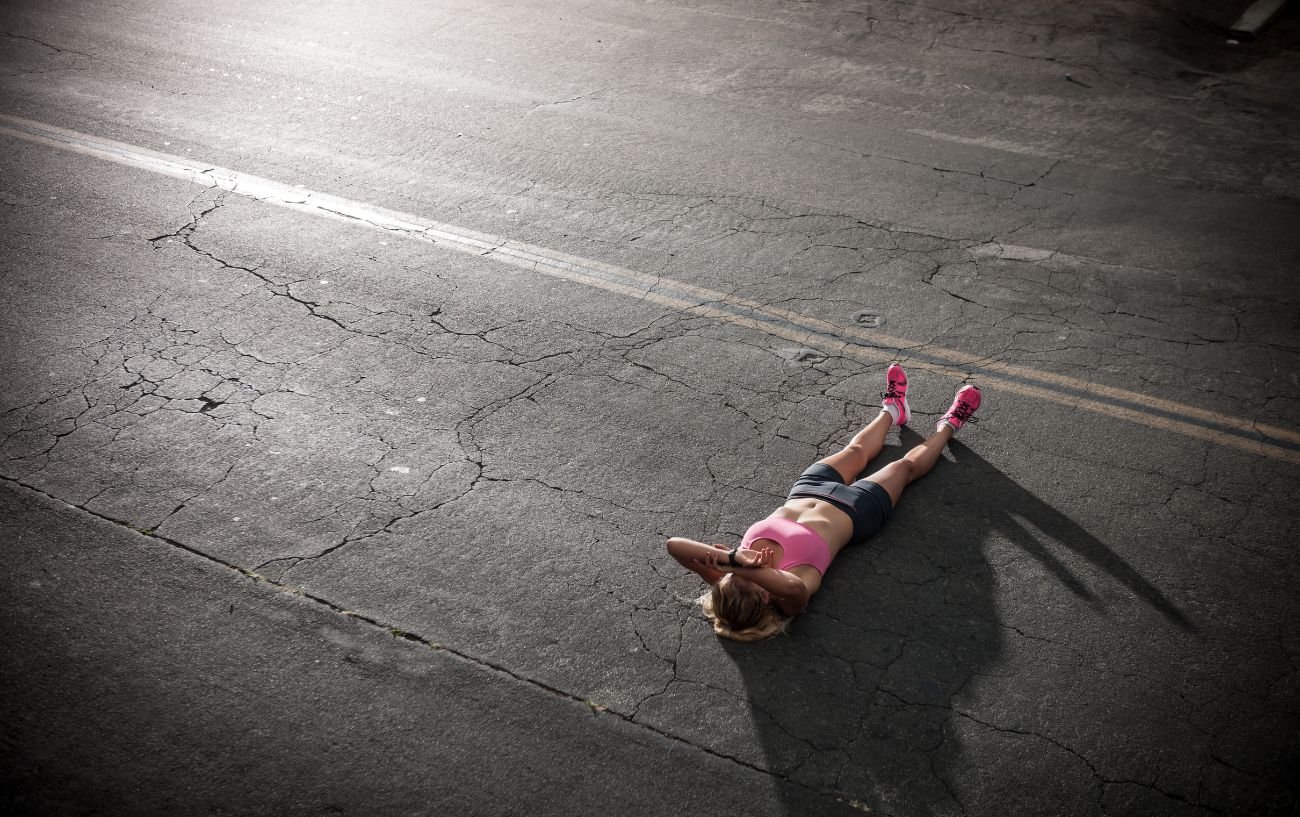
The Science of Stability: Moving Beyond Leg Strength
A team of Australia-based researchers recently measured changes in leg and core biomechanics in a small group of runners who were clearly fatigued. Most experts would have expected to find big changes in the foot, ankle, calf muscles, knees, and quads.
Surprise! That didn’t happen. There was almost no change in lower-leg biomechanics.
Instead, the big changes occurred above the hips. These changes, loosely described as “wobbling,” reduced the runners’ economy. Running economy is considered a key factor in marathon-running success.
Runners and running-form experts have long focused their attention on the lower body. After all, the legs are the “engine” that moves you forward.
But the upper body also includes oxygen-burning muscles. Because the torso is larger than the legs, it consumes excessive energy if not operating efficiently.
Another difference between the legs and the torso: Running by itself builds leg strength, especially if you do a variety of workouts like hills and speed.
But running alone doesn’t strengthen the torso. Torso strengthening requires different, more specialized exercises. Otherwise, the torso is likely to “leak” energy as you run.
It’s Time To Consider How Much You Wobble
Here’s a brief summary of the new paper (free full text at link), including its approach and its conclusions.1McConnochie, G. E., Fox, A., Bellenger, C., & Thewlis, D. (2026). Metabolic and biomechanical responses to running-related fatigue assessed with optimal control simulations tracking wearable sensor signals. Royal Society Open Science, 13(1). https://doi.org/10.1098/rsos.250668
The experiment involved six veteran runners, including three females, who were running at least 30 miles a week. The researchers acknowledge the small number of subjects, noting that they had difficulty recruiting runners willing to complete a demanding, highly fatiguing series of runs. Also, they tracked a large set of biomechanical variables, which was a challenge in and of itself.
In the lab, each runner followed an identical and very precise protocol. It included, in short order: 1) an easy warmup; 2) a steady-state running economy test; 3) an all-out 2K effort; 4) an additional 9+ minutes of hard intervals intended to increase fatigue; 5) a second 2K time trial; and 6) a second running economy test.
The researchers were particularly interested in results from the second 2K test and the second economy test. They assumed that both would suffer vs the first go-round, but wanted to verify this with objective results.
The protocol worked. The runners got slower, and their running economy dropped.
Next, the study team analyzed which changes in body biomechanics most contributed to the decline in performance.

Yes, Your Biomechanics Matter. But Not In The Way You Imagined
Here’s what they found: All runners were clearly fatigued and slower on the second 2K time trial. Individual differences ranged from 3 to 50 seconds. All runners also scored lower on their second RE test vs the first.
These results were hardly a surprise. In fact, everyone expected them. The leg muscles can only go so far and so fast before they begin to weaken, right? That’s why it’s so hard to maintain pace for 26.2 miles.
Only that isn’t what the Australian researchers observed. Instead, they found that their subjects suffered little to no breakdown in leg biomechanics.
Indeed: “Lower-limb kinematics remained relatively stable under fatigue.”
What did change then? Answer: movements above the waist, in the torso. “The model revealed significant changes in the torso, pelvis, and vertical oscillation.”
Combined, these changes suggested that “upper-body biomechanics may play a more prominent role in fatigue response.”
In particular, researchers noted four areas of torso movement that became more wasteful as the runners grew more fatigued: 1) excessive torso tilt, or forward lean; 2) excessive rotation of the pelvis and torso; 3) contralateral pelvic drop (hip drop) with each stride; and 4) excessive vertical oscillation (bounce).
These changes in torso biomechanics, and not differences in the lower legs, correlated with slower, less economical running. Conclusion: “Significant changes were observed in the torso, pelvis, and vertical oscillation… Localized fatigue in back and core muscles impairs running economy and performance.”
A Research Expert Answers Key Questions
Here, the first author, Grace McConnochie, PhD, provides additional information on core training and running economy. A long-time runner, McConnochie has personal bests of 33:17.86 for 10,000 meters and 1:16:09 for the half-marathon. Last fall, she represented New Zealand at the World Mountain & Trail Running Championships.
Why did you and your colleagues undertake this study? What did you hope to learn?
GM: I’ve competed in distance running for many years, so when I started my PhD, I wanted to study something I was passionate about. Fatigue is a key determinant of performance, but it’s also a complex phenomenon that seemed worth investigating in depth. We designed this study to examine fatigue with a detailed, individualised approach, looking at how fatigue affects whole-body running mechanics and running economy together.
Please describe the principal findings as simply and clearly as possible. What was surprising about these findings?
GM: We found that the more fatigued runners had a greater decline in their running economy, but not in the way people have expected. Running is considered a leg-dominant activity, but we observed more meaningful changes in the lumbar spine and pelvic motion. This suggests that the way runners control their upper body is a critical factor in the fatigue-performance relationship.
Why is the torso important to runners?
The torso may appear largely passive during running, but it is very much an active, working system. The trunk muscles consume oxygen and play a major role in stabilising the body and transmitting forces between body segments. There is also growing evidence that torso and pelvic motion are critical in lower-limb motion.
A recent publication (link) highlighted how trunk motion is a primary contributor to lower leg accelerations when running. In addition, we have done unpublished work showing that weakened calf muscles can lead to compensatory changes in torso position and movement. These findings reinforce our view that running should be viewed as a connected, whole-body movement, and that the breakdown in upper to lower body strength and coordination can contribute to decreased running economy and/or performance.2Bezerra, M. Y. G., Santos, T. R. T. D., Orselli, M. I. V., Teixeira, J. P. M. P., Richards, J., Trede, R. G., Fonseca, S. T., & Souza, T. R. (2025). Lumbopelvic moments are key contributors to lower limb forward acceleration and deceleration in male runners. Journal of Biomechanics, 194, 113057. https://doi.org/10.1016/j.jbiomech.2025.113057
How might core training of the torso improve an endurance runner’s fatigue-resistance?
Maintaining effective core function under fatigue becomes critical, especially late in a marathon. A well-conditioned core may help runners maintain more stable, economical movement patterns by preserving efficient force transfer between the upper body, pelvis, and legs. If the core begins to fatigue, runners may lose this coordination, leading to compensatory movements, increased muscular effort, and a higher energetic cost for the same running speed.
Can you suggest specific core-torso exercises that might help runners improve their durability in a marathon?
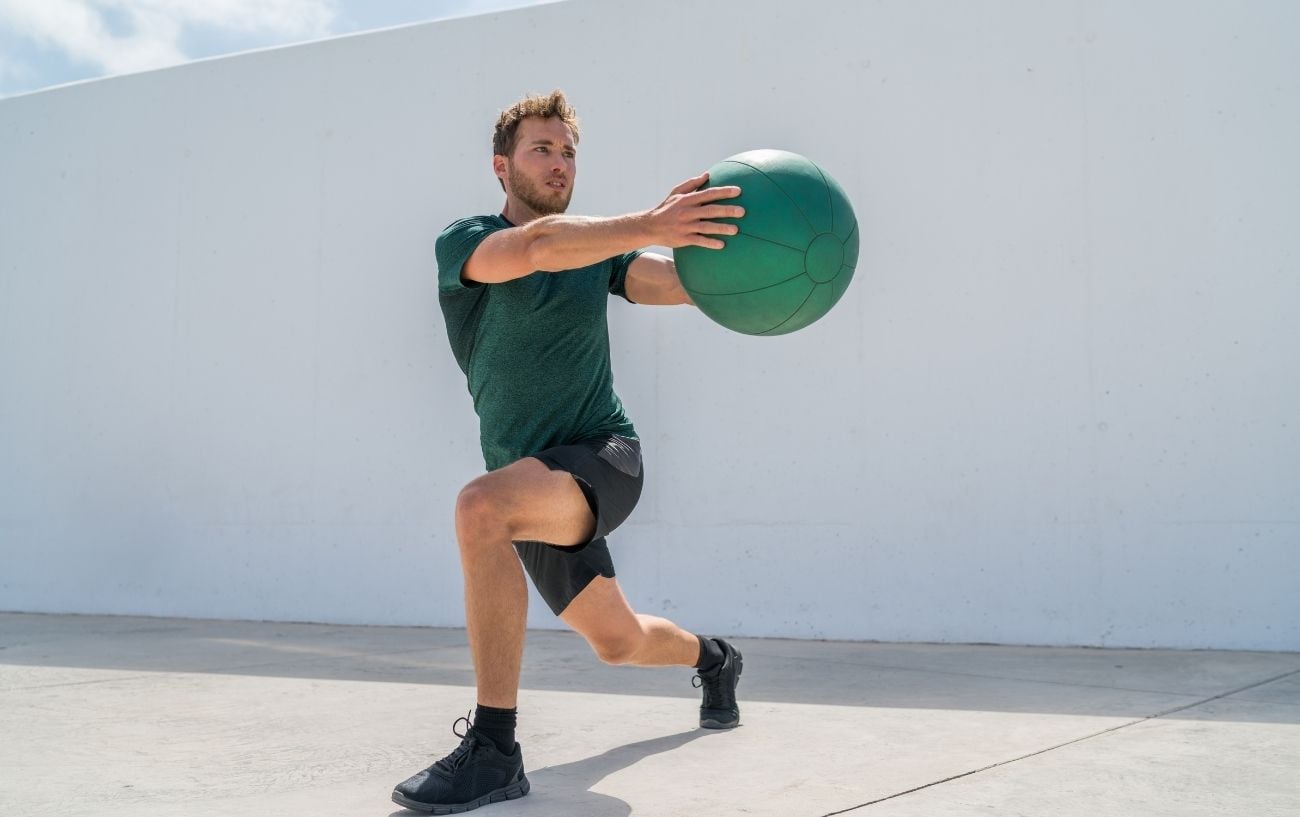
While neither my colleagues nor I are clinicians, I can suggest some exercises based on my own experiences as an athlete, and informed by this research. These would include: 1) Standing medicine-ball rotations combined with a knee lift; 2) Bird-dog variations; and 3) Pallof presses, especially with a split or single-leg stance.
It’s also important to learn how to engage the deep core muscles to provide stability during movement. Working with a physiotherapist can be helpful. Also, I have found that Jay Dicharry’s Anatomy for Runners and Running Rewired are excellent resources with great information and exercises.
Anything else you’d like to add?
This study was intentionally detailed and demanding, so we had few subjects. That means the results should be interpreted with caution. They may not apply to all runners, because fatigue is highly individual and runners differ in individual factors such as training history, strength background, and how they distribute and tolerate fatigue. Runners need to understand how they personally respond to fatigue in terms of movement patterns that change. Then they can choose targeted approaches to improving durability and performance late in a race.
Don’t Let a Weak Torso Ruin Your Marathon
The new paper has a clear message. Runners should strength-train the core just as they do their legs. In fact, it’s possible that core training is the more important of the two.
Thus: “Training should emphasize improving physiological factors that affect energy efficiency, while ensuring adequate core and upper-body strength on the basis of more notable changes in torso and pelvis motion.”
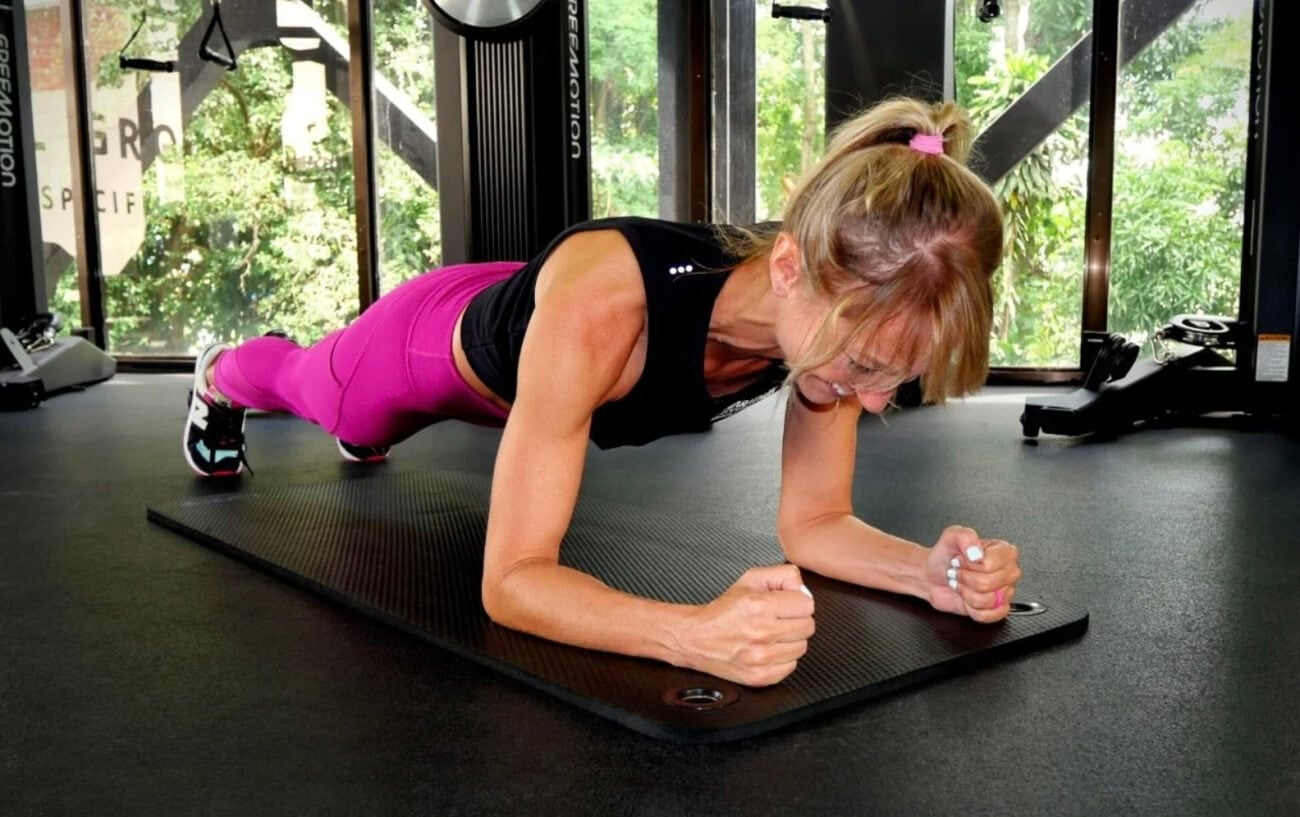
In addition to the exercises McConnochie mentions above, consider the “plank.” It is probably the favorite core exercise of many runners.
The plank becomes ever-so-much more effective if you evolve it from a static plank to a dynamic plank. This involves moving your arms and/or legs while maintaining a stiff core. Any internet search will reveal many variations you can try.
Remember: You don’t run with your legs only. And the stronger your core muscles, the more efficiently your legs will perform in the long haul.
References
RunClub — Free
Join 300,000+ runners in RunClub
Free training plans for every distance, a daily running game, exclusive coaching content, and a real community of runners. Create your free account in 20 seconds — no card.
Already a member? Log in →







Join the conversation
This is so helpful updates, we expect more and more WR to be broken 🥱,thank you so much,🙏 long live Marathon Handbook 💪🇺🇬✌
Several years ago I told a physical therapist I was going to that when a runner runs tired, biomechanics go to hell, and that's how injuries happen. When you get tired, and find your form going sideways, stop. You're done at least for a few hours. Increase distance but with good form. Usually tired running results in too much lean forward at the waist, strides longer than they should be, lower cadence, and bad shoulder/head posture. The legs are usually okay. It's the butt, obliques, hip flexors, abs and lower back that need work.