


Probiotics are often sold to athletes through a chain of plausible promises, such as improved gut health, reduced inflammation, faster recovery, and, ultimately, better performance. Each link sounds reasonable. But do they actually work?
A new study enrolled 30 male distance runners who received either a five-strain probiotic providing 2 billion colony-forming units per day or a placebo. Training continued, and the researchers provided standardized meal boxes to reduce dietary noise.1Jagłowska, K., Folwarski, M., Chroboczek, M., Potrykus, M., Kaczmarczyk, M., Skonieczna-Żydecka, K., & Kaczor, J. J. (2026). Multistrain Probiotic Supplementation Combined with a Standardized Diet Did Not Significantly Affect Exercise Performance or Inflammatory Responses in Male Endurance Runners: A Randomized Controlled Trial. Nutrients, 18(15), 2484. https://doi.org/10.3390/nu18152484
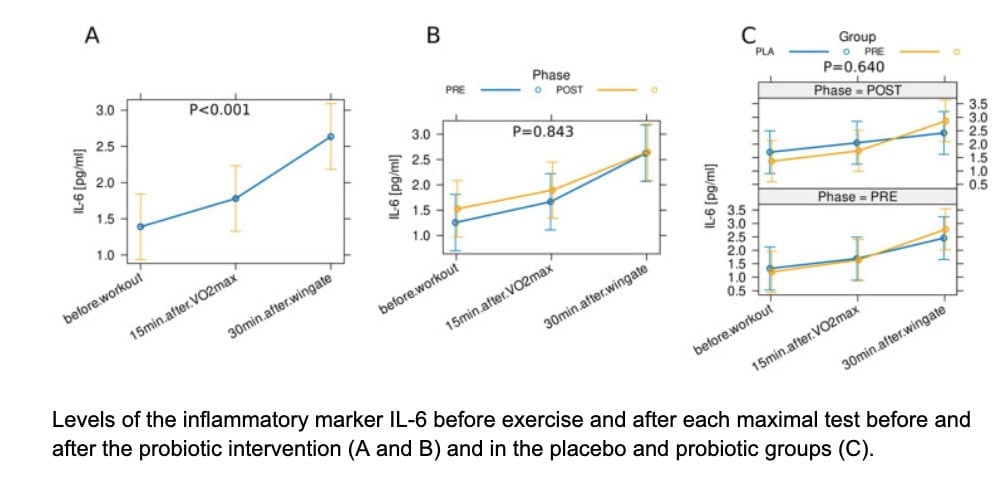
- The probiotic did not improve time to exhaustion, Wingate performance (a test of maximal power output on a stationary bike), ventilation, respiratory exchange ratio (a measure of fuel utilization during exercise), lactate, creatine kinase (a marker of muscle breakdown), interleukin-6 (a marker of inflammation), or tumor necrosis factor-alpha (another marker of inflammation) compared with placebo.
- However, the probiotic did produce a small but significant 3.5 ml/kg/min difference in the runner’s peak oxygen uptake.
What this means for runners
Do not treat “probiotic” as a single performance-enhancing ingredient. Effects, when they exist, are likely to depend on the strain, dose, outcome, and athlete. This five-strain product did not make trained runners faster or blunt their exercise-induced inflammatory, lactate, or muscle-damage responses over four weeks.
A probiotic may still be useful for a specific gastrointestinal or clinical reason, but that is a different claim from improved endurance. If performance is the goal, the more reliable priorities remain adequate carbohydrates, sufficient total energy, sleep, and a solid training plan (boring… I know).
References
RunClub — Free
Join 300,000+ runners in RunClub
Free training plans for every distance, a daily running game, exclusive coaching content, and a real community of runners. Create your free account in 20 seconds — no card.
Already a member? Log in →












Start the conversation