



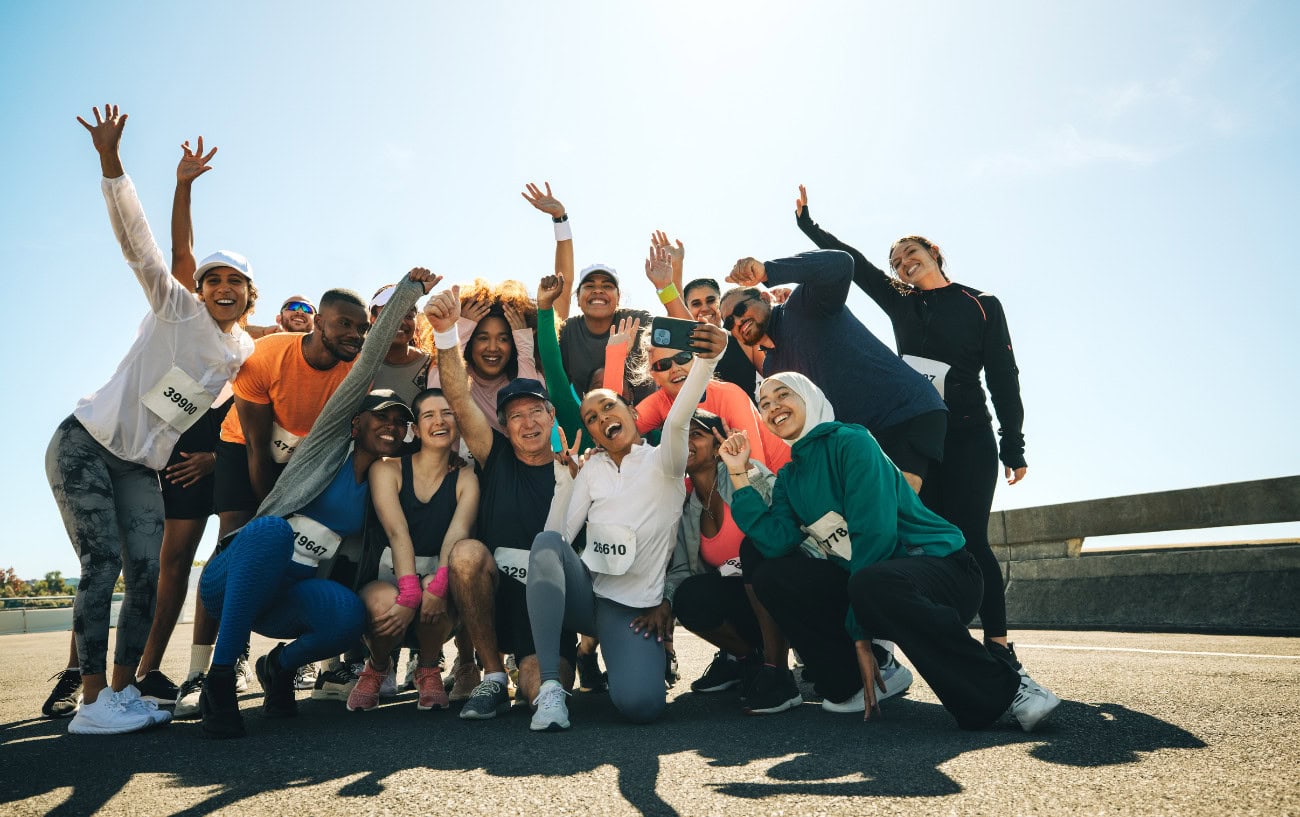
On paper, running looks like a solo sport: one body, one pair of lungs, one set of shoes doing the work. But we all need community sometimes, so what should you look for in one? Ask most long-time runners what keeps them going, and you’ll hear the same thing again and again: the people.
At some point, the miles stop being just a personal project and start becoming something bigger—a standing appointment with a small tribe and a sense of belonging that somehow makes the hard stuff feel lighter.
This is not just sentimentality. Training with others changes what your brain expects from effort, how your nervous system handles stress, and affects how likely you are to keep showing up when life gets messy.
Community, in other words, is not an optional extra but can be the best part. Here’s what to look for and why…

Accountability Without Shame
One of the quiet superpowers of a running community is that it makes consistency feel less like willpower and more like a social habit. When you know people are expecting you on Tuesday night or Saturday morning, “I’ll go tomorrow” becomes a harder story to sell yourself.
The best groups handle this with accountability without shame. They notice when you’ve been missing and check in, but the tone is curiosity and care, not judgment. A coach might say, “Haven’t seen you in a couple of weeks—everything okay?” A training partner might send a simple, “We missed you at the track.” The message is simple: you matter here.
That kind of gentle accountability is powerful because it ties your training to quality relationships, not just to a spreadsheet. When motivation dips—as it does for everyone—sometimes you run less for what you might get out of the workout, and more for the people. Borrowed motivation still counts.
Hard Workouts Hurt Less in a Pack
Anyone who has ever dragged themselves to a group run “just to show up” and ended up finishing a solid workout has experienced this: effort feels different when you are not the only one doing it.
Part of that is simple distraction—conversation pulls your attention away from every muscle that wants to quit. But something deeper is happening, too.
We psychologists talk about social facilitation: performance often improves when you are around others, even if no one is explicitly pushing you. A steady group around you becomes a rolling reference point—proof that the pace is survivable, that the weather is tolerable, that the hill is climbable.
Where your solo brain might say, “This is too hard,” your social brain quietly replies, “Apparently, it isn’t, because we’re all still here.”
Experienced coaches see this too. Ask them why attendance stays high in a club that meets through winter, and they rarely start by listing training benefits. They talk about the energy of a shared warm-up, the small jokes during easy miles, the silent agreement that “we’re doing this together” when the workout turns sharp. The miles are the same; the context is entirely different.

Belonging as a Mental Health Tool
Underneath the workouts and race photos, running groups are really about belonging—a sense that there is a place where your presence is expected and your absence is noticed, and belonging is unconditional. That matters more than most training plans acknowledge.
Loneliness and disconnection are strongly linked with higher levels of depression, anxiety, and perceived stress. A standing group run is a built-in antidote to that isolation. You get regular, low-pressure contact with people who know your name, remember your races, and notice when you are off your game. You do not have to perform or impress; you just have to show up and move your feet.
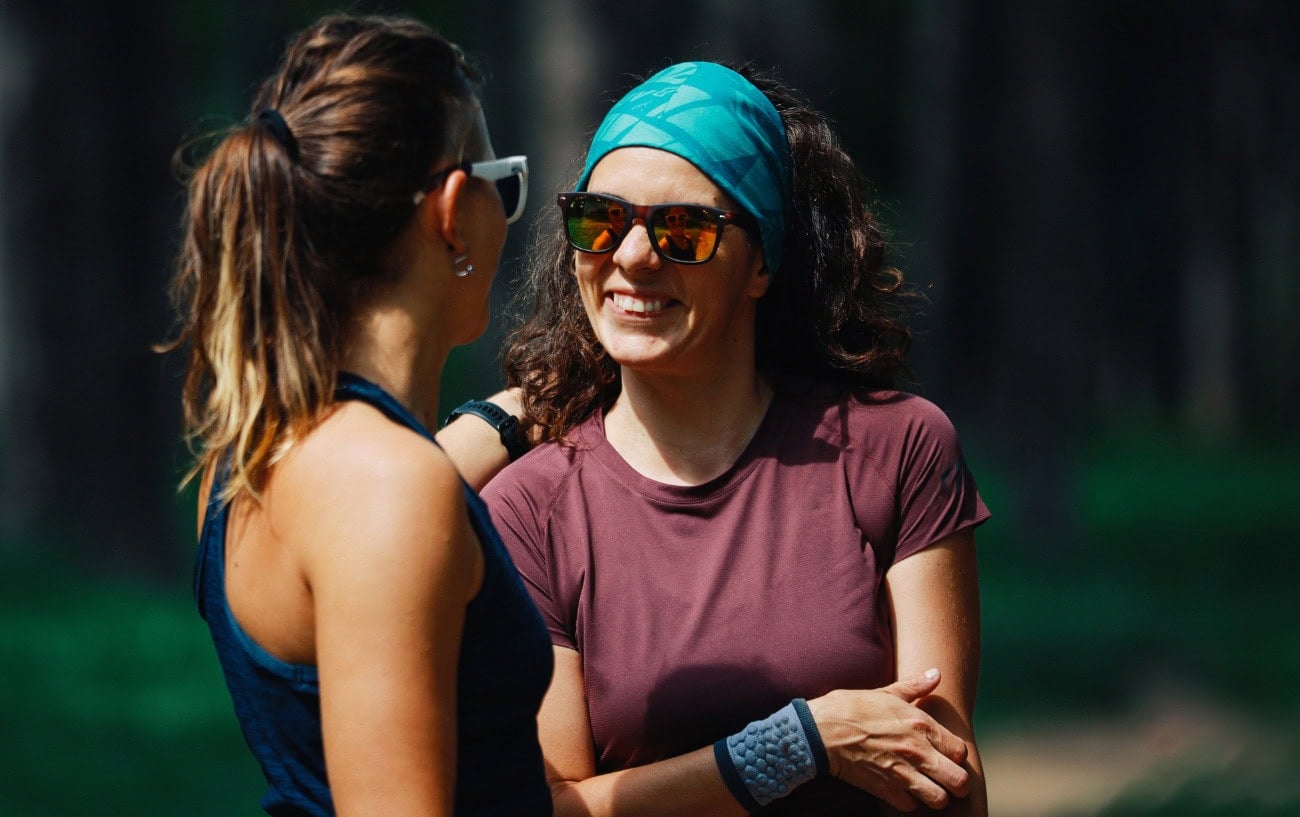
Many runners describe their club as the one space where they don’t have to explain themselves. Work titles, family roles, backstory—they all fade a bit when everyone is sweating through the same humid tempo run.
That temporary suspension of everyday identity can be mentally protective. For an hour or two, you’re not “the overwhelmed parent” or “the burnt-out manager.” You’re simply a runner among runners.
How the Best Run Clubs Set the Tone
The vibe or “feel” of a group is not an accident; it is heavily influenced by how it is led. Coaches and organizers set the tone in subtle ways. When they emphasize process over perfection, relationships over race times, inclusion over hierarchy, the group becomes a safer place to show up as you are.
Healthy running communities often share a few characteristics:
- All paces truly welcome. Not just in the tagline, but in the way workouts are structured, so no one is left alone in the dark.
- Clear, predictable structure. Regular meeting days and routes make it easier to build the habit and reduce anxiety about “what to expect.”
- Recognition beyond results. Shouting out the person who came back from injury, the one who showed up after a hard week, the first-time 5K finisher—not just the fastest splits.
Many coaches will tell you that their proudest moments are not personal records, but the quiet messages that come later: “This group got me through a rough patch,” “I didn’t realize how much I needed this,” “These people are my family now.” Those are the markers of a community that is doing more than building fitness; it is scaffolding mental health.
Every runner has days when a workout looks intimidating on paper: a long tempo, hill repeats, a pace you are not sure you can hold. In a group, those same sessions often feel more like a shared challenge than an individual test.
There is something uniquely grounding about hearing a half-dozen watches beep into a rep at the same moment, or cresting a hill and seeing your training partners bent over their knees, breathing just as hard as you are. Difficult effort becomes a collective experience, and that changes how your brain interprets it.
Instead of “I am suffering,” the story becomes “we are doing something hard together.” That subtle shift is one definition of resilience: not the absence of difficulty, but the ability to stay in contact with it without being overwhelmed.
Runners who repeatedly practice that with others—staying steady through discomfort while supported—often find it easier to cope with stress outside of running, too. They have rehearsed not quitting, in company.
A Safe Space to Open Up — or Just Be”
For some people, the greatest mental health benefit of a group run isn’t the workout at all; it is the conversation that happens between intervals or on long, easy miles.
Running side by side offers a kind of shoulder-to-shoulder listening that only moving towards a common destination or purpose can offer. It can also provide tips and wisdom that are hard-earned and some seemingly picked up by osmosis.
Big topics seem to surface more naturally when everyone is looking forward: job stress, relationship changes, grief, and burnout. The rhythm of movement and breath acts like a buffer. You can say a hard thing, fall into a few minutes of silence, then pick up the thread again without pressure, even next week.
At the same time, there should be no expectation that anyone must share anything. Quiet is also allowed. Some days, the group’s mental health gift is simply being around other humans without needing to talk at all.
Seeing abundant life and positivity can diminish our own “heavy stuff”. The important part is knowing that the option is there—that if life gets heavy, there are people who you know already walk (or run) through the hard miles with you.
How to Tell If A Group Is the Right Fit
Not every group will feel like a perfect fit—and that’s okay. If you are looking for a community that supports both your running and your mental well-being, pay attention to how you feel during and after a trial run:
- Do you feel like you belong and are accepted, as you are?
- Do you leave feeling lighter, even if the workout was hard?
- Does someone notice you and check in?
- Is there room for different goals and life situations? (Not only one “serious” way to be a runner?)
Hopefully, you can tick off “yes” to most of these questions, most days. If nothing local clicks, start small and build your own tribe. One or two friends who meet at the same time each week can give you many of the same benefits: accountability, shared effort, and a place to talk.
Over time, you may find others join almost by accident—a neighbor, a coworker, someone who saw your enthusiasm and asked, “Can I come along?”
On a final note, there will always be days when you need the solitude of a solo run. But for the other days, the best simple advice from psychologists is to “be brave and try some social runs”. Keep trying until you find the right fit. You are worth it.
RunClub — Free
Join 300,000+ runners in RunClub
Free training plans for every distance, a daily running game, exclusive coaching content, and a real community of runners. Create your free account in 20 seconds — no card.
Already a member? Log in →








Start the conversation