


When Parker Morse filled out an application to volunteer at this year’s Boston Marathon, he wrote: “I have missed this race ONCE since 1995. The Boston Marathon is the High Holidays of my personal liturgical calendar. I’ve stepped away from nearly everything else I used to do in the sport, but I will not give up Boston.”
The note says much about Morse’s passion. But, typically, it says nothing about his pivotal 30-year contribution to online running media. Morse never trumpeted himself or his work.
Yet it can be argued that he made increasingly diverse contributions to running content on the internet than any other individual. He was the first online editor/producer at Runner’s World, wrote extensively for IAAF/World Athletics, helped design web pages for World Marathon Majors and the Boston Marathon, played a low-key but central role in Boston Marathon TV coverage, and supported the Fast Women website and newsletter produced by his wife, Alison Wade.
Morse, who died unexpectedly at age 52 on May 4, 2026, was quiet, hard-working, self-effacing, and painstakingly efficient at every task he tackled.
Consider the following. Morse didn’t have to fill out that volunteer form. He had been a linchpin in Boston’s TV coverage for nearly a decade, and the BAA wouldn’t consider letting anyone else have his job collating and fact-checking split times from the race before passing them along to the TV broadcast teams.
That was important stuff that couldn’t be delegated to anyone but a proven pro. Still, Morse believed in process/systems/doing the right thing, so he followed instructions to a T and filled out the form.
“Parker was an unsung hero behind the scenes,” says Jack Fleming, the BAA’s president and CEO. “He was unbelievably thoughtful, intelligent, and diplomatic. As a volunteer contributor, he would let us make the final decision, but I never went against his guidance.”
Fleming adds that Morse was instrumental in building the first website for World Marathon Majors, and also helped the BAA in its website evolution. “He wanted it to be as good as possible, and to make sure we didn’t make any unnecessary mistakes.”
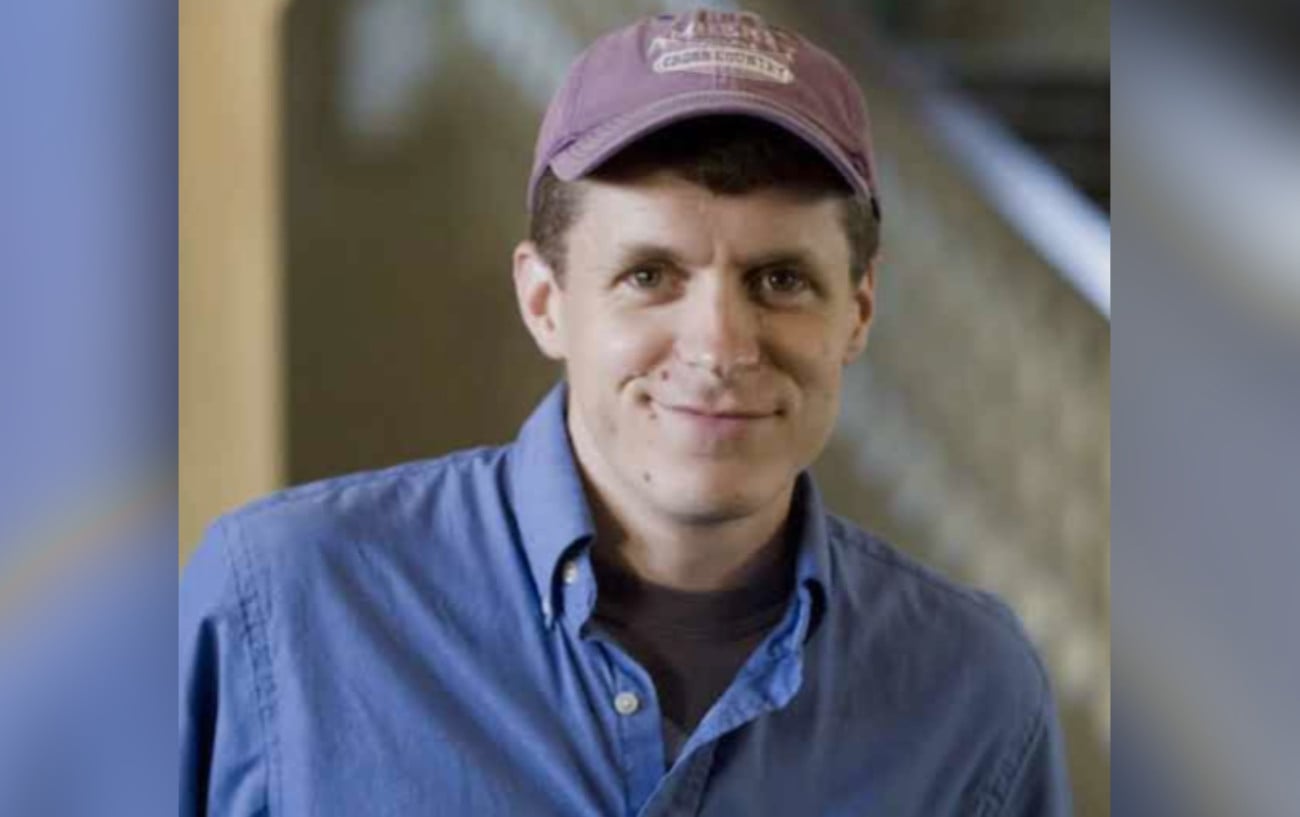
From Bath, Maine, To The World Stage
Morse grew up in Bath, Maine, and attended Morse High School, named after a distant relative. He was captain of both his high school and college track teams, and enjoyed many other pursuits. Along his life’s path, Morse engaged in activities such as playing the trombone, working as an electrician for the theatre department, working at the Nike factory outlet in Freeport, Maine, and conducting tours at the Emily Dickinson Homestead in Amherst, Mass.
He spent the summer of 1994 studying in St. Petersburg, Russia, and two years later graduated cum laude with a major in Russian from Amherst College.
Morse joined Runner’s World straight out of college in 1996. The well-known magazine had launched a barebones website earlier in the year and needed someone to produce and supervise the new initiative.
The editors knew of Morse because he had earlier won an RW contest to name and explain a favorite running road. Morse entered the contest with “Flat Hills Road” in Amherst. He was anointed the contest winner for the humor and paradox of his entry.
As soon as Morse joined RW, he was thrown into the tumult of that summer’s 1996 Atlanta Olympic Games. He quickly designed the RW web pages that hosted Atlanta coverage.
IBM was a global Olympic sponsor and had widely promoted its plans for instantaneous results straight from the track to the Internet. However, IBM largely failed to deliver on this promise due to technical glitches.
Meanwhile, RW had several reporters and spectators in the Olympic Stadium using early cell phones to call in results to the main office in Emmaus, Pennsylvania. There, Morse and a skeleton crew hand-entered all the details into a waiting web page.
Improbably enough, RW Online delivered Olympic results ahead of IBM (and the world), at least for a number of the early, important days of track and field coverage.
Later, Morse helped create and maintain “Runner’s World Daily” online. While not as glitzy as today’s web pages full of photos and videos, RW Daily established a path — with results, interviews, feature stories, and opinion pieces — that continues to this day. Here’s an early page as captured by the Internet Archive’s Wayback Machine.
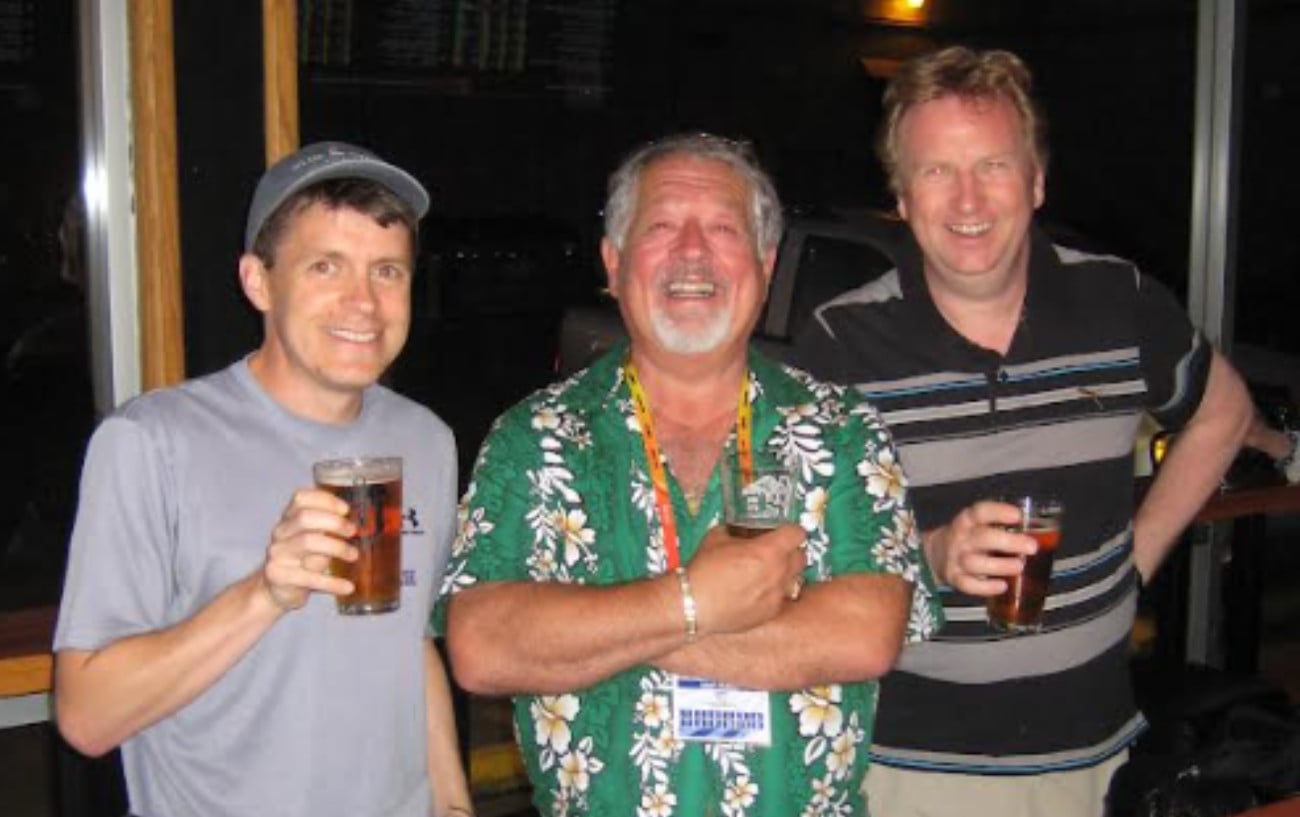
The Reporter Behind the World’s Biggest Races
After marrying Wade and moving to the Boston area, Morse wrote for the IAAF/WA for many years. His articles included early coverage of a Usain Bolt 100-meter world record in 2008 (before Bolt’s blazing success in the Beijing Olympics) to the historic victories of Yuki Kawauchi and Des Linden in the stormy 2018 Boston Marathon.
Recognizing Morse’s talent and his ability to produce under high-pressure deadlines, World Athletics made him a major contributor at many of its most important events, like the World Championships and the Olympic Games. During those years, Morse often worked with British journalist and track expert Phil Minshull.
“Parker became the ‘go to man’ to write blow-by-blow articles at the big championships,” remembers Minshull. “He was given a free hand with his assignments because he was an excellent writer and knew just what needed to go online.”
Here’s an article Morse wrote from the 2016 Rio Olympics about Mo Farah’s successful defense of his Olympic 10,000-meter title. In it, despite the tight deadline, Morse compared Farah’s trip-and-fall to a similar incident that befell Lasse Viren in the 1972 Olympic Games, before Morse was born!
“The mishap immediately drew comparisons to Lasse Viren’s near-disastrous fall in the 1972 final in Munich, but Farah’s position was never so precarious as that of the Finn. Farah spent the early going loping at the back of the pack as a rotating cast of faces took turns at the front.”
In recent years, Morse played a central role in providing accurate information to TV crews presenting the Boston Marathon to a national and international audience. For a number of years, these crews had complained about inaccurate “split times” they were receiving during their live broadcasts. Enter Morse.
According to Chris Lotsbom, Boston’s director of race communications and media, Morse turned things around. “At our broadcast meetings, someone would always ask: ‘Is Parker back in the spotters’ room? If so, we’re in good shape.”
“Parker was so dependable, and he went the extra mile to ensure that our splits system ran smoothly. We made gigantic strides, largely due to Parker’s ideas and innovation.
Quietly Lifting Up The Next Generation of Running Writers
Lotsbom adds a personal note about how Morse influenced his own youthful beginnings as a running writer/reporter: “When I was a high school kid soaking up all the articles I could find, I remember seeing Parker’s byline repeatedly on the IAAF website. Later, I met him in Boston, and he quickly became a friendly face who shared his passion for the sport as well as his advice about covering it. He made me feel welcome at an early age, and I have always felt grateful to him.”
At The Morning Shakeout newsletter, well-known coach/writer/editor Mario Fraoli shared a similar story about how Morse quietly encouraged his early writing efforts: “I didn’t know Parker super well, but we exchanged emails on occasion. He was a kind and generous man.
“I’ll never forget the first email he sent me back in 2005. He told me to pursue doing interviews and gave me the emails of editors who might be interested in publishing them. It was an unselfish gesture that had an impact on 23-year-old me, and helped shape the trajectory of my career and life in a way I never could have imagined.”
Many friends of Parker Morse and Alison Wade responded to news of his death on Facebook and Substack. These included comments by David Monti, known for his decades of reporting at Race Results Weekly, and from former New York Road Runners CEO Mary Wittenberg.
David Monti: “Jane and I loved Parker. We met 30 years ago when RW launched its website. He was equal parts smart and kind, and there was nobody quite like him.
“I loved working with Parker every year at the Boston Marathon. I listened to his always-calm voice in my headset, while I was in the ESPN booth trying to keep all of the splits straight.”
Mary Wittenberg: “I was so glad to see Parker the morning of this year’s Boston Marathon. He was happily enthusiastic about working the race with the broadcast team, and his smile beamed wide as we caught up on you and the girls.
“I will always remember Parker’s brilliance, his web/tech expertise (leading RW forward), all that World Athletics coverage, and his deep, deep knowledge and care for the sport.”
A GoFundMe fundraiser has been created to support Parker’s family.
RunClub — Free
Join 300,000+ runners in RunClub
Free training plans for every distance, a daily running game, exclusive coaching content, and a real community of runners. Create your free account in 20 seconds — no card.
Already a member? Log in →



Start the conversation