


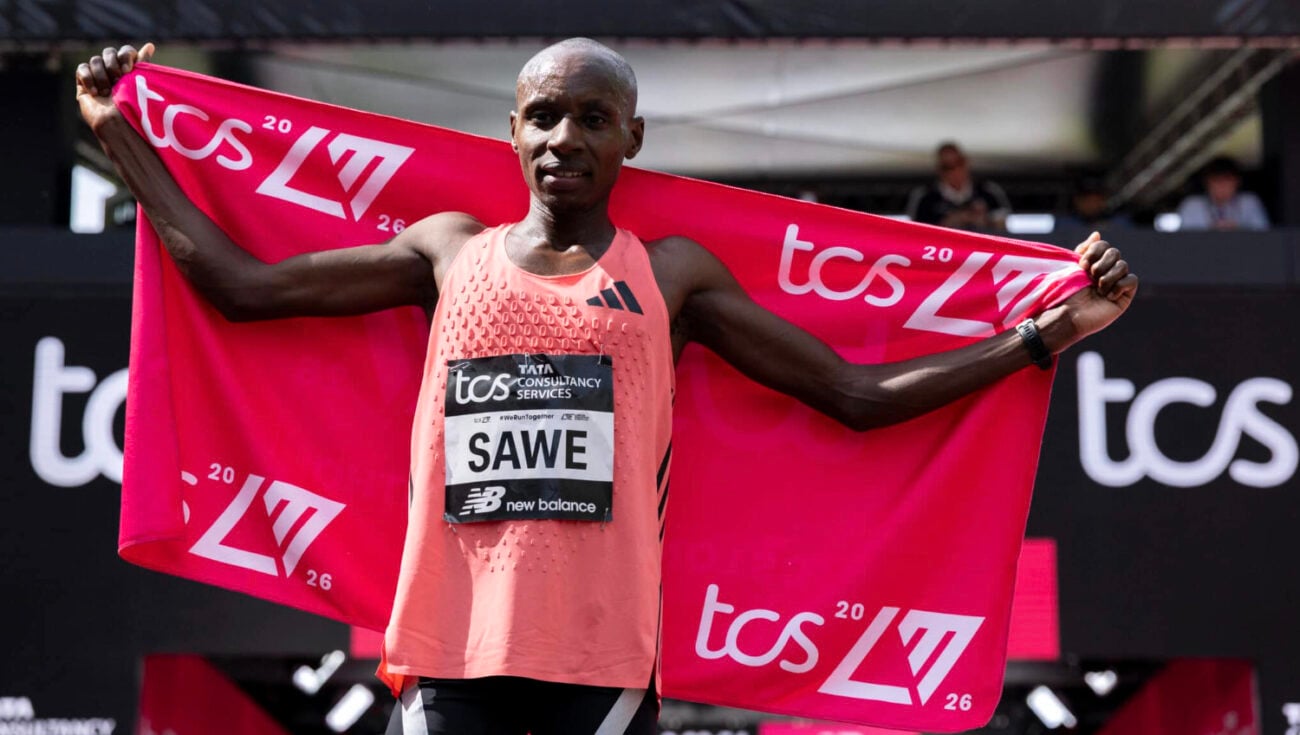
Immediately after Sabastian Sawe ran 1:59:30 in the London Marathon, the world demanded to know everything about him. How did he train? What shoes did he wear? What fluids and gels did he consume? What about caffeine and sodium bicarbonate?
No one asked about his mental preparation.
Folks, we might be missing a significant piece of the equation. Unexpectedly enough, both Sawe and Eliud Kipchoge gave credit to a writer who’s little known in the endurance world.
That writer, Brad Stulberg, has gained a growing audience in recent years for his books about mental health, well-being, and sustainable excellence. Here’s what he doesn’t do: write training plans, manufacture super shoes, or sell supplements.
Indeed, Stulberg is more interested in strength training than marathon endurance. He leaves the latter to his business partner, Steve Magness, who’s widely recognized in the running and training world.
They work together on a multimedia platform called The Growth Equation, where they aim to present “pragmatic, no-nonsense information, tools, and practices to help you cultivate sustainable and fulfilling success and excellence.”

Wait a minute! Eliud Kipchoge read my book?
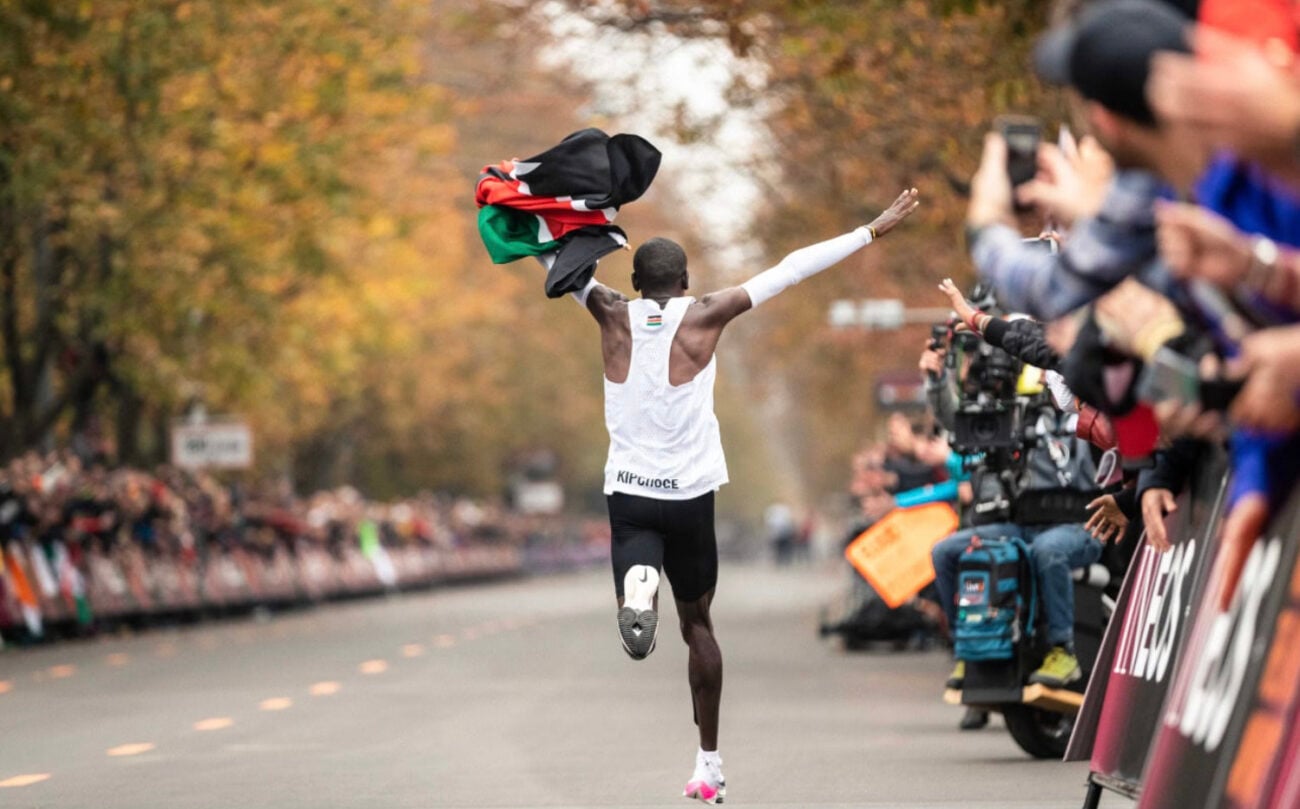
To his great surprise, Stulberg’s zen-like philosophical advice has begun permeating deeply into Kenyan running culture. After Eliud Kipchoge ran a world-record 2:01:09 in the 2022 Berlin Marathon, he wrote that he had been reading Stulberg’s The Practice of Groundedness before the race.
Kipchoge added: “It’s up there; it’s a good book, it molds you as a human being.”
The morning after Sawe’s epic 1:59:30 in Berlin, Stulberg received an unsolicited message from someone he didn’t know. It said: “Hi Brad. I am Claudio, Sabastian’s coach. I just wanted to say thank you because your books and podcasts have been a great source of inspiration in my job.
“I am currently having in my hands The Way of Excellence, and it has been a great help to me in guiding Sabastian in the last few weeks of his preparation. ‘Confidence is based on evidence’ has been a guiding concept.”
How Two Non-Running Books Reshaped the Marathon World
Below, Brad Stulberg answers questions about finding himself as an unexpected marathon guru.
How did you first learn that Eliud Kipchoge had read your book?
Shortly after Kipchoge broke the then-world record for the marathon in Berlin, my phone started blowing up with text messages from friends: “Dude, Eliud Kipchoge!” At first, I had no idea what they were talking about. Then I saw a video going viral on Twitter in which Kipchoge, who is known for being an avid reader, was asked what book he had read before the race. He said it was my The Practice of Groundedness.
I couldn’t have been more surprised. It was a bit surreal, if I’m being honest. I had no prior contact with Eliud or his training group. But I’ve always been a huge fan of his.
And then, after Sabastian Sawe’s 1:59:30 in London?
That evening, I wrote a little something on my Instagram page about Sawe’s earth-shattering performance. The next morning, I woke up to a direct message from his coach, Claudio Berardelli, thanking me for writing The Way of Excellence and explaining how he and Sawe used it in their final preparation for the race.
Once again, I was surprised beyond belief. I had no contact or prior relationship with either Claudio or Sawe. I was just like, wow, this is wild.
Of course, I am so stoked that my ideas and words are reaching these types of people. If my writing played even the tiniest part in supporting this 1:59 marathon, well damn, that’s really cool.
Do you consider that your books are about human performance?
No, and yes. I am broadly concerned with human flourishing -what it means to live and perform our best. As an athlete myself, I think my writing is partially rooted in sport. I love to draw examples from athletes. In the new book that Claudio Berardelli found valuable, I tell stories from golf, Olympic bobsledding, triathlon, powerlifting, and, of course, distance running. Sport is such an incredible microcosm for life.
Your work isn’t easy to summarize in a few words, at least not for me. What would you say?
I’d say I’m thinking and writing about what it means to care deeply, and give a damn, and pursue excellence and love in a chaotic and sometimes utterly messed-up world. And if you perform better too, hell, that’s great!
A runner can’t possibly run sub-2 on healthy thinking alone. How exactly does the right mindset improve performance?
A runner obviously has to put in the work, the training. But the psychology and philosophy of excellence can help in three significant, perhaps even formative, ways.
First, it actually helps you train better. If you go into workouts with the right mindset and ideas, you get more out of the workouts. Over time, those incremental gains compound and can add up to something big.
Second, on race day, the fitness you express has a lot to do with your mindset. You can have two runners with the exact same fitness, and they will run very differently on race day, based on their state of mind and how they respond to all the inevitable challenges.
Third, the right mindset makes training and racing more fun. And having fun is one of the biggest competitive advantages you can have. It keeps you coming back. It keeps you training hard. It keeps you in the game.
Which of your central themes are most applicable to runners and marathoners?
All these come from the new book, The Way of Excellence.
- There is no greater illusion than thinking the accomplishment of some goal will change your inner life. What will change your life is the person you become in the process of going for it.
- Caring is cool. You are not going to be the best anything—including the best version of yourself—with an attitude of nonchalance.
- Confidence comes from evidence. You’ve got to put in the reps and give yourself reason to believe. Then, on the starting line, you can trust your training. Clearly, this is true in sport, but it’s also true in life.
- People overrate intensity and underrate consistency. Anyone can crush themselves and have a heroic day, a heroic week, and maybe even a heroic month. But that’s not the goal. The goal is to generate a heroic, long-term body of work.
- Embrace a process mindset. Set a big goal that will challenge you. Break that big goal down into its component parts. Focus on nailing those component parts, day in and day out. You’ve got to dig where your feet are. The bigger the goal, the smaller the steps.
In a sport obsessed with measurable gains — lactate thresholds, super shoes, and grams of carbohydrate — Stulberg provides a quiet reminder that the mind matters too. He mainly wants readers to care deeply about what they pursue. But now his writing is directly linked to two marathon world records.
RunClub — Free
Join 300,000+ runners in RunClub
Free training plans for every distance, a daily running game, exclusive coaching content, and a real community of runners. Create your free account in 20 seconds — no card.
Already a member? Log in →











Start the conversation