


Investors got their first chance to react to Sunday’s inaugural Enhanced Games when the New York Stock Exchange opened Tuesday, after the Memorial Day weekend. They were not impressed. Enhanced Group Inc., the publicly traded parent of the Enhanced Games and a planned online pharmacy for testosterone, supplements and other performance enhancers, watched its stock fall by almost half.
ENHA closed Friday at $5.36. On Tuesday it opened sharply lower, hit $2.67 in early trading, and finished the session at $3.03, down 43.47 percent on volume of about 5.88 million shares. SwimSwam reported the move erased close to $800 million in market value. The 52-week high for the stock is $14.
The decline ran against the broader market, which finished higher on news of a possible U.S.-Iran ceasefire deal and a rally in chip stocks. ENHA traded the other way.
JUST IN: Enhanced Games stock crashes 50%, after many non-enhanced athletes outperformed "juiced" ones. pic.twitter.com/7tOrxBjKRM
— Polymarket (@Polymarket) May 26, 2026
What the broadcast actually showed
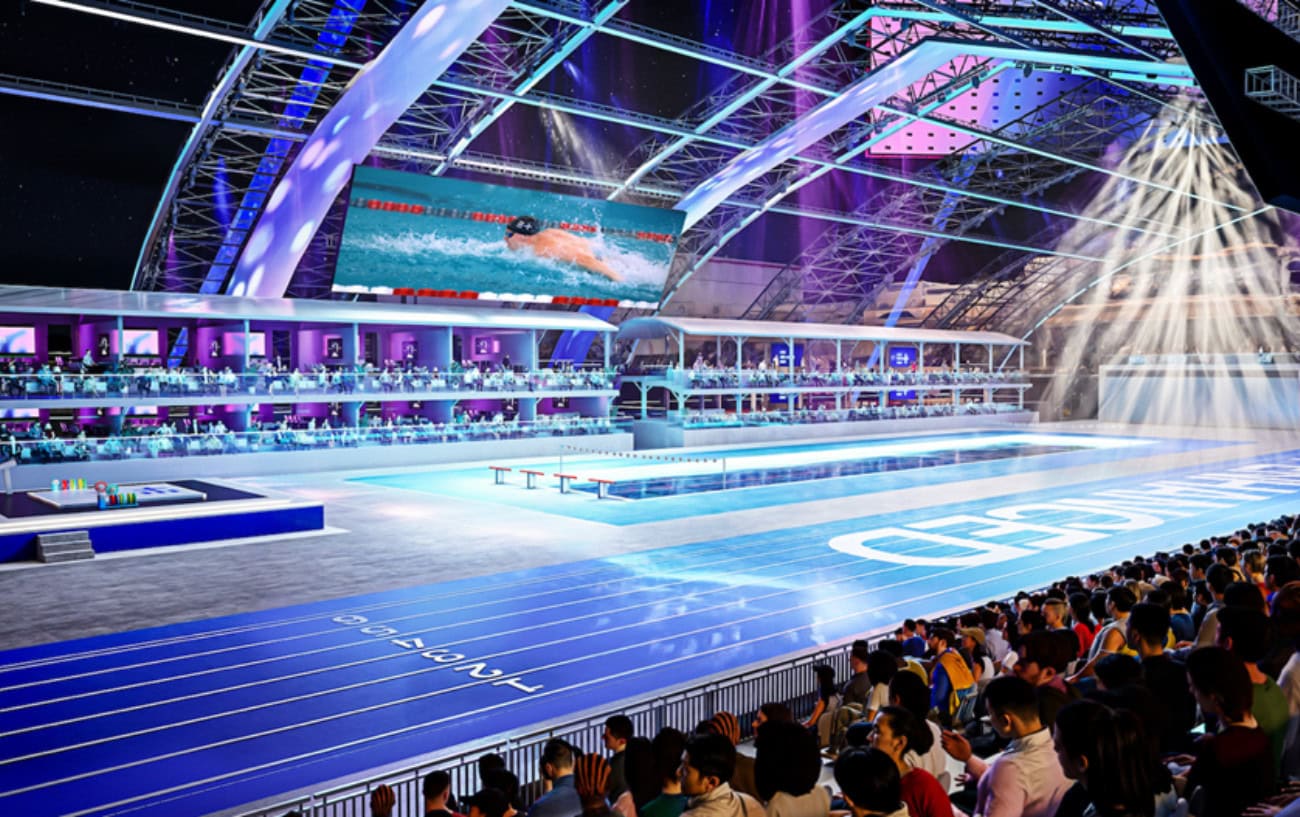
The Enhanced Games, held Sunday night on the Las Vegas Strip, was meant to demonstrate what the company’s products can do. Organizers had promised “multiple world records” and a rewrite of human performance limits. The actual broadcast delivered one record, swum by Kristian Gkolomeev in a banned skinsuit while doping. That swim will not enter the official record books.
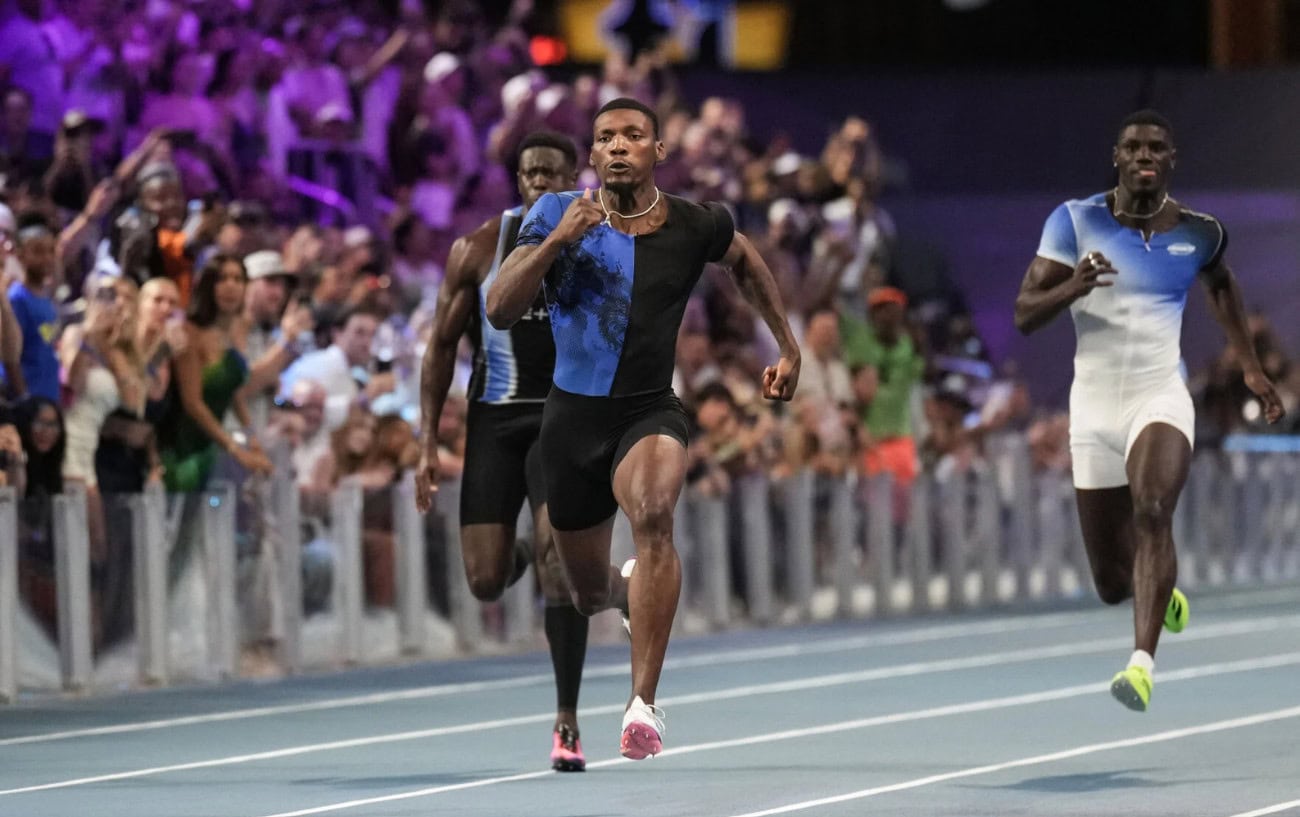
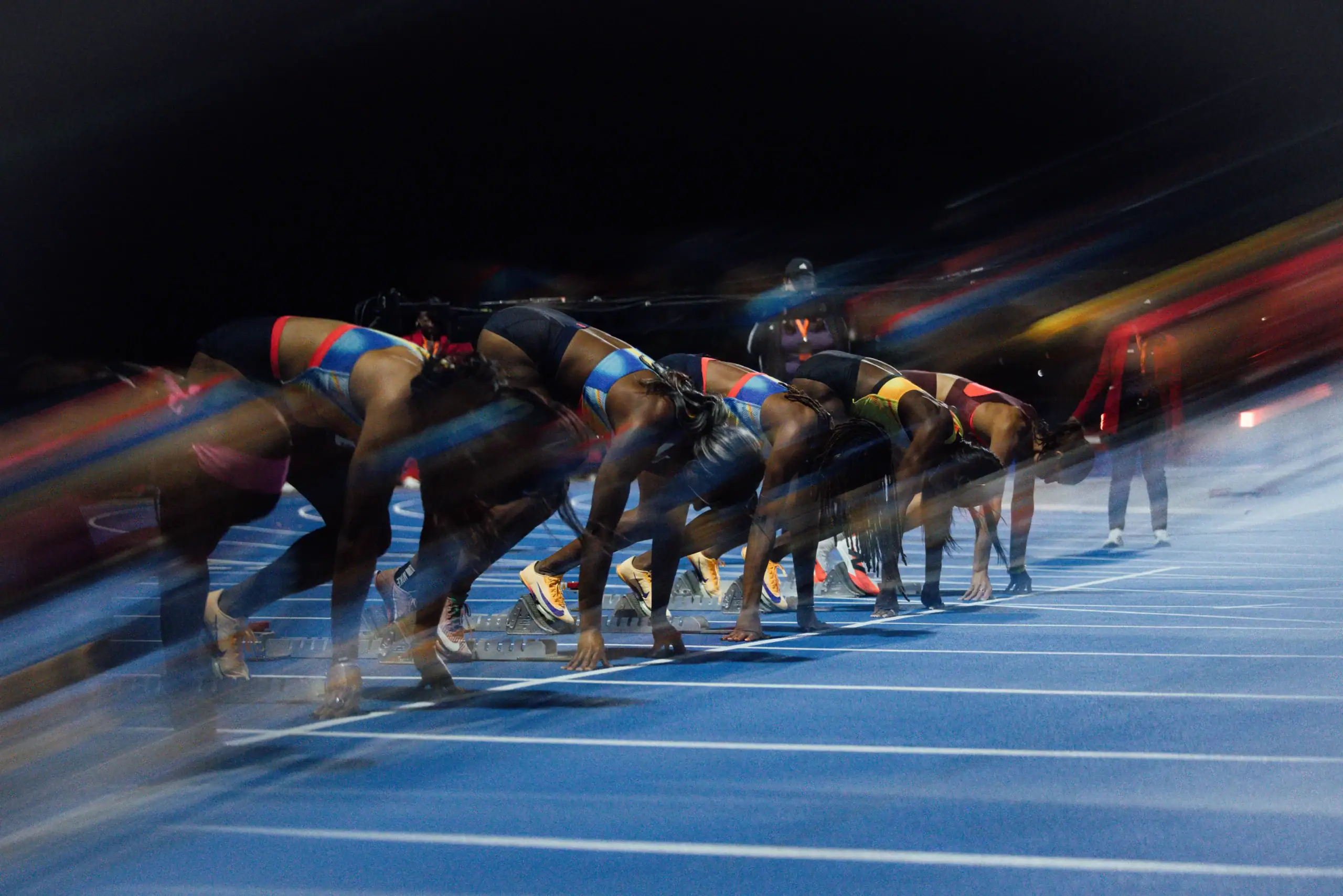
Three of the four athletes who said they raced drug-free won their events. Fred Kerley took the men’s 100 meters in 9.97 seconds, almost four-tenths of a second off Usain Bolt’s untouched 9.58. Tristan Evelyn won the women’s 100 in 11.25, more than three-quarters of a second off Florence Griffith Joyner’s world record. Hunter Armstrong won a clean swim event. None of the doped athletes cleared an officially ratified mark.
SwimSwam put it plainly in its coverage Tuesday: “the spectacle-oriented Games didn’t really prove the product.”
A sponsorship beat the market ignored
Enhanced did have one piece of good news Tuesday. The company announced that sponsorship revenue from the inaugural Games exceeded $32 million, beating its 2026 sports revenue guidance of $31 million. The headline ran across financial wires at 10:10 a.m. Eastern. The stock kept falling.
The reaction lines up with how analysts have framed the business since its $1.2 billion SPAC merger. The Enhanced Games is, in Wall Street’s read, a marketing channel for a consumer drug and supplement business, not a sports league. Without record-breaking performances to anchor that marketing, the pitch loses force.
Seeking Alpha lists a consensus revenue estimate of $50 million to $57 million for 2026, with a net loss, and roughly triple that for 2027. Both projections depend on convincing consumers that the company’s “Protocol” of testosterone, supplements and other enhancers works. Sunday was the first public test.
“Changed the world” meets the closing bell
Chief executive Maximilian Martin told the crowd in Las Vegas after Sunday’s events that the Enhanced Games had “arrived in mainstream culture” and “changed the world tonight.” Two trading days later, Wall Street’s response was a 43 percent decline and a fresh 52-week low.
USA Today’s For The Win wrote that the event “failed to live up to their own hype” and proved “that doping can only help athletes who are already elite rather than make a ‘pretty good’ swimmer an Olympic medalist.”
That is the opposite of the message the company needs. Its growth case depends on consumers believing the products turn elite athletes into superhuman ones. By Tuesday’s close, the market was pricing the broadcast as it actually was, not as it had been sold.
RunClub
Get more running stories — join RunClub
Daily running news, a community of 300,000+ runners, free training plans for every distance, and a daily running game. Free to join — no card.
Already a member? Log in →








Start the conversation