


Josh Kerr’s 3:42.66 in London settled a question the sport has circled for nine years: a world record can be engineered. The suit, the spike, the pacing lights, the months of scheduled content, all of it worked, and the mark will stand in the book that matters. Credit where it is due. But the official splits point somewhere less comfortable for the people who will now try to repeat the formula. The engineering carried Kerr to the start line in the shape of his life. What carried the race to 3:42.66, for three of its four laps, was Yared Nuguse, and no brand has yet found a way to manufacture him.
The lineage is familiar. Nike’s Breaking2 produced a 2:00:25 at Monza that could never be ratified. The INEOS 1:59 Challenge produced a sub-two-hour marathon that never counted. Faith Kipyegon ran 4:06.42 in Paris last June, quicker by well over a second than the official record she still owns, and the sport counts it as zero. These were magnificent productions with an asterisk built into the premise, and as my colleague argued in these pages before the race, Project 222’s real innovation was to take their entire toolkit and submit it to sanction: a Diamond League race, legal pacing, a legal spike, doping control at the finish.

The production values came along intact. The countdown was announced in March. The altitude-chamber sleeping arrangements became content. The family became a video series. The night before the race, Kerr published footage of his 2:42.45 time trial for 1,200m from altitude, the fastest anyone has covered the distance under any conditions. “My competitor was a time that isn’t going to change,” Kerr told FloTrack before the race.
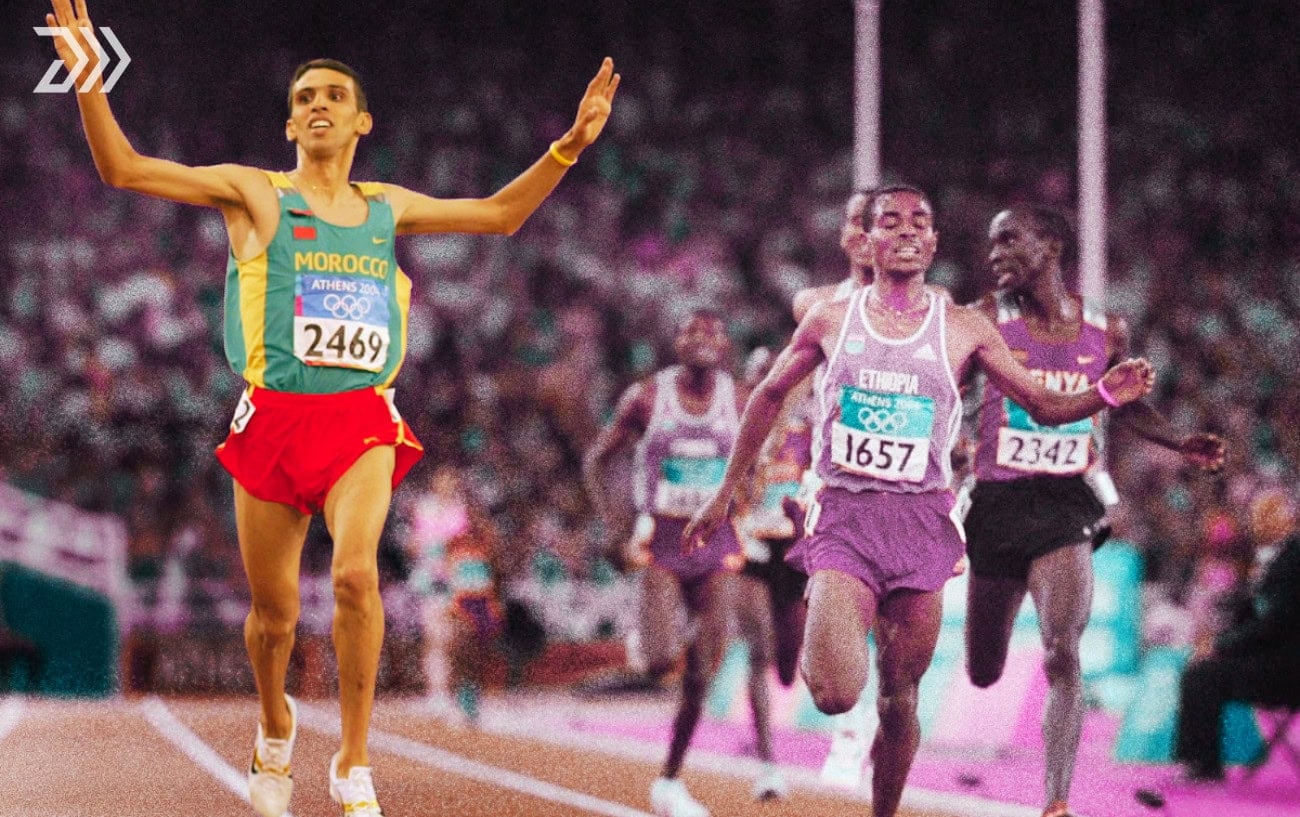
For three laps on Saturday, it stopped being true. Nuguse arrived in London with a faster personal best than Kerr’s and a coach who had promised LetsRun.com, “We haven’t found a speed yet that he would not go with.” He went with it. Through 1,200 meters the world record attempt was also a two-man race, and everything we know about middle-distance running says those laps were faster for it. The template is the record Kerr broke: in Rome in 1999, Noah Ngeny chased Hicham El Guerrouj so hard that both men finished under the old mark. Nobody planned that. It is the part of that night no meet director has reproduced in 27 years.
The marathon offered the same lesson three months ago. When the two-hour barrier finally fell in a race that counted, it fell twice in the same morning: Sabastian Sawe ran 1:59:30 at the London Marathon with Yomif Kejelcha, on his debut, finishing in 1:59:41. Kipchoge’s paced exhibition in Vienna had stood alone for seven years as proof a human could do it. The official breakthrough arrived only when two humans tried to beat each other.

A time trial, however lavishly produced, removes the thing that makes racing fast: consequence. Nobody can put a number on what a rival supplies, the adrenaline of an actual contest, the pride of a shot called in public, the fear of failing at something that counts, and that is precisely the point. Because it cannot be measured, it cannot be specified, budgeted, or built; it can only be invited. Kerr seemed to understand this better than his own sport does; he insisted from the start on an open field in a real race, and the man who could beat him accepted.
The formula will now be copied, and it should be. More records should be chased under sanction, in public, with the receipts filed. But Kipyegon’s official mile record remains 4:07.64, a second and a half slower than her engineered Paris run, and whichever brand takes her, or anyone, back to the barrier next will face the question London just answered. Kerr has his record because the rules made it real and a rival made it fast, and the next attempt will need both.
RunClub
Get more running stories — join RunClub
Daily running news, a community of 300,000+ runners, free training plans for every distance, and a daily running game. Free to join — no card.
Already a member? Log in →









Start the conversation