


More than 50,000 runners from over 100 countries took to the streets of Chicago on October 12 for the 47th edition of the Bank of America Chicago Marathon.
The race delivered world-class performances and another chapter in the ongoing rivalry between Nike and Adidas for dominance in marathon super shoe technology. Both brands claimed top honors in the men’s and women’s divisions, while Hoka and Asics also secured valuable podium spots with prototype and production models.

🥇 Jacob Kiplimo (2:02:23) – Nike Alphafly 3
Uganda’s Jacob Kiplimo claimed his first major marathon victory in Chicago, finishing in 2:02:23, one of the fastest times ever recorded on U.S. soil. Kiplimo raced in the Nike Alphafly 3, the brand’s current flagship marathon racer and successor to the Alphafly NEXT% 2.
The Alphafly 3 features Nike’s trademark ZoomX foam, paired with dual Air Zoom pods and a full-length carbon plate, offering a distinct blend of bounce and stability. Unlike the prototype “Dev 16141” model tested by Conner Mantz (who broke the American record in the same race), Kiplimo’s shoes were confirmed to be standard retail Alphafly 3s.
Early observations suggest that Nike’s latest developmental models are experimenting with geometry changes reminiscent of the original Alphafly 1, featuring a lower drop and a more aggressive forefoot rocker, possibly hinting at the design direction for a future Alphafly 4.
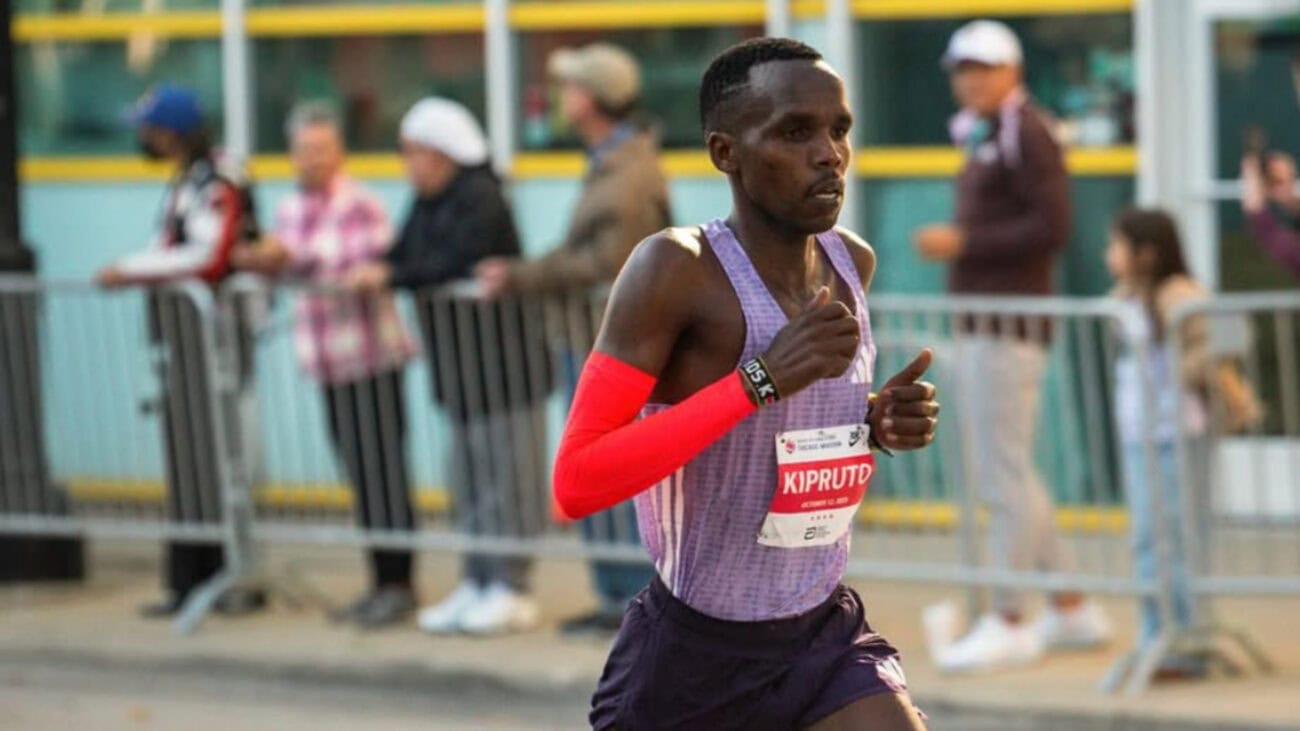
🥈 Amos Kipruto (2:03:54) – Adidas Adizero Adios Pro Evo 2
In second place, Amos Kipruto of Kenya clocked 2:03:54 wearing the Adidas Adizero Adios Pro Evo 2, the follow-up to the ultralight Evo 1 that redefined marathon footwear in 2023.
At under 140 grams, the Evo 2 remains the lightest racing shoe on the professional circuit. It pairs a carbon-infused plate with Adidas’s Lightstrike Pro foam, tuned for energy efficiency and ground feel. While the retail version features a liquid rubber outsole, Kipruto’s pair appeared to use a Continental rubber prototype, designed for improved grip and slightly better durability.
This marks another major marathon podium for the Adizero Evo line, which continues to prove that Adidas’s minimalist, rebound-focused design philosophy can still rival Nike’s more cushioned approach.

🥉 Alex Masai (2:04:37) – Hoka Cielo X1 3.0 Dev
Kenya’s Alex Masai took third in 2:04:37, wearing a Hoka prototype registered as the Cielo X1 3.0 Dev on the World Athletics shoe database.
Traditionally known for its heavily cushioned training shoes rather than elite marathon racers, Hoka’s developmental Cielo line represents a significant evolution. According to Sagasu Running, the 3.0 model is believed to feature a nitrogen-infused PEBA foam, a lighter and more elastic compound adapted from Hoka’s trail racing prototypes, and a redesigned rocker plate for improved propulsion.
Masai’s podium finish marks one of the first times a Hoka prototype has medaled in a World Marathon Major, signaling the brand’s growing credibility in top-level racing.
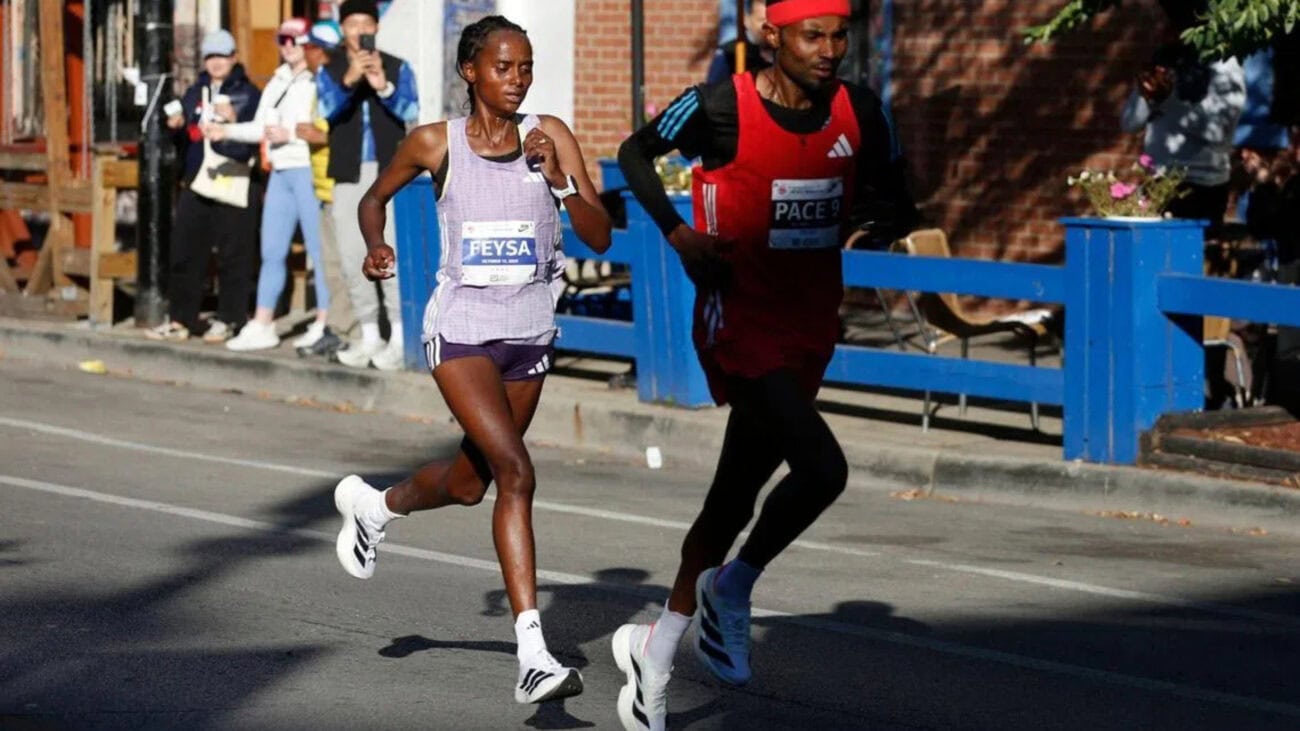
🥇 Hawi Feysa (2:14:56) – Adidas Adizero Adios Pro Evo 1 v2
In the women’s race, Hawi Feysa of Ethiopia stormed to her first major marathon win with a 2:14:56 finish, the fastest women’s marathon time of 2025 to date. She raced in the Adidas Adizero Adios Pro Evo 1 v2, a refinement of the record-breaking shoe worn by Tigst Assefa during her 2023 world record run in Berlin.
The Evo 1 v2 keeps the ultralight, single-use construction philosophy of its predecessor while improving foam stability and rocker transition. With its 39mm stack height and stripped-down upper, the Evo 1 remains a symbol of Adidas’s aggressive commitment to speed above all else. Feysa’s win reaffirms the Evo series’ place among the most dominant marathon shoes in modern racing.
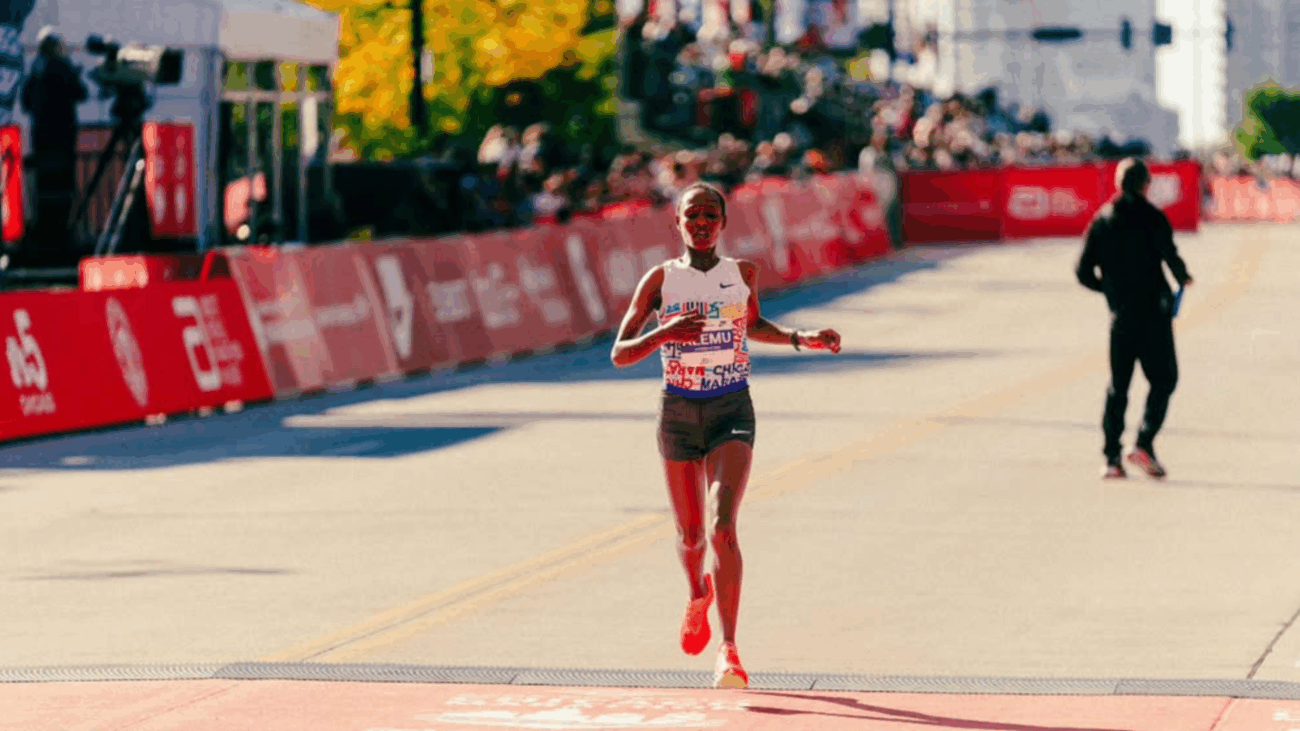
🥈 Megertu Alemu (2:17:18) – Nike Vaporfly 4
Second place in the women’s race went to Megertu Alemu of Ethiopia, who crossed the line in 2:17:18 wearing the Nike Vaporfly 4.
While Nike markets the Vaporfly 4 as a versatile racer for both elites and serious amateurs, its presence on a World Marathon Major podium proves it’s still more than capable at the highest level. The shoe uses a refined version of ZoomX foam, a wider platform, and a tweaked plate curvature for a smoother, more natural ride compared to the Alphafly.
Nearly a decade after the original Vaporfly disrupted marathon racing in 2019, the Vaporfly 4 continues to perform, proof that innovation doesn’t always mean reinventing the formula.
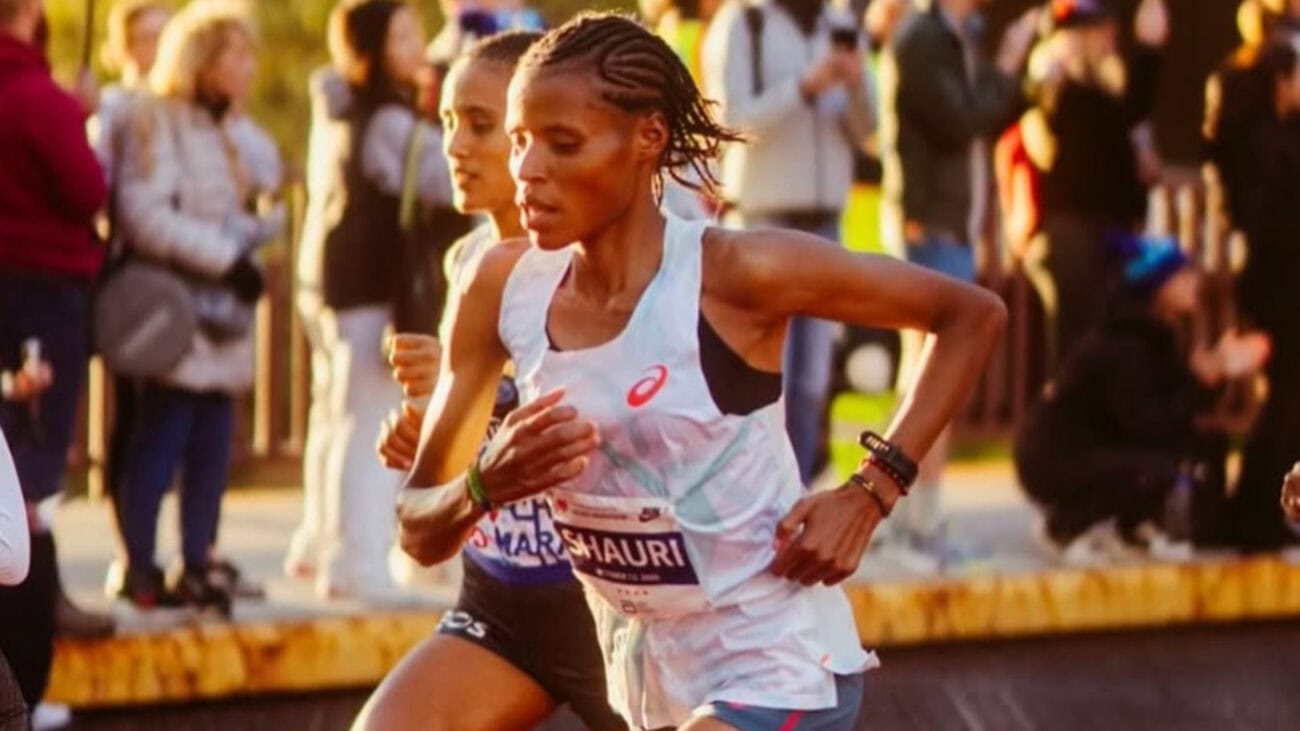
🥉 Magdalena Shauri (2:18:23) – Asics Metaspeed Sky Tokyo
Tanzanian athlete Magdalena Shauri rounded out the women’s podium in 2:18:23, wearing the Asics Metaspeed Sky Tokyo, the latest evolution of Asics’s carbon-plated racing line.
Released earlier this year, the Sky Tokyo introduces a redesigned FF Turbo+ foam midsole with improved energy return and reduced weight. Its balanced rocker geometry was engineered for athletes with higher cadence running styles, making it a natural fit for Shauri’s smooth, rhythm-driven stride.
The Metaspeed platform has now appeared on women’s podiums across multiple World Marathon Majors in 2025, confirming Asics’s consistent presence among the sport’s elite.
RunClub
Get more running stories — join RunClub
Daily running news, a community of 300,000+ runners, free training plans for every distance, and a daily running game. Free to join — no card.
Already a member? Log in →





Start the conversation