


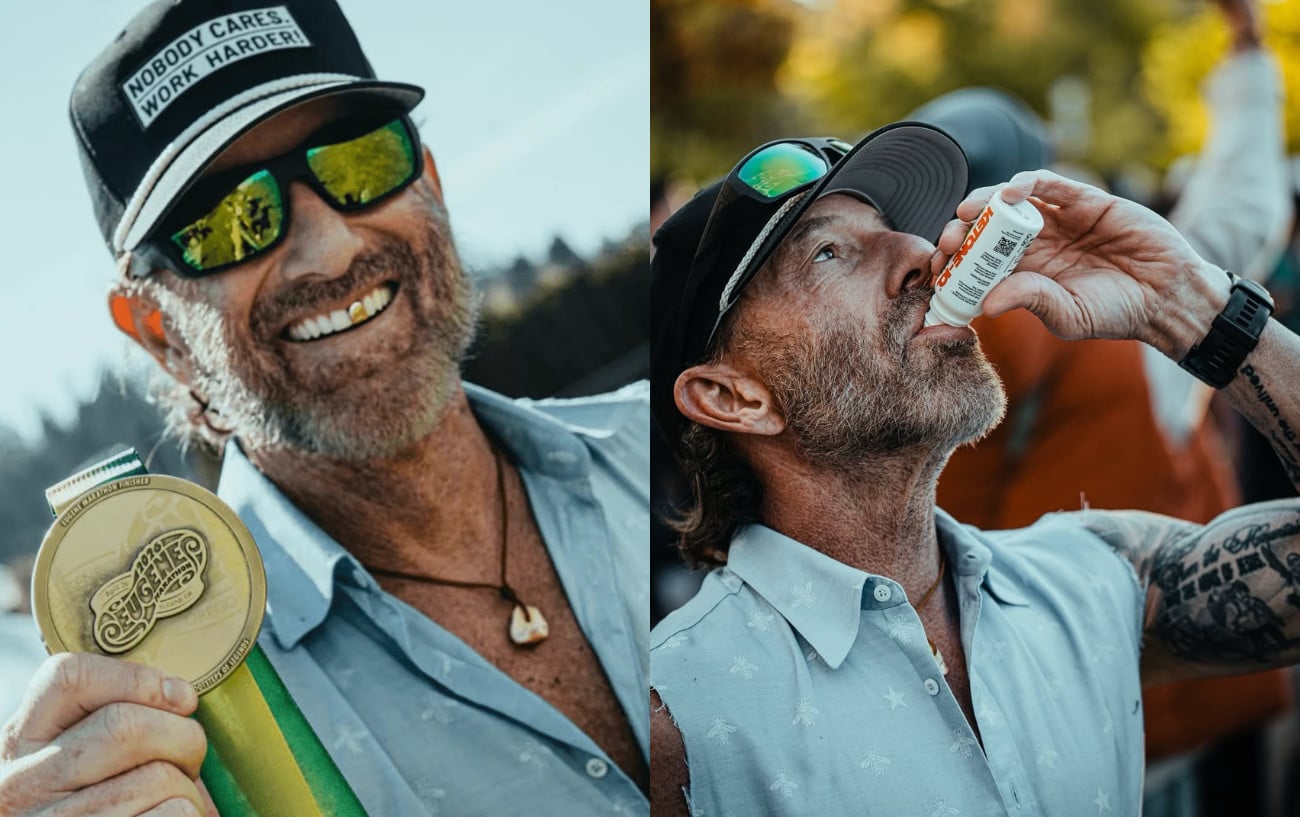
Cam Hanes brought a new acronym into running last month: BPC-157, the peptide he admitted to using in an Instagram comment with Sage Canaday. The 58-year-old had just won his age group at the Eugene Marathon. He said he’d been injecting the peptide as part of his injury recovery. WADA bans it. USADA can hand out a four-year suspension for using it. Canaday has now filed a tip with the agency.
For most runners watching the story play out, the bigger question is simpler. What is this stuff, and why does it seem like every other middle-aged runner is suddenly on it?
What’s actually being sold
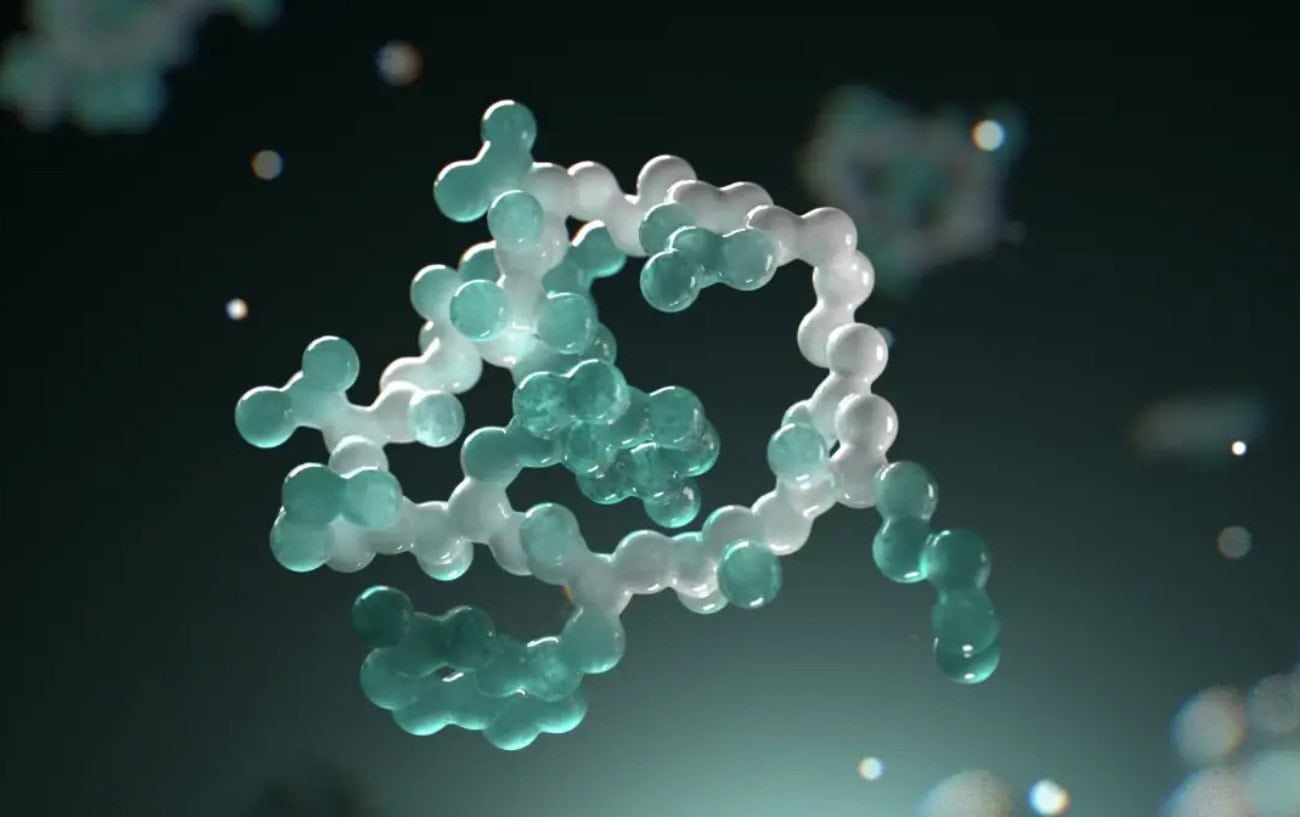
A peptide is just a short chain of amino acids, anything under 50. Anything longer is a protein. Insulin is a peptide. Oxytocin is a peptide. They aren’t exotic in themselves.
What’s getting injected by runners and influencers is a narrow slice of that universe. These are synthetic peptides designed or borrowed from natural compounds, sold for purposes the FDA has never approved. They sort into two rough buckets. Healing peptides like BPC-157, TB-500, and GHK-Cu claim to repair tendons, ligaments, and muscle. Growth hormone peptides like CJC-1295 and ipamorelin nudge the pituitary to release more growth hormone and IGF-1. Both categories sit on WADA’s banned list.
The combo you’ll see most often promoted on Instagram is the “Wolverine Stack,” BPC-157 paired with TB-500 for soft tissue recovery. The other common pairing is CJC-1295 with ipamorelin, sold as a way to boost your own growth hormone without injecting HGH directly. Beyond those, there’s GHK-Cu, AOD-9604, MOTS-c, and a dozen others. These are usually sold in stacks, not solo.
So what is BPC-157
BPC stands for Body Protection Compound. It’s a 15-amino acid sequence derived from a protein found in human gastric juice. Croatian researchers in the 1990s were studying why the stomach is so good at healing itself, and BPC-157 is the lab-made version of a fragment of that protein.
The reason runners want it is the mechanism. In animal studies, BPC-157 promotes angiogenesis, the formation of new blood vessels in tissue that doesn’t get much blood flow on its own, like tendons. It pushes fibroblasts to produce more Type I collagen, the strong organized stuff in a healthy tendon, rather than the weaker scar-tissue Type III. It dampens inflammatory cytokines like IL-6. It upregulates the growth hormone receptor on tendon cells, so they respond more to your own circulating GH. In rats and mice, the effects on tendon and muscle healing have been consistent enough to get sports medicine’s attention.
Animal data is great. Human data barely exists.
As of early 2026, there are three published human studies on BPC-157. All of them are small pilot studies. None are randomized controlled trials. One looked at 12 patients with bladder pain. One looked at 16 patients with knee pain. One was a two-person IV safety study.
That’s the whole human dataset. There’s no trial in runners. No trial for Achilles tendinopathy. No trial for plantar fasciitis. Athletes injecting BPC-157 are working off animal data and the testimonials of other athletes who tried it and felt better.
Safety, and the gray market
Short-term, the small human studies that exist haven’t flagged anything serious. The long-term picture in people is essentially unknown. The same angiogenesis that helps a damaged tendon can in theory help a tumor get a blood supply, which is why oncologists pay attention to this mechanism even though no study has shown BPC-157 causes cancer.
Sourcing is the more immediate problem. Most of the peptide vials being injected by runners come from compounding pharmacies, gray-market resellers, or Chinese suppliers selling direct. A Texas testing lab found 8% of submitted peptide products were contaminated, with purity in vials sold as BPC-157 ranging from 82% to 100%, and some vials not containing any BPC-157 at all. At a 2025 longevity conference in Las Vegas, two women ended up on ventilators after being injected with peptides the FDA had flagged as unsafe. That’s on top of the wider supplement contamination problem that already catches clean athletes out under WADA’s strict liability rules.
What the rules say, and what most runners actually need
BPC-157 has been on WADA’s prohibited list since January 2022 under category S0, non-approved substances. It’s banned at all times, in and out of competition. A first violation carries a default four-year ban, which would lock you out of Boston, every World Marathon Major, Eugene, and most ultras worth running. Doping bans aren’t quick to come back from. CJC-1295, ipamorelin, TB-500, and most of the other peptides on the standard influencer stack are banned too. USADA acts on tips, which is exactly what Canaday filed.
The honest read for any runner thinking about peptides because an injury won’t quit: the animal data is interesting, the human data is thin, the supply chain isn’t safe, and the boring standard treatments with decades of human trials behind them still work. Progressive loading, heavy slow resistance, time. If you want a legal supplement edge that actually has data behind it, look at sodium bicarbonate or creatine. They’re not exciting. They also won’t get you a four-year ban from racing the events you train all year for.
RunClub
Get more running stories — join RunClub
Daily running news, a community of 300,000+ runners, free training plans for every distance, and a daily running game. Free to join — no card.
Already a member? Log in →




Join the conversation
OK, so here is the problem as I and many other older athletes see it. If BPC-157 promotes healing and helps with recovery in an unnatural way, it actually DOES improve performance. Not directly in that you take a shot and you run faster, you still have to train hard and work hard. So how does it help? As a 59 year old runner, the one thing that holds me back from what I could do when I was younger is recovery time. I can still go out and run 70+ mile weeks, hit the gym twice a week, run tempo and interval workouts, all of it and still keep up with my 35 year old training partners. The difference between now and 20, 10, 5, or even 2 years ago is how long it takes for my body to recover from these work outs, how long it takes to build adaptations to the workouts, how much rest and recovery I need to get my nervous system out of sympathetic mode so I can actually go to sleep at night. My younger training partners can put in a workout with me, then go to work, go chop wood, build a deck, etc. I have to come home and sit in a chair for 8 hours while my body recovers. As we age, our ability to recovery and rebuild after training goes down... drastically. It actually shocked me by how much to the point where I thought something was wrong with me! Went and got all the tests and I'm totally normal, above normal in a lot of cases (resting heart rate of 42, max heart rate of 197). I kept trying to train like I did when I was younger (and by "younger", I mean 42, not 28) and as a result, I pushed too hard, fell and broke 2 ribs, fell and broke out my front teeth and got a concussion and TBI that took me out for 8 months, and pushed hard to come back and succumbed to Over Training Syndrome 3 times. Until I realized that the most important training element for a late 50s competitive marathoner is RECOVERY. If an older athlete uses things like stem cells or BPC-157, they can actually train like they did when they were younger (and by "younger", I mean 28, not 42) and they can recover and build adaptations like a much younger athlete. This allows them to get fitter and faster where people NOT taking it cannot. I'm a full time athlete, I have all the time and will in the world to train and train hard. But I can't recovery like I used to, so I'm limited in how much/hard I can train before I push my body past it's limits to recover. It sucks, but this is what it is to get older. If you take things that help you heal, it's not just to heal an injury. I sure wish I had something to help me heal from my two broken ribs! But I can't take that stuff and be in compliance with USATF Rules. I run because I love it, but I also love to compete and test myself against other athletes in my age group. I always want to get that podium win or get the invite to Age Group World Championships, but if there are people out there doing (and promoting) the use of banned substances that artificially help with recovery and allow people to train harder, I am at a great disadvantage. If even three runners that I would be normally equal to (for example) in my age group use a banned substance, that give them an edge over me... there goes the podium. In a race with 100 runners in my AG (like it was in Eugene), that's only 3%. If just 3% of runners get an advantage to overtake me in this race, I don't make the podium. Maybe it doesn't matter to people not competing, or who don't care about masters sports, or who just run to finish a marathon or whatever. But to people who are competing for podium wins, or Boston Qualifying Times, or World Championship invites, who work as hard as their aging bodies will let them, pushing that redline trying not to overdo it and trying to recover, it means a whole hell of a lot. We don't do this for prize money, we do this for an even and fair comparison to others in our division to challenge ourselves and see how we stack up.
That was a great post. I have run all my life and love to push as hard as I can. From 63 to 65 I have seen my body’s ability to recover really decline. Day and night difference! Giving it a chance to recover is a struggle more difficult than a hard threshold workout. As which, you can’t sleep at night and your HRV tanks for three days. Youth is wasted on the young my friend.
The negatives outweigh the positives (from a risk POV) but I don't understand the ban if all 157 does is promote faster healing. It doesn't seem to be like a performance enhancing steroid. If all it does is help someone heal faster what's wrong with that?
The FDA is no longer an accrediting agency for what is safe and what is not for the consumer. They are lap dogs to the highest bidder. Think no farther than Covid vaccinations. Everything was fast tracked, no studies, and now we have people lingering with long-term Covid and vaccination symptoms. Some people, especially the young have lost their lives as a direct result of these vaccinations.
On the other hand look at the polarizing medicine ivermectin. This cure-all handles everything from Covid to cancer. The FDA fought hard to initiate a smear campaign against this medicine but in the end they were sued and had to print a retraction as well as payout money. The argument, they claim that ivermectin does not reduce the symptoms of Covid. They had no ground to stand on, but they thought since they were the FDA they could say whatever they wanted.
What are the problems with peptides as well as medicines like ivermectin? They are older than dirt, nobody can make any money off of them. So if they can't be lucrative, then they are a threat.
I've never used BPC-157, but after suffering 6 weeks with plantar fasciitis, seeing my physician, taking a rest, stretching like there's no tomorrow, and now getting back with a reduced pace as well as endurance, if the opportunity presents itself, I will use it. But I will have enough honesty to not enter any race that uses the USADA or WADA guidelines. At 52 years old, I'm not getting any younger so I'm not looking for an unfair advantage but rather an opportunity to simply compete.
Is it banned because it gives users an unfair advantage? If so, doesn’t that imply that it is very effective and does, in fact, assist recovery from tissue damage?
By all accords it speeds up recovery from injury like nothing else, I have a friend who swears by it.
Big pharma wont invest in it as they cannot patent it therefore they are not interested in throwing money into research, google it, I think you will be amazed.