


VO2 max gets most of the attention, but runners with similar aerobic ceilings can perform very differently. A small study in trained female runners is a good reminder of what may separate athletes inside a relatively similar-looking group.1Yamanaka, R., Yamashiro, K., Sato, D., Ando, R., & Suzuki, Y. (2026). Physiological and performance-related variables associated with long-distance running performance in female distance runners. Frontiers in Sports and Active Living, 8. https://doi.org/10.3389/fspor.2026.1877914
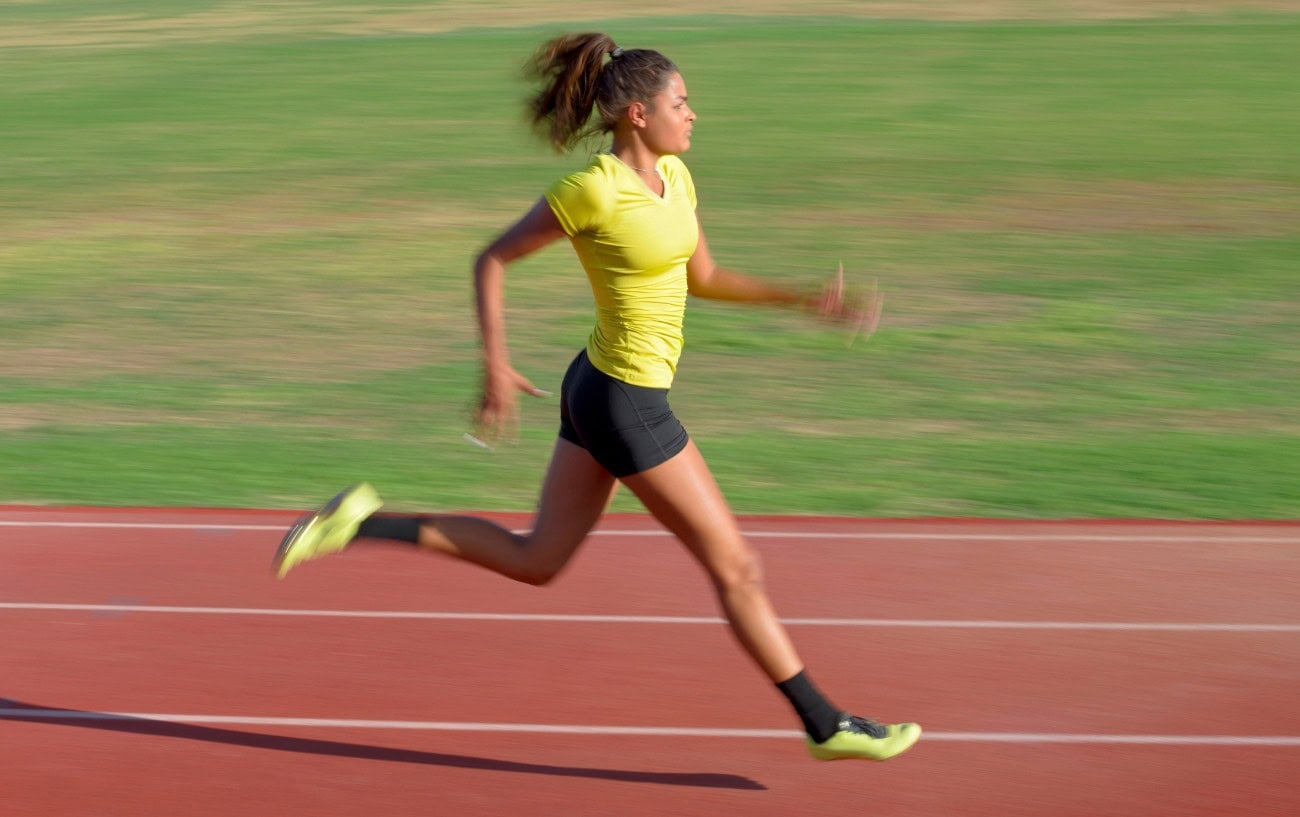
Researchers evaluated 13 female runners who averaged 10:07.8 for their season-best 3,000-meter performance.
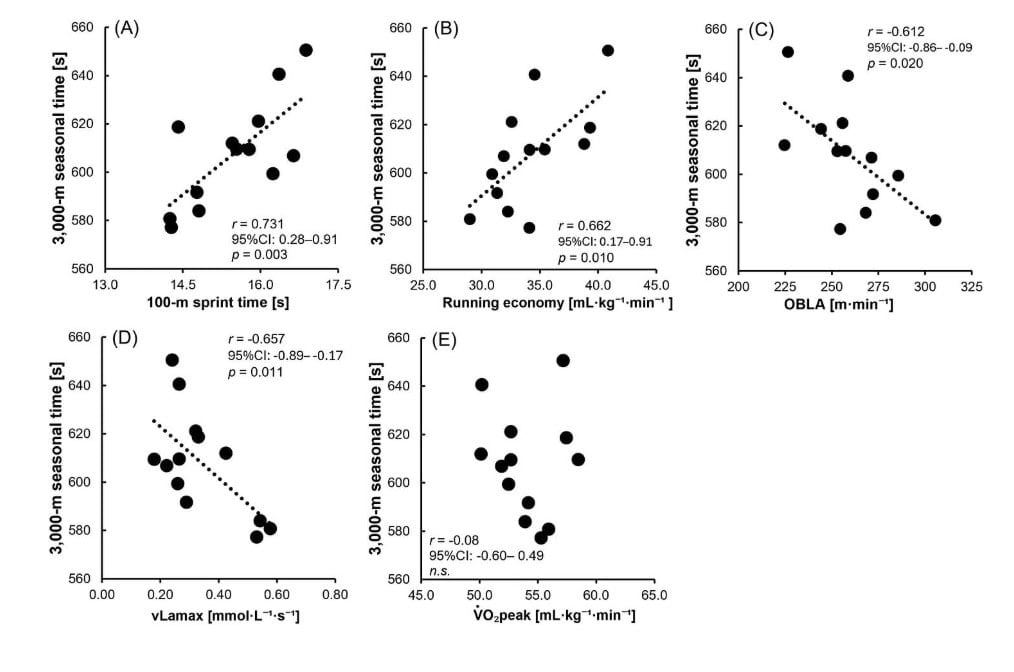
- Faster 3,000-meter times were associated with faster 100-meter sprint times, better running economy, a faster speed at the onset of blood-lactate accumulation, and a higher estimated maximal rate of lactate accumulation (vLamax).
- VO2 peak was not meaningfully associated with performance.
In simple terms, the faster women were more economical, reached the lactate marker at a higher speed, sprinted faster, and—somewhat surprisingly—showed a higher accumulation of lactate. And these were all better predictors of how the women would perform than their maximal aerobic capacity.
What this means for runners
This is a friendly reminder that VO2 max is one part of performance—not a complete ranking system.
Once aerobic fitness is reasonably high, performance may depend more on how economically and quickly you can use it. Strides, short hill sprints, and carefully dosed speed work can improve coordination and preserve your “top end,” but that doesn’t mean you need to turn your endurance program into sprint training.
References
RunClub — Free
Join 300,000+ runners in RunClub
Free training plans for every distance, a daily running game, exclusive coaching content, and a real community of runners. Create your free account in 20 seconds — no card.
Already a member? Log in →











Start the conversation