


There are many amazing physical and mental health benefits of running, from improving cardiovascular health and increasing bone density to decreasing stress and anxiety and improving mood.
But, what does running do to a woman’s body? Does running tone your legs? Does running make your butt bigger? Are there certain changes to expect with a female runner’s body?
In this article, we will discuss the effects of running on the female body, including changes to the physique as well as internal changes to the body from running.
We will discuss:
- How Running Improves Your Health
- Female Runner’s Body: Does Running Make Your Butt Bigger?
- Female Runner’s Body: What Does Running Do to Your Breasts?
- Does Running Tone Your Body?
Let’s get started!

The Honest Truth About How Running Changes A Woman’s Body
The popular framing — “runner’s body” as a body type you achieve — gets the causality backwards. Running produces specific, measurable changes in cardiovascular function, body composition, hormonal regulation, and bone, but the magnitude of those changes depends heavily on training volume, fueling adequacy, and individual physiology. Some of the changes are unambiguously healthy. Some — specifically the menstrual and bone-density consequences of under-fueled training — are not.
Cardiovascular and metabolic changes that are well-supported
Regular endurance running expands plasma volume by 10–15 percent within 1–2 weeks, lowers resting heart rate by 5–15 bpm over 8–12 weeks, and raises VO2max by roughly 10–20 percent in previously sedentary adults 1Convertino VA. Blood volume: its adaptation to endurance training. Med Sci Sports Exerc. 1991;23(12):1338-48.. The all-cause mortality reduction in long-term running cohorts is well-replicated: a meta-analysis of 14 prospective studies covering 232,000 participants found running was associated with a 27 percent reduction in all-cause mortality, with the dose-response curve flattening past about 4–6 hours per week 2Pedisic Z, Shrestha N, Kovalchik S, et al. Is running associated with a lower risk of all-cause, cardiovascular and cancer mortality, and is the more the better? A systematic review and meta-analysis. Br J Sports Med. 2020;54(15):898-905.. The cardiometabolic benefits — improved insulin sensitivity, lipid profile, blood pressure — appear at relatively modest doses, with curves continuing to improve up to roughly 150–250 minutes/week of moderate-vigorous activity 3Lee DC, Pate RR, Lavie CJ, Sui X, Church TS, Blair SN. Leisure-time running reduces all-cause and cardiovascular mortality risk. J Am Coll Cardiol. 2014;64(5):472-81..
Body composition: the less-tidy reality
Endurance training reliably reduces body fat percentage in untrained adults, but the magnitude is modest at typical recreational doses, and compensation matters. The ACSM’s position stand on weight loss notes that 150 minutes/week of moderate exercise produces minimal weight loss without dietary modification; meaningful body-composition change typically requires 225–420 minutes/week paired with energy-balance management 4Donnelly JE, Blair SN, Jakicic JM, et al. Appropriate physical activity intervention strategies for weight loss and prevention of weight regain for adults. Med Sci Sports Exerc. 2009;41(2):459-71.. The compensatory-eating literature shows that exercise-induced energy expenditure is partially offset by increased intake in many people, which is one reason simply running more doesn’t produce proportional fat loss 5King NA, Caudwell P, Hopkins M, et al. Metabolic and behavioral compensatory responses to exercise interventions: barriers to weight loss. Obesity. 2007;15(6):1373-83.. Lower-body lean mass increases modestly in beginning runners and stabilises; upper-body lean mass typically doesn’t change without strength training. Calf, quadriceps, and gluteal hypertrophy is real but small at recreational volumes — far smaller than the “runner’s legs” cliche suggests.
RED-S, menstrual function, and the energy-availability trap
The single most important physiology women runners need to understand is energy availability — the calories left over after exercise expenditure to support all other physiological functions. Below approximately 30 kcal/kg of fat-free mass per day, the IOC consensus on Relative Energy Deficiency in Sport (RED-S) documents a cascade: suppressed luteinising hormone pulsatility, hypoestrogenic state, menstrual dysfunction (luteal-phase defects, oligomenorrhoea, amenorrhoea), reduced bone-mineral density, impaired protein synthesis, and immune suppression 6Mountjoy M, Sundgot-Borgen J, Burke L, et al. The IOC consensus statement: beyond the Female Athlete Triad — Relative Energy Deficiency in Sport (RED-S). Br J Sports Med. 2014;48(7):491-7.. The 2018 update extended the framework with broader cardiovascular, gastrointestinal, and psychological consequences 7Mountjoy M, Sundgot-Borgen JK, Burke LM, et al. IOC consensus statement on relative energy deficiency in sport (RED-S): 2018 update. Br J Sports Med. 2018;52(11):687-97.. The under-recognised piece for runners: menstrual irregularity is a marker of inadequate fueling, not a benign side-effect of training. Recovery typically requires increasing energy intake by 300–600 kcal/day for several months, often paired with reduced training load, and the bone-density losses can take years to recover (and may not fully recover) 8Cobb KL, Bachrach LK, Greendale G, et al. Disordered eating, menstrual irregularity, and bone mineral density in female runners. Med Sci Sports Exerc. 2003;35(5):711-9..
Bone density, stress fractures, and the load paradox
Running is osteogenic at the lower extremities — ground reaction forces of 2.5–3x bodyweight stimulate increased bone-mineral density at the femur, tibia, and lumbar spine in well-fueled runners 9Tenforde AS, Carlson JL, Sainani KL, et al. Sport and triad risk factors influence bone mineral density in collegiate athletes. Med Sci Sports Exerc. 2018;50(12):2536-43.. The paradox is that under-fueled female runners often have lower bone density than sedentary controls despite the high mechanical loading, because the hypoestrogenic state of RED-S overwhelms the osteogenic stimulus 10Nattiv A, Loucks AB, Manore MM, et al. American College of Sports Medicine position stand. The female athlete triad. Med Sci Sports Exerc. 2007;39(10):1867-82.. Bone stress injuries cluster in this population: tibial, metatarsal, and femoral neck stress fractures appear in roughly 8–15 percent of high-volume female runners over a competitive season, with menstrual dysfunction and low BMI as the dominant predictors 11Bennell KL, Malcolm SA, Thomas SA, et al. Risk factors for stress fractures in female track-and-field athletes: a retrospective analysis. Clin J Sport Med. 1995;5(4):229-35.. The protective stack is energy availability above 30 kcal/kg FFM/day, regular menstrual cycles, and progressive (not spike) volume loading.
When “running changes my body” isn’t the right frame
The framing of running as a body-changing tool sometimes drives the worst version of the practice — under-fueled training pursued for aesthetic outcomes that are largely genetic. Body composition responds modestly to running at recreational volumes; the larger and more durable changes are cardiovascular fitness, metabolic health, and longevity. For women specifically, the literature suggests reframing “runner’s body” goals around what running reliably delivers (fitness, mood, mortality risk) rather than what it doesn’t (a specific physique). Pregnancy, perimenopause, and menopause introduce additional layers: post-partum return to running benefits from progressive pelvic-floor and core re-loading rather than aerobic-only ramps 12Bo K, Artal R, Barakat R, et al. Exercise and pregnancy in recreational and elite athletes: 2016/17 evidence summary from the IOC expert group meeting. Br J Sports Med. 2018;52(17):1080-5., and the perimenopausal hormonal shift accelerates lean-mass and bone-density loss in ways that respond to combined endurance + strength training rather than running alone 13Phillips SM, Tang JE. Optimizing the elderly individual’s response to exercise to enhance maintenance of skeletal muscle mass and quality. Curr Opin Clin Nutr Metab Care. 2009;12(6):635-43.. The honest reading: running gives women durable cardiovascular and longevity benefits at modest doses; the body-composition gains are real but small; and adequate fueling is the variable that determines whether running is health-promoting or health-eroding for a given runner.
How Running Improves Your Health
Almost every runner, and even non-runners, know that running is great for your heart. By strengthening your heart muscle, increasing the elasticity of your blood vessels, and improving the efficiency of your cardiovascular system, running can reduce your blood pressure and resting heart rate.
Running can also decrease your LDL (“bad”) cholesterol and HDL (“good”) cholesterol, all of which can reduce your risk of heart disease or stroke. In fact, research suggests that running may reduce your risk of death from cardiovascular disease by 45 percent.
Research has found that runners have about a 25-30% lower risk of all-cause mortality, and consistent running has been found to increase your life expectancy by at least three years.
In fact, a study that investigated the cardiovascular disease and mortality risk of 13,000 runners over nearly 15 years found that running as little as six miles per week—or roughly 52 minutes total—decreased the risk of all-cause and CVD mortality by 30% and 45%, respectively, relative to non-runners.
Plus, even this very low weekly mileage increased the survival rate of runners by 3.0 and 4.1 years for all-cause and CVD-related survival, respectively, compared to non-runners.

Female Runner’s Body: Does Running Make Your Butt Bigger?
Running definitely has the potential to change the physical appearance of your body.
But does running make your butt bigger or smaller?
Running can potentially make your butt bigger or smaller depending on the type of training that you are doing and the diet that you are following, as well as whether or not you are supplementing with strength training.
The butt is composed of both muscle (the glutes) and fat.
Running can potentially increase the size of your glutes or the muscular component of the butt and can decrease the amount of subcutaneous body fat stored in your butt. In this way, running can change the relative ratio of muscle mass to fat tissue in your butt. This, in turn, can change the size, shape, and firmness of your butt.

Particularly if you are doing a lot of hill workouts and sprinting, as well as supplementing your running with strength training exercises that target your glutes, you can build up the size of the muscles in your butt.
However, muscle building requires adequate caloric intake, as well as sufficient proteins, along with enough of a stimulus for growth. This stimulus comes through resistance, which is why hill workouts and sprinting are the most effective forms of running to build glute muscle mass.
If you are in a caloric deficit, you will burn body fat, which can decrease the size of your butt since muscle tissue is denser than fat.
Therefore, if you are not consuming enough calories and you are doing a lot of long, slow-distance running on a flat surface, running will probably make your butt smaller because you will be losing body fat and not building much muscle.

Female Runner’s Body: What Does Running Do to Your Breasts?
In general, most women find that running will decrease the size of their breasts over time.
Because running can decrease your body fat percentage, and breast tissue is primarily composed of fat, many women find that they go down at least a cup size after 6 to 12 months of consistent running.
Of course, your fat loss from running is largely dependent on your diet as well, as fat loss occurs when you are in a caloric deficit.
This means that if you are running and performing other types of physical activity that ultimately put you in a position where you are burning more calories than you are eating, you will lose fat.
Because body fat is lost throughout the body rather than in only specific regions, running can decrease your breast size.

The extent to which your breasts will shrink will depend on your starting cup size and body fat percentage, your particular body shape and body fat distribution, how much you run, and your overall diet and caloric balance.
If you do not want your breast size to decrease, make sure you are consuming enough calories and plenty of heart-healthy fats (such as those in fatty fish, avocados, nuts, and olive oil) and performing exercises that strengthen your chest muscles.
Examples include push-ups, chest press, bench press, and chest fly.
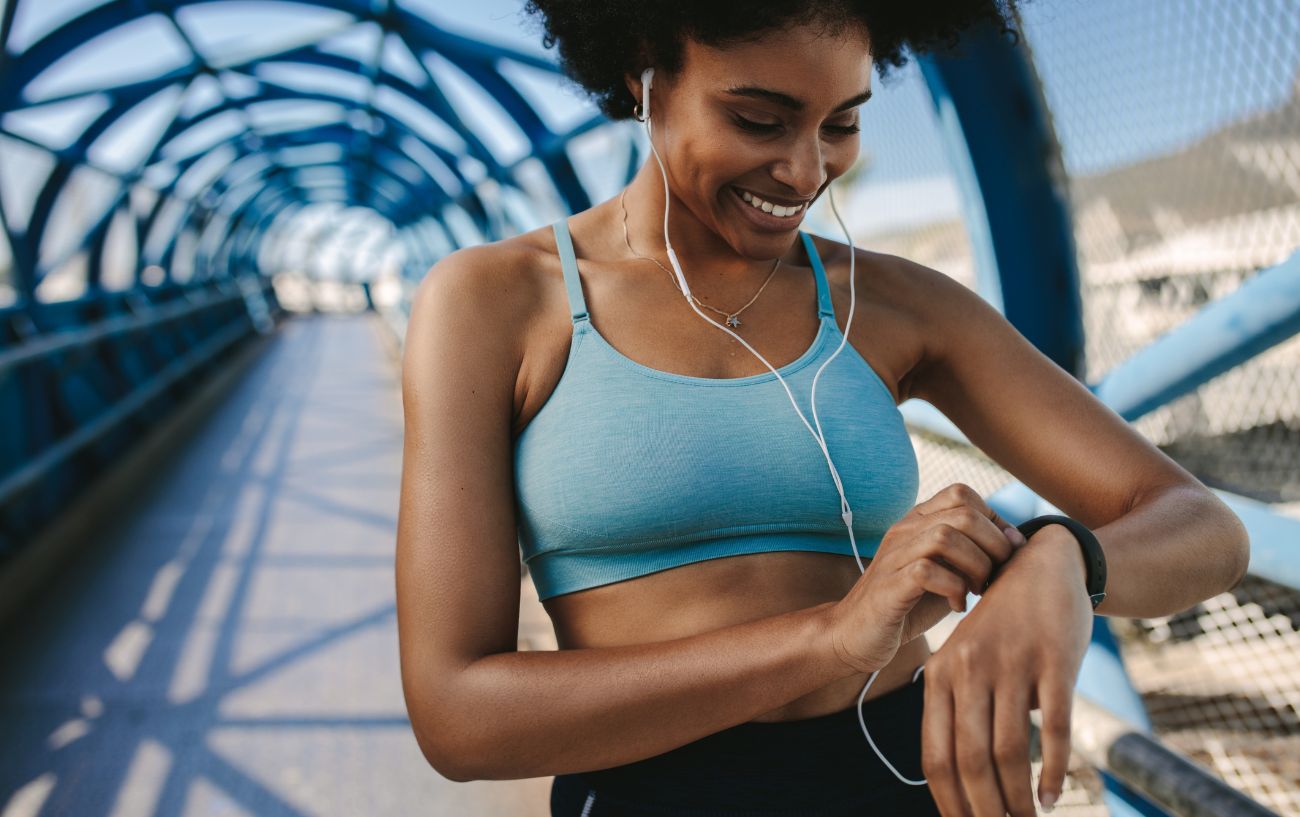
One helpful and often overlooked thing to discuss in relation to the effect of running on your breasts is the importance of wearing a supportive sports bra.
Because running is a high-impact exercise with a lot of jarring on your body, it is imperative to wear a properly fitting, supportive sports bra, especially if you have larger breasts.
A high-quality running sports bra not only makes running more comfortable by reducing bouncing, but it can also prevent future sagging of your breasts.
The only natural support for breast tissue is our skin itself and weak ligaments referred to as Cooper’s ligaments.
The excessive jostling from running without a sports bra or in a worn-out sports bra that is too loose can overstretch and damage these ligaments over time.
Additionally, as we age, our skin loses some of its natural elasticity, and collagen, which is one of the support of structural proteins in the skin, also begins to break down faster and not regenerate as quickly.
Therefore, if you do lots of running in an unsupportive sports bra, you may be setting yourself up for saggy boobs later on in life.
There are many different styles of sports bras for runners, with various types of straps, closures, cup support, wires, etc.
As with running shoes, it is a good idea to get fitted at your local running shop to find what feels best for your body. A sports bra that does not fit properly may do little to prevent bouncing or, worse, may cause painful chafing.

Does Running Tone Your Body?
One of the most common questions that new runners are eager to discover the answers to is, “Does running tone your body?”
“Toning” can be a bit of a confusing term because it is somewhat poorly defined and thus poorly understood by the general public.
When people are looking to “get toned,” they would like to see better muscle definition. In most cases, in order to look toned, you need to build muscle to some degree, as well as lose body fat.
The good news is that running can address both sides of this equation, helping to effectively tone your body and improve your muscle definition and physique.
Running burns calories, and if you are able to consistently maintain a caloric deficit, which means that you are burning more calories per day than you are eating, you will lose that by running.
It is important to remember that the number of calories you burn per day is far more than just the number of calories you burn running.

Your total daily energy expenditure (TDEE) is the sum of the calories burned through deliberate exercise such as running, the calories burned being physically active with daily life activities above the level of resting condition, the calories that you burn digesting and metabolizing food, and your basal metabolic rate (BMR).
Your BMR is typically the largest contributor to the number of calories you burn per day. It refers to the number of calories your body needs daily just to sustain your life.
Running will directly increase the number of calories you burn per day through exercise, but also, over time, running can increase your BMR.
As you build more muscle, your basal metabolic rate will increase because muscle consumes more calories, even at rest, than fat tissue.
Therefore, with consistency and patience, as long as you follow a nutritious, calorie-controlled diet, running can help you get toned and reduce your body fat percentage.
This only scratches the surface of all the excellent things running can do for the female body, so get out there and enjoy your run!
Now we know what running can do to a female’s body, but let’s expand on running benefits in general, including physical and mental health benefits. For a long list of why you should be running and why it is so good for you, check out our article: The 26 Awesome Benefits of Running.

References
RunClub — Free
Join 300,000+ runners in RunClub
Free training plans for every distance, a daily running game, exclusive coaching content, and a real community of runners. Create your free account in 20 seconds — no card.
Already a member? Log in →







Start the conversation