


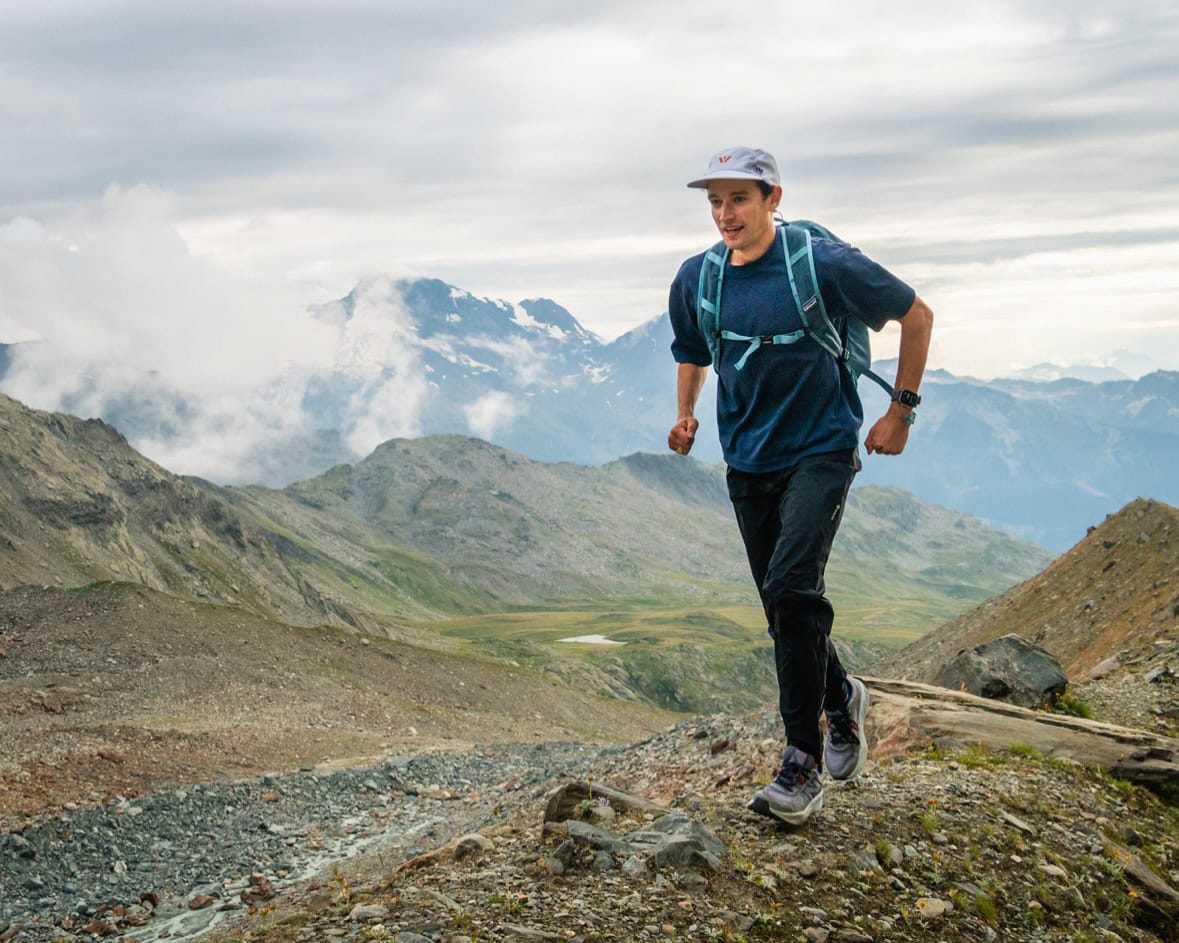
Here’s the dirty secret about road runners: we think that running on the trail is a lot easier than it actually is. We take one look at the running pace and think: ‘easy! I’d make a fine trail runner myself!’
So, when I was invited on a hut-to-hut trek through the French Alps, based out of Chalet Pelerin in Sainte-Foy-Tarentaise, I flew across the Atlantic and drove towards France’s eastern countryside overconfident and underprepared. The trip was curated by Eleven Experience, a travel company best known for high-end skiing and fishing lodges and off-the-grid getaways. Now, they’re exploring the running scene in some of the most picturesque places on Earth like the Alps, Iceland, Colorado and the Canadian Rockies.
I joined a small delegation of journalists and content creators for the adventure. I won’t lie: as a 65-minute half-marathoner, I don’t usually expect to be pushed on fitness-based press trips. More often than not, I’m the one easing up to let the group catch its breath. But this time was different. For four days, I was left in the Alpine dust by my teammates for this trip: three women with serious trail cred who flew down steep descents, danced across rocky passes, and actually knew how to use those pesky hiking poles.
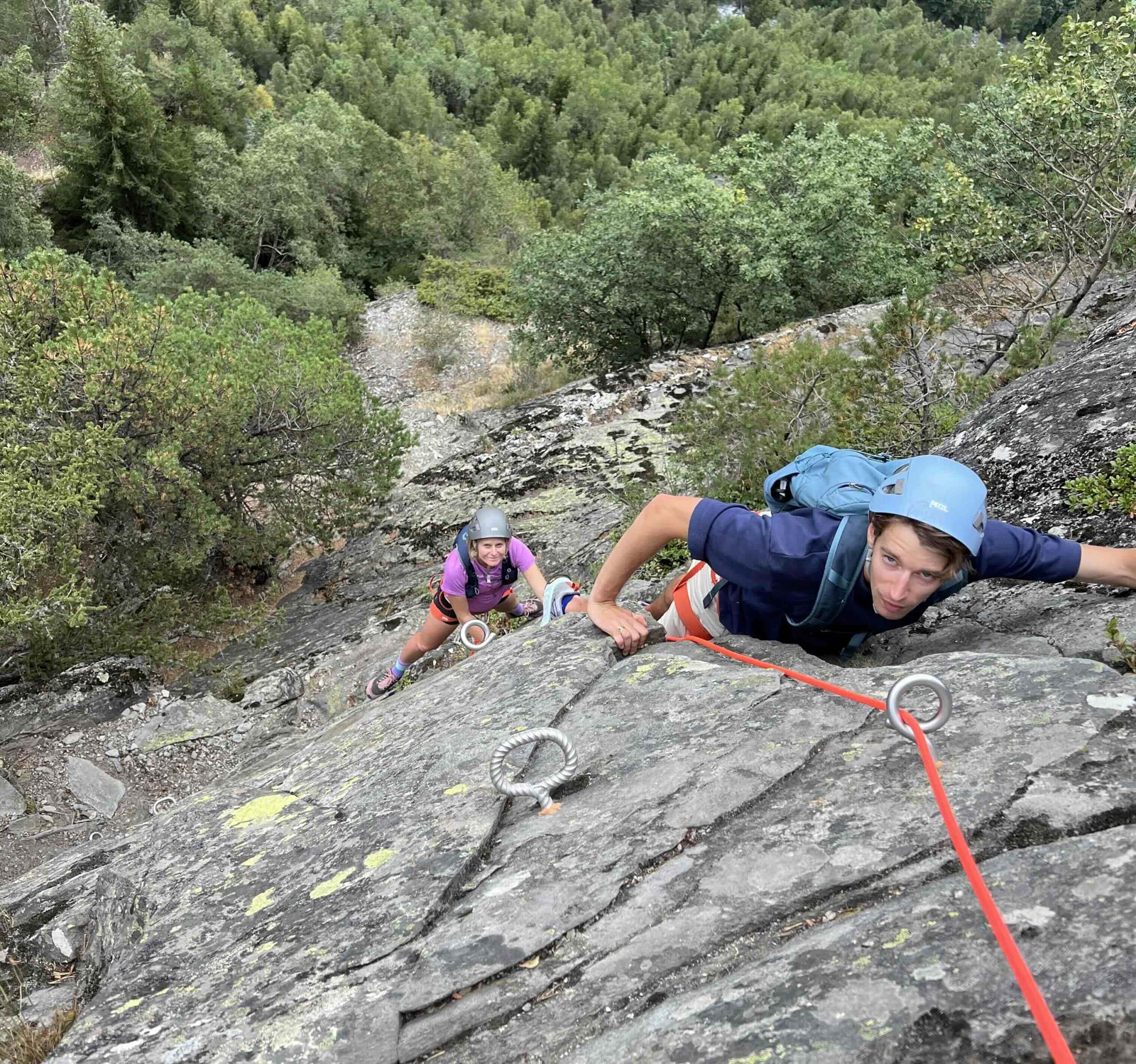
The hut-to-hut experience itself was a dream. We kicked things off with a via cordata—Italian for “climbing a mountain with ropes and wobbly knees”—on the French side of the Alps. That led straight into a 16-kilometre mountain run to Le Crot, where we stayed the night. The next day we power-hiked for 12 miles up Le Col du Mont Blanc, cresting 7,000 feet and crossing into Italy, where we soothed our aching muscles around a campfire. On Day Three, we logged another nine miles back to base camp. By the end of it, we had covered more than 15,000 ft. of elevation. Thankfully, the rustic cottages along the way—stocked with wine, charcuterie, bunk beds, playing cards, and a highly skilled chef—tricked me into thinking I could do it all again the next day.
If you’re tempted to take your road chops to the trails, and test yourself on Eleven’s hut-to-hut alpine circuit or another, consider this your warning. Here are five tips to prevent you from shuffling down the mountain feeling burnt out, sore, injured, or just plain humbled:
1. Learn to Run Downhill (For Real)
Trail downhills aren’t like road downhills for three main reasons: they are longer, they are steeper, and they are usually terrifyingly rocky and uneven. For minutes, and maybe hours, you have to land squarely on your feet, while breaking your stride and resisting gravity’s pull to maintain balance. The motion feels unnatural, and targets your quads and patellar tendons. After a single day, I had pains above both of my kneecaps: traditional runner’s knee, whose name they should change to trail runner’s knee, or more aptly trail knifing, because I’d never encountered the feeling of having knives dug into my quads on the roads. Strengthening your quads with hikes, or even resistance workouts at the gym before your big adventure, can help mitigate that awful feeling and keep you healthy.
2. Learn to EAT on the Run. A Lot.
Before this hut-to-hut trek, the longest I had ever trained without stopping was probably two hours; the window of time that science has proven is just short enough to pull off without fueling (hence the marathon bonk). Trail runs aren’t like that: you will probably be on the move for at least three hours or far longer, during which time you also need the cerebral capacity to make decisions about how to negotiate terrain. The brain runs on carbs, and so does the aerobic system. So bring little snacks that are easy to carry and digest: bars, chews, dates, trail mix (hence the name) do the trick. This advice becomes twice as important if you’re trail running for multiple days in a row: there are few things worse for performance than carrying a caloric deficit through the night. And recent research shows that carbs are just as important for recovery as they are for fueling a big day on the trails.
3. Be Humble and Embrace the Necessary Gear
I resisted the poles as long as I could. Because… poles? Why would I need poles? This isn’t a ski trip. And, fair: they didn’t do much for me on the uphills; but they did keep me steady while I ran downhill with knives sticking out of my patellar tendons (see tip #1). Hiking poles also collapse, so they’re highly packable. And, yes, you’ll need a small backpack. I used this Laser Lite Hydration Pack from Nathan, which comes with a cavity for a three-liter bladder and handy front pockets for essentials like snacks, along with back storage for layers of clothing (which you will need in the mountains).
4. Get Proper Trail Shoes for the Specific Terrain
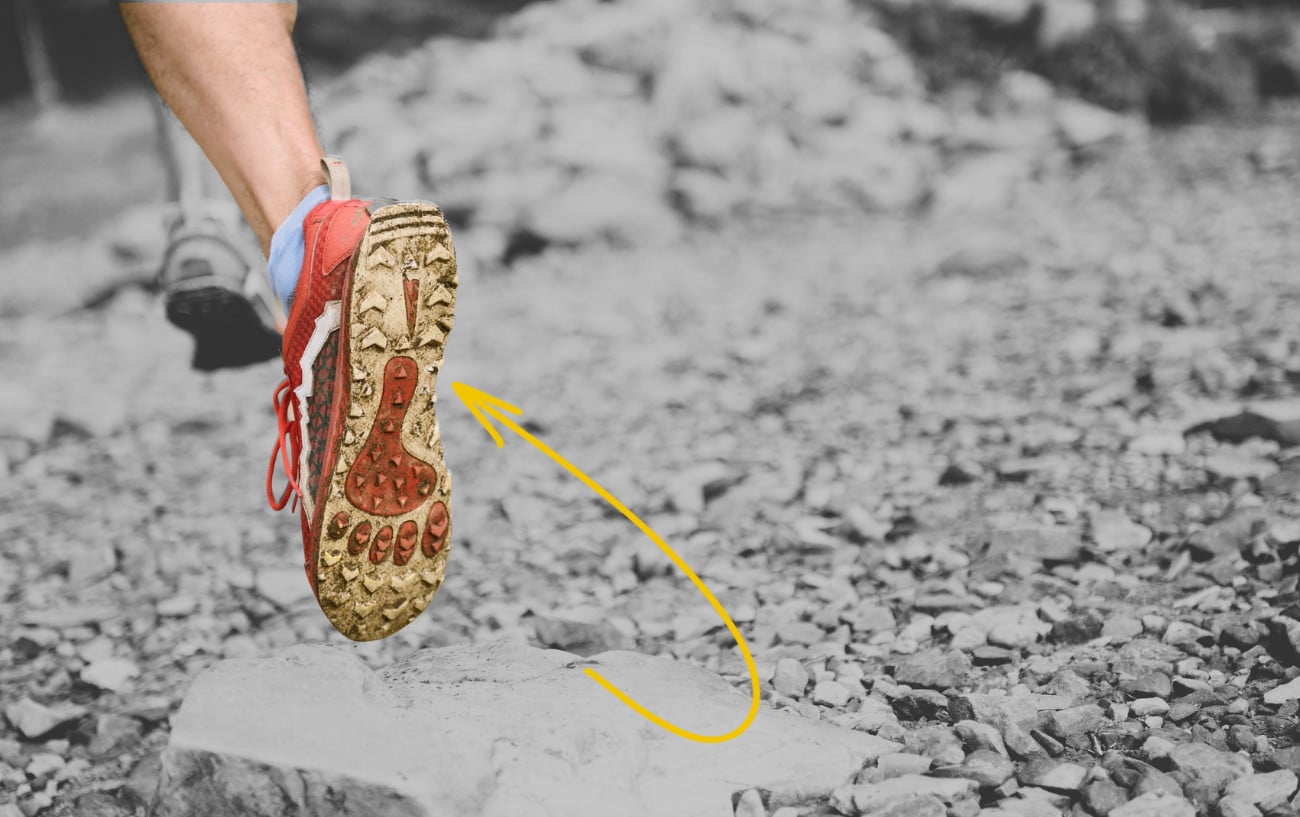
When transitioning from the roads to the trail, a shoe is not a shoe is not a shoe. I made the grave mistake of wearing my favourite road shoe of the moment, the fast but cushioned Asics Superblast 2 (you can watch my review here), only to constantly roll my ankles on the seemingly endless litany of roots and rocks on the Alpine singletrack.
A proper trail running shoe is made firmer, often with a specially tuned chunky outsole and deeply-cut lugs for grip. Traction and durability reign supreme. I’ve since had the chance to test out several trail shoes in tough conditions, and currently have two favourites: the tall and indestructible Hoka Mafate X, and the light but grippy Norda 005. Both have a carbon plate, tacky grip, a rock forward profile, and landing pad that keeps the foot straight and minimizes ankle rolls.

5. Throw Pace Out the Window and Nerd Out on Elevation Gained
That isn’t to say don’t run with a watch: especially if you count on it for navigation. But keeping track of your speed, and trying to match your regular pace is a fool’s errand. Winding, technical terrain, often at several thousand feet above sea level, will feel much harder than your flat road runs. The difference is so great that trail runners don’t even count their runs in miles, kilometers or even by pace—they will report it in vertical metres covered. Fail to accept that you’re doing a different sport, and you will go home devastated.
6. Count the Hiking Miles
A lot of multiple-day trail runs include significant hiking components. As a purist runner, I don’t count anything but running in my weekly mileage. If my watch detects my one-mile morning walk to get a coffee and it uploads it to Strava, I make sure to delete it. But hikes—especially long ones—shouldn’t be neglected. They do take a lot out of your body, and failing to record them may lead you to overtraining and burnout. So, yes, log those “walking” miles. If you want to get really fussy with your data tracking, most running watches actually have a “hiking” sport category, but it might be more enjoyable to just hit the start button on a trail run, and let it go. Sure, you’re annual average pace on Strava will suffer, but just think of all those kudos from those meters of elevation you’ll crush.
7. Respect the Weather (It Can Change in Minutes)
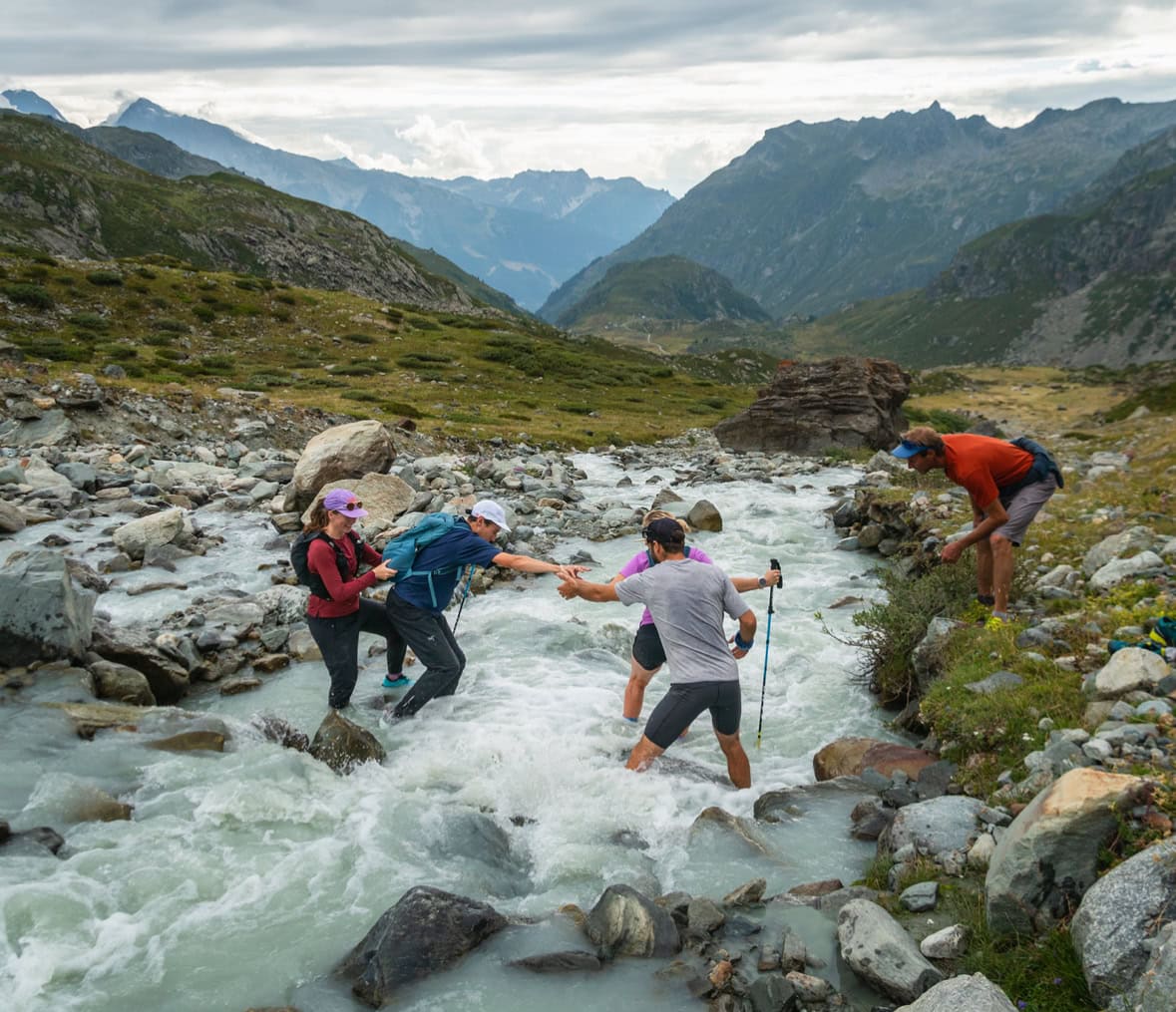
In the mountains, conditions can flip from sunny and warm to cold, wet, and dangerous in under an hour. Always pack extra layers, a waterproof shell, gloves, and a hat, even if the day looks clear and you’re running during dog days of summer. Road runners used to predictable loops at sea level often underestimate how exposed trails can be, particularly at elevation. Mountains attract wacky weather.
8. Train Your Balance and Core
On the road, you can “switch off” mentally and cruise. On trails, every step demands micro-adjustments for roots, rocks, and uneven surfaces. Core strength, stability drills, and balance exercises (single-leg work, wobble board, yoga) translate directly to trail resilience and fewer falls. I recommend switching a couple of your road-based runs to a local trail, and try to simulate the terrain the best you can. Getting used to constantly scanning the forest floor ahead of you will prepare you the different demands of intense days on the trails.
9. Hydrate and fuel Differently (and Carry More Than You Think)
Aid stations aren’t waiting for you in the backcountry. Carry a hydration bladder and/or soft flasks, and learn where water sources are on your route. Also consider picking up a screw-top charoal filter for a handheld soft flask, just in case you have to purify your own water along the way. Thankfully, in the Alps, there are many clean water sources available, but I’d recommend definitely mapping them out in advance, and have a hydration plan in place. In altitude and dry mountain air, dehydration hits harder and faster than on the roads.
Shocker: after running for a few hours on the trails you will start craving something other than gels and carb mix. There are plenty of salty alternatives.
10. Mental Pacing: Accept That It’s Slower and Harder
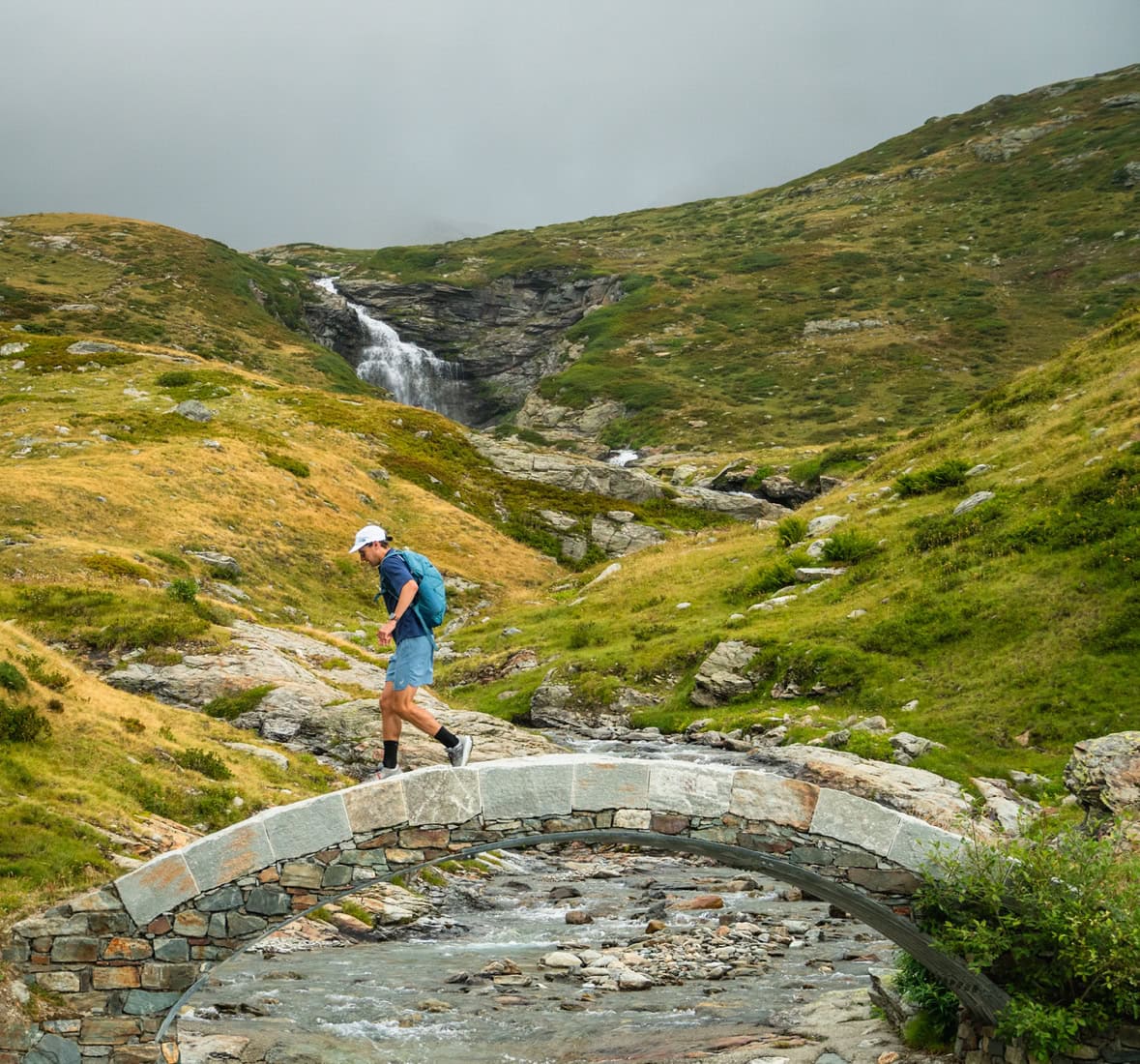
Trail running isn’t just a physical adjustment; it’s a mental one. Accept that covering 10 miles might take twice the time (and effort) of 10 miles on the road. Celebrate vertical gain and time-on-feet rather than pace or distance. Consider this: ultra GOAT Jim Walmsley (and 2:17 marathoner) will routinely power hike up hills instead of trying to run them. Do as the pros do, and embrace putting your hands on your quads for those steep marches up a nasty incline. You’ll feel stronger during the truly runnable sections, and you won’t lose any time in the long run. This mindset shift makes the experience much more rewarding.
BONUS: Learn the Etiquette of the Trail
Yielding to uphill runners, greeting other trail users, and respecting wildlife and fragile environments are all part of the sport. Road runners new to trails sometimes forget that the mountains have their own rules. As tempting as it is to add another rock to that cairn, many trail custodians would rather you just leave it to them to manage the trail.
RunClub — Free
Join 300,000+ runners in RunClub
Free training plans for every distance, a daily running game, exclusive coaching content, and a real community of runners. Create your free account in 20 seconds — no card.
Already a member? Log in →






Start the conversation