


Every runner wants to move like the pros — smooth, controlled, almost effortless. And it turns out there’s real science behind why good running form matters, beyond just looking the part.
Recent research has reshaped how coaches think about running form. A 2024 systematic review and meta-analysis1Bas Van Hooren, Jukic, I., Cox, M., Frenken, K. G., Bautista, I., & Moore, I. S. (2024). The Relationship Between Running Biomechanics and Running Economy: A Systematic Review and Meta-Analysis of Observational Studies. Sports Medicine, 54. https://doi.org/10.1007/s40279-024-01997-3 in Sports Medicine found that running biomechanics explain 4–12% of the variation in running economy between individuals — meaning small adjustments to your form can translate into measurable performance gains.
And a 2025 review on running cadence2Figueiredo, I., Reis, M., & Sousa, J. E. (2025). The Influence of Running Cadence on Biomechanics and Injury Prevention: A Systematic Review. Cureus. https://doi.org/10.7759/cureus.90322 confirmed that subtle tweaks — like nudging your step rate up 5–10% — reduce impact forces on your knees, hips, and tibia without hurting your running economy. In other words, better form isn’t just about aesthetics — it’s about running faster, longer, and with fewer injuries.
But here’s the catch: most runners aren’t sure what good form actually looks like, or how to fix the parts that feel “off.” Should you land on your forefoot? How tall should you run? What’s the right cadence — really? The advice runners get is often contradictory, and the research is still evolving.
The good news? Form is one of the most coachable things in running. Even if you’ve been running for years, the right cues, a few targeted drills, and some consistency can transform how your body moves — often within a few weeks.
You don’t need to overhaul your stride or chase an “ideal” form that doesn’t exist. You just need a few small, well-placed adjustments that work with your body, not against it.

Why Focus On Improving Running Technique?
Beyond the economy gains we touched on above, the research points to a few specific levers that move the needle most.
Lower vertical oscillation, greater leg stiffness, and shorter ground contact time were all linked to better running economy — so the goal isn’t to bounce higher or land harder, it’s to move more horizontally with a quick, controlled stride.
Cadence is the most actionable lever of the bunch. That 5–10% bump in step rate doesn’t just improve economy — it specifically reduces the impact forces traveling up through your tibia, knees, and hips, which is exactly where most overuse injuries develop. It’s one of the few form changes that deliver both performance and injury-prevention wins at the same time.
The injury connection is where poor form really starts to cost you. Overstriding — landing with your foot well ahead of your center of mass — has been shown to increase posteriorly-directed braking forces and vertical impact loading,3Lieberman, D. E., Warrener, A. G., Wang, J., & Castillo, E. R. (2015). Effects of stride frequency and foot position at landing on braking force, hip torque, impact peak force and the metabolic cost of running in humans. Journal of Experimental Biology, 218(21), 3406–3414. https://doi.org/10.1242/jeb.125500 forcing your muscles and connective tissues to absorb energy that’s working against your forward motion.
Every overstride is essentially a tiny brake pedal, and your body pays the cost in shin splints, runner’s knee, Achilles issues, and stress fractures.
Proper form, by contrast, distributes those forces across the joints designed to handle them — meaning less wasted energy and less wear-and-tear over the long haul. And the best part? You don’t have to overhaul your stride to run faster and more comfortably.
Small, consistent adjustments to cadence, posture, and foot landing position are usually all it takes — and the research suggests you can feel the difference within a few weeks.
What Does Good Running Form Look Like?
Before we get into how to improve your form, it’s worth knowing what we’re actually aiming for.
There’s no universal blueprint for “perfect” running form — every runner’s body, mechanics, and history are different, and the latest research backs that up. But there are a handful of core elements that consistently show up in efficient, injury-resistant runners, regardless of pace or experience level.
Here’s what to look for:
#1: Balanced Pelvis
Your weight should be split evenly between your two hips and legs. Keep your core muscles tight and engaged to promote balance.
Even though each leg swings separately, you want your hips to be level and balanced. When each foot lands, engage your glutes and core to keep your hips level rather than sinking down into the weight-bearing side (the Trendelenburg sign).
If you notice you are indeed dropping your hip on each side when you land, you need to strengthen your gluteus medius muscle, an important hip abductor.
When added to your strength training plan, exercises like clam shells, lateral leg lifts, single-leg squats, and side steps can help strengthen this muscle group. Unilateral exercises will also work out muscle imbalances in general.
Also, include core strength exercises for improved stability.
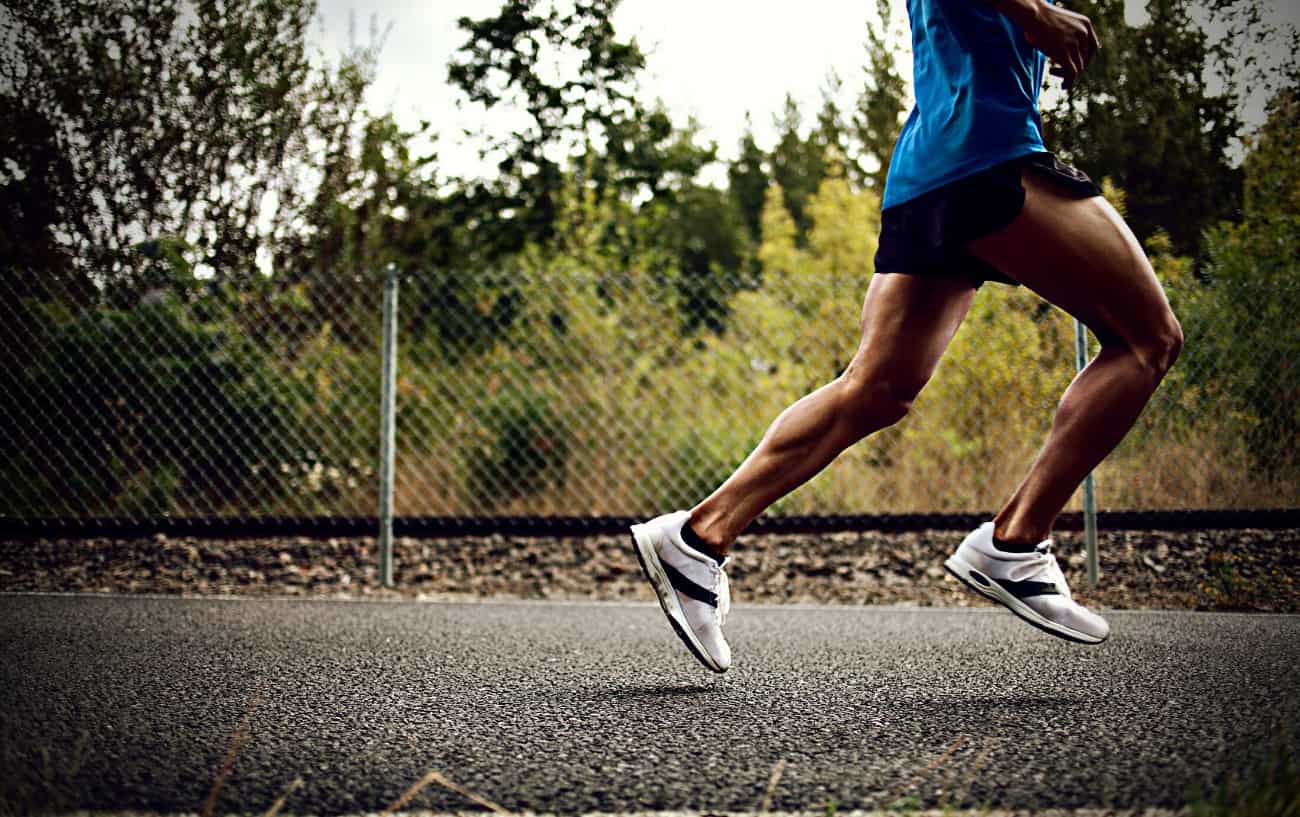
#2: Upright Posture
Proper running form hinges upon using good posture because it allows your lungs and diaphragm to expand and breathe as easily as possible.
Keep your upper body upright and your spine neutral.
In other words, you should not be hunched over or leaning backwards while you run. Picture yourself “running tall,” as if there’s a string attached to the top of your head pulling you up towards the sky. A slight forward lean is encouraged.
Think about keeping your chest open, up, and proud. Engage your core and keep your shoulders back and down, away from your ears.
#3: Legs and Feet
Aim for symmetry first. Your legs should move like mirror images of each other — equal stride length, equal cadence, equal effort on both sides. Subtle imbalances are normal, but big ones can signal a strength deficit or compensation pattern worth addressing.
Lift your legs high enough that you’re not shuffling. Some runners think shuffling saves energy because they’re not picking their feet up as much — but in reality, it creates excess friction with the ground and kills your forward momentum. A quick, light foot turnover is what you’re after.
Here’s where the science has shifted: foot strike pattern matters far less than coaches once believed. For years, the prevailing advice was to land on your midfoot or forefoot and avoid heel striking at all costs. The latest research tells a more nuanced story.
A systematic review and meta-analysis4Xu, Y., Yuan, P., Wang, R., Wang, D., Liu, J., & Zhou, H. (2020). Effects of Foot Strike Techniques on Running Biomechanics: A Systematic Review and Meta-analysis. Sports Health: A Multidisciplinary Approach, 13(1), 71–77. https://doi.org/10.1177/1941738120934715 on foot strike techniques found no meaningful difference in running economy between heel, midfoot, and forefoot strikers. Heel striking, on its own, also doesn’t reliably predict injury risk the way it was once thought to.
So what does actually matter? Where your foot lands relative to your body.
The bigger issue isn’t whether your heel touches first — it’s overstriding, when your foot lands well ahead of your center of mass. Research published in the Journal of Experimental Biology5Lieberman, D. E., Warrener, A. G., Wang, J., & Castillo, E. R. (2015). Effects of stride frequency and foot position at landing on braking force, hip torque, impact peak force and the metabolic cost of running in humans. Journal of Experimental Biology, 218(21), 3406–3414. https://doi.org/10.1242/jeb.125500 found that the further your foot lands ahead of your hip, the higher the braking forces and vertical impact loading on your body.
Translation: an overstriding heel-striker creates braking forces with every step, but a heel-striker who lands closer to under their hips can run efficiently and without unusual injury risk.
The most evidence-backed fix isn’t to consciously shorten your stride or switch foot strikes — it’s to nudge your cadence up by 5–10%, which automatically pulls the foot-landing position back under your body. The 2025 cadence review confirmed this approach reduces impact forces on the tibia, knees, and hips without hurting running economy.
A few practical cues to keep in mind:
Don’t force a foot strike change. Trying to consciously switch from heel to forefoot striking is one of the most common causes of running injury — your calves and Achilles tendons need months to adapt to that kind of load shift. Most runners are better off improving cadence and foot landing position instead.
Land lightly. You shouldn’t hear your shoes slapping the pavement, regardless of which part of your foot touches first.
Aim for quick, quiet feet. Loud, heavy footfalls usually mean you’re landing too far ahead of your center of mass.

#4: Head and Gaze
Keep your head in a neutral position — chin and forehead facing straight ahead, not tilted up at the sky or dropped toward the ground. Imagine a string gently lifting the crown of your head, lengthening your spine from your tailbone all the way up.
Your gaze should travel forward and slightly down — roughly 10 to 20 feet ahead on the road or trail. This lets you spot upcoming footing (cracks, rocks, curbs) without dropping your head and losing your posture.
Resist the urge to stare at your feet. Beyond the obvious — you can’t see what’s coming — it compresses your airway, restricts your breathing, and pulls your shoulders forward into a hunched position that cascades down through the rest of your stride.
A simple cue if your head starts dropping mid-run, especially when fatigue sets in: eyes up, chest open. Two words: instant reset.
#5: Arm Swing
Many runners don’t focus enough attention on their arms. The arm swing component of running form helps improve your balance, rhythm, power, and speed. In fact, the arms drive the legs. The faster you pump your arms, the faster your legs will move.
Your shoulders should be relaxed and down away from your ears. Your elbows should be bent at about a 90-degree angle. Swing your arms straight forward and back along the side of your torso.
Minimize any motion of your arms across your body.
Your hands should not swing past the midline of your body, so if you picture an invisible fence running down your torso from your chin to your belly button, do not allow your right hand to swing across to the left side of this fence, and vice versa.
When your arm swing has too much side-to-side motion, your running form is less efficient. This motion wastes energy that could otherwise be propelling you forward.
#6: Relaxed Hands
Your hands should be in a loose, relaxed fist as if trying to keep a butterfly safe inside without crushing it. A tight fist increases tension and can fatigue your muscles over time.
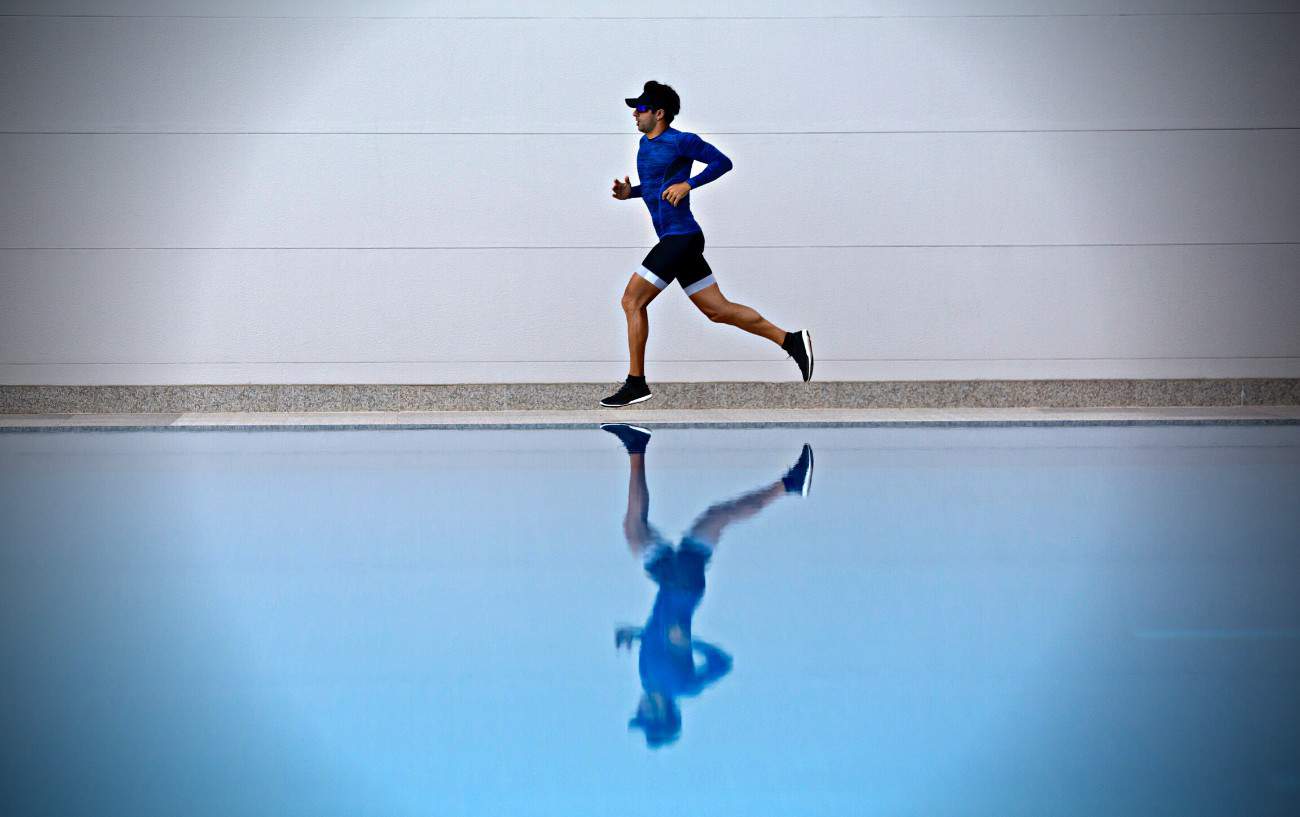
How Can I Improve My Running Form Instantly?
Changing your running form can feel overwhelming, especially if you’ve been running for months or years. Most of us run with whatever feels natural — we don’t think about our shoulders, hips, or cadence consciously. We just run.
But as the research we’ve covered shows, the time and energy you invest in your form pays off. Even small, well-placed adjustments can deliver measurable improvements in running economy, reduce impact forces on your joints, and help you avoid nagging overuse injuries that derail training cycles.
The keyword, though, is gradually. Trying to overhaul every part of your stride at once is a fast track to feeling robotic, frustrated, or even injured. Instead, pick one body part or one form cue per run, and work on it patiently over several weeks.
Use Cues and Mantras That Resonate With You
A short, repeatable cue gives your brain something to lock onto when fatigue starts breaking down your form. Here are some examples to choose from:
- Balance: “Level pelvis,” “even hips,” “balanced pelvis.”
- Posture: “Run tall,” “head to the sky,” “proud chest,” “shoulders away from the ears,” “stand, don’t slouch.”
- Head: “Eyes forward,” “eyes on the horizon,” “eyes up” (if you tend to look at your feet)
- Cadence: “Quick feet,” “light and quick,” “fast turnover,” “step, don’t shuffle.”
- Foot landing: “Land under,” “feet under hips,” “soft and quiet.”
- Arms: “Don’t cross the fence,” “swing and drive,” “forward and back,” “powerful pump.”
- Hands: “Hold a butterfly,” “light fists,” “relaxed hands,” “loose grip.”
As a running coach, I recommend my athletes pick one or two components per run — say, cadence and arms — and choose the cue that resonates most with how they want their form to feel.
Then recite it every few minutes during the warm-up and main run as a gentle nudge back to the pattern you’re building.
Prioritize the Cues With the Biggest Payoff
If you’re not sure where to start, lead with the changes the research says move the needle most:
- Cadence. A 5–10% bump in step rate is the single most evidence-backed form change. Use a metronome app or a BPM-matched playlist to anchor your turnover.
- Posture. “Run tall” addresses multiple downstream issues at once — it opens the chest for better breathing, prevents the slouch that compresses your airway, and naturally encourages a foot landing closer to under your body.
- Foot landing position. Not foot strike pattern, but where your foot lands relative to your hips. Cadence and posture cues usually fix this on their own.
- Relaxation. Tight shoulders, clenched fists, and a tense jaw all waste energy. A quick body scan every mile — “soften shoulders, soften hands, soften jaw” — keeps you efficient.

Get Visual Feedback
Cues only get you so far. To actually see what your form looks like:
- Run in front of a mirror on a treadmill — instant, real-time feedback you can adjust on the fly.
- Have a friend film you running from the front, side, and back. The side view is the most revealing — it shows your foot landing position, posture, and arm swing all at once.
- Slow the video down to half-speed when you watch it back. Small inefficiencies that fly by in real time become obvious in slow motion.
- Work with a running coach if you can. A trained eye can spot compensations and asymmetries you’d never notice on your own.
Build It Into Drills, Not Just Runs
The research on cadence and form improvements consistently shows that drills and strides reinforce new patterns faster than easy mileage alone. A few minutes of focused drill work, two or three times a week, accelerates the change:
- Strides (4–6 reps of 20 seconds at a fast-but-relaxed pace at the end of easy runs) naturally raise cadence and clean up form.
- A-skips and high knees train your feet to land under your hips.
- Quick-feet drills build the neuromuscular pattern of higher cadence.
- Wall drills practice a vertical shin-and-foot landing position close to your body.
Pair these with calf, Achilles, and tibialis strength work so the tissues that absorb the new loading pattern are ready for it.
Be Patient — Real Change Takes Time
Cadence research suggests that most runners need 4 to 8 weeks of consistent, gentle practice for a form change to feel natural. Some changes — like a true foot strike shift — can take 6 months or longer for the body to fully adapt to.
The good news? Cues and small adjustments often feel better within a single run, even if the full physiological adaptation is still weeks away. That immediate “lighter, easier, smoother” sensation is a real preview of where you’re heading.
So pick your one cue. Run with it. Check in mid-run. Watch yourself on video. Repeat. The runs you put in now — focused on form, not just fitness — are the ones that pay off for years to come.
Next step? Perfecting that cadence. Take a look at this next guide:
References
RunClub — Free
Join 300,000+ runners in RunClub
Free training plans for every distance, a daily running game, exclusive coaching content, and a real community of runners. Create your free account in 20 seconds — no card.
Already a member? Log in →










Join the conversation
I thank you for your time guiding me through this process and helping me to understand how to enjoy to run with passion and feel alive while running and love running thus you are a great teacher