


Mizuno unveiled the Hyperwarp 96 on Thursday, a carbon-plated racing shoe that weighs about 96 grams, and it is making just 696 pairs of it for the whole world, each with its own serial code and a special-edition box. The Japanese company is calling it a concept model, and the production run is a nod to the weight in the name. Mizuno will sell it through its own online store and shops from Dec. 4. A handful of running retailers get their pairs from January 2027.
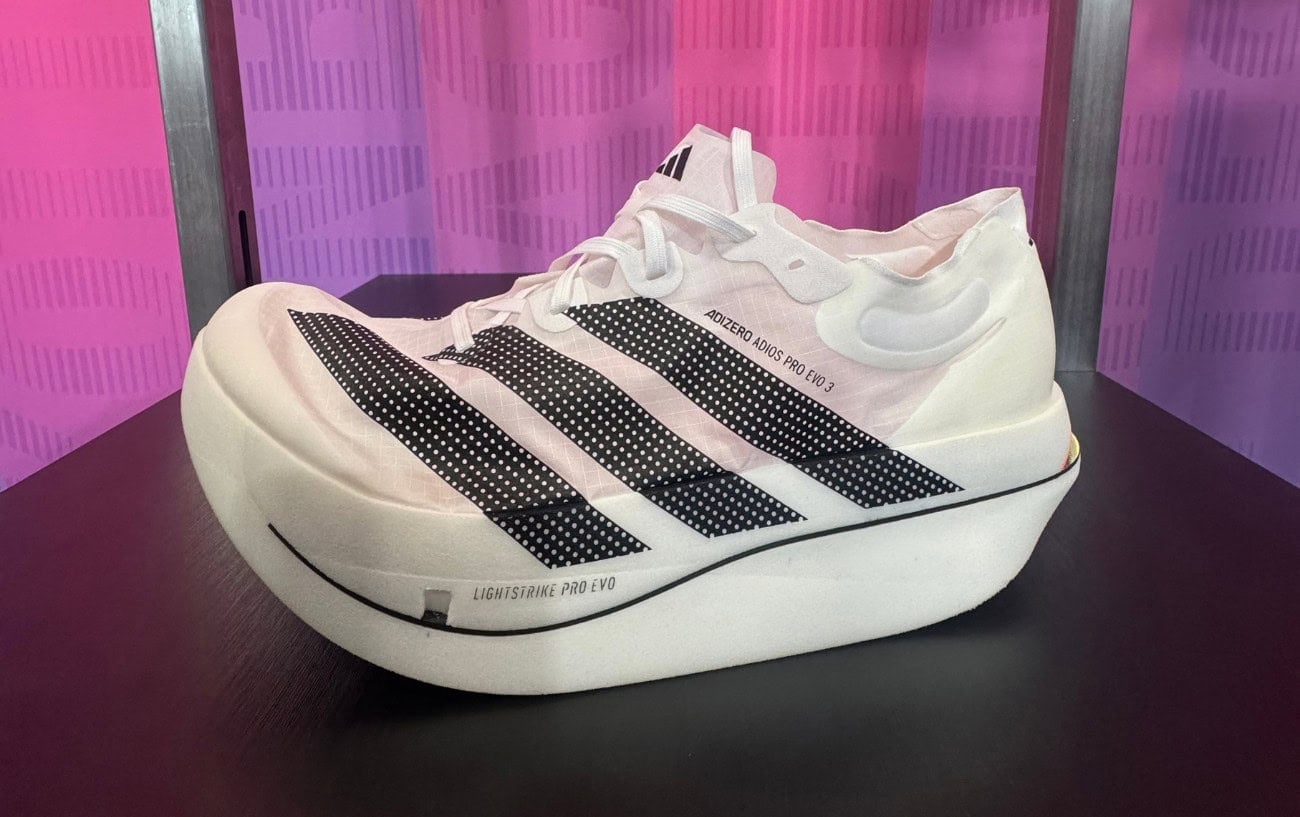
In Japan the shoe costs ¥88,000 ($554). That price includes the country’s 10 percent consumption tax, and without it the figure is ¥80,000 ($504), a few dollars off the $500 Adidas charges for the Adizero Adios Pro Evo 3. Mizuno’s English-language announcement, released as the shoe went on show at the Berlin Marathon expo, carried no U.S. or European price. The French site Stadion Actu has reported €500 ($569) for Europe.
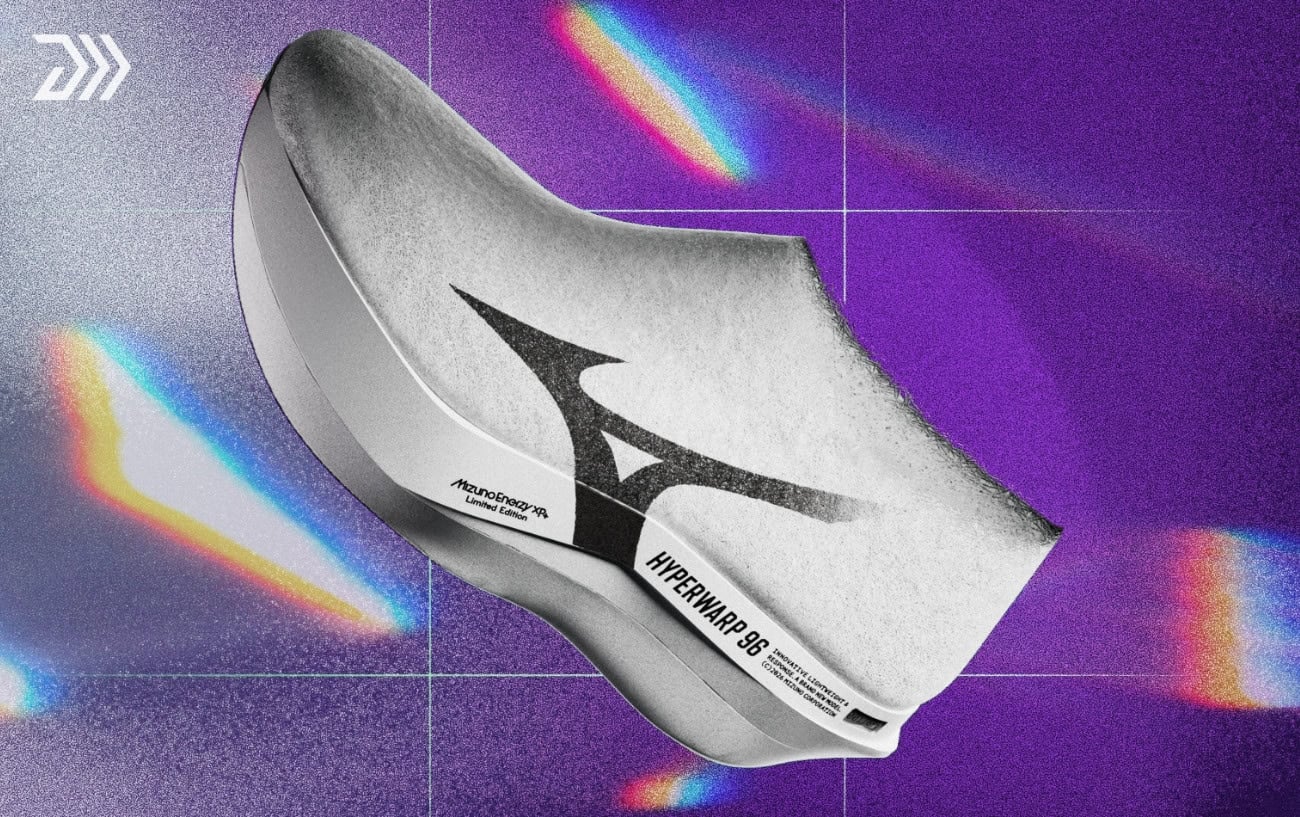
Mizuno’s figure comes from a 27.0cm shoe, which its size chart lists as a men’s U.S. 9. Adidas gives 97 grams for the Evo 3, averaged across UK 8.5 samples, and on Adidas’ own conversion a UK 8.5 is also a U.S. 9. So a single gram separates two shoes weighed at the same size. Both numbers come from the brands, and Mizuno describes its own as approximate. The Evo 3 is the shoe Sabastian Sawe wore to 1:59:30 at the London Marathon in April, and its first run was small enough that resale prices climbed past $5,000. With under 700 pairs to go around, the Hyperwarp 96 will be harder to find still.
Mizuno’s other racers, weighed in the same 27.0cm size, come in at 137 grams for the Hyperwarp Pure, 170 grams for the Hyperwarp Elite and 200 grams for the Hyperwarp Pro. The Pure had been the lightest of them, and the 96 undercuts it by 41 grams while carrying 4.5mm more foam under the heel.
How Mizuno Built a 96-Gram Racer
World Athletics caps road shoes at 40mm of sole under the heel, and Mizuno has used 39mm of it, with 36mm under the forefoot. Adidas settled on the same pair of numbers for the Evo 3. Mizuno says the shoe has World Athletics approval. Its upper is a fitted sleeve of TPU fibers, packed more tightly in some places than others and laid at different angles around the foot, and it has no laces and nothing strapped inside.
The midsole is machined, top to bottom, from Mizuno Enerzy XP+ Limited Edition, a foam the 96 does not share with any other Mizuno shoe. Inside it sits the Smooth Speed Plate, carbon from heel to toe, which Mizuno molds in three dimensions and says is hard to get right with carbon.
Where the Hyperwarp 96 Fits
The Asics Metaspeed Ray, listed at 121 grams in our guide to carbon-plated shoes, and Joma’s RS-9000, at 126.1 grams, were both being talked about as the lightest racer around not so long ago. For a sense of what an everyday flagship racer weighs now, Adidas’ Adizero Adios Pro 5, launched this week at $275, is 177 grams. Mizuno, for its part, only claims that the 96 is the lightest shoe in the Hyperwarp series.
What Mizuno learned building the 96 is going into its next Hyperwarp models, the company says, and that is where most runners will actually meet any of it, since fewer than 700 people will own a pair. The shoe is on show at the Berlin expo, and the marathon itself runs Sunday.
RunClub
Get more running stories — join RunClub
Daily running news, a community of 300,000+ runners, free training plans for every distance, and a daily running game. Free to join — no card.
Already a member? Log in →




Start the conversation