


You lace up your shoes, nail your workouts, eat your veggies, and hydrate like a pro—but how’s your sleep?
Sleep is one of the most powerful recovery tools a runner has, yet it’s often the most overlooked. Between early morning miles, demanding schedules, family responsibilities, and the general hustle of daily life, it’s no wonder many runners are skimping on rest.
However, if you’re serious about becoming a stronger, faster, and more resilient athlete, quality sleep must be an integral part of your training strategy.
We’ll explore exactly what’s happening inside your body while you sleep—and why those nightly hours are so essential for recovery, performance, and injury prevention.
We’ll also provide you with six practical, science-backed tips for enhancing the quality of your rest, allowing you to maximize the benefits of your training. Let’s get into why better sleep might be the performance edge you didn’t know you needed.
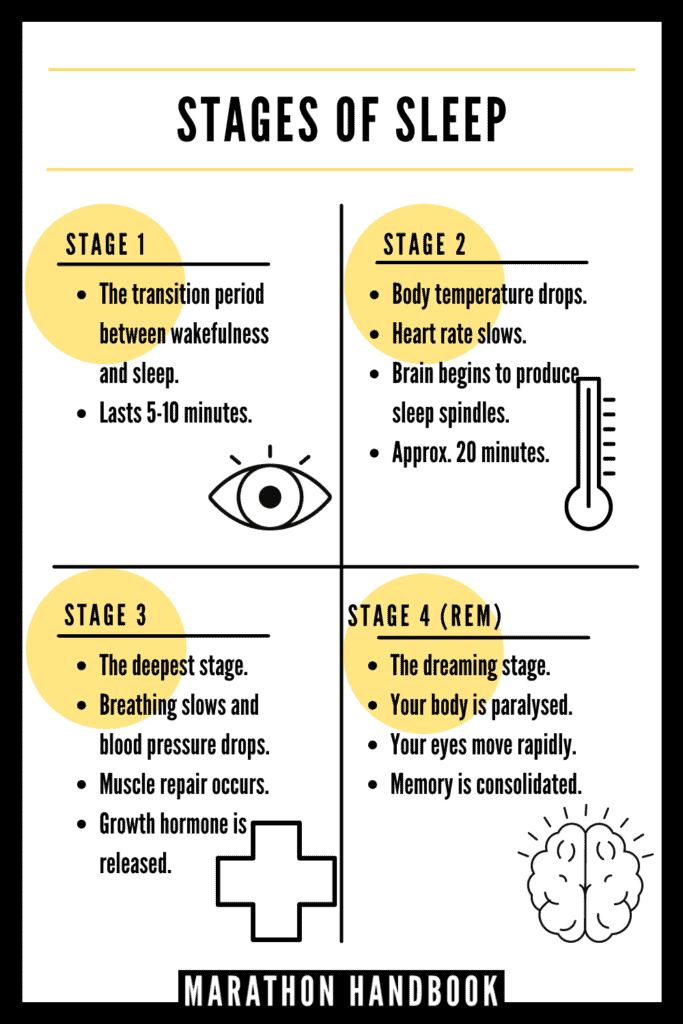
The Four Stages Of Sleep
Signs you’re not getting enough sleep
In a U.S. survey, 11% of adults reported getting an insufficient amount of sleep every night—and it’s not just the number of hours that matters. The quality of your sleep is just as crucial as the quantity.
If you’re running on just five hours of sleep each night and constantly feel exhausted, the issue is likely a lack of sleep overall. However, if you’re consistently getting the recommended 7–9 hours of sleep and still waking up tired, poor sleep quality could be to blame.
Here are a few common signs your sleep quality might need improvement:
- You feel groggy or sluggish during the day
- It takes you more than 30 minutes to fall asleep at night
- You wake up more than once throughout the night
- After waking in the night, it takes longer than 20 minutes to fall back asleep
- You rely heavily on caffeine just to stay alert and functional
If any of these sound familiar, it might be time to rethink your sleep habits and recovery strategies.
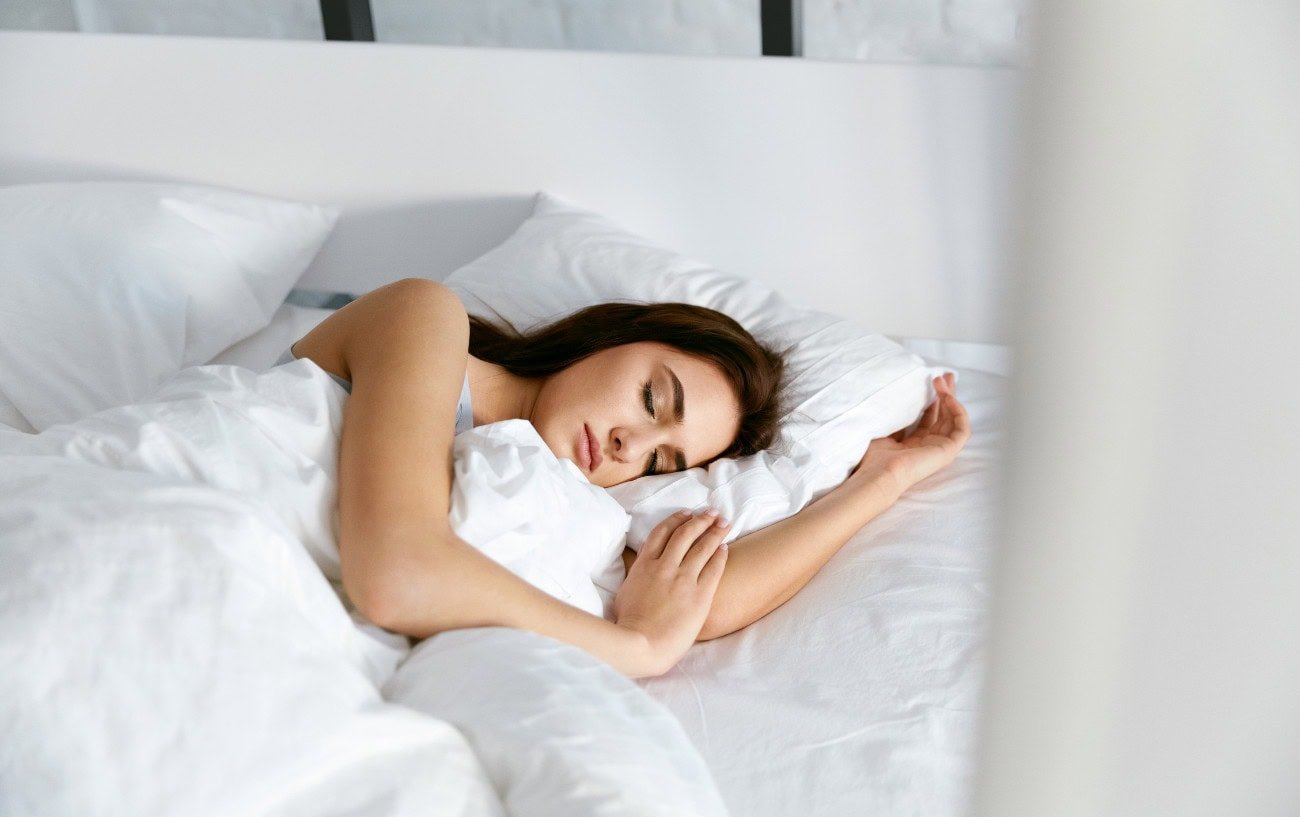
What goes on in a runner’s body during sleep
As runners, we really care about sleep because it supports our recovery and helps us become stronger, faster, and more resilient athletes.
The good news? A solid night’s sleep does exactly that.
Most of the recovery-boosting benefits of sleep happen during stage 3—also known as deep sleep—which typically occurs during the first half of the night. This is when:
- Damaged tissues are repaired
- Growth hormone is released1Van Cauter, E., & Plat, L. (1996). Physiology of growth hormone secretion during sleep. The Journal of Pediatrics, 128(5), S32–S37. https://doi.org/10.1016/s0022-3476(96)70008-2 to aid in recovery
- Memory and motor skills are consolidated and strengthened
In other words, deep sleep is when your body does the heavy lifting of recovery, making it absolutely essential for running performance.
Do runners need more sleep Than Non-Runners?
If sleep is so crucial for muscle repair, then surely runners (who love to tear up their muscles) need more sleep than the average person?
While training to break the sub-2-hour marathon record, Eliud Kipchoge slept for 8 hours a night and took a 2-hour nap during the day.
During her training, marathoner Paula Radcliffe would sleep 8-10 hours a night and an additional couple of hours in the afternoon.
Research indicates that runners require more sleep than sedentary individuals for several reasons.
#1: Full recovery requires proper sleep.
Studies show that in order to reap the benefits of your training, you need to recover properly.2Vitale, K. C., Owens, R., Hopkins, S. R., & Malhotra, A. (2019). Sleep Hygiene for Optimizing Recovery in Athletes: Review and Recommendations. International Journal of Sports Medicine, 40(08), 535–543. https://doi.org/10.1055/a-0905-3103
It would be a waste to spend hours a week training for your running goals, for your progress only to be sabotaged by undersleeping.
#2: As your mileage increases, sleep requirements increase.
During the peak of your training, when your weekly mileage is at its highest, your need for sleep will also be sky-high.
You may even find yourself taking a leaf out of the pro’s books and hunkering down for a nap in the afternoon.

What happens if you don’t get enough sleep?
Chronic poor sleep has been shown to increase your chances of diabetes, obesity, and cardiovascular disease.3Medic, G., Wille, M., & Hemels, M. (2017). Short- and long-term Health Consequences of Sleep Disruption. Nature and Science of Sleep, 9(9), 151–161. https://doi.org/10.2147/nss.s134864
And there are even some reports that indicate that you’re at a higher risk of developing Alzheimer’s disease.4Shokri-Kojori, E., Wang, G.-J., Wiers, C. E., Demiral, S. B., Guo, M., Kim, S. W., Lindgren, E., Ramirez, V., Zehra, A., Freeman, C., Miller, G., Manza, P., Srivastava, T., De Santi, S., Tomasi, D., Benveniste, H., & Volkow, N. D. (2018). β-Amyloid accumulation in the human brain after one night of sleep deprivation. Proceedings of the National Academy of Sciences, 115(17), 4483–4488. https://doi.org/10.1073/pnas.1721694115 Although those would result from pretty extreme cases of sleep deprivation over the course of many years.
More relevant for runners, however, is the fact that poor sleep can increase the risk of injury.
Studies have demonstrated that consistent under-sleeping can increase your risk of injury and overtraining syndrome.5Watson, A. M. (2017). Sleep and Athletic Performance. Current Sports Medicine Reports, 16(6), 413–418. https://doi.org/10.1249/jsr.0000000000000418
This is because consistently training on fatigued legs means your body just doesn’t get a chance to recover fully between training sessions.
Proper recovery should be viewed as an essential part of training, sleep included.
Does running improve sleep?
So, as runners, we need better quality sleep. And more of it.
Does our body adjust naturally?
According to sleep expert Amy M. Bender, PhD, among the general population, those who report exercising more are more likely to spend longer in stage 3 sleep, also known as deep sleep.
We are more likely to experience a deeper stage of sleep after exercising. This is one of the reasons why medical professionals often recommend exercise for those struggling with sleep.
So running does, in fact, boost your sleep quality.
A study examining over 1,000 London Marathon runners and Canadian National Team Athletes found that, in general, runners tend to experience fewer sleep issues than other athletes or the general population. 6Bender, A. M., Lawson, D., Werthner, P., & Samuels, C. H. (2018). The Clinical Validation of the Athlete Sleep Screening Questionnaire: an Instrument to Identify Athletes that Need Further Sleep Assessment. Sports Medicine – Open, 4(1). https://doi.org/10.1186/s40798-018-0140-5
However, those stats don’t make you personally immune to poor sleep.
If you suffer from poor sleep, you may have considered using sleep tracking devices to help you on your journey to becoming a well-rested runner.
Should You Track Your Sleep?
We runners love our data, pace charts, heart rate zones, cadence… You name it. So it’s no surprise that many of us are curious about tracking our sleep, too.
After all, if sleep is a key part of recovery and performance, it seems only natural to want the stats. But here’s what you need to know before you start obsessing over your sleep scores.
If you’re aiming to spend more time in stage 3 sleep (the deep, recovery-boosting phase), you might be tempted to turn to your GPS watch or sleep tracker for answers. Many devices claim to track your sleep stages, breaking down your night into light, deep, and REM phases.
The catch? These devices rely on movement and heart rate data—not brainwaves. And while they’re improving in accuracy, they’re still not precise.
The gold standard for sleep stage tracking is an EEG (electroencephalogram), which measures your brain’s electrical activity. Not exactly something most of us have at home.
Instead of getting caught up in the specific stages, most sleep experts agree: focus on your total sleep duration and how you feel during the day. That’s often a better indicator of your recovery and readiness.
Even when tracking total sleep, sports watches can be a little off. They may record the time you spend lying in bed reading, watching TV, or scrolling your phone as part of your sleep—even if you haven’t actually nodded off yet.
To get the most accurate results:
- Try getting into bed only when you’re ready to sleep.
- Set a consistent wake-up time.
- Avoid stimulating activities like phone use right before bed.
Still, even with perfect habits, these tools are best viewed as guides—not facts.
Ironically, tracking your sleep too closely can sometimes hurt your sleep. There’s even a name for it: orthosomnia—a kind of anxiety triggered by trying to optimize sleep based on what your tracker says.
If you’ve ever felt frustrated or panicked over a “bad” sleep score, even when you don’t feel that tired, you know the feeling.
Bottom line? Use sleep tracking if it motivates you to build better habits—but don’t let it stress you out. Listen to your body, trust how you feel, and aim for consistent, high-quality rest over chasing perfect data.
Your performance doesn’t hinge on one night’s sleep—it’s built over time, just like your training.
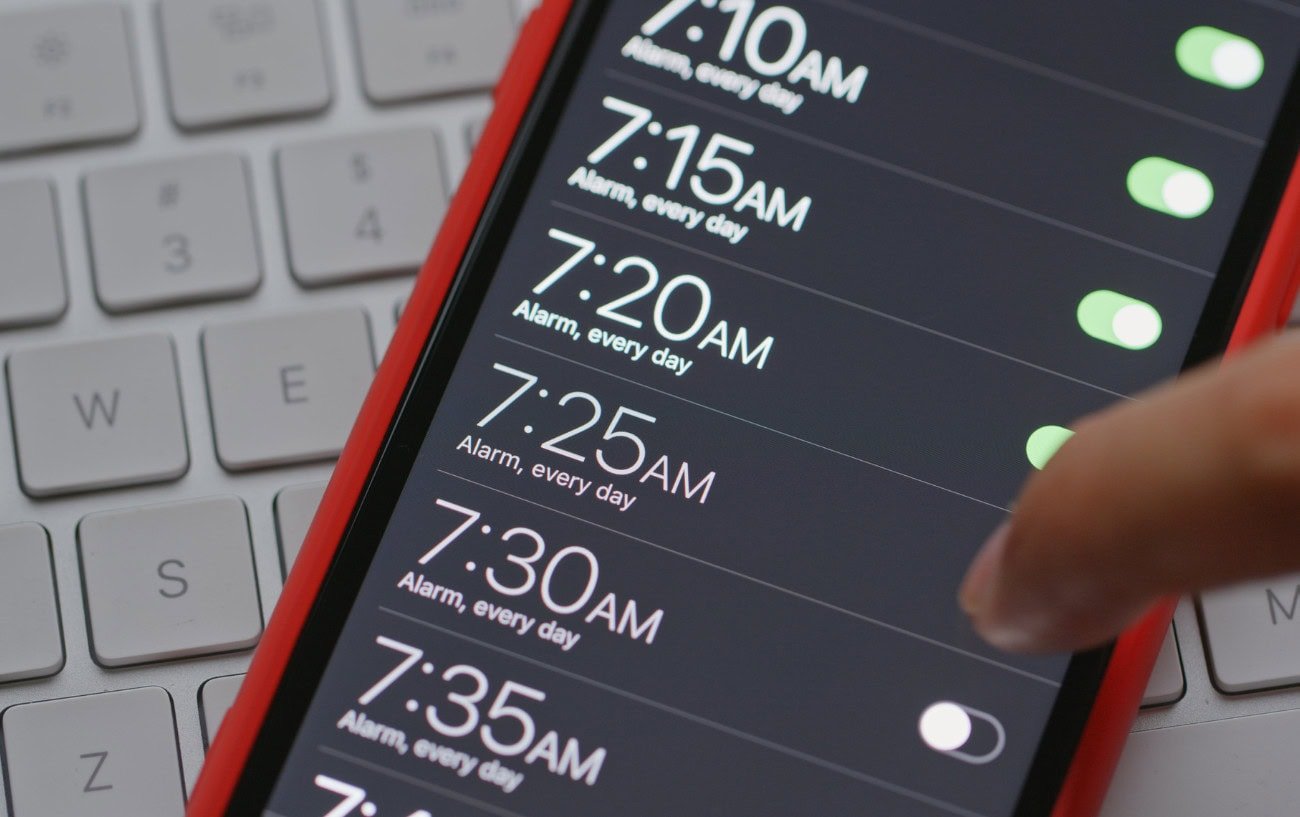
6 tips for a good night’s sleep
Instead of focusing on the stats, you’re better off investing your energy in those things within your control.
Here are some great strategies you can implement into your own life that can help you to become a stronger, well-rested runner. It’s a bit of extra effort, but remember, sleep is a key part of running training.
#1: Sleep in complete darkness
Even small amounts of light can disrupt your sleep. If streetlights, passing car headlights, or early sunrises seep into your room, it’s worth investing in blackout curtains or an eye mask.
Even the glow from electronics or digital clocks can interfere with deep sleep. Create a sleep sanctuary that’s as dark as possible. Your body will thank you with better, deeper rest.
#2: Wear blue light glasses before bed
Blue light from screens (like your phone, TV, tablet, or laptop) can trick your brain into thinking it’s still daytime, suppressing melatonin production and delaying sleep.
Blue light-blocking glasses are a great tool if you can’t avoid screens in the evening. They help your body maintain a healthy circadian rhythm, making it easier to wind down naturally.
#3: Get into a routine
Consistency is king when it comes to sleep.
Your body thrives on a regular schedule, so aim to go to bed and wake up at the same time every day—even on weekends. This helps reinforce your circadian rhythm, making it easier to fall asleep and wake up feeling refreshed.
Pro tip: Set a reminder 30–60 minutes before bedtime to begin winding down with a calming ritual, such as reading, stretching, or journaling.
#4: Avoid caffeine and alcohol before bed
While caffeine keeps you wired, alcohol might make you drowsy—at first. But both are notorious for disrupting sleep quality.
Caffeine can linger in your system for 6–8 hours, so try to cut off coffee and other stimulants by mid-afternoon. As for alcohol, it can interfere with your REM cycle, making sleep less restorative and causing frequent wakeups. Save that glass of wine for earlier in the evening, if possible.

#5: Avoid sugar before bed
Sugar can cause blood sugar spikes and crashes, disrupting your energy levels and sleep quality. Eating sugary foods late at night can lead to restlessness, middle-of-the-night wake-ups, and cravings the next day due to poor sleep quality. 7British Heart Foundation. (2018, August 8). Sleeping tips. Bhf.org.uk; British Heart Foundation. https://www.bhf.org.uk/informationsupport/heart-matters-magazine/wellbeing/sleeping-tips
Try to satisfy any nighttime hunger with a balanced option, such as Greek yogurt with berries or a small handful of nuts, to support stable blood sugar levels and promote better recovery.
#6: Steer clear of screens before bed
We all do it, but scrolling in bed is one of the biggest sleep saboteurs. The blue light from phones and other screens interferes with melatonin production, making it harder to feel naturally sleepy.
Ideally, go screen-free at least an hour before bed. Instead, wind down with a book. This signals to your brain that it’s time to rest and helps you fall asleep faster and sleep more deeply.
So, if you want to sleep like a champion runner, start small. Try implementing just one of these habits at a time—and build your way to deeper, higher-quality sleep.
For more information on recovery, check out our next guide:
References
RunClub — Free
Join 300,000+ runners in RunClub
Free training plans for every distance, a daily running game, exclusive coaching content, and a real community of runners. Create your free account in 20 seconds — no card.
Already a member? Log in →








Start the conversation