


Super shoes have become one of the strangest training decisions in running. On the one hand, they are clearly fast. The combination of highly resilient foam, tall midsoles, and stiff embedded plates can improve running economy and make race pace feel just a little more forgiving. On the other hand, almost every runner now has a story: the friend who started doing workouts in plated shoes and suddenly developed calf issues, foot pain, or a bone stress injury that seemed to come out of nowhere.
That does not mean super shoes are dangerous. But it does raise the question: when these shoes change how we run, where does that stress go?
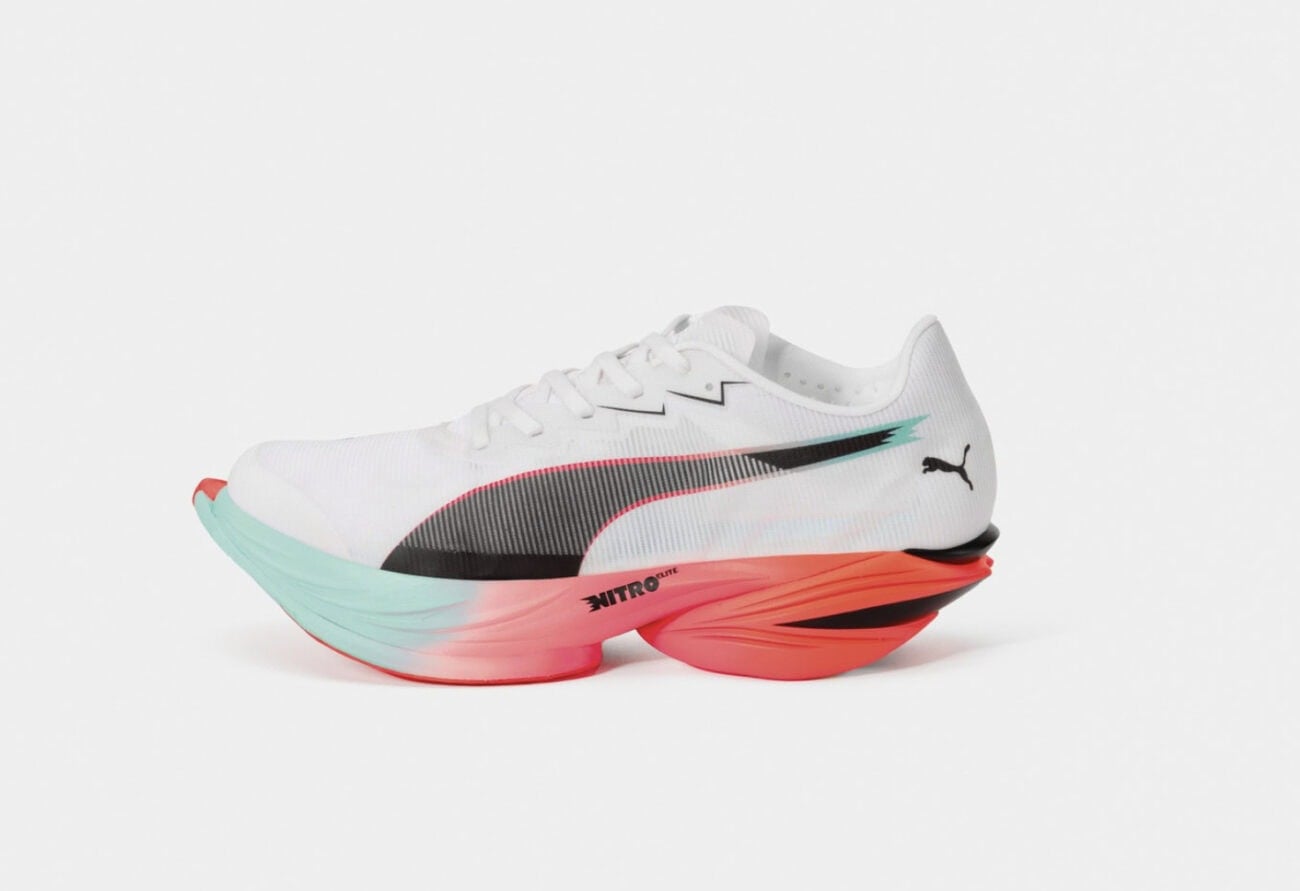
A new study looked at exactly that question1Bruneau, M. M., Gaudette, L. W., Sirls, E., Hollander, K., Saxena, A., Hoenig, T., De Carlo, F., Fodera, A., Sullivan, V., Bean, A., Lussner, A., Baxter, Z., & Tenforde, A. S. (2026). Biomechanics associated with bone stress injuries while using advanced footwear technology in elite distance runners. PM&R. https://doi.org/10.1002/pmrj.70153 in elite distance runners. The researchers had 23 healthy elite runners, 11 women and 12 men, run in three different shoe conditions: a neutral shoe, a lightweight, responsive-foam shoe, and an advanced footwear-technology shoe with highly cushioned foam and a stiff, embedded plate. The runners tested each shoe in randomized order at three self-selected speeds: training effort, tempo effort, and 5K race pace. During each condition, the researchers measured movement and force patterns that have previously been associated with bone stress injuries.
In the advanced footwear condition, runners showed a lower cadence, meaning they took fewer steps per minute. Lower cadence often goes hand in hand with longer strides or slight overstriding, which can increase the body’s loading demands over time. The researchers also found greater inward collapse of the arch/rearfoot than in the neutral shoe, another mechanical pattern linked to bone stress injury risk. These changes were described as small, but small changes repeated thousands of times per run can matter when an athlete is stacking workouts, long runs, and high weekly mileage.
But there was also a potentially protective signal. In the super shoes, runners pushed off less with their ankles. That suggests the shoe may reduce demand on the ankle plantarflexors, including the calf-Achilles complex, during propulsion.
This is the part that complicates the interpretation. Super shoes may not simply increase or decrease injury risk; they may redistribute load. Less ankle demand could be helpful for some runners, while altered cadence and greater rearfoot motion could shift stress elsewhere, including toward the bones of the foot or lower leg.
What this means for runners
If you race in plated shoes, you probably need some exposure to them in training so race day does not become a brand-new mechanical stimulus. But I would be cautious about making them your everyday trainer, especially during high-volume blocks or when returning from injury. Rotate shoes, introduce plated models gradually, and pay attention to early warning signs in the foot, shin, calf, and Achilles. The key idea is that super shoes may help you run faster by changing how load is distributed, but your bones, tendons, and muscles still need time to adapt to that new loading pattern.
References
RunClub — Free
Join 300,000+ runners in RunClub
Free training plans for every distance, a daily running game, exclusive coaching content, and a real community of runners. Create your free account in 20 seconds — no card.
Already a member? Log in →








Join the conversation
The research seems to suggest that the shoes have an effect on cadence but do not take into account that so does the runner even in the new shoes. All these researchers are being paid and in reality they say absolutely nothing sensible or helpful to the everyday runner. I am old and anything they usually say is of no assistance to me at all.