


We have gotten used to the idea that advanced footwear technology improves running economy on the road. But trails are not roads. The surface is uneven, pace changes constantly, foot placement matters, and stability can become just as important as bounce.
So the question here is simple: do advanced trail shoes actually improve running economy on real trails?
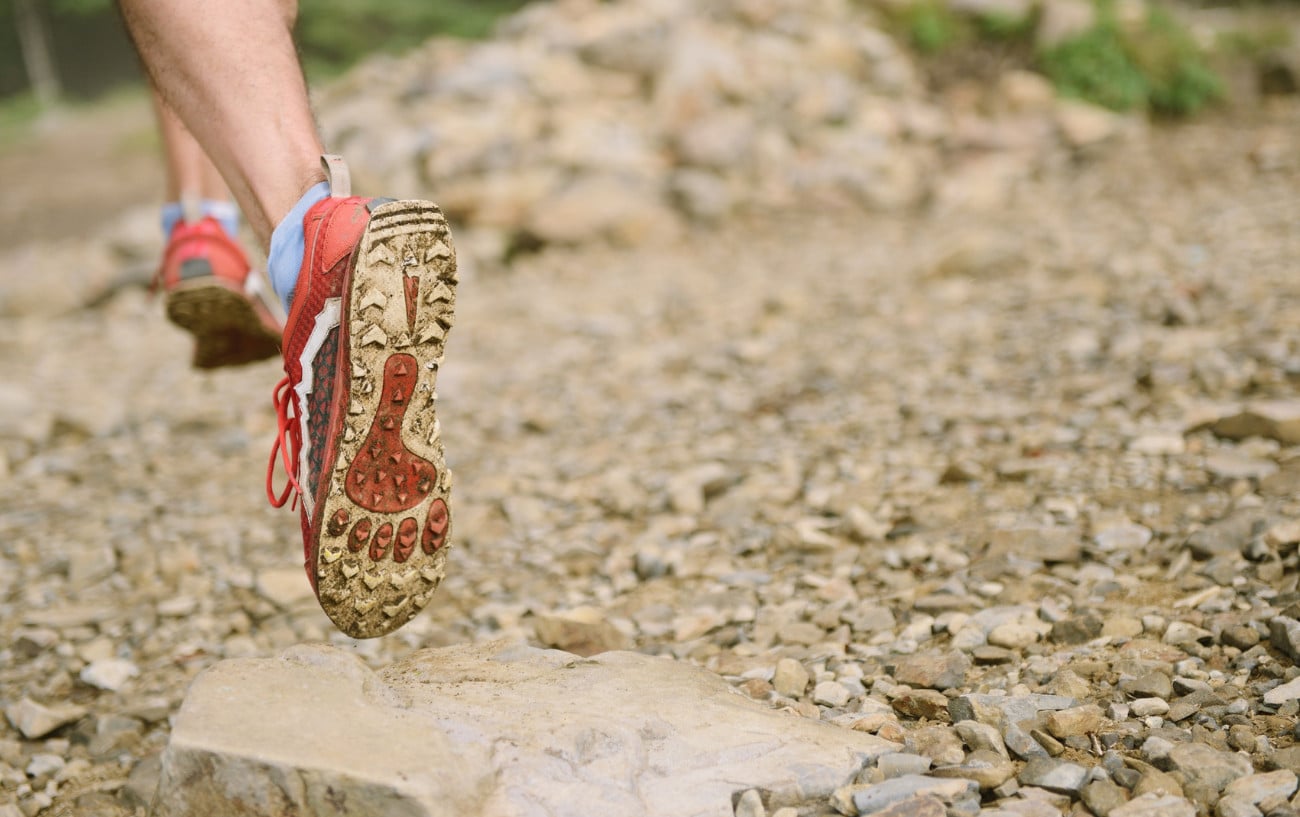
This study tested eight trail runners1Joubert, D. P., & Sanders, J. (2026). Effects of Advanced Footwear Technology in Trail Running Shoes on Running Economy. Journal of Strength & Conditioning Research. https://doi.org/10.1519/jsc.0000000000005553 during an outdoor trail running session. Each runner completed four 1,500-meter trail trials at a self-selected 50K race effort, alternating between an advanced footwear technology trail shoe and a control trail shoe. The order was counterbalanced, and oxygen consumption was measured using a portable metabolic device. Running economy was calculated as the cost of transport, which adjusts oxygen use for speed.
The result: the advanced trail shoe improved running economy by about 1.1% compared with the control shoe, which is smaller than the 2–4% improvements often discussed in road racing shoes, especially when tested at faster treadmill speeds.
That smaller effect makes sense. Trail running likely dilutes some of the benefits of advanced footwear. If you are braking on descents, navigating rocks, turning, stabilizing, or varying stride length, the shoe’s energy return may not translate as cleanly as it does on smooth pavement. Also, the athletes ran more slowly than at elite road-shoe testing speeds. Super shoe benefits can depend on speed, mechanics, and how well the shoe interacts with the runner.
Still, 1.1% is not nothing. Over an ultra or long trail race, even a small reduction in energy cost could matter, particularly if it delays fatigue or reduces muscle damage. But the keyword is could. This study measured running economy over relatively short trail segments, not actual race outcomes, downhill durability, ankle stability, technical terrain performance, or late-race fatigue.
What this means for runners
Advanced trail shoes may offer a real, albeit smaller, economic benefit than road super shoes, so I’d think of them as a tool rather than a magic upgrade. On smoother, faster, runnable trails, they may be especially useful. On highly technical courses, stability, traction, confidence, and downhill control may matter more than foam rebound.
The best trail shoe is not necessarily the one with the most technology; it is the one that lets you run efficiently without fighting the terrain. Practice in them before race day, especially on descents and technical sections, because the shoe that saves oxygen on paper is only helpful if you can actually control it when the trail gets messy.
References
RunClub — Free
Join 300,000+ runners in RunClub
Free training plans for every distance, a daily running game, exclusive coaching content, and a real community of runners. Create your free account in 20 seconds — no card.
Already a member? Log in →












Start the conversation