


A molecule your gut makes from pomegranates could tweak your mitochondria, aid your recovery, and help you run faster. If you’re rolling your eyes…just bear with me.
That molecule—urolithin A—keeps popping up in places endurance athletes care about: muscle endurance, recovery, and the energy factories that power long runs (mitochondria).
What’s urolithin A?
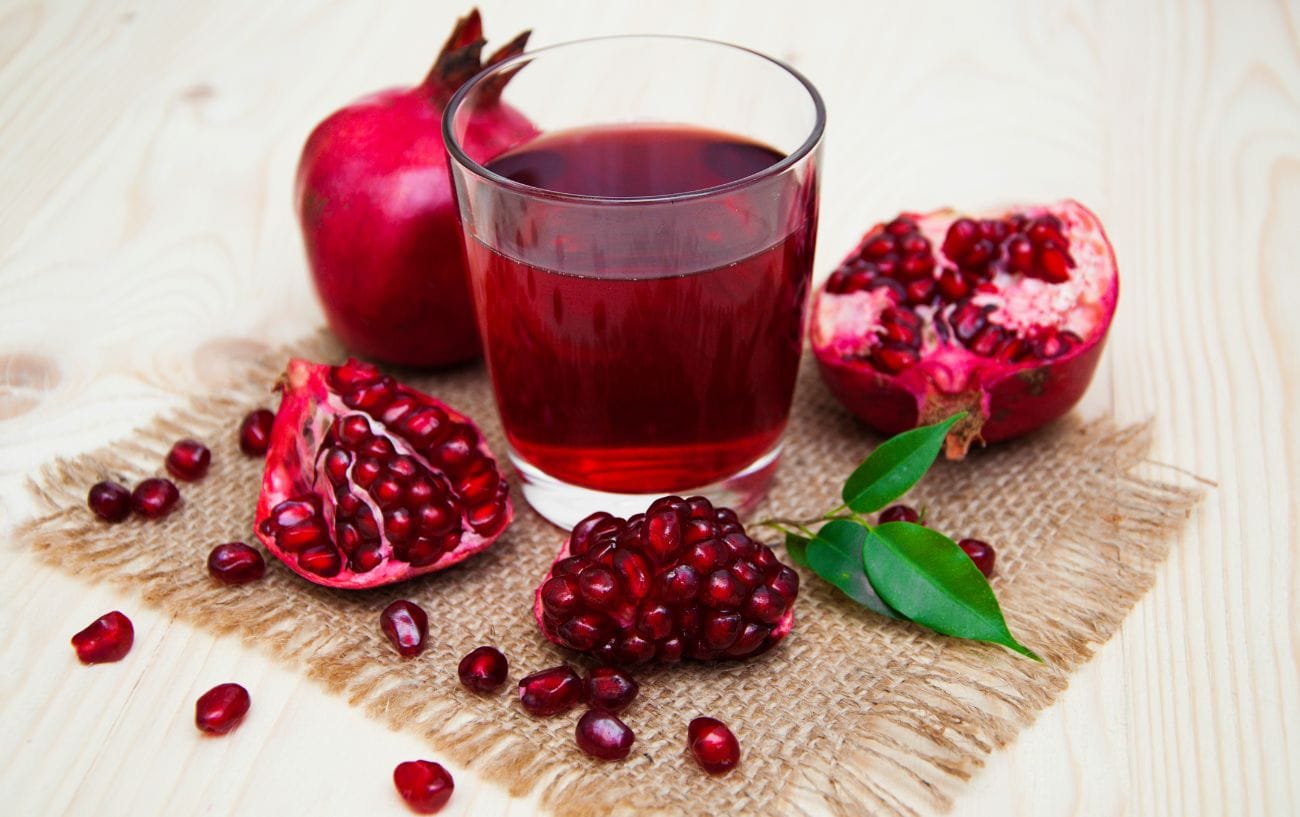
Urolithin A is a postbiotic—instead of being in food itself, it’s produced when certain gut microbes break down compounds called ellagitannins (think pomegranates, some berries, some nuts). The catch is that not everyone makes much of it—microbiomes vary wildly—so researchers have been testing purified urolithin A to bypass that variability. Take it as a supplement, and you skip a step.
Urolithin A seems to nudge mitophagy, the process that clears out damaged mitochondria so newer, better-functioning ones can take their place.
In human trials (mostly in middle-aged or older adults so far), supplementation has been linked to better muscle endurance and strength on standardized tests, modest bumps in aerobic capacity, and shifts in blood markers that hint at more efficient fat metabolism and lower systemic inflammation. None of this screams “instant PR,” but it does describe the kind of slow, structural improvements that matter over a training block. Most of us will take all the help we can get.
So why might urolithin A help endurance athletes, speculatively? Two reasons. First, endurance performance depends as much on the quality of your mitochondria as the quantity. Better turnover could mean more efficient ATP production at a given pace (i.e., the same workload feels easier). Second, recovery. If urolithin A dampens muscle-damage signals and inflammation after hard sessions, you might bounce back faster and stack more quality training (arguably the biggest real-world performance lever).
The effects are likely small and additive, but that’s often how breakthroughs show up in well-trained runners anyway.
In today’s newsletter, I’ll dig into the newest randomized trial in highly trained runners at altitude—what changed, what didn’t, and how we should think about urolithin A as a tool in a real training plan.
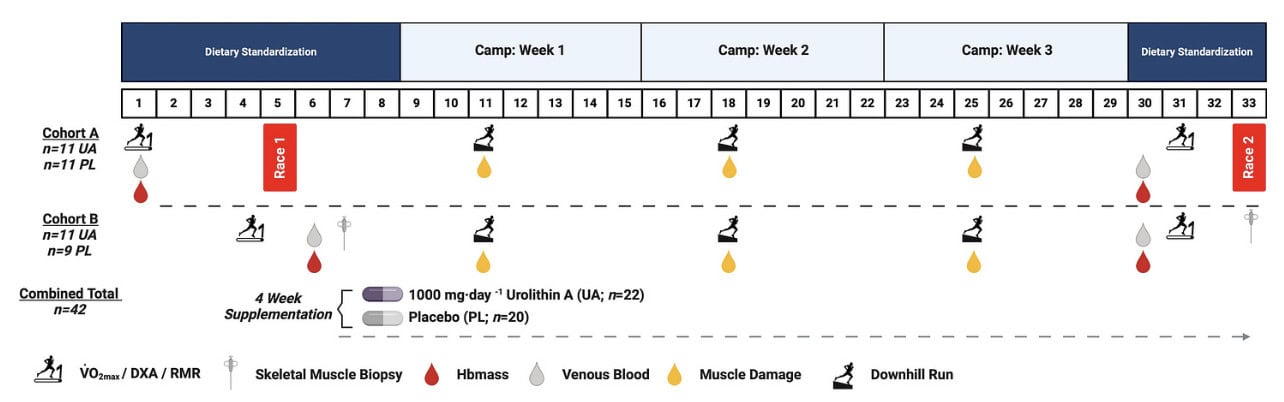
Runners (average VO₂max ~66 mL/kg/min) were randomized to one of two groups: a urolithin A group (22 runners who took 1000 mg per day) or a placebo (20 runners) for four weeks spanning a supervised altitude training camp. Everyone had body composition, hemoglobin mass, running economy, 3,000m time trial performance, and VO₂max assessed before and after. Each week at altitude, they also completed a ~4.5 km “hard” downhill run to provoke muscle damage and evaluate how markers of muscle damage and inflammation would respond.
A separate cohort (20 participants; 11 from the urolithin A group and 9 from the placebo group) provided muscle samples.
Performance & physiology changes
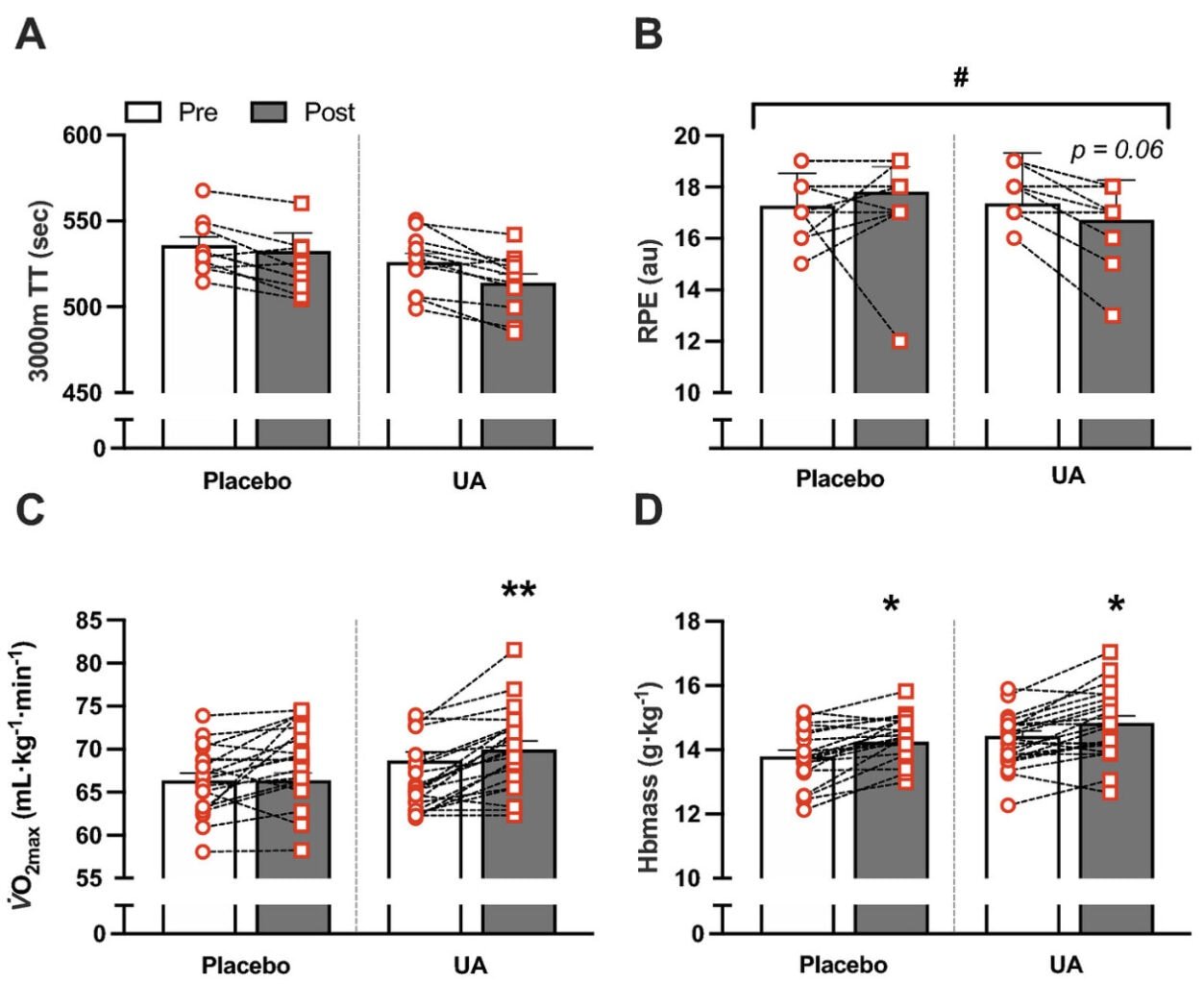
The 3,000m performance improved slightly in both groups: those taking urolithin A improved by ~2.3% (~12 seconds), compared with ~0.6% (~3 seconds) in the placebo group. RPE (effort) after the post-camp race was lower with urolithin A, meaning the runners reported a lower effort despite running slightly faster.
VO₂max increased more with urolithin A—from 66.4 to 70.0 mL/kg/min (~5.4% increase) vs. 66.4 to 68.7 (~3.6% increase) in placebo, even though hemoglobin mass rose similarly in both groups (~4–5%). This suggests that urolithin A may affect aerobic fitness in ways unrelated to increased red blood cell production. Meanwhile, running economy at a fixed speed didn’t change meaningfully, and body composition (lean mass and fat mass) stayed stable.
Recovery & muscle damage
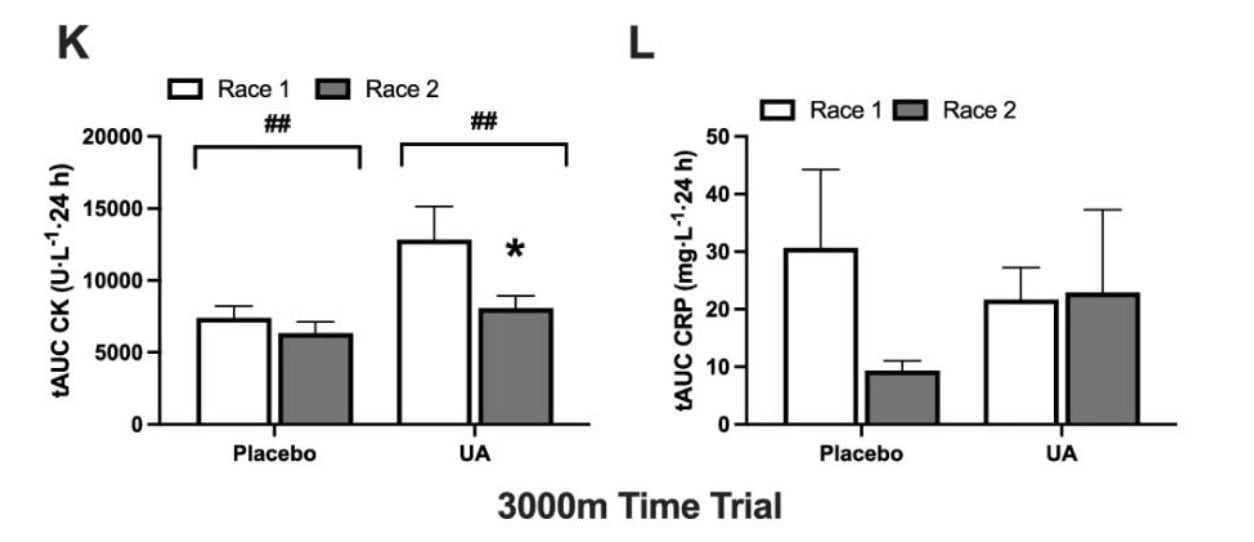
Muscle damage markers (specifically, creatine kinase, or CK) responses to the weekly downhill runs declined across weeks in both groups (a classic training adaptation), with no clear separation. After the 3,000m race, runners taking urolithin A showed a clearly lower CK total response over the next 24 h, whereas those in the placebo didn’t—a signal of reduced exercise-induced muscle damage.
C-reactive protein (CRP; an inflammatory marker) didn’t move much in either group.
Muscle biology
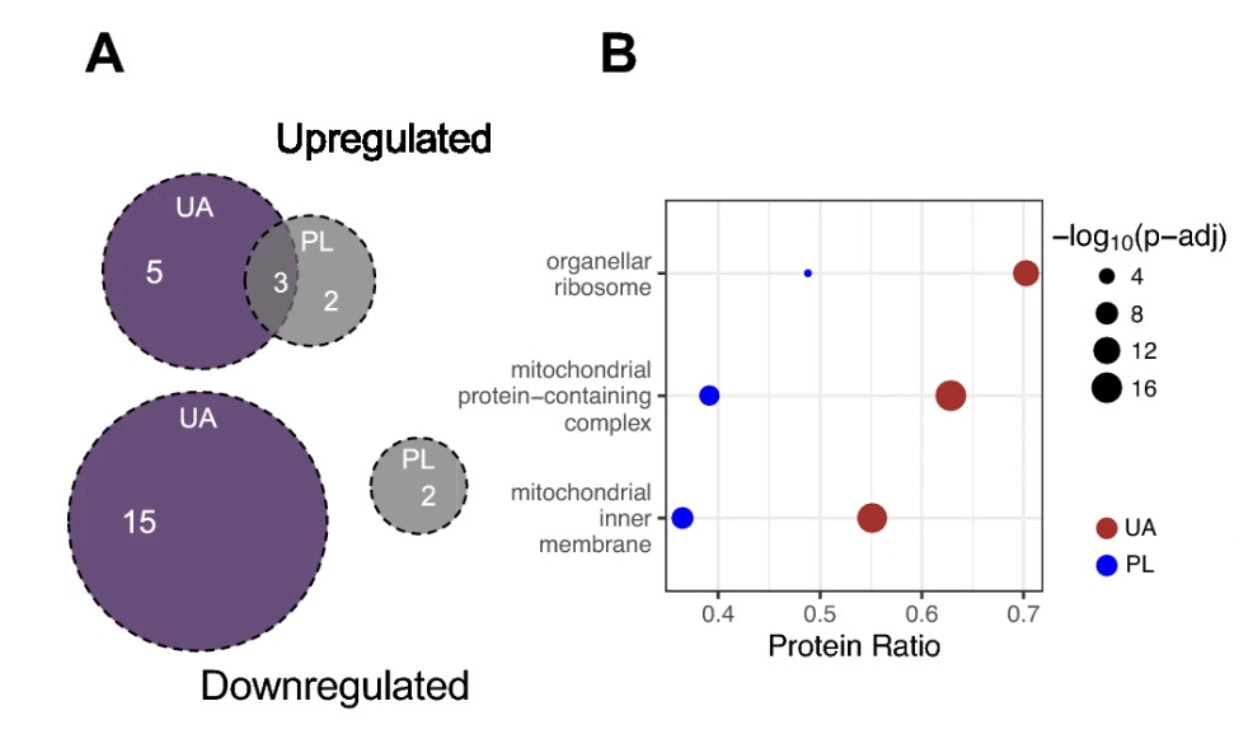
In the biopsy group (those who didn’t complete the running tests but who gave samples of their muscles instead), urolithin A didn’t crank up mitochondrial output, but it shifted the muscle’s “internal toolkit” toward better mitochondrial upkeep.
First, proteomics (a big survey of thousands of muscle proteins) showed a coordinated rise in proteins that build and service mitochondria. Two big clusters moved:
- Mitochondrial ribosomal proteins (which assemble mitochondrial proteins) and other translation/assembly factors were higher.
- Proteins tied to mitochondrial gene expression nudged up, including an enzyme that transcribes mitochondrial DNA.
Second, there were signs that mitophagy (the recycling of worn-out mitochondria) was dialed up. Better turnover usually means healthier, more efficient mitochondria over time.
Third, pathways linked to inflammation trended down. That doesn’t mean “no inflammation,” but it suggests that urolithin A could be useful for calming it during heavy training blocks with the added stress of altitude, for example.
Despite all of these changes, classic mitochondrial capacity markers didn’t budge in four weeks. Those usually require either more time, more training stimulus, or both. In other words, urolithin A didn’t seem to enhance mitochondrial function or their number in this study.
What this means for runners
If you’re heading into an intense block (altitude, race-specific prep, heavy downhill or track work), urolithin A (1,000 mg/day was used in this study) may help you feel better and show lower muscle-damage markers after hard efforts, and it might even slightly enhance your VO₂max. These are all useful if they let you stack quality sessions with less residual fatigue.
I wouldn’t expect urolithin A to magically drop your 3k, 5k, or marathon time on its own—training and fueling still do the heavy lifting. But as a recovery-support add-on, it’s a reasonable experiment for 4–8 weeks, ideally with a third-party-tested product and morning dosing on an empty stomach as in the study.
If you’re older or less highly trained than this cohort, the chance of a noticeable benefit may be higher; if you’re already near your ceiling, expect subtle gains measured more in day-to-day readiness than massive PRs in training or racing.
A few caveats. The study included only men, lasted just 4 weeks, and performance and biopsy cohorts were separate (common in elite-athlete studies to keep tests feasible). In addition, the real-world camp variability (a strength and a limitation) adds noise to the data.
Quick word of warning, this stuff is not cheap. The highest quality brand comes in at $115 for a month’s supply. If you’re looking for a more budget-friendly option, find some pomegranate juice or pomegranate extract, and let your gut microbes do the work of (hopefully) turning it into urolithin A.
As always—Run Long, Run Healthy
~Brady~
RunClub — Free
Join 300,000+ runners in RunClub
Free training plans for every distance, a daily running game, exclusive coaching content, and a real community of runners. Create your free account in 20 seconds — no card.
Already a member? Log in →







Start the conversation