


Chances are, you’ve heard of (and maybe even taken) antioxidant supplements.
They’re marketed to runners as a way to reduce muscle damage, tame soreness, and perhaps even enhance performance during workouts and races. In theory, they should. But the big question remains: do they? And should you use them?
Luckily, the International Society of Sports Nutrition (ISSN)—THE “say so” organization when it comes to sport supplements—just released their position stand on dietary antioxidants.1Gonzalez, D. E., Dickerson, B. L., Roberts, B. M., Kurtz, J. A., S. Waldman, H., Gonzalez, A. M., McAllister, M. J., Heileson, J. L., Bloomer, R. J., Arent, S. M., Candow, D. G., Stout, J. R., Hecht, K. A., Campbell, B., Kerksick, C. M., Kalman, D., Antonio, J., & Kreider, R. B. (2026). International Society of Sports Nutrition position stand: effects of dietary antioxidants on exercise and sports performance. Journal of the International Society of Sports Nutrition, 23(1). https://doi.org/10.1080/15502783.2026.2629828
This post summarizes their findings and provides a more “runner-centric” spin (the review is for athletes in general). Hopefully, it’ll help you make an evidence-based decision about how (or whether) to use antioxidants in your training.
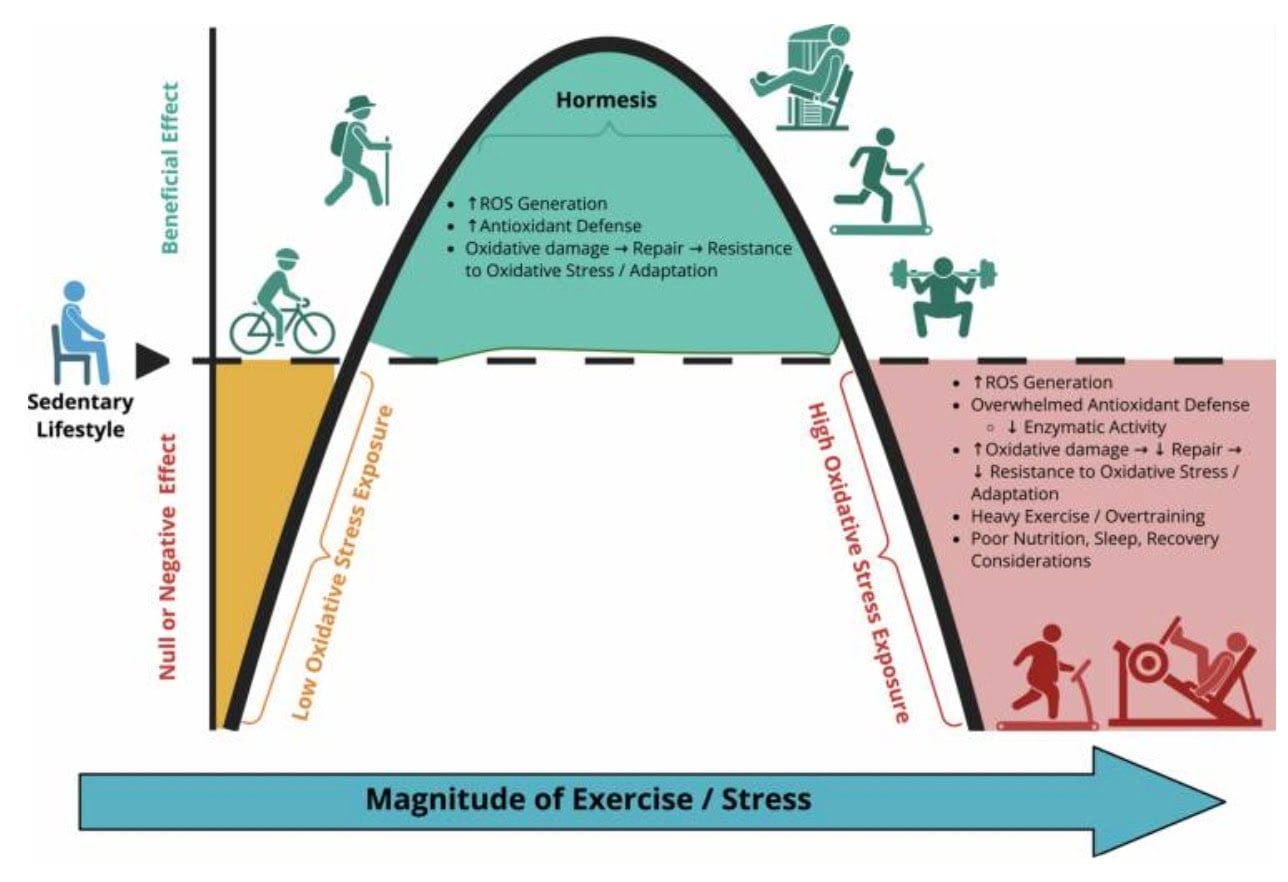
The position statement opens with the tension at the heart of the antioxidant debate: hard training increases the body’s production of reactive oxygen/nitrogen species (ROS/RNS). These are molecules that have an unpaired electron, making them highly reactive with other molecules and tissues in the body. A moderate amount helps drive adaptation, but too much can contribute to fatigue and cellular damage. There’s oxidative eustress (useful signaling) and oxidative distress (harmful overload), and the ISSN also distinguishes “oxidative stress” (often reversible signaling disruption) from “oxidative damage” (more structural, harder-to-reverse harm).
- Too little ROS signaling and we get a weak training stimulus.
- The right amount leads to adaptation.
- Too much (from overtraining, poor recovery, underfueling, etc.) can push you toward inflammation, damage, and immune disturbances.
This “damage-control” logic is why antioxidant supplements are so popular among athletes. Antioxidants are broadly defined as substances (from your body or from your diet/supplements) that reduce or prevent the oxidation of key molecules such as lipids, proteins, and DNA. But antioxidants don’t all work the same way. Some directly neutralize free radicals; others reduce the chance radicals form; others “take the hit” first to protect more important structures; and many work indirectly by turning on protective pathways—basically boosting your internal defense machinery.
Bottom line: type matters, not just dose. And while antioxidants can look like a recovery hack, in some cases (especially at high doses), they may dampen the very signaling you’re trying to stimulate with training.
Exercise increases oxidative stress biomarkers, and ROS production tends to scale with exercise intensity and mechanical stress. In practice, ROS and oxidative damage are connected to fatigue, force production, recovery, muscle soreness, and your ability to repeat quality sessions. It can push you toward slower recovery and more fatigue. On the flip side, modest ROS/RNS helps trigger training adaptations (including mitochondrial signals) and upregulates our internal defenses. It’s not all bad!
So the ISSN explicitly recommends thinking in phases: are you prioritizing recovery right now, or adaptation? That answer should change your antioxidant strategy.
Supplementation makes the most sense for deficiencies, dietary gaps, or unusually stressful blocks (overreaching, back-to-back competitions, smog/altitude). They make less sense for general day-to-day training, where the benefits may be small and harder to translate into real performance gains. Most athletes can achieve optimal antioxidant intake with a well-balanced diet, so the position stand encourages understanding which foods provide which antioxidant classes and using supplements primarily to fill gaps due to preferences, restrictions, or allergies. In other words: build the base with food; use supplements as targeted tools.
So the ISSN’s big message is pretty simple: oxidative stress isn’t the enemy, it’s part of the training signal. The real question is when that stress is helping you adapt… and when it’s just beating you up and slowing recovery. That’s why “antioxidants” don’t get a universal thumbs-up or thumbs-down here—they’re tools you periodize.
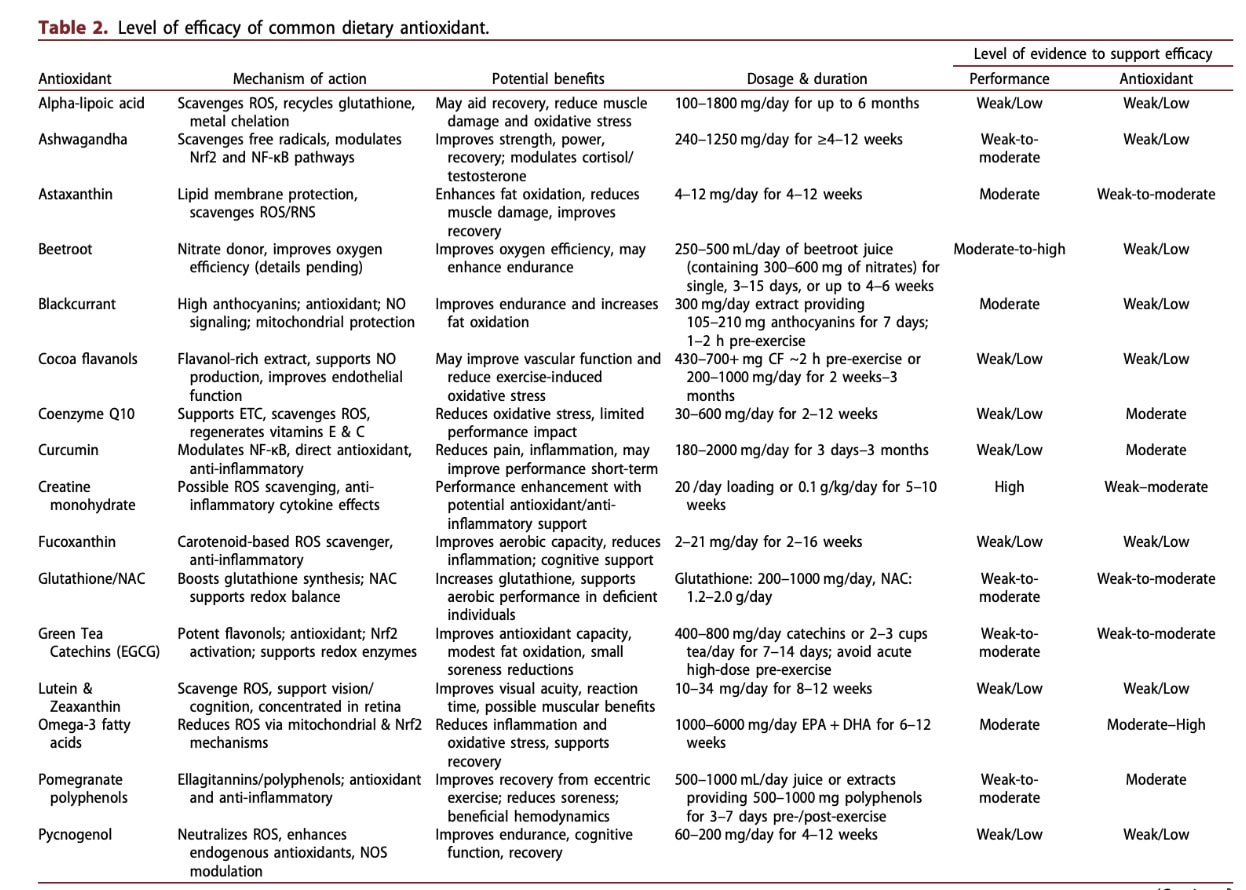
So now let’s get practical. Supplement by supplement, what does the evidence say, what’s worth your money, what’s mostly hype, and what actually matters for runners trying to train hard and show up fresh?
High evidence (best-supported for performance)
Creatine monohydrate (Performance: high | Antioxidant: weak–moderate)
- Creatine has a massive evidence base for performance (not just as an “antioxidant”), and the antioxidant/anti-inflammatory angle is a potential bonus on top of its primary ergogenic (performance-enhancing) effect.
- Specifically in runners, short-term creatine loading has been reported to reduce inflammatory markers after a hard endurance event.
- Runner take: If you’re choosing one supplement with real performance receipts, creatine is the cleanest pick, especially if you also lift, sprint, or race frequently.
Moderate-to-high evidence
Beetroot (nitrates/beetroot juice) (Performance: moderate-to-high | Antioxidant: weak/low)
- The takeaway is basically: performance/recovery can improve, but oxidative stress & inflammatory biomarker levels are inconsistent (so don’t buy it as an antioxidant pill).
- An ultra-endurance mountain race study reported no effect on oxidative stress/inflammatory biomarkers.
- Runner take: Best framed as a nitric oxide booster/running efficiency aid (especially for time trials or hard sessions), not as a general “recovery antioxidant.”
Tart cherry (Performance: moderate-to-high | Antioxidant: moderate)
- A meta-analysis cited in the paper reports that tart cherry taken in the week before (and up to ~1.5 h pre) endurance efforts improved performance outcomes like time trials and time to exhaustion/total work output.
- Recovery is where tart cherry really shines: multiple analyses show reduced muscle soreness, improved strength recovery, and lower inflammatory markers (CRP/IL-6) across many contexts, including high-intensity running.
- Runner take: A strong tool during race week or a peak training block—especially when you want to recover fast without obvious adaptation-blunting concerns.
Moderate evidence
Omega-3 fatty acids (EPA + DHA) (Performance: moderate | Antioxidant: moderate–high)
- Evidence is strongest for anti-inflammatory and antioxidant effects, with multiple trials showing improvements in markers and recovery-adjacent outcomes (e.g., lower markers of muscle damage) and less soreness after damaging exercise in some studies.
- ≥1000 mg/day EPA/DHA (or equivalent via food) tends to yield antioxidative effects across populations, including athletic ones.
- Runner take: Not a “take it once and PR” supplement—more of a 6–12 week recovery resilience strategy, especially when training load is high.
Astaxanthin (Performance: moderate | Antioxidant: weak-to-moderate)
- The paper highlights potential wins for endurance-related outcomes, such as higher fat oxidation in trained cyclists after short-term supplementation (one study reported a large % increase), though not all studies agree.
- It may reduce muscle soreness/perceived damage without impairing training adaptation in the studies discussed (example: reduced soreness after resistance training).
- Runner take: A decent option if your main limiter is recovery feel, not necessarily VO₂max.
Blackcurrant (anthocyanins, often NZ blackcurrant extract) (Performance: moderate | Antioxidant: weak/low)
- There are actual, running-relevant findings showing that blackcurrant juice improved peak running speed in trained female runners in one study (and improved time-trial performance in other endurance contexts).
- A systematic review/meta-analysis reports a small but meaningful performance effect, with the authors noting that the magnitude could matter even at high levels of sport (and they compare the effect size in context to caffeine).
- Runner take: Interesting “small edge” supplement, especially for steady-state work; just don’t expect big changes in antioxidant biomarkers to prove it worked.
Weak-to-moderate (some signal, lots of noise, and context dependence)
Ashwagandha (Performance: weak-to-moderate | Antioxidant: weak/low)
- A cited meta-analysis suggests improvements in strength/power at ~240–600 mg/day for ≥6 weeks, but much of the evidence is from untrained populations.
- Some trials report better perceived recovery alongside improvements in strength and power during training blocks.
- Runner take: More of a training support/recovery perception candidate than a proven endurance booster.
Glutathione/N-Acetylcysteine (NAC) (Performance: weak-to-moderate | Antioxidant: weak-to-moderate)
- NAC seems most promising when there’s a baseline glutathione deficiency (glutathione is our body’s primary antioxidant)—improvements in aerobic/anaerobic performance outcomes are reported in deficient individuals, but not in those with high baseline glutathione.
- In healthy, active men, 14 days of NAC (1800 mg/day) didn’t meaningfully alter several muscle damage/inflammation/oxidative stress markers after muscle-damaging exercise (beyond small changes in soreness in some contexts).
- Runner take: Potentially useful in specific situations (dietary insufficiency, heavy stress blocks), but not a reliable supplement that automatically makes you run better or recover quicker.
Green tea polyphenols (EGCG) (Performance: weak-to-moderate | Antioxidant: weak-to-moderate)
- Repeated dosing (7–14 days) can improve antioxidant capacity and reduce oxidative stress markers after hard exercise, but improvements in time-trial or max performance are inconsistent.
- Practical caution: high-dose EGCG immediately pre-training may cause GI issues or alter blood flow; plus, there’s concern about liver injury risk at high doses (the paper mentions >800 mg EGCG/day).
- Runner take: If you already drink green tea, cool. But as a supplement, the risk/benefit isn’t amazing.
Pomegranate polyphenols (Performance: weak-to-moderate | Antioxidant: moderate)
- Trials suggest that high-polyphenol pomegranate juice before and after eccentric/resistance work can improve strength recovery and soreness—effects appear more consistent when polyphenol content is high and timing is right (≥60 min pre).
- Benefits are less consistent in less-trained groups or with lower-polyphenol products (formulation matters).
- Runner take: Another “recovery juice” that may help around damage-heavy blocks (downhills, hills, racing)—but quality and dosing matter.
Quercetin (Performance: weak-to-moderate | Antioxidant: weak-to-moderate)
- Findings are limited and inconsistent in athletes; some studies show improvements in performance or mitochondrial markers, while others show none.
- Bioavailability is a major issue (low active levels in the blood; metabolic variability), and strategies such as co-ingesting with vitamin C are discussed as possible workarounds.
- Runner take: A “maybe” supplement with a plausible story, but not something I’d prioritize unless you’re experimenting carefully.
Weak/Low (limited evidence for performance in athletes, but a few are still interesting)
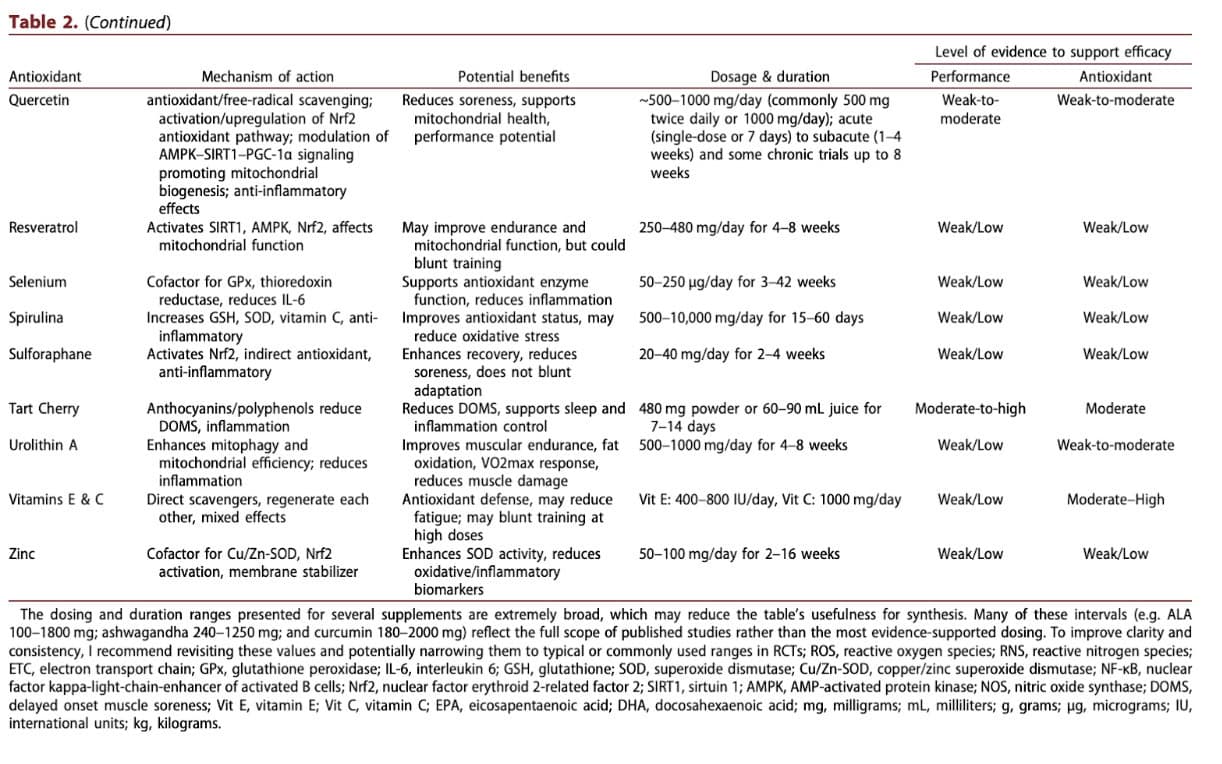
Urolithin A (Performance: weak/Low | Antioxidant: weak-to-moderate)
- At an altitude training camp, 1000 mg/day for 4 weeks was associated with lower RPE in a 3,000 m time trial and lower creatine kinase (an indirect marker of muscle damage).
- The urolithin A group also showed a larger within-group increase in VO₂max than the placebo group in that study (still early evidence).
- Runner take: Super intriguing for endurance + mitochondria nerds… but still early days.
Sulforaphane (Performance: weak/low | Antioxidant: weak/low)
- The paper notes that it’s distinct from “direct” antioxidants, which can blunt adaptations. Rather, it acts through a specific pathway to indirectly reduce inflammation.
- Small studies suggest reduced markers of muscle damage and soreness without harming training outcomes.
- Runner take: A “recovery support” candidate if you get a quality product—but evidence is still limited.
Curcumin (Performance: weak/low | Antioxidant: moderate)
- Curcumin often shows anti-inflammatory/antioxidant effects, and some protocols show short-term performance/recovery benefits.
- Runner take: More plausible as a muscle soreness/pain perception tool than as a direct endurance enhancer.
Coenzyme Q10 (Performance: weak/low | Antioxidant: moderate)
- The authors summarize that most studies show minimal to mixed performance effects, even though oxidative stress and muscle damage biomarkers sometimes improve.
- Runner take: If you’re taking it, do it for health reasons, not because it reliably makes you faster.
Cocoa flavanols (Performance: weak/low | Antioxidant: weak/low)
- Performance findings are described as equivocal, but acute dosing ~400–500 mg (or higher) ~2h pre-exercise may help vascular function and possibly reduce oxidative stress during bouts.
- Runner take: Interesting pre-session experiment (especially for “blood flow” sessions), but evidence isn’t strong. Chocolate does taste good, though.
Fucoxanthin (Performance: weak/low| Antioxidant: weak/low)
- Microalgae-derived supplements containing fucoxanthin + EPA/DHA reduced IL-6 and improved functional performance markers in non-athlete populations; the authors emphasize the need for sport-specific trials.
- Runner take: Not ready for prime time as a performance supplement.
Pycnogenol® (Performance: weak/low | Antioxidant: weak/low)
- The paper cites studies suggesting improvements in maximal aerobic capacity/time to fatigue and recovery metrics in cyclists/triathletes/military trainees at 60–200 mg/day for 4–8 weeks (still limited overall).
- Runner take: Interesting, but the ISSN still grades it low—consider it “experimental.”
Alpha-lipoic acid (ALA) (Performance: weak/low | Antioxidant: weak/low)
- In a running protocol (90 min + eccentric running), ALA increased erythropoietin (EPO) release and lowered some oxidation markers, but didn’t change creatine kinase (a common muscle damage marker).
- Runner take: Not much to justify routine use for performance.
Lutein + zeaxanthin (Performance: weak/low | Antioxidant: weak/low)
- The evidence in the paper is mostly about visual processing/reaction time (potentially more relevant to fast/chaotic sports than to distance running).
- Runner take: Probably not your limiting factor unless you’re in trail/technical racing or older/vision-limited contexts.
Resveratrol (Performance: weak/low | Antioxidant: weak/low)
- Big caution: the paper highlights evidence that resveratrol can blunt training adaptations (example: older men had reduced VO₂max/cardiovascular gains during high-intensity training with 250 mg/day).
- Runner take: Hard to recommend for healthy runners trying to adapt.
Selenium (Performance: weak/low | Antioxidant: weak/low)
- Some studies in active populations show improved antioxidant enzyme activity and reduced oxidation markers.
- Performance effects are inconsistent; the paper positions selenium primarily as a deficiency-prevention/recovery support, not as a performance supplement.
- Runner take: Test status/diet first—don’t megadose.
Spirulina (Performance: weak/low | Antioxidant: weak/low)
- The paper says spirulina isn’t well established as ergogenic; one study found no effect on isometric performance or exercise-induced muscle damage in a short protocol.
- Runner take: Not a go-to performance/recovery tool based on current evidence.
Vitamins C + E (Performance: weak/low | Antioxidant: moderate–high)
- Most studies show no performance benefit, and some show blunted training response with high-dose protocols.
- Example mechanism-level concern: high-dose C & E (e.g., 1,000 mg C + 400 IU E) has been reported to blunt endurance-related signaling pathways and mitochondrial biogenesis in untrained men.
- Runner take: Food-first; supplement mainly for low intake/deficiency risk, not as a “training upgrade.”
Zinc (Performance: weak/low | Antioxidant: weak/low)
- Zinc can improve antioxidant defense markers and reduce oxidative stress markers, but the authors say more performance-focused work is needed in athletic populations.
- Runner take: Think “coverage for deficiency,” not “performance enhancer.”
Should runners supplement with antioxidants?
Most runners shouldn’t “just take antioxidants.” The ISSN’s core point is that oxidative stress isn’t purely damage, it’s also a key training signal. If you blunt that signal all the time (especially with high-dose, chronic antioxidant pills), you may reduce some of the very adaptations you’re training for.
So instead of asking “Should I take antioxidants?” the better question is: “Am I trying to adapt right now… or am I trying to survive and recover?”
Here are a few takeaways for runners:
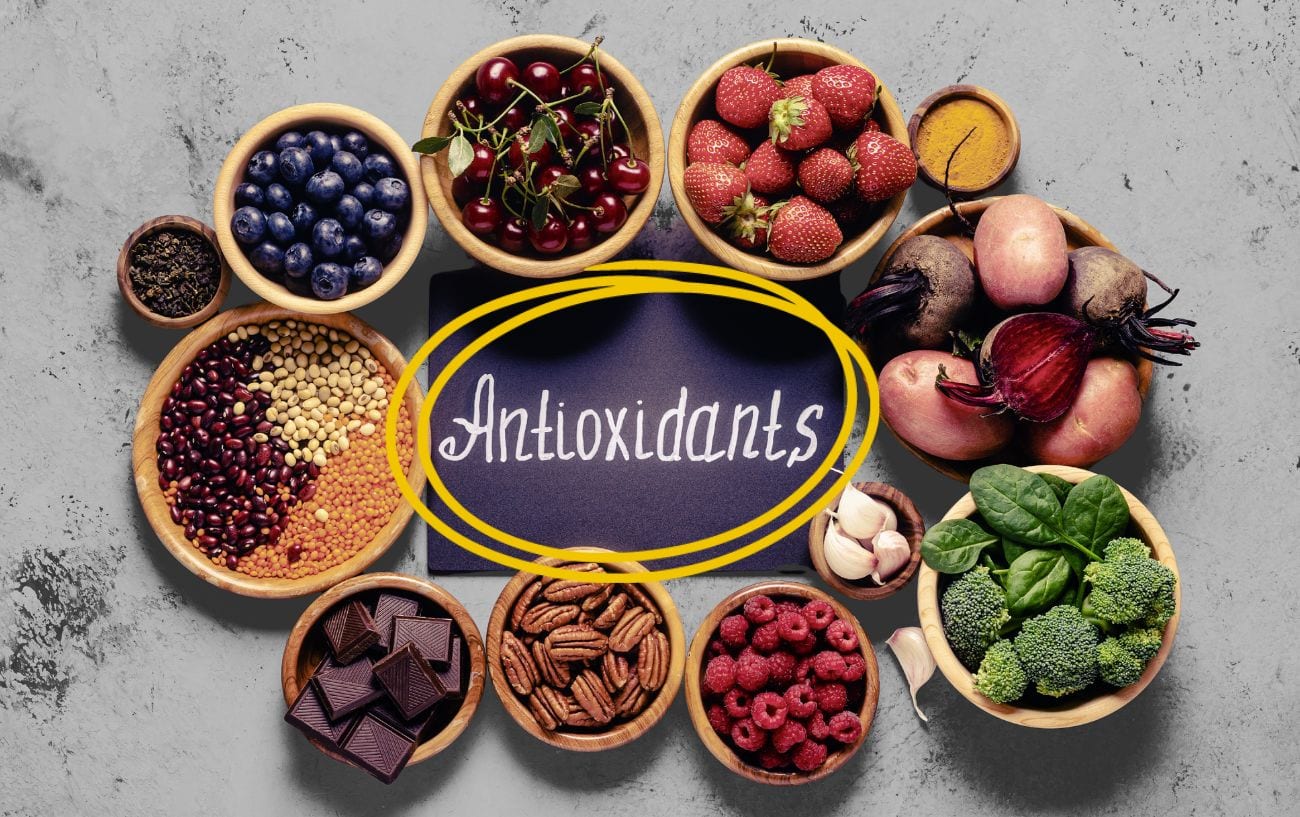
- Food-first is the default. Build your antioxidant base from a colorful, polyphenol-rich diet (fruits/veggies, berries/cherries, legumes, nuts, olive oil, etc.). That supports health and recovery without going overboard.
- Supplements are for specific situations, not everyday insurance. Take them if you’re deficient or at risk; you have dietary gaps; or you’re in a high-stress window where recovery is the limiter.
- If you do supplement, be targeted and time-limited.
What does that look like in real runner terms across a training cycle?
- Base/build phase: keep it mostly food. Avoid megadosing antioxidant vitamins.
- Peak/race weeks or brutal blocks: targeted support can make sense—especially with options the ISSN views as better-supported for athletes (they highlight tart cherry, omega-3s, astaxanthin, and also include creatine in their top tier—though it’s not really an “antioxidant supplement” in the classic sense).
- Don’t stack everything. More isn’t better. Pick one strategy that matches the goal.
Honestly, this review made me a bit more interested in taking antioxidants… not less. I don’t currently take anything from this list (other than omega-3s and creatine on and off), but I’m now considering a few supplements for targeted training blocks or for the 1–2 weeks leading up to a race.
If you’re thinking of doing the same, just remember that context and dose matter. Antioxidant supplements are neither good nor bad, nor are they always useful or useless. They’re a tool. And when used correctly, they can be beneficial.
References
RunClub — Free
Join 300,000+ runners in RunClub
Free training plans for every distance, a daily running game, exclusive coaching content, and a real community of runners. Create your free account in 20 seconds — no card.
Already a member? Log in →





Start the conversation