


Endurance fueling advice usually treats carbohydrate and fluid as separate targets: hit a certain number of grams per hour, then drink enough to manage thirst and heat. A small new experiment suggests the two may be more connected than that.
Nine trained male cyclists and triathletes completed two 160-minute rides at 50% of their peak power in temperate conditions, about 73°F (23°C). In both trials, they consumed 60 grams of glucose per hour. In the high-fluid trial, they also received enough water to match sweat losses closely; in the low-fluid trial, they received only 15 milliliters of water after each carbohydrate feeding.
The low-fluid condition did exactly what it was intended to do. By the end of the ride, participants had lost 2.8% of their body mass, compared with just 0.2% in the high-fluid condition. Plasma volume fell, and heart rate and thirst climbed. Core temperature and gastrointestinal discomfort, however, were not different between trials.

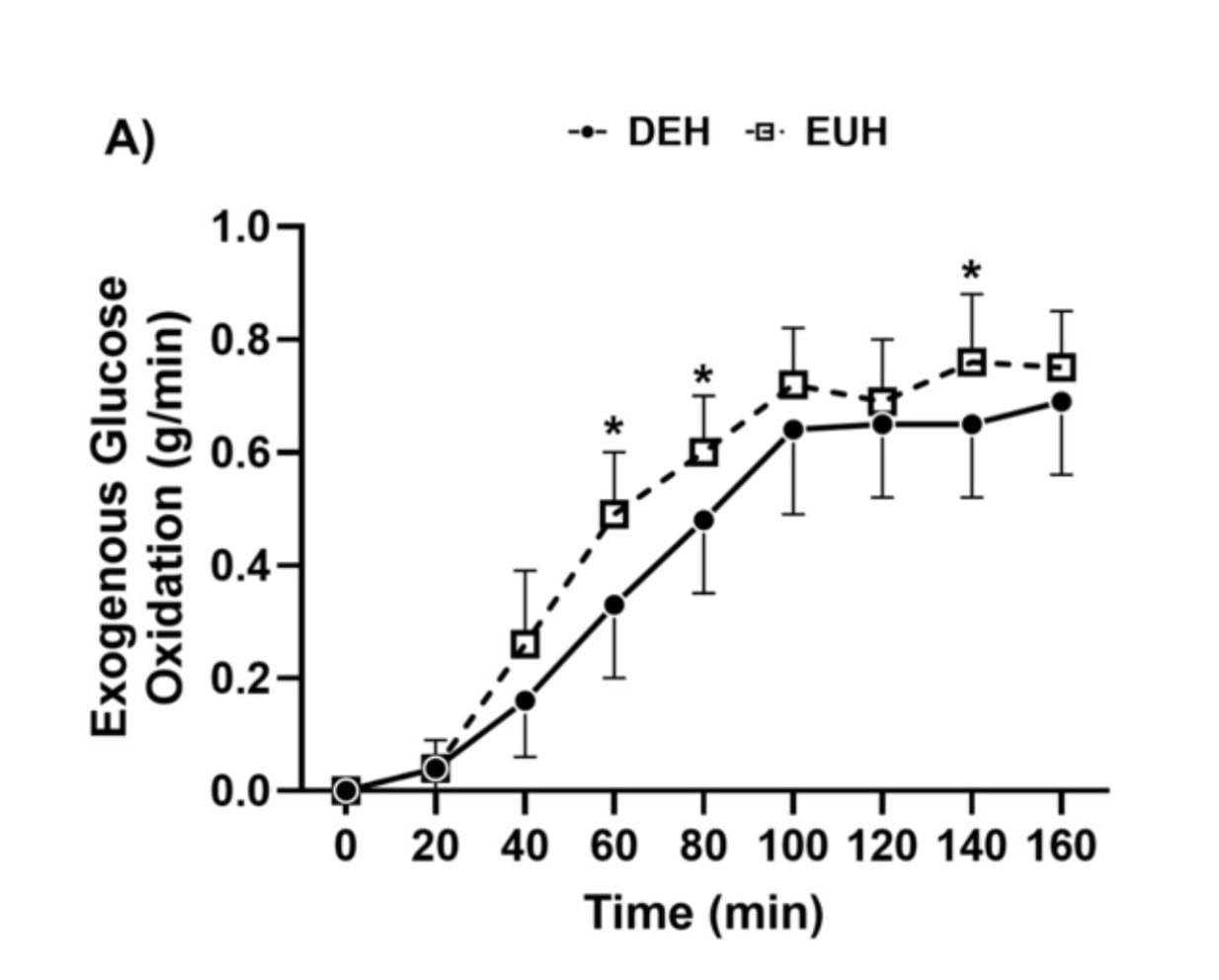
Dehydration reduced how much of the ingested glucose the athletes used (oxidized).
- From 40 to 160 minutes, average exogenous glucose oxidation was 0.51 grams per minute in the low-fluid trial versus 0.61 grams per minute with more fluid, a difference of roughly 16%.
- Peak glucose oxidation was also about 12% lower, 0.70 versus 0.79 grams per minute.
- The largest gap appeared at 60 minutes, when oxidation was 0.33 versus 0.49 grams per minute, even though body-mass loss at that point was only about 1%.
What this means for runners
If you are taking gels or a concentrated drink during a long run or race, the fluid consumed alongside those carbohydrates may affect how well they move through the gut and become available to working muscle. The practical target is not to replace every drop of sweat. It is to test a combined carbohydrate-and-fluid plan that limits excessive dehydration without creating sloshing or gastrointestinal distress.
This study does not establish a universal fluid dose, and it does not prove that a 16% reduction in exogenous glucose oxidation will slow your race. Treat it as a reason to rehearse fueling and hydration together—especially for long events, if you have a high sweat rate, or in a race where carrying or accessing fluid is difficult.
RunClub — Free
Join 300,000+ runners in RunClub
Free training plans for every distance, a daily running game, exclusive coaching content, and a real community of runners. Create your free account in 20 seconds — no card.
Already a member? Log in →








Start the conversation