


Every runner knows someone who got really fit, really fast—and then disappeared.
Sometimes it’s injury. Sometimes it’s burnout. Sometimes it’s the toll of the psychological grind. In elite running, where the incentives are enormous and the margins are tiny, this pattern is probably more common than we’d like to think.

A new study tried to unpack this problem1Dessye, A. M. (2026). Unpacking the Ethiopian paradox of career durability in elite endurance runners via a mixed methods study. Discover Mental Health, 10.1007/s44192-02600513-5. https://doi.org/10.1007/s44192-026-00513-5 in one of the most fascinating running environments in the world: Ethiopia. The authors call it the “Ethiopian Paradox.” Ethiopia produces some of the greatest distance runners in history, yet within that same system, many talented athletes burn out, get injured, or leave the sport early.
The study included 60 retired elite Ethiopian endurance runners, split evenly by sex. All had competed at a national championship or international level in events from 5,000 meters to the marathon. The researchers compared two groups: a “Durable & Thriving” cohort with elite careers lasting 10 or more years, and a “Burnout & Injury” cohort whose careers ended within seven years due to injury, overtraining syndrome, or burnout.
- The durable runners averaged 14.2 years at the elite level and retired around age 36.8.
- The burnout/injury group averaged 5.4 years and retired around age 27.9. That alone is a huge difference. The question was why.
The researchers retrieved historical training logs, calculated training load volatility using weekly acute-to-chronic workload ratios, administered psychological surveys, and conducted semi-structured interviews.
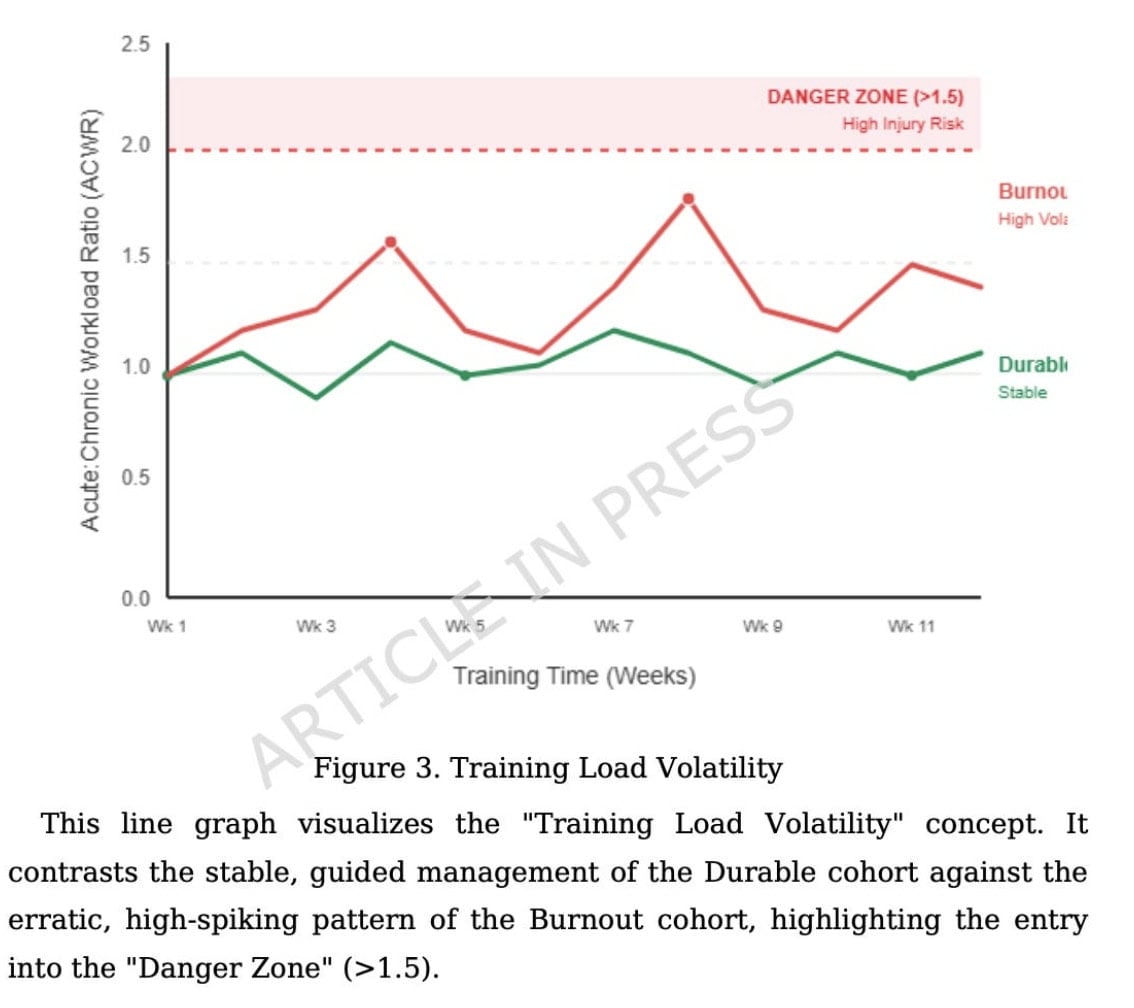
The durable group had significantly lower training load volatility—their training was steadier. The burnout/injury group had more frequent spikes in workload, often pushing acute: chronic workload ratios above 1.5, a zone commonly discussed as higher risk for injury when load jumps too quickly.
Durable athletes scored higher on coping with adversity, 10.2 versus 8.7, and much lower on concern over mistakes, 22.1 versus 28.5. Personal standards were similar between groups, which matters. The durable athletes were no less ambitious; they just seemed less likely to turn every setback into a personal catastrophe.
Three themes separated the durable runners from those who broke down:
- Guided autonomy in coaching (durable runners described coaches who adjusted training based on how the athlete felt. Burned-out runners described more rigid, top-down systems).
- An identity outside of running (durable runners had family, work, community, or other roles that gave them some psychological distance from performance. Burned-out runners often described running as their entire identity.)
- A strong community buffer.
I like this study because it pushes the conversation on durability beyond physiology. VO2 max, running economy, and lactate threshold matter. But so do training stability, coach-athlete communication, recovery, identity, and the extent to which your training environment gives you permission to adapt. That’s especially true for those of us who aren’t professional athletes.
What this means for runners
Durability often comes from consistent, hard training. Watch the spikes: sudden mileage jumps, stacking workouts when life stress is high, racing too often, or trying to “make up” missed sessions.
Also, pay attention to the psychological side. If every bad workout feels like evidence that you are failing, that is a risk factor. The more practical approach is to build a system where training can flex, recovery is respected, and running is important without becoming your entire identity. A lot of these things come with experience in the sport (speaking from personal experience).
References
RunClub — Free
Join 300,000+ runners in RunClub
Free training plans for every distance, a daily running game, exclusive coaching content, and a real community of runners. Create your free account in 20 seconds — no card.
Already a member? Log in →












Start the conversation