



Most runners can name at least one person who shaped the way they think about the sport. Maybe it was an Olympian or a world record setter, or even an influencer. Just as likely, it was a local coach, a veteran club runner, or someone unexpected.
We tend to think of mentors as people who offer direct advice or have a large following. But often a mentor’s influence is deeper and psychological. Even without training tips, they give us something else: a picture of what running goals could look like in real life.
Research on athletes suggests that proximity matters and that role-modeling relationships can improve self-efficacy (the belief that you can successfully do hard things), which, in turn, can support better performance and more time in productive “flow states”. In other words, seeing someone you admire do something inspiring changes your own habits, mindset, and self-beliefs.
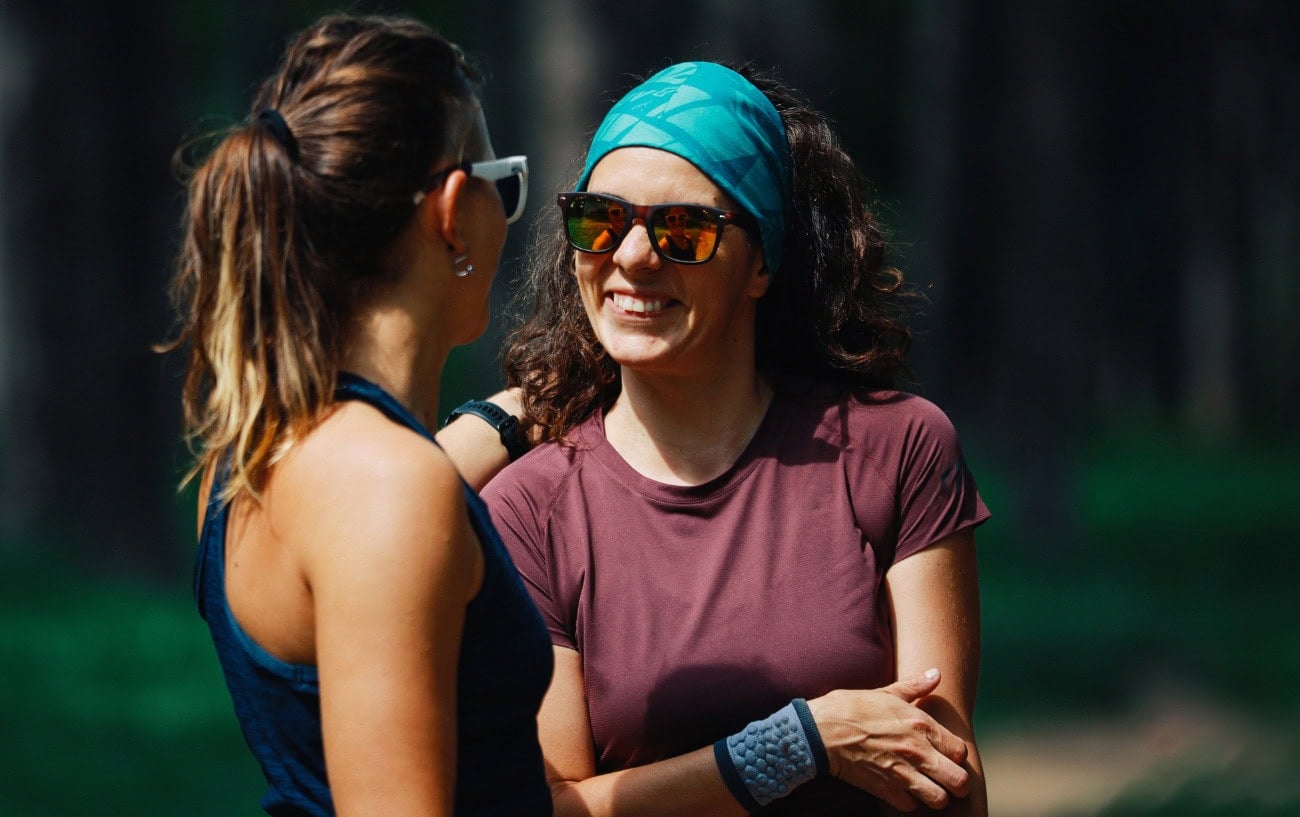
Why Mentors Matter More Than We Think
Psychologists have a useful term for one of the main ways mentors affect us: observational learning. We learn not only by doing, but by watching. When we see another runner handle nerves before a race, return after a bad result, or build a life that includes both ambition and limits, our brains are quietly taking notes: how to pace a marathon wisely, which workouts matter, and when to back off.
Another key term is vicarious experience, a major source of self-efficacy in Bandura’s framework. When we watch someone we relate to succeed through effort in hard things, we begin to think, “maybe I can do something like that too”. Importantly, the effect is strongest when the person feels at least somewhat similar to us—not superhuman, not infinitely distant.
That helps explain why mentorship is not only about elite examples. The runner who may help you most is not always the one with the fastest marathon PB. It might be the parent who trains around a chaotic family schedule, the masters runner who rebuilt after burnout, or the friend who openly uses therapy, journaling, or breathwork to keep going through hard seasons.
Research on mentoring in sport also points to something broader than performance: mentoring relationships can offer emotional support, reflection, and a sense of relational bond that shapes the sporting experience itself. In other words, good mentors do not just tell us what to do. They show us how to be.
3 Ways A Mentor Changes How You Run
A running mentor can influence motivation in many overlapping ways.
First, they normalize the hard parts.
Many recreational runners quietly assume that confident runners do not struggle with self-doubt, flat spells, comparison, and inconsistency. A good mentor punctures that illusion. They let you see that mental friction is part of the process, not proof that you do not belong in the sport.
Second, mentors can strengthen self-efficacy.
That word can sound technical, but it describes something every runner knows: the internal shift from “I don’t think so” to “I think I might be able to do that.” Role models help create that shift by making a hard thing visible and thinkable.
Research shows that modeling can improve not only confidence but also flow—the absorbed, high-functioning state in which performance feels smooth, focused, and less effortful.
Third, mentors can help with cognitive reappraisal, the ability to interpret a difficult experience in a more useful way.
A race blow-up becomes information, not humiliation. A missed week becomes a reset, not a collapse. Watching another runner respond this way teaches us. This is why our flawed mentors are often more useful than polished ones. They are the ones who fail, regroup, ask for help, and keep going. The runner who has learned mental health tools like flexible goal setting, self-compassion, and social support often teaches more by example than the untouchable icon who only seems to win.
Why Proximity Beats Prestige
Many runners already have mentors around them; they just do not label them that way.
They are the people who:
- Show up consistently without making running their entire identity.
- Speak honestly about stress, injury, and aging, or mental health.
- Handle disappointment without spiraling into self-destruction.
- Compete hard but keep perspective.
- Make space for joy, not just metrics.
There is a quiet power in seeing someone live a running life you could actually imagine inhabiting. A local runner who juggles work, family, and everyday constraints may be more psychologically useful than an elite icon whose life revolves around training.
That is not because elites are irrelevant. Far from it. Major running icons can expand our sense of possibility, sharpen aspiration, and introduce us to styles of courage or discipline we might not discover otherwise. They inspire us. But for day-to-day motivation, proximity matters.
Research has found that similarity to a role model can affect whether the model boosts self-efficacy or simply feels far away. If the gap feels too wide, admiration can turn into discouragement.
Pedestal Effect: When Admiration Tips Into Comparison
By putting our running icons on a pedestal, we can create an aura of untouchability around them—and in the process, make our own lives feel inadequate by comparison.
Psychologists note this in social comparison: evaluating ourselves against others in ways that can either motivate us or erode our confidence. When the comparison turns harsh, it can slide toward impostor syndrome, where we start to feel like frauds in our own running lives, despite clear evidence that we are showing up, improving, and doing the work.
This happens more easily than most runners admit. We look at an icon’s race results, consistency, discipline, body, or charisma, and forget that we are comparing our full, messy, sleep-deprived, work-stressed life to a highly edited slice of someone else’s reality. The result is often a corrosive inner script: I’m not serious enough. I’m not tough enough. I’m only pretending to be a runner.
The most helpful turn is to frame this differently: not as evidence that we do not measure up, but as information about what we value.
The mentor is not there to prove our inadequacy; they are there to help us clarify what qualities we admire and might want to cultivate in our own version. Maybe it is their discipline. Maybe it is their patience. Maybe it is their ability to recover from public failure.
Once we identify the quality, we can stop trying to become them and start practicing that quality as ourselves; a much more humane—and sustainable—form of aspiration.
What Good Mentorship Actually Looks Like
Healthy mentorship in running usually has a few recognizable qualities.
A good mentor:
- Expands your sense of possibility without making you feel small.
- Shares the process, not just the outcomes.
- Lets you see both struggle and success.
- Encourages reflection and growth rather than dependency or envy.
- Helps you become more fully yourself, not a photocopy.
This last point matters. The goal of mentorship is not imitation for its own sake. It is integration. You borrow what is useful, adapt it to your own temperament and life, and leave the rest. You do not need to eat exactly what your running hero eats, train exactly how they train, or adopt their entire philosophy.
Often, the most valuable thing to copy is not behavior, but mindset: like how they relate to adversity, uncertainty, and imperfection.
That is where ordinary mentors can be especially powerful. The runner who says, “I had a tough week, so I shortened the workout but kept the routine going,” may be teaching a more durable lesson than the runner who appears endlessly disciplined and untroubled. One offers a fantasy. The other offers a path.
How To Find — And Be — the Right Kind Of Running Mentor
One useful practice is to ask yourself: “Who actually makes me want to run better and feel stronger?” That question can reveal a lot.
Look for people who stir:
- Curiosity rather than envy.
- Energy rather than shame.
- Possibility rather than self-erasure.
- Respect rather than obsession.
We can also widen the definition of mentorship. Not every mentor has to know they are your mentor. Some will be authors, podcast guests, coaches from afar, or runners you follow because they show the whole picture—through setbacks, failed buildups, changed goals, and re-starts. That kind of model is especially powerful for us when we navigate motivation dips, mental health balance, and identity struggles in the sport. It gives us permission to remain “works in progress”.
One last twist: If mentors shape us, then we are probably shaping others, too, even if we don’t notice.
You do not need to be famous, elite, or especially wise to become someone another runner quietly learns from. You just need to model a way of being that is honest, grounded, and repeatable. That might mean talking openly about things like how you handle race nerves. It might mean showing what a comeback after injury actually looks like. It might mean being the person in your club who reminds newer runners that bad patches and self-doubt do not disqualify them from belonging.
Mentorship in running is powerful because it is not always about performance. At its best, it teaches us how to fail well, how to carry ambition without collapsing under it, and how to keep the sport humane even as we chase meaningful goals. That may be the deepest gift our running icons give us: not the fantasy that greatness belongs to other people, but the evidence that ordinary people like us can keep becoming more resilient and succeed, one run at a time.
RunClub — Free
Join 300,000+ runners in RunClub
Free training plans for every distance, a daily running game, exclusive coaching content, and a real community of runners. Create your free account in 20 seconds — no card.
Already a member? Log in →









Start the conversation